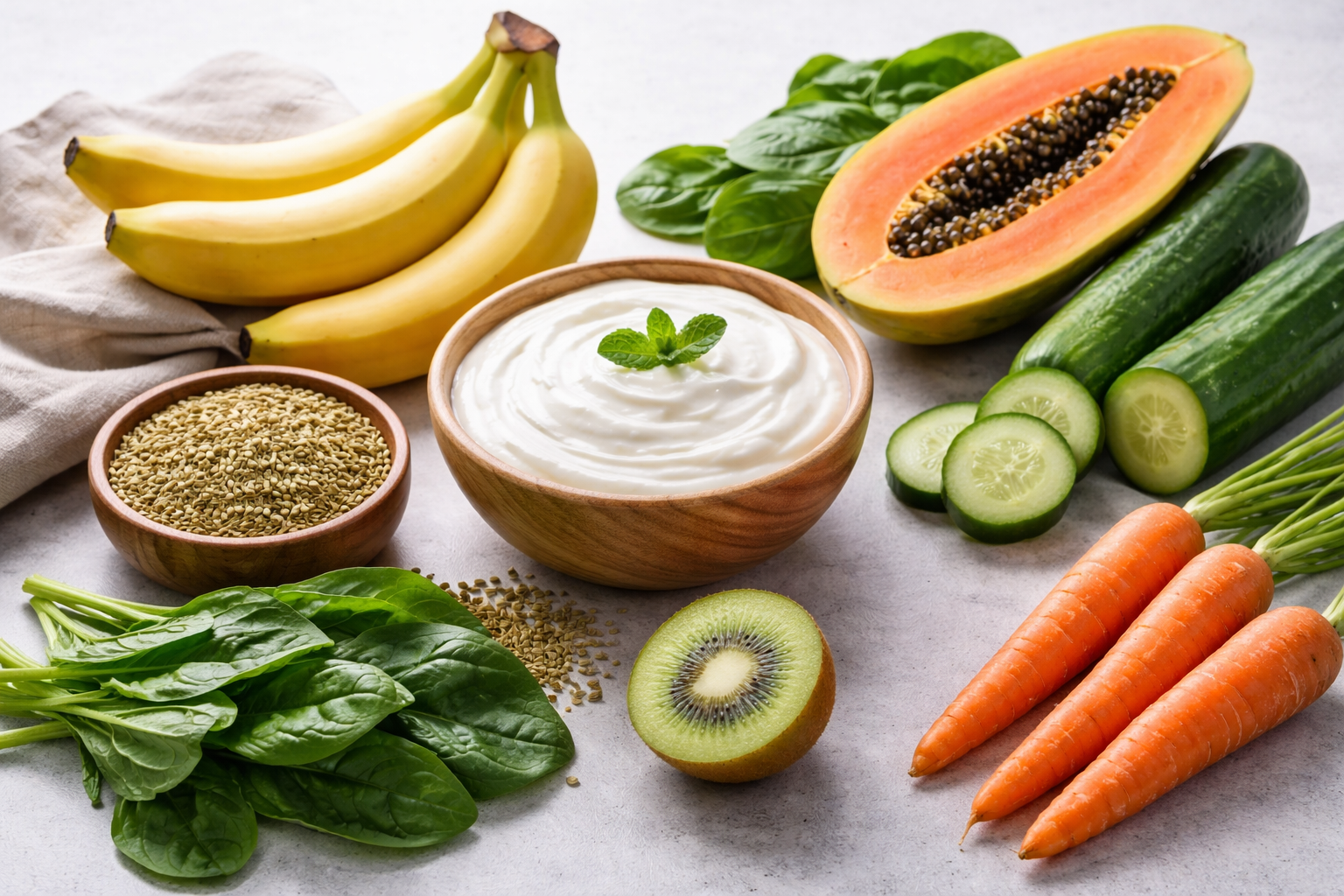
Bloating is one of those problems that looks harmless but feels miserable. Your stomach feels tight, clothes suddenly don’t fit right, and even a normal meal leaves you uncomfortable for hours. For some people, it’s occasional. For others, it’s daily.
Here’s the blunt truth: most bloating isn’t random. It’s usually caused by poor digestion, gas buildup, water retention, or an imbalance in gut bacteria. And what you eat plays a direct role in all of it.
This isn’t about avoiding food. It’s about choosing the right ones that help your gut work properly.
Below are foods that actively reduce bloating, along with clear reasons why they work.
Foods That Help With Bloating
These foods support digestion, reduce gas buildup, and help your stomach feel lighter.
1. Yogurt (With Live Cultures)
Not all yogurt helps. Only those with live probiotics matter.
Probiotics may improve digestion and help reduce bloating with regular intake, though results are mixed.
Yogurt is easier to digest than milk because its bacteria help break down lactose, a common cause of bloating.
Stick to plain, unsweetened yogurt. Flavored versions add sugar, which can worsen bloating.
2. Fennel Seeds
Fennel seeds are widely used to support digestion and ease bloating.
They contain natural compounds like anethole and fenchone that support digestive function.
Fennel seeds have antispasmodic properties, meaning they relax the muscles of the digestive tract, reduce cramping, and allow gas to pass more easily.
They also support smoother movement of food through the gut and may help protect the stomach lining.
As a result, fennel can reduce gas buildup and that heavy, uncomfortable feeling after meals. However, strong human studies are still limited.
3. Banana
Bananas are effective for reducing bloating.
They are rich in potassium, which helps balance sodium levels in the body. Excess sodium causes water retention, leading to that swollen, heavy feeling.
By helping your body flush out excess salt, bananas reduce water-related bloating.
They also contain soluble fiber, which supports smoother digestion without producing excess gas.
4. Cucumber
Cucumber works mainly because of its high-water content (about 96%).
It helps flush out excess fluids and reduces water retention, which can ease bloating quickly.
It also contains antioxidants that can help calm irritation in the digestive tract.
You can eat it raw, add it to salads, or infuse it in water.
5. Papaya
Papaya supports digestion in a very direct way.
It contains papain, an enzyme that help your body break down protein efficiently. When protein isn’t digested properly, it sits in the gut longer, leading to fermentation, gas, and that heavy feeling after meals. Papaya helps prevent that buildup.
It also has mild anti-inflammatory properties, which can calm irritation in the digestive tract. This matters because even low-level gut inflammation can slow digestion and contribute to bloating.
In addition, dietary fiber in papaya supports regular bowel movement, which helps reduce constipation-related bloating.
Fresh papaya works best, especially when eaten between meals.
6. Oats
Oats are a good source of soluble fiber.
Soluble fiber absorbs water and forms a gel-like substance in the gut. This helps regulate bowel movements and prevents constipation, which is a major cause of bloating.
The key is tolerance. Too much fiber at once can cause gas, especially if your body isn’t used to it.
Start with small portions and increase gradually.
7. Pineapple
Pineapple contains bromelain, an enzyme that helps digest protein.
Like papaya, it improves digestion efficiency and reduces the chances of food sitting in the gut and fermenting.
It also has anti-inflammatory properties that can calm an irritated digestive system.
Fresh pineapple works better than canned versions.
8. Spinach
Leafy greens like spinach are low in FODMAPs (fermentable carbs that cause gas).
They are easy to digest and provide magnesium, which helps relax muscles in the digestive tract and may support regular bowel movements.
This makes spinach especially useful for bloating linked to constipation.
Cooked spinach is even easier to digest than raw.
9. Zucchini
Zucchini is one of the easiest vegetables to digest.
It has high water content and a soft texture when cooked, which makes it gentle on the gut.
It helps keep digestion smooth without creating excess gas.
Lightly cooked zucchini works best.
10. Rice (Especially White Rice)
Rice gets a bad reputation, but it’s one of the safest foods for a sensitive gut.
It’s low in fiber and easy to digest, which reduces the chances of fermentation and gas buildup.
If you’re dealing with frequent bloating, switching to simpler carbs like rice can make a noticeable difference.
11. Caraway Seeds
Caraway seeds are one of the most effective remedies for gas-related bloating.
They help relieve gas buildup and relax the muscles of the digestive tract. This allows trapped gas to move out instead of building pressure in the abdomen, which is what causes that tight, uncomfortable feeling.
They also support better breakdown of food, especially after heavy or oily meals, where bloating is more common.
You can chew a small amount after meals or use them in warm water or tea for better results.
12. Kiwi
Kiwi is one of the most underrated foods for digestion.
It contains an enzyme called actinidin, which helps break down proteins and speeds up digestion. This reduces the time food sits in your gut, lowering gas formation.
It’s also rich in fiber that supports regular bowel movements without causing heaviness.
One kiwi after meals works well.
13. Turmeric
Turmeric may help reduce inflammation in the gut.
Bloating isn’t always just gas. In some cases, low-grade inflammation can make your abdomen feel swollen.
Curcumin, the active compound in turmeric, has anti-inflammatory properties that may help ease this discomfort.
Research suggests that curcumin may help improve digestive symptoms in people with IBS, including gas and bloating, though results are not consistent.
Use it in cooking or add a pinch to warm water with black pepper.
14. Carrots (Cooked)
Raw carrots can sometimes cause gas in some people, while cooked carrots are easier to digest.
They contain soluble fiber that supports smoother bowel movements without causing excess fermentation.
Cooked carrots are gentler on the gut and less likely to cause bloating.
Lightly steaming or sautéing works best.
15. Coriander
Coriander supports digestion by stimulating digestive enzymes and improving how the stomach processes food.
It may help reduce gas, bloating, and discomfort in the digestive system, especially after heavy or oily meals.
It also has mild diuretic properties, which can help reduce water retention-related bloating.
You can use fresh leaves in meals or boil the seeds in water for a simple drink.
16. Cumin Water
Cumin water is a simple and effective remedy for bloating.
It may help stimulate digestive enzymes and improve the breakdown of food, reducing gas formation.
Drinking it warm, especially after meals, can help ease bloating and discomfort.
17. Ginger Tea
Ginger helps reduce bloating by improving digestion and speeding up how quickly food moves through the stomach.
It relaxes the digestive tract, which helps ease gas, cramping, and abdominal discomfort after meals.
It also has natural carminative properties that reduce gas formation and support smoother digestion.
Drinking a cup of ginger tea after meals can help ease bloating and discomfort.
18. Coconut Water
Coconut water is effective for bloating caused by dehydration and electrolyte imbalance.
It’s rich in potassium, which helps reduce water retention and flush out excess sodium.
It also keeps digestion smooth by supporting proper muscle function in the gut.
Drink it mid-morning or after heavy meals.
19. Peppermint Tea
Peppermint tea may help reduce bloating and digestive discomfort.
Compounds like menthol relax the muscles of the digestive tract, which helps ease gas, cramping, and abdominal pressure.
Clinical studies on peppermint oil show strong benefits for IBS symptoms and abdominal pain, but tea may provide a milder effect. However, there is limited research specifically on peppermint tea.
Drinking a warm cup after meals can help soothe the stomach and support digestion.
20. Kefir
Kefir is a fermented dairy drink rich in probiotics that support gut health.
It contains a wider variety of beneficial bacteria than yogurt, which helps improve gut balance and digestion.
Regular intake has been linked to reduced bloating, less abdominal discomfort, and a healthier gut environment.
If you tolerate dairy well, kefir can be a useful addition to help manage bloating.
21. Buttermilk (Traditional)
Traditional buttermilk is a fermented dairy drink that is light, hydrating, and easy to digest.
It contains beneficial bacteria that support gut health and improve digestion, which can help reduce bloating and discomfort.
It is often well tolerated after meals and may help ease digestive irritation.
Adding roasted cumin or ginger can further support digestion and help reduce gas.
Foods That Can Worsen Bloating
Some foods can worsen bloating, especially if your digestion is sensitive.
- Carbonated drinks → introduce excess gas
- Fried and oily foods → slow digestion
- Beans and certain legumes → hard to digest for some people
- Processed foods → can disrupt gut balance
- Artificial sweeteners → may cause gas and bloating
These don’t affect everyone the same way, but reducing them can help if you experience frequent bloating.
Along with adjusting your diet, staying active, eating in moderation, and chewing your food properly can significantly reduce bloating.
What’s Actually Causing Your Bloating
If you don’t understand the cause, you’ll keep chasing temporary fixes.
Here are the main triggers:
1. Gas buildup
Caused by poor digestion or high-fermenting foods.
2. Water retention
Often due to excess salt or hormonal changes.
3. Constipation
Slows everything down, leading to pressure and swelling.
4. Food intolerances
Lactose and gluten are common triggers.
5. Gut imbalance
Too many bad bacteria increase gas production.
Each food listed above targets one or more of these causes. That’s why they work.
What You Should Stop Doing
This is where most people go wrong.
You’re eating too fast
Swallowing air adds to bloating. Slow down.
You’re mixing too many foods
Heavy combinations make digestion inefficient.
You rely on “healthy” but hard-to-digest foods
Raw salads, excess legumes, and artificial sweeteners often worsen bloating.
You ignore portion size
Even good foods cause bloating if you overeat.
Final Take
Bloating isn’t something you have to tolerate.
If it’s happening regularly, your digestion is telling you something is off. Fixing it doesn’t require extreme diets or supplements. It comes down to choosing foods that your gut can handle and digest efficiently.
Start simple. Add 2–3 of these foods daily. Remove obvious triggers. Pay attention to how your body responds.
You’ll notice the difference faster than you expect.