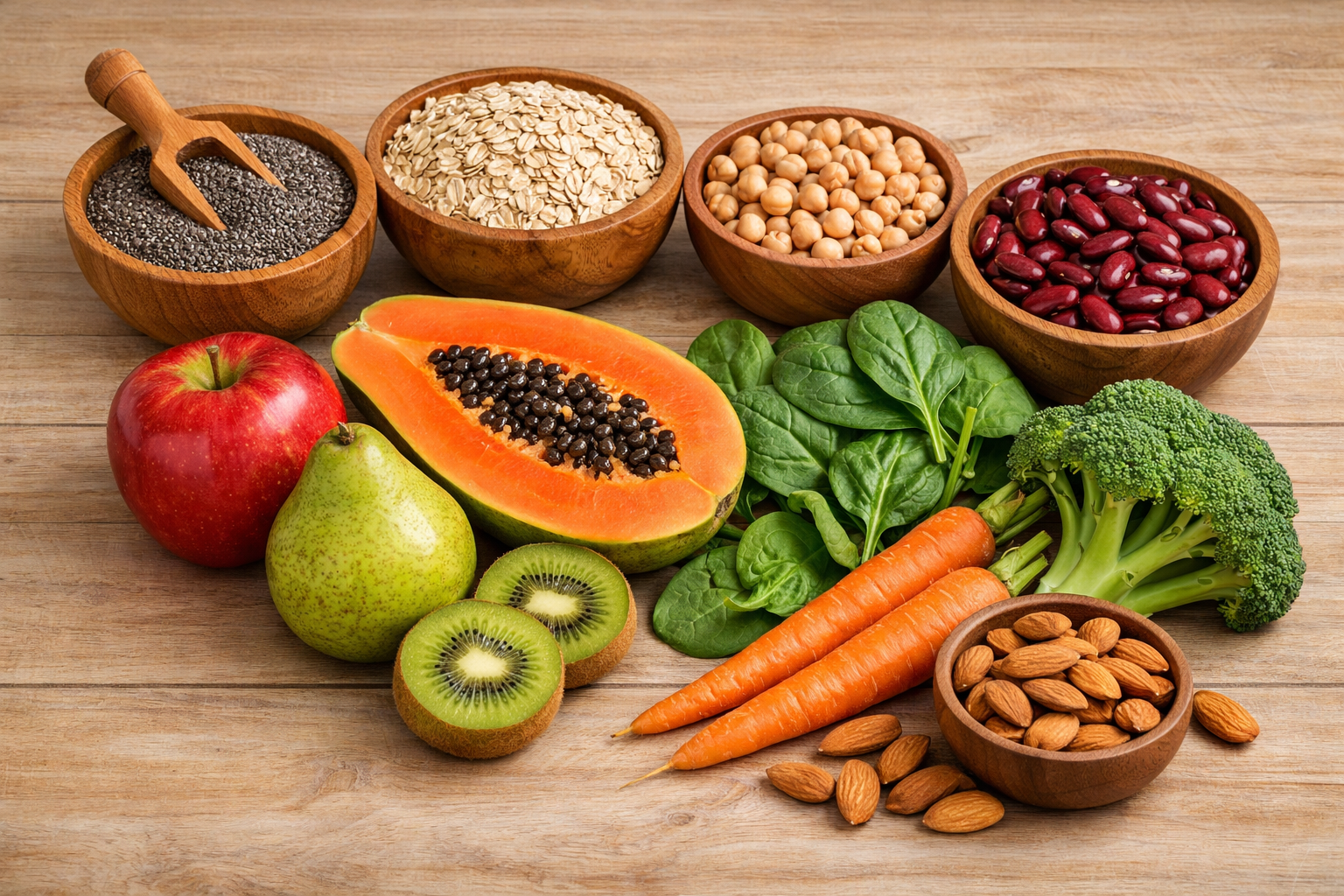
Constipation is not just about irregular bowel movements. It affects how you feel throughout the day. You feel heavy, bloated, and uncomfortable, and over time it starts affecting your appetite, energy, and routine.
Most people try to fix it quickly. They cut food, try random remedies, or depend on short-term solutions. It may help for a day or two, but the problem usually returns.
That’s because constipation builds slowly. Low fiber intake, not enough water, irregular eating patterns, and lack of movement all contribute to it.
Fiber is one of the most effective ways to improve this. But simply adding “more fiber” is not enough. You need the right foods, in the right amounts, used consistently.
This list focuses on practical foods that fit into everyday meals and support smoother digestion without extreme changes.
Why Fiber Matters for Constipation
Fiber is one of the main drivers of healthy digestion. Without enough of it, stool becomes harder, smaller, and slower to pass.
It works in three simple ways:
- Adds bulk to stool so it moves more easily through the intestines
- Holds water in the stool, keeping it soft
- Feeds beneficial gut bacteria, which supports overall digestion
There are two types of fiber, and both matter:
- Soluble fiber: absorbs water and softens stool
- Insoluble fiber: adds bulk and helps move stool through the gut
Relying on just one type won’t give consistent results. You need a mix of both.
One more thing most people get wrong: expecting quick results. Fiber doesn’t work overnight. Your body needs time to adjust, and the benefits build with consistency.
High Fiber Foods That Help Relieve Constipation
The foods below include some of the best high-fiber foods for supporting regularity and relieving constipation.
1. Chia Seeds
Chia seeds are one of the most concentrated sources of fiber, providing about 10 g of fiber in just one ounce (28 g).
When soaked, they absorb water and form a gel-like texture, which helps soften stool and make it easier to pass. Their soluble fiber also supports gut bacteria, improving digestion gradually.
A clinical study on 60 patients with IBS-C found that a formula containing chia seed powder improved stool consistency, IBS symptoms, and quality of life within 15–28 days, while remaining safe and well tolerated.
Because they are so dense, even a small daily amount can have a noticeable impact over time.
2. Flaxseeds
Flaxseeds offer a mix of soluble and insoluble fiber, with roughly 2 g of fiber per one tablespoon (ground).
Ground flaxseeds are more effective than whole ones, as they are easier to digest. They also contain natural oils that help lubricate the intestines, making stool movement smoother.
A 12-week study in 53 constipated patients with type 2 diabetes found that consuming 10 g flaxseed twice daily significantly improved constipation symptoms, while also reducing weight, blood sugar, and cholesterol levels, with no reported side effects.
Adding them to curd, smoothies, or oats is a simple way to increase fiber intake.
3. Oats
Oats provide around 4 g of fiber per 1 cup cooked, mainly in the form of beta-glucan, a soluble fiber. This helps retain water in the stool, making it softer and easier to pass.
Oats are also gentle on the digestive system, making them suitable for regular use without causing irritation or discomfort.
For a higher fiber option, oat bran is even more concentrated and can be a better choice for relieving constipation.
4. Whole Wheat Bread
Two slices (64 g) of whole wheat bread provide about 4 g of fiber, largely from the bran layer.
The insoluble fiber adds bulk to stool and helps speed up its movement through the intestines.
Like other whole grains, it is naturally rich in fiber, while refined grains contain very little. Whole grains help improve bowel movements by increasing stool bulk, softening it, and helping it move through the intestines faster.
Replacing refined white bread with whole wheat bread is a simple and effective way to support better digestion.
5. Rye Bread
Rye bread is rich in fiber, providing around 4 g per two slices (64 g), particularly arabinoxylans, which help increase stool bulk and speed up intestinal movement.
Clinical studies show it can soften stool and reduce transit time more effectively than white bread.
However, it may cause bloating or gas in some people due to its high FODMAP content.
6. Lentils
Lentils contain about 16 g of fiber per one cup cooked (198 g) and offer both soluble and insoluble fiber. This combination helps soften stool while also increasing its bulk.
Lentils also support gut bacteria, which improves digestion over time.
Since they are already a staple in many meals, increasing their intake is a practical way to boost fiber.
7. Chickpeas
Chickpeas provide roughly 12 g of fiber per one cup cooked (164 g) and contain resistant starch, which feeds beneficial gut bacteria.
This helps regulate bowel movements gradually rather than giving only short-term relief. Their fiber content also adds bulk, making stool easier to pass.
Chickpeas also contain bioactive compounds that support digestion and may help reduce bloating and abdominal discomfort.
8. Kidney Beans
Kidney beans contain 11.3 g of fiber per one cup cooked (177 g). They are effective at increasing stool bulk and supporting regular bowel movements.
Proper soaking and cooking make chickpeas easier to digest and help reduce digestive discomfort.
9. Apples
One medium apple (200 g) provides 4.2 g of fiber, mainly from pectin, a soluble fiber.
Pectin absorbs water and helps soften stool, making it easier to pass.
Research shows that increasing fiber intake, particularly pectin, can improve stool frequency and consistency when consumed in higher amounts over several weeks.
Apples also contribute to hydration, which further supports digestion when eaten whole.
10. Pears
One medium pear (178 g) offers 5.52 g of fiber and are particularly effective due to their high-water content. This combination helps improve stool consistency and supports easier bowel movements.
Pears also contain natural sugars like sorbitol along with antioxidants, which support gut health and further help relieve constipation.
They are gentle on the digestive system, making them suitable for regular consumption.
11. Guava
A 100 g serving of guava contains 5.4 g of fiber, making it one of the highest fiber fruits.
Both the flesh and seeds contribute to its effect. The fiber adds bulk, while the seeds can help stimulate bowel movement.
Regular consumption can noticeably improve digestive regularity.
12. Papaya
One small papaya (157 g) provides about 3 g of fiber along with digestive enzymes that help break down food.
These enzymes reduce strain on the digestive system and support smoother stool movement.
It contains pectin, a soluble fiber that helps regulate bowel movements and prevent constipation, and cellulose, an insoluble fiber that supports gut health and regularity. These fibers also act as prebiotics, improving digestion and enhancing nutrient absorption.
Its water content may also help reduce bloating and heaviness after meals.
13. Kiwi
One kiwi (75 g) provides 2.25 g of fiber along with actinidin, a natural enzyme that helps improve digestion. This combination supports smoother bowel movements and helps relieve constipation.
A meta-analysis of five trials found that kiwifruit significantly increased bowel movement frequency in people with functional constipation. While results suggest it is safe and effective, the overall quality of evidence was low, so more high-quality studies are needed.
Kiwi also has high water content, which further helps soften stool and support easy passage.
14. Spinach
Spinach provides around 4 g of fiber per one cup cooked (180 g) and also contains magnesium, which may help relax the muscles of the digestive tract. This supports smoother movement of stool through the intestines.
Including spinach regularly can improve bowel consistency over time.
15. Carrots
A single cup of carrot slices contains about 3.5 g of fiber and are easy to digest. Their fiber adds bulk to stool, while their water content supports smoother movement.
They are also less likely to cause bloating, making them a good starting point when increasing fiber intake.
16. Sweet Potatoes
Sweet potatoes provide about 4 g of fiber per one medium (with skin). Their fiber helps increase stool bulk, while their soft texture makes them easy to digest.
A lab study found that sweet potato contains a compound called trifostigmanoside I (TS I), which supports gut health by increasing mucus production and protecting intestinal lining cells. It helps maintain the gut barrier by strengthening tight junctions.
This may support better digestion, especially in cases where gut barrier function is compromised
17. Broccoli
One cup (156 g) of cooked broccoli contains 5.14 g of fiber and supports gut bacteria, which improves digestion over time.
Light cooking makes it easier to digest while preserving most of its fiber content.
18. Almonds
Almonds provide about 3.6 g of fiber per small handful (28 grams), along with healthy fats. The fats help lubricate the digestive tract, while fiber supports smoother stool movement.
A small handful daily is enough to contribute to better digestion.
Highest Fiber Foods from This List
If your goal is to increase fiber quickly, focus on:
- Chia seeds
- Lentils
- Chickpeas
- Kidney beans
- Guava
- Almonds
- Whole wheat
These provide the highest fiber per serving and have the strongest impact.
How to Add Fiber Without Making Constipation Worse
Increasing fiber too quickly can cause bloating and discomfort.
Do it properly:
- Increase intake gradually over 7–10 days
- Drink enough water throughout the day
- Spread fiber across meals instead of one large portion
Common Mistakes That Keep You Constipated
- Not drinking enough water
- Eating too many refined foods
- Low physical activity
- Ignoring natural bowel urges
These cancel out the benefits of fiber.
When to Seek Medical Advice
If constipation continues despite consistent dietary changes, look for:
- Persistent abdominal pain
- Blood in stool
- Sudden changes in bowel habits
- Long-term constipation without improvement
These require proper evaluation.
Final Takeaway
Constipation is not a quick problem with a quick fix.
It improves through consistent habits.
Adding high fiber foods, staying hydrated, and maintaining regular eating patterns can support better digestion over time.
Start simple. Stay consistent. That’s what works.
3 thoughts on “18 High Fiber Foods for Regularity”
Comments are closed.