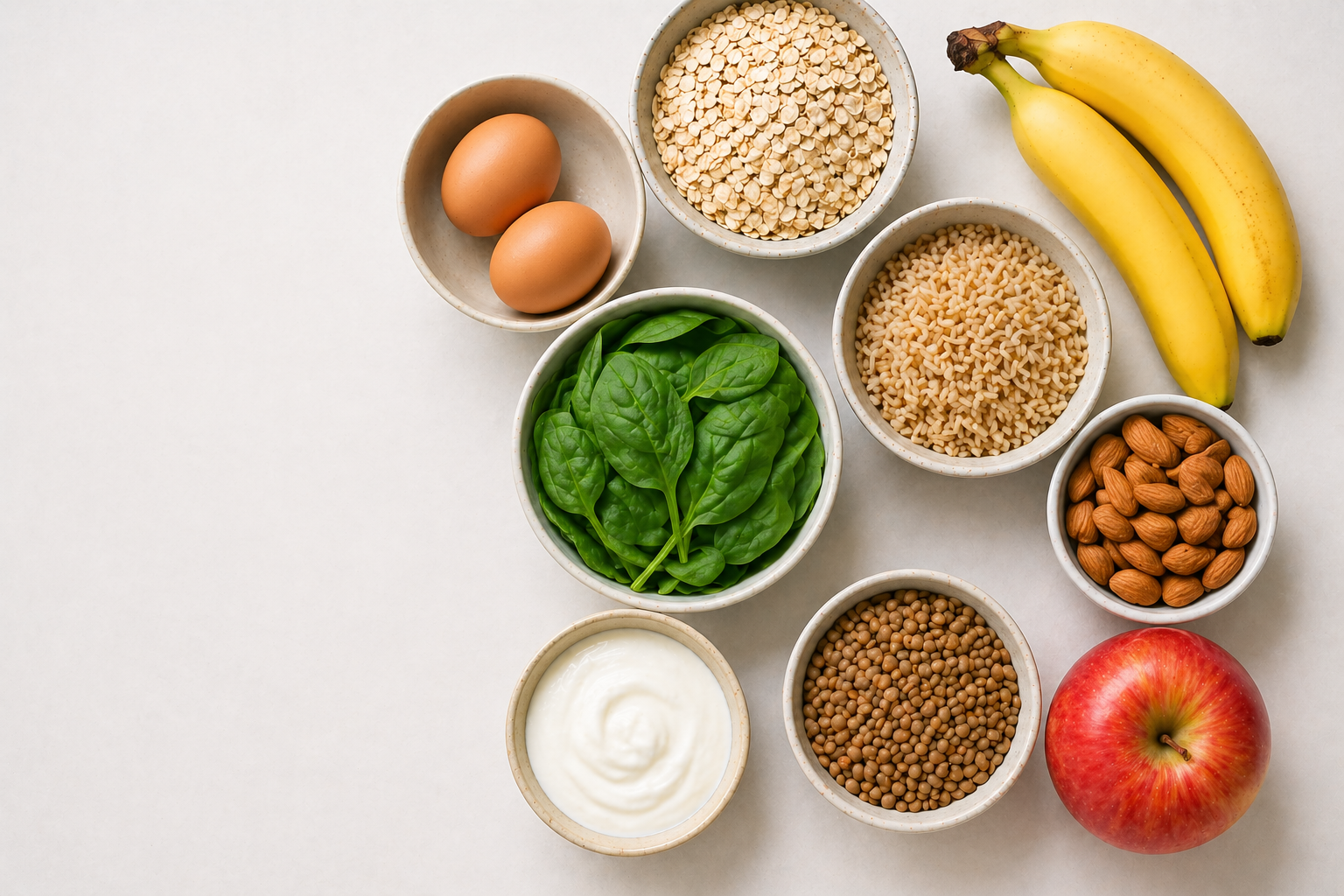
You don’t notice your energy—until it drops.
That mid-morning brain fog. The 3 PM slump. The feeling that even small tasks take effort. Most people blame sleep or stress. But what you eat plays a direct role in how steady your energy feels throughout the day.
Here’s the problem: quick fixes like sugary snacks or caffeine give a short spike, then a crash. What your body actually needs is steady fuel—foods that release energy slowly, support your metabolism, and prevent those highs and lows.
This is not about “superfoods” or instant results. It’s about eating in a way that keeps your body functioning consistently.
Before we get into the list, one thing to be clear about: there are very few direct studies showing that specific foods increase energy on their own. Most evidence comes from how nutrients affect blood sugar, metabolism, and fatigue. That’s why the foods below are chosen for how they support steady energy, not for quick boosts.
Foods for Low Energy
Below are foods that help support energy levels and prevent fatigue throughout the day.
1. Oats
Oats are one of the most reliable foods for steady energy.
They are rich in complex carbohydrates and beta-glucan fiber, which slow digestion and lead to a gradual release of glucose into the bloodstream. This helps prevent sharp spikes and crashes that often leave you feeling tired.
In fact, a meta-analysis of 15 trials found that oat intake reduced post-meal glucose response and fasting insulin levels, both of which are linked to more stable energy levels throughout the day.
Oats also provide iron and B vitamins that support energy metabolism. If your breakfast leaves you hungry within a couple of hours, switching to oats is a simple change that often improves how long your energy lasts.
2. Bananas
Bananas are simple, effective, and often underestimated.
They contain natural sugars (glucose, fructose, sucrose) combined with fiber, which gives both quick and sustained energy. They’re also rich in potassium, which supports muscle function and reduces fatigue during physical activity.
A study in 14 trained cyclists found bananas and a 6% carb drink delivered similar performance, blood sugar, inflammation, and immune responses during a 75-km ride, with slightly higher antioxidant activity in the banana group.
A banana before a workout or during a long day works better than most packaged snacks.
3. Beets
Beets contain dietary nitrates, which convert into nitric oxide in the body and help widen blood vessels. This improves blood flow and oxygen delivery to muscles, allowing the body to use oxygen more efficiently and reduce fatigue during physical activity.
A large review of multiple studies found that beetroot juice can improve endurance, oxygen use, and exercise performance, especially in non-athletes, although the effects are generally small.
Most studies use beetroot juice, which provides a more concentrated dose, but whole beets can still contribute when included regularly.
4. Eggs
Eggs provide high-quality protein that helps maintain steady energy levels.
Unlike refined carbs, protein slows digestion and keeps you full longer. Eggs also contain B vitamins, especially B12, which helps convert food into usable energy.
If your breakfast is mostly carbs, adding eggs can make a noticeable difference in how long your energy lasts.
5. Brown Rice
White rice gives quick energy—but it doesn’t last.
Brown rice, on the other hand, is a whole grain. It contains fiber, magnesium, and B vitamins that support energy production and prevent rapid blood sugar spikes.
If you feel sleepy after meals, replacing refined grains with whole grains like brown rice is a practical fix.
6. Almonds
Almonds are dense in nutrients that support energy.
They contain healthy fats, protein, and magnesium—a mineral involved in over 300 reactions in the body, including energy production. Low magnesium levels are linked to fatigue.
A small handful of almonds can keep you going between meals without the crash that comes from sugary snacks.
7. Spinach
Spinach is not a “quick energy” food, but it supports long-term energy levels.
It’s rich in iron, which helps carry oxygen to your cells. When iron levels are low, oxygen delivery drops, which can lead to fatigue, weakness, and poor focus. Iron deficiency is one of the most common causes of tiredness worldwide.
Spinach also provides vitamin C, which helps improve iron absorption, along with magnesium that supports overall energy metabolism.
If your fatigue is constant, not just occasional, iron intake is something worth paying attention to.
8. Sweet Potatoes
Sweet potatoes are a slow-burning fuel source.
They contain complex carbohydrates and fiber, which slow down digestion and release glucose gradually into the bloodstream. This helps avoid sudden spikes and crashes in energy.
They also provide potassium for muscle function and vitamin A for overall health.
Compared to refined carbs, sweet potatoes keep you full longer and support more stable energy levels.
They’re especially useful before long workouts, travel days, or any situation where you need steady energy without frequent snacking.
9. Greek Yogurt
Greek yogurt and curd are high in protein and low in sugar (if unsweetened).
A 100 g serving provides around 9 g of protein, which slows digestion and helps keep blood sugar stable. This reduces energy crashes and keeps you full longer compared to carb-heavy snacks.
They also contain probiotics that support gut health, which plays a role in nutrient absorption and overall energy levels.
Best used as a mid-morning or evening snack, or after workouts when you need something filling but not heavy. Avoid flavored versions with added sugar—they cancel out the benefits.
10. Apples
Apples are a simple but effective energy food.
They contain natural sugars along with soluble fiber (pectin), which slows digestion and releases energy gradually. This helps avoid sharp spikes and crashes compared to refined snacks.
Apples also provide polyphenols that may support mental alertness, along with high water content that helps with hydration.
They’re best used as a quick mid-morning or afternoon snack when you need light, steady energy without feeling heavy.
11. Lentils
Lentils are one of the most effective plant-based foods for sustained energy.
They provide complex carbs and protein, which digest slowly and help keep blood sugar stable for longer. Lentils are also rich in iron and folate, which support oxygen transport and reduce fatigue, especially if your intake is low.
Compared to refined carbs, lentils give longer-lasting energy and better satiety. They’re especially useful in main meals when you need steady energy for several hours without crashes.
12. Dark Chocolate
Dark chocolate can give a mild energy boost—but this is where people go wrong.
It contains small amounts of caffeine and theobromine, which can improve alertness without the intensity of coffee. It also provides flavonoids that support blood flow, including to the brain.
The key is portion control. A small piece of 70% cocoa or higher is enough. Larger amounts quickly add excess sugar and calories, which cancels the benefit.
13. Dates
Dates are a quick and effective source of energy.
They are rich in natural sugars like glucose and fructose, which are rapidly absorbed and provide immediate fuel. Unlike processed sugar, dates also contain small amounts of fiber, potassium, and antioxidants, which help support energy without a sharp crash.
They are best used when you need fast energy—such as before a workout, during long gaps between meals, or when you feel low. A few dates can often replace packaged snacks with better results.
14. Quinoa
Quinoa provides a balanced combination of carbohydrates and protein.
Unlike most grains, it is a complete protein, meaning it contains all essential amino acids. This helps support muscle function and prevents energy dips caused by low protein intake. Its complex carbohydrates digest slowly, providing steady energy over time.
Quinoa also contains magnesium and iron, which support energy production and oxygen transport. It works well as a base for meals when you need long-lasting energy without feeling heavy.
15. Chickpeas
Chickpeas provide steady, sustained energy.
They contain a mix of complex carbohydrates, protein, and fiber, which slow digestion and help maintain stable blood sugar levels. This prevents the rapid spikes and crashes that often lead to fatigue.
They are also a source of iron and B vitamins, which support energy metabolism and reduce tiredness over time. Chickpeas work best as part of main meals or as a snack when you need consistent energy for several hours.
16. Oranges
Oranges support energy mainly by reducing fatigue rather than providing immediate fuel.
They are rich in vitamin C, which helps improve iron absorption and supports overall energy metabolism. Low iron levels are a common cause of tiredness, and vitamin C plays a key role in preventing that.
Oranges also have high water content, which helps maintain hydration—another factor often overlooked in energy levels. They are best used as a refreshing snack or alongside iron-rich meals to support long-term energy.
Why You Still Feel Tired (Even If You Eat “Healthy”)
Here’s the blunt reality: adding these foods alone won’t fix your energy if your overall eating pattern is poor.
Common mistakes:
- Skipping meals, then overeating later
- Relying heavily on refined carbs (white bread, sugar, packaged snacks)
- Not eating enough protein
- Poor hydration
- Irregular meal timing
Energy is not about one food. It’s about consistency.
Final Takeaway
If your energy levels are unstable, the issue is not a lack of “energy foods.” It’s how your body is being fueled throughout the day.
Focus on:
- Complex carbohydrates for steady fuel
- Protein to prevent energy dips
- Healthy fats for sustained energy
- Micronutrients like iron and magnesium
- Proper hydration
There’s no shortcut here. But once you get this right, your energy stops feeling unpredictable.
And that changes everything.