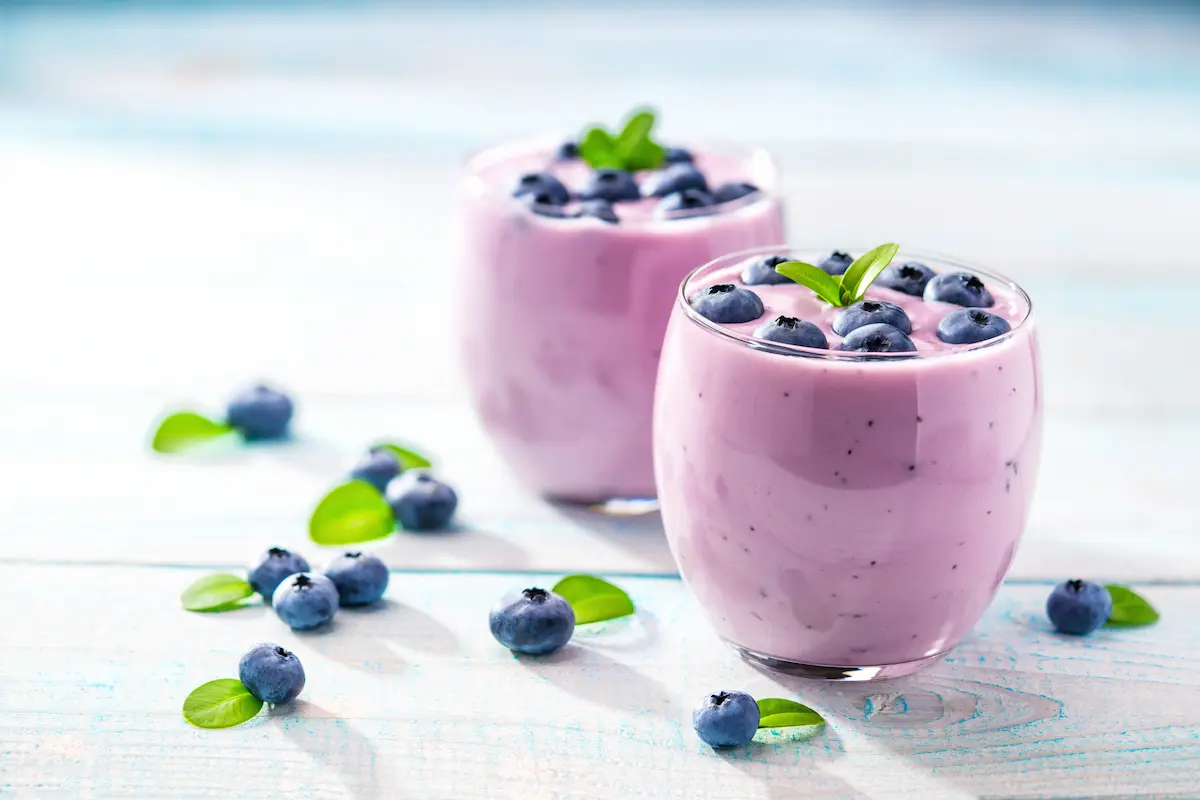
A smoothie can be much more exciting than throwing a banana, spinach, and some milk into a blender and hoping for the best.
Think deep purple berries with almond butter, bright mango and ginger, creamy avocado with lime, tart cherries with cocoa, or a tropical green smoothie that actually tastes tropical. The best combinations balance sweetness, acidity, creaminess, and texture while bringing together fruits, vegetables, nuts, seeds, and other minimally processed ingredients.
These anti-inflammatory smoothie ideas are designed to make breakfast or snack time feel like something you want rather than something you’re forcing yourself to drink.
Anti-Inflammatory Smoothie Ideas
From fruity and refreshing to creamy and rich, these combinations make it easy to bring more colorful, nutrient-rich foods into your day. Try one as written or adjust the ingredients to suit your taste and texture preferences.
1. Wild Blueberry, Walnut & Cinnamon Smoothie
Deep purple blueberries, creamy banana, walnuts, plain Greek yogurt, and a little cinnamon make this one rich and almost dessert-like without needing much added sweetness.
The walnuts add a subtle buttery flavor that works especially well with tart berries, while yogurt gives the smoothie enough body to feel substantial.
Blueberries and walnuts fit naturally into an eating pattern rich in plant foods and unsaturated fats. Walnuts also provide alpha-linolenic acid, a plant-based omega-3 fat.
For a thicker texture: Freeze the blueberries and banana beforehand and use just enough milk to get the blender moving.
2. Mango-Ginger Smoothie with Chia
This is bright, sunny, and naturally sweet.
Blend ripe mango with plain yogurt or unsweetened milk, fresh ginger, chia seeds, and a squeeze of lime. The mango gives it a silky texture, while ginger adds a warm note underneath the tropical sweetness.
Chia seeds contribute fiber and plant-based omega-3 alpha-linolenic acid, while ginger is one of the herbs and spices commonly included in anti-inflammatory dietary patterns. That doesn’t mean ginger itself should be viewed as a treatment for inflammation.
For a sharper finish: Add extra lime rather than more sweetener.
3. Tart Cherry, Cocoa & Almond Butter Smoothie
This one lands somewhere between a chocolate shake and a fruit smoothie.
Blend unsweetened tart cherries with banana, unsweetened cocoa powder, almond butter, and plain Greek yogurt. The cherries provide a pleasant tang against the darker flavor of cocoa, while almond butter makes the smoothie creamy and rich.
Dark cocoa and nuts can fit within a varied, plant-rich eating pattern, but this is still a smoothie—not a medicinal drink.
Make it extra chocolatey: Add a teaspoon of cacao nibs on top instead of blending them completely smooth.
4. Creamy Avocado, Spinach & Lime Smoothie
If you want a green smoothie that doesn’t taste like blended salad, start here.
Avocado gives this smoothie its velvety texture, while baby spinach adds color without overwhelming the flavor. Add cucumber, lime juice, a small amount of pineapple, and fresh mint for a cool, refreshing finish.
Avocado provides mostly monounsaturated fat, while spinach and other vegetables contribute fiber and a range of micronutrients. Healthy unsaturated fats and vegetables are staples of Mediterranean-style eating patterns.
The trick: Don’t skip the lime. The acidity keeps the avocado from making the smoothie taste flat.
5. Strawberry, Flaxseed & Vanilla Smoothie
This is simple enough for a weekday but still tastes like something you’d order at a café.
Blend frozen strawberries with plain Greek yogurt, ground flaxseed, unsweetened milk, and a little vanilla. If the berries are tart, add half a banana for natural sweetness.
Strawberries bring antioxidants and fiber, while ground flaxseed contributes fiber and alpha-linolenic acid.
For extra creaminess: Add a spoonful of Greek yogurt after blending and pulse briefly rather than thinning the smoothie with more milk.
6. Pineapple, Cucumber & Fresh Ginger Smoothie
This is the refreshing one.
Pineapple brings bright tropical sweetness, cucumber keeps the smoothie light, and fresh ginger gives it a little heat. Add lime juice and a handful of spinach if you want more greens without changing the flavor dramatically.
Pineapple also contains bromelain, a group of enzymes that has been studied for its potential anti-inflammatory effects. It’s particularly good when you don’t want a heavy, creamy smoothie.
Serve it cold: Use frozen pineapple rather than adding a large amount of ice, which can dilute the flavor.
7. Raspberry, Pistachio & Cardamom Smoothie
This combination is less predictable—and that’s exactly why it works.
Blend raspberries with plain yogurt, a small banana, pistachios, and a pinch of ground cardamom. The raspberries provide tartness, while pistachios add a subtle richness and nutty flavor.
Nuts, berries, and minimally processed plant foods are all consistent with the broader dietary patterns associated with healthier inflammatory profiles.
For more berry flavor: Use frozen raspberries and reduce the banana so the smoothie stays tart.
8. Peach, Ginger & Oat Smoothie
This one has the texture of a breakfast shake rather than a thin fruit drink.
Blend ripe or frozen peaches with rolled oats, plain yogurt, fresh ginger, cinnamon, and unsweetened milk. The oats give the smoothie more body and make it feel surprisingly substantial.
Whole grains such as oats are emphasized over refined grains in healthy eating patterns, and they provide fiber and other nutrients.
For a summer version: Add a few fresh mint leaves before blending.
9. Black Cherry, Spinach & Pumpkin Seed Smoothie
Don’t let the green color fool you—this one tastes primarily like cherries.
Blend frozen dark cherries with baby spinach, banana, pumpkin seeds, plain yogurt, and unsweetened milk. The cherries provide the dominant flavor, while the pumpkin seeds add subtle nuttiness.
The result is creamy, slightly earthy, and much more interesting than a standard green smoothie.
For extra texture: Sprinkle a few chopped pumpkin seeds over the top instead of blending them all in.
10. Orange-Carrot, Turmeric & Ginger Smoothie
Bright orange and packed with fresh flavor, this is one of the most visually appealing combinations on the list.
Blend orange segments with cooked or finely grated carrot, fresh ginger, turmeric, Greek yogurt, and a small amount of black pepper. Add a little water or unsweetened milk to reach the consistency you like.
Carrots and oranges contribute colorful plant compounds, while turmeric and ginger are commonly used spices in anti-inflammatory dietary patterns. Evidence does not support treating this combination as a standalone therapy for inflammation, however.
11. Blueberry, Tahini & Date Smoothie
Tahini might sound unusual in a smoothie, but its sesame richness pairs beautifully with blueberries.
Blend blueberries with tahini, plain yogurt, cinnamon, and milk. If needed, use one small date for sweetness rather than adding sugar.
The tahini gives the smoothie a slightly nutty, almost halva-like character while the berries keep it fresh.
Don’t overdo the tahini: Start with a small spoonful so its flavor complements rather than dominates the fruit.
12. Papaya, Lime & Chia Smoothie
Papaya gives this smoothie an almost naturally creamy texture.
Blend ripe papaya with lime juice, chia seeds, plain yogurt, and a little fresh ginger. The combination is tropical but not overly sweet, especially with plenty of lime.
Chia adds fiber and plant-based omega-3 fat, while the fruit provides a variety of vitamins and plant compounds.
13. Apple, Spinach & Almond Butter Smoothie
Think apple pie, but greener and much fresher.
Blend a crisp apple with baby spinach, almond butter, cinnamon, plain yogurt, and milk. Keep the apple peel on if your blender can handle it well.
The almond butter gives the smoothie richness while cinnamon and apple create the familiar flavor of a warm baked dessert.
For a colder version: Use frozen apple chunks instead of ice.
14. Blackberry, Avocado & Hemp Seed Smoothie
This one has a striking dark-purple color and an unusually creamy texture.
Blend blackberries with avocado, hemp seeds, plain yogurt, and a squeeze of lemon. Add a small amount of banana only if you need additional sweetness.
The berries provide tartness, while avocado and hemp seeds create a rich, almost silky mouthfeel.
15. Tropical Spinach Smoothie with Kiwi, Pineapple & Flax
Finish with a green smoothie that actually tastes tropical.
Blend kiwi, pineapple, spinach, ground flaxseed, plain yogurt, and unsweetened coconut or dairy milk. The pineapple and kiwi provide enough acidity and sweetness to keep the spinach in the background.
Spinach, fruit, flaxseed, and yogurt make this a convenient way to combine several nutrient-rich foods in one glass.
Learn more: 15 Anti-inflammatory foods to include in your diet
What Makes a Smoothie Anti-Inflammatory?
There isn’t a specific recipe that officially qualifies as an “anti-inflammatory smoothie.”
The more useful way to think about these drinks is as a convenient way to combine foods that commonly appear in healthy dietary patterns—berries and other fruits, vegetables, nuts, seeds, whole grains, yogurt, and healthy unsaturated fats.
Research on inflammation generally supports looking at the overall pattern of eating rather than expecting one food or drink to have a dramatic effect.
A Few Simple Smoothie Rules
You don’t need a complicated formula, but a few habits can make your smoothies much better:
Use whole fruit instead of juice. It keeps the smoothie more filling and preserves the fiber from the fruit.
Add something substantial. Greek yogurt, oats, chia, flax, nuts, or nut butter can turn a fruit drink into a more satisfying breakfast or snack.
Balance sweet with acidic. Lemon, lime, berries, kiwi, or plain yogurt can keep a smoothie from becoming overly sweet.
Don’t rely on “superfoods.” A smoothie doesn’t need ten powders, extracts, or supplements to be nutritious. A handful of familiar whole foods can do plenty.
Watch the extras. Large amounts of honey, syrups, sweetened yogurt, or fruit juice can turn an otherwise nutritious smoothie into a very sugary drink.
Conclusion
An anti-inflammatory smoothie doesn’t need to be neon green, packed with powders, or built around one supposedly magical ingredient.
It can be a thick blueberry-and-walnut smoothie, a creamy avocado-lime blend, a tart cherry chocolate combination, or a bright mango and ginger drink.
What matters more is how these smoothies fit into the rest of your diet. A pattern built around fruits, vegetables, legumes, whole grains, nuts, seeds, fish, and unsaturated fats has considerably more evidence behind it than any single smoothie recipe.
And if your smoothie happens to taste like something you’d happily order at your favorite café, that’s a pretty good reason to keep making it.