Most people don’t struggle with fitness because they’re lazy. They struggle because starting feels confusing and overwhelming. At home, there’s no class schedule, no trainer watching, no clear signal that you’re doing it right. You scroll through routines, save videos, buy equipment, and still don’t move.
A lot of advice fails because it’s built for motivation, not real life. It assumes energy you don’t have yet. It assumes time you won’t always get. And it often jumps straight into intensity instead of helping you build a habit that survives normal days.
This article is for beginners who want something realistic. Not perfect workouts. Not dramatic transformations. Just a way to move your body at home that feels doable and slowly gets easier.
You’ll learn how to start small, stay consistent, and avoid the common traps that make people quit before they ever see progress.
Start Smaller Than You Think You Should
What most people do wrong is start like they’re already fit. They plan long workouts, copy routines meant for experienced people, and push hard right away. In daily life, that usually leads to soreness, frustration, and skipped days.
What actually works is starting almost embarrassingly small. Ten minutes. Sometimes five. One round of simple movements. Enough to get warm, breathe a little harder, and stop before you feel wiped out.
In practice, this builds confidence fast. You finish feeling capable instead of defeated. You’re more likely to repeat it tomorrow because it didn’t cost you much energy.
A simple start could look like this:
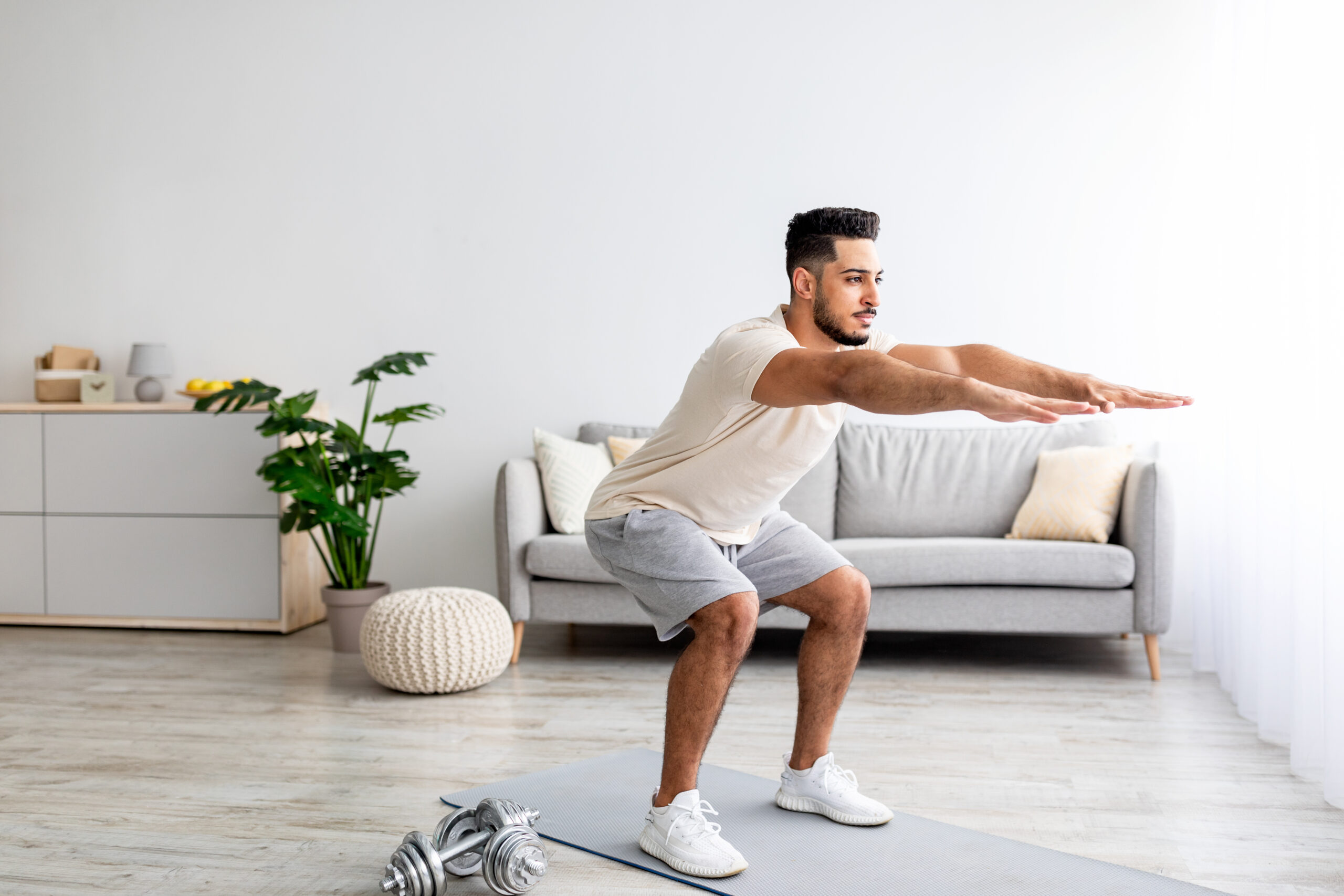
- 5 squats
- 5 wall push-ups
- 10 seconds of marching in place
Repeat that two or three times. Done.
This approach is easier to stick with because it lowers resistance. You’re not convincing yourself to “work out.” You’re just moving for a few minutes. Over time, those minutes stack up naturally.
Choose Movements You Don’t Hate
A common mistake is forcing yourself to do exercises you dislike because you think you should. Burpees, long planks, jumping routines. You dread them. You avoid them. Then you stop entirely.
What works better is choosing movements you tolerate or even enjoy. Walking in place. Bodyweight squats. Seated exercises. Gentle stretching. These might look basic, but in daily life, they get done.
Fitness at home isn’t about impressing anyone. It’s about repetition. If you like the movement, you’ll repeat it without arguing with yourself.
Try building a short list of “go-to” moves you don’t resist. Three to five is enough. Rotate through them based on mood and energy.
This works because consistency comes from comfort at the beginning. Once movement becomes familiar, you can add challenge later. But first, you need something you’ll actually do on a tired Tuesday.
Tie Your Routine to an Existing Habit
Most beginner routines fail because they float. “I’ll work out sometime today” sounds flexible, but it usually means never.
What works in real life is attaching movement to something you already do. After brushing your teeth. Before your morning coffee. Right after work. Before your evening shower.
This removes decision-making. You don’t negotiate with yourself. The workout just follows the habit.
For example:
- After brushing your teeth in the morning, do five minutes of movement.
- After work, change clothes and do one short routine before sitting down.
- Before your nightly shower, stretch for three minutes.
In practice, this turns fitness into a cue-based habit instead of a motivation-based one. Over time, it feels strange not to do it.
This approach is easier to stick with because it fits into your day instead of competing with it. You’re not finding extra time. You’re using time that already exists.
Keep the Routine Simple and Repeatable
Beginners often think variety keeps things interesting. In reality, too much variety creates confusion. You’re constantly learning new moves instead of getting better at familiar ones.
What actually works is repeating the same simple routine for weeks. Not because it’s exciting, but because it’s reliable.
A basic home routine might be:
- Squats
- Push-ups (wall or floor)
- Marching or stepping
- Gentle core movement
Do the same routine three or four times a week. Adjust reps slowly. Add a round when it feels easy.
In daily life, repetition builds rhythm. You stop wondering what to do. You just start.
This is easier to stick with because it reduces mental load. No planning. No scrolling. No guessing. You know what today’s movement looks like before you begin.
Over time, strength and comfort improve quietly. That’s when people realize fitness doesn’t have to feel complicated to work.
Plan for Low-Energy Days
Most routines are built for high-energy days. Those are rare.
In practice, most days fall somewhere in the middle. Some days you’re tired. Some days distracted. Some days just not in the mood.
What works is planning for those days instead of pretending they won’t happen.
Have a “minimum routine.” Something so easy you’ll do it even when motivation is low. Two minutes of stretching. One round of movement. A short walk in place.
On better days, do more. On hard days, do the minimum and stop.
This keeps the habit alive. Skipping entirely breaks momentum. Doing something small keeps the door open.
This approach works because it respects reality. You’re not failing on low-energy days. You’re adapting. Over time, those small days protect the routine more than intense workouts ever could.
Focus on Form, Not Speed
A lot of beginners rush through movements. Fast reps. Half range. Little control. It feels productive, but it often leads to sloppy habits and frustration.
What works better is slowing down. Fewer reps. More control. Paying attention to how your body moves.
In daily life, slower movement builds awareness. You notice balance. You notice strength differences. You feel more connected instead of exhausted.
For example, do squats slowly. Stand up with control. Lower yourself with intention. Stop before fatigue ruins form.
This approach is easier to stick with because it feels manageable. You’re not racing a timer. You’re moving with purpose.
Over time, strength improves naturally. And because you’re not rushing, you’re more likely to keep moving regularly without burning out.
Create a Clear “End” to Each Session
One reason beginners quit is because workouts feel endless. You start, then keep adding more until you’re wiped out. Next time, you avoid starting at all.
What works is deciding when the workout ends before you begin. Ten minutes. Three rounds. One song.
When the end is clear, starting feels safer. You know what you’re signing up for.
For example:
- Move for the length of one playlist
- Do three rounds and stop
- Set a timer and quit when it rings
This makes workouts feel contained, not overwhelming.
In practice, clear endings build trust with yourself. You stop fearing the routine because it respects your limits.
This approach sticks because it removes the “how long will this take?” anxiety that stops many beginners from starting.
Common Mistakes Beginners Repeat
These mistakes show up constantly in daily life:
- Starting with long, intense workouts
- Copying routines meant for experienced people
- Waiting for motivation before moving
- Changing routines too often
- Skipping completely on tired days
None of these mean you’re bad at fitness. They just make consistency harder than it needs to be.
Fixing these alone often leads to steady progress without adding effort.
A Sustainable Mindset for Long-Term Fitness
Fitness at home works best when you stop treating it like a project. It’s not something you “get done.” It’s something you practice.
Think in weeks, not days. Miss a day and move on. Have a slow week and keep going.
Consistency isn’t about perfection. It’s about returning.
Over time, your body adapts to what you repeat. Not what you plan. Not what you intend. What you actually do most days.
When movement becomes normal instead of special, it stops feeling like work.
Conclusion: Keep It Simple and Keep Showing Up
A beginner fitness routine at home doesn’t need to be impressive. It needs to be repeatable.
Small routines done often beat big plans done once. Gentle movement beats extreme effort that burns out. Familiar habits beat constant novelty.
If you move a little most days, you’re already doing it right.
Start where you are. Keep it simple. Let consistency do the rest.
That’s how fitness quietly becomes part of your life instead of something you keep starting over.