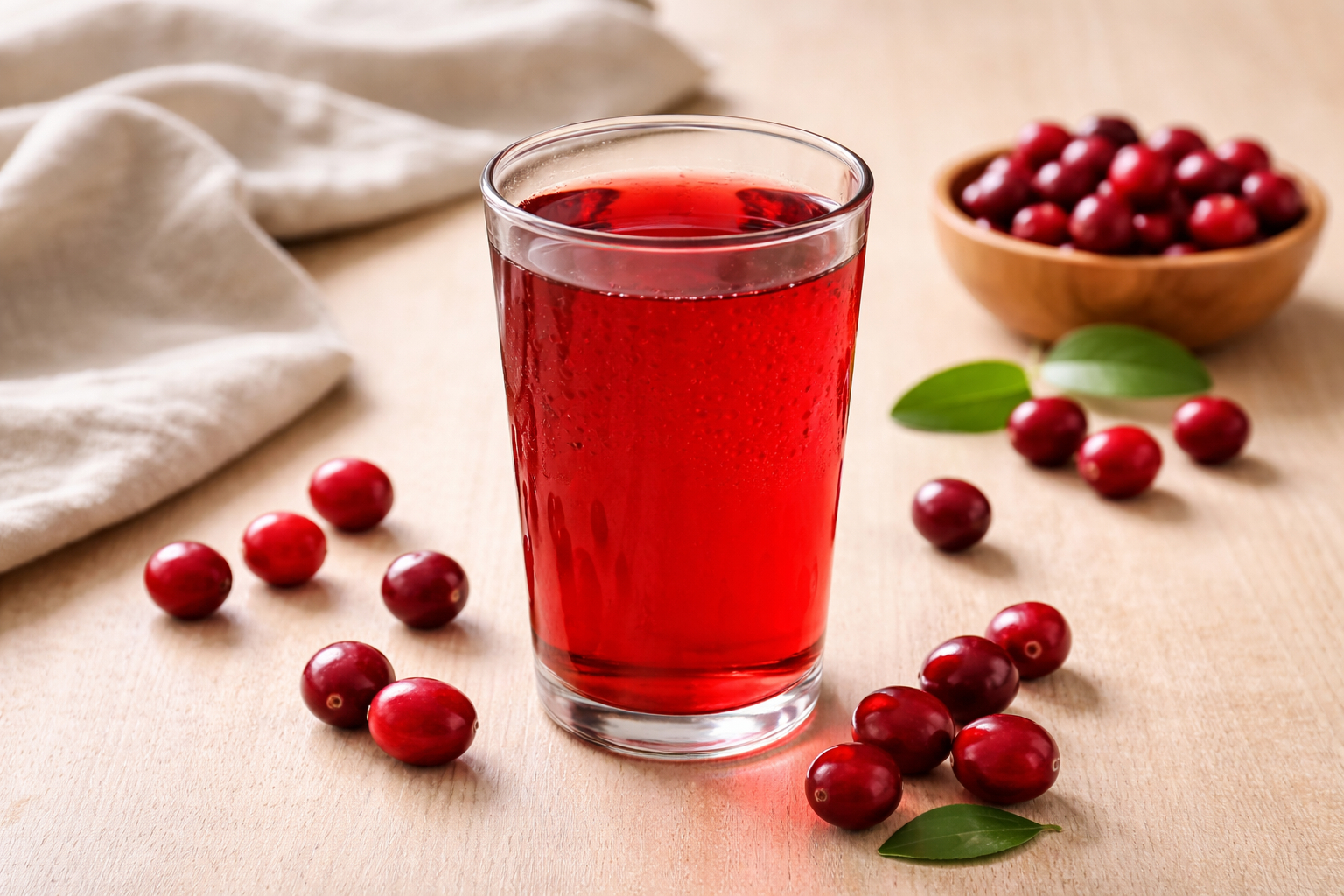
Cranberry juice is often treated like a one-purpose drink. Most people think of it only when there’s a urinary issue, then forget about it completely. That narrow view misses what actually makes it valuable.
This juice is loaded with plant compounds that quietly support different systems in the body. But here’s the reality: the benefits are often overstated, and the type of cranberry juice you choose makes a bigger difference than the fruit itself.
If you want a clear picture—what it genuinely helps with, where people go wrong, and how to use it properly—this breakdown covers it without exaggeration.
What Makes Cranberry Juice Nutritionally Valuable?
Cranberries are rich in polyphenols, which are plant compounds known for their protective effects in the body. Cranberry juice also provides small amounts of vitamin E and vitamin K, along with trace minerals like potassium and copper. While these nutrients contribute to overall health, they are not the main reason this juice stands out.
The real strength comes from compounds called proanthocyanidins (PACs). These compounds go beyond basic antioxidant activity and influence how certain bacteria behave in the body. This is what gives cranberry juice its strong association with urinary tract health.
Nutritional Profile
A standard one-cup serving (248 g) provides:
- Energy: 79.4 kcal
- Carbohydrates: 18 g
- Dietary Fiber: 0.25 g
- Total Sugars: 8.46 g
- Total Fat: 0.84 g
- Potassium: 176 mg (4% Daily Value)
- Thiamin (B1): 0.045 mg (4% DV)
- Folate: 22.3 mcg (6% DV)
- Vitamin E: 2.98 mg (20% DV)
- Vitamin K: 12.6 mcg (11% DV)
Unsweetened, pure cranberry juice can contain higher levels of vitamin C (about 26% DV) along with small amounts of vitamin B6 (8% DV), but processing often reduces these nutrients.
Health Benefits
Cranberry juice offers several health benefits, mainly due to its unique plant compounds and antioxidant content.
1. May Help Prevent Urinary Tract Infections (UTIs)
This is the most well-known benefit, but it’s also the most misunderstood.
Cranberry juice does not treat urinary tract infections. Instead, its polyphenols help make it harder for bacteria, especially E. coli, to attach to the lining of the urinary tract. When bacteria can’t stick, they are more likely to be flushed out naturally.
This makes cranberry juice useful as a preventive approach, particularly for people who deal with frequent UTIs. In one study, women with recurrent UTIs saw infections drop from 2.2 to 0.5 over 6 months, along with a 68% reduction in antibiotic use after taking cranberry extract.
But once an infection is already present, it won’t solve the problem on its own. Medical treatment is still necessary.
That distinction matters. Using it incorrectly leads to frustration and delays proper care.
2. Rich in Antioxidants
Cranberry juice is a rich source of antioxidants, including polyphenols such as flavonoids, phenolic acids, anthocyanins, and tannins, along with smaller amounts of vitamin C and other bioactive compounds. These compounds help neutralize free radicals, which are unstable molecules that can damage cells over time.
Reducing oxidative stress doesn’t create an immediate, visible effect, but it plays a role in long-term health. High levels of oxidative stress are linked to conditions like heart disease, diabetes, inflammation, and aging, and antioxidants help limit this damage.
An animal study showed that polyphenols and 100% cranberry juice increased antioxidant activity in organs such as the liver, kidney, heart, and brain. Researchers also detected polyphenol metabolites in these tissues, suggesting these compounds can reach different parts of the body.
However, these findings are based on animal models and may not directly apply to humans.
That said, cranberry juice is just one part of the equation. It supports the process, but it cannot offset a poor diet or lifestyle.
3. May Support Heart Health
The polyphenols in cranberry juice appear to have a positive effect on blood vessels. They help improve how blood flows and may reduce inflammation within the vascular system.
Some studies also show modest improvements in cardiovascular markers, including a slight increase in HDL and changes in lipoprotein profile.
In one study, drinking 500 mL of cranberry juice daily for 8 weeks slightly reduced daytime diastolic blood pressure (~2 mm Hg) and improved lipoprotein profile by increasing LDL particle size, although total LDL levels did not change.
In another study, 78 overweight adults who consumed a low-calorie, high-polyphenol cranberry beverage for 8 weeks saw reduced inflammation (lower CRP), lower insulin levels, and an increase in HDL cholesterol.
These changes are not dramatic. You won’t see meaningful results if the rest of your diet is unbalanced or heavily processed. Cranberry juice works best when it’s part of an overall heart-conscious eating pattern.
Think of it as support, not a solution.
4. May Support Gut Health
Cranberry juice has a subtle but interesting effect on gut health.
Its polyphenols don’t just act as antioxidants, they also interact with gut bacteria, helping beneficial strains grow while keeping harmful ones in check. These compounds may also reduce inflammation in the digestive tract, which plays a key role in overall gut health.
Most of this evidence comes from animal and lab studies, but early human research suggests similar trends, including improvements in gut bacteria balance and metabolic byproducts.
Cranberry compounds have also been studied for their effect on H. pylori, a bacterium linked to stomach problems. Some clinical studies show cranberry juice may help lower infection rates or improve treatment outcomes when used alongside standard therapy. However, it’s not a replacement for medical care.
5. May Benefit Oral Health
The same anti-adhesion properties that help in the urinary tract may also benefit oral health.
Cranberry polyphenols, especially proanthocyanins, can interfere with bacteria like Streptococcus mutans and Porphyromonas gingivalis, reducing their ability to form biofilms on teeth and gums. This may help limit plaque buildup and support healthier gums.
These compounds may also reduce inflammation and enzyme activity linked to gum disease.
However, there’s a clear limitation. Most cranberry juices are acidic, and many are sweetened. Frequent exposure to acid and sugar can weaken enamel and increase the risk of cavities.
So while the compounds themselves are beneficial, the way cranberry juice is commonly consumed can cancel out much of that advantage.
6. May Improve Immune Response
Cranberry juice plays a supportive role in immune health mainly through its polyphenols. These compounds help regulate immune response and may reduce unnecessary inflammation that can weaken the body’s defenses.
Some research also suggests cranberry compounds can enhance the activity of certain immune cells, which may help the body respond more effectively to infections.
A 2013 study showed that drinking 450 mL of a low-calorie cranberry beverage daily for 10 weeks increased γδ-T cell activity nearly fivefold. While it did not reduce illness incidence, it significantly reduced cold and flu symptoms.
This doesn’t mean it prevents illness. It simply supports how the body responds when needed.
There’s a difference between supporting a system and making it invincible. Cranberry juice falls into the first category.
7. May Support Vaginal Microbiome Balance
Cranberry juice may support vaginal health by influencing the balance of bacteria in the vaginal microbiome. Its polyphenols appear to interact with microbial communities, which can affect how different bacteria grow and coexist.
In a small study of postmenopausal women, cranberry intake for 15 days improved vaginal microbiota in those with dysbiosis (an imbalance of bacteria). It reduced harmful bacteria like Streptococcus and increased beneficial strains. However, this effect was observed in a specific group and over a short period.
Cranberry juice is not a treatment for vaginal conditions such as yeast infections or bacterial vaginosis. At best, it supports microbial balance, but it is not a replacement for proper medical care.
8. Can Fit Into a Weight Management Diet
Cranberry juice is often marketed as a weight-loss drink, which is misleading.
Unsweetened cranberry juice is relatively low in calories and can replace high-sugar beverages, which may indirectly support weight control. Its polyphenols may also play a minor role in metabolic health.
But none of this leads to fat loss on its own. If the juice you’re drinking is sweetened, it can easily work against your goals instead of supporting them.
This is where most people get it wrong.
The Biggest Problem: Most Cranberry Juice Is Misleading
The majority of cranberry juice available in stores is not pure juice. It is often labeled as “cranberry juice cocktail,” which usually means it’s diluted and loaded with added sugar.
This changes everything.
Instead of getting the benefits of polyphenols without excess calories, you end up consuming a sugary drink that spikes blood sugar and adds unnecessary calories. Over time, this cancels out many of the potential advantages.
If you’re drinking cranberry juice for health, this is the first thing you need to fix.
How to Choose the Right Cranberry Juice
You need to be selective. Otherwise, the effort is pointless.
Look for products labeled as 100% cranberry juice or unsweetened cranberry juice. The ingredient list should be short and straightforward, without added sugars or artificial additives.
Be prepared for the taste. Real cranberry juice is tart and slightly bitter. That sharpness is a sign you’re getting the actual compounds, not a diluted version.
If the flavor feels too strong, diluting it with water is a better option than switching to a sweetened version. You can also blend it with naturally sweeter fruits like apple or berries for a milder taste, but this will increase the overall sugar content.
How Much Should You Drink?
You don’t need large amounts to see benefits. A moderate intake of around 150 to 250 ml per day is enough.
Drinking more doesn’t increase the benefits and may lead to unnecessary acidity or digestive discomfort. Keeping it consistent and moderate is more effective than overdoing it.
Safety and Precautions
Cranberry juice is generally safe, but it’s not for everyone in every situation.
People prone to kidney stones should be cautious because cranberries contain oxalates, which can contribute to certain types of stones. Those taking blood-thinning medications should also be careful, as cranberry may interact with certain drugs, and medical advice is recommended.
If you have a sensitive stomach, the acidity may cause irritation, especially when consumed on an empty stomach. Consuming large amounts may also lead to stomach upset or diarrhea, particularly in young children.
Cranberry juice should not be used as a replacement for medical treatment, especially for conditions like UTIs. Pregnant or breastfeeding individuals should consult a healthcare provider before consuming it in large amounts.
These are not common issues, but they are worth paying attention to.
Common Myths You Should Ignore
A common misconception is that cranberry juice cures urinary tract infections. It doesn’t. It may help reduce the risk of recurrence, but it does not treat an active infection.
Another mistake is assuming more is better. Higher intake doesn’t improve results and can lead to unwanted effects, especially with added sugar.
Not all cranberry juice is healthy. Many commercial options are heavily sweetened and closer to sugary drinks than functional beverages.
These mistakes often lead to ineffective use, excess sugar intake, and missed benefits.
The Bottom Line
Cranberry juice has real benefits, but they are often exaggerated or misunderstood.
It supports urinary tract health, contributes antioxidants, and plays a small but useful role in heart, immune, and digestive health. None of these effects are dramatic on their own, but together they add value when part of a consistent, balanced routine.
The biggest factor is quality. If you choose unsweetened, pure cranberry juice and use it in moderation, it becomes a practical addition to your diet. If you rely on sweetened versions or expect fast results, it turns into just another sugary drink with a health label.
Used correctly, it adds value. Used carelessly, it does not.