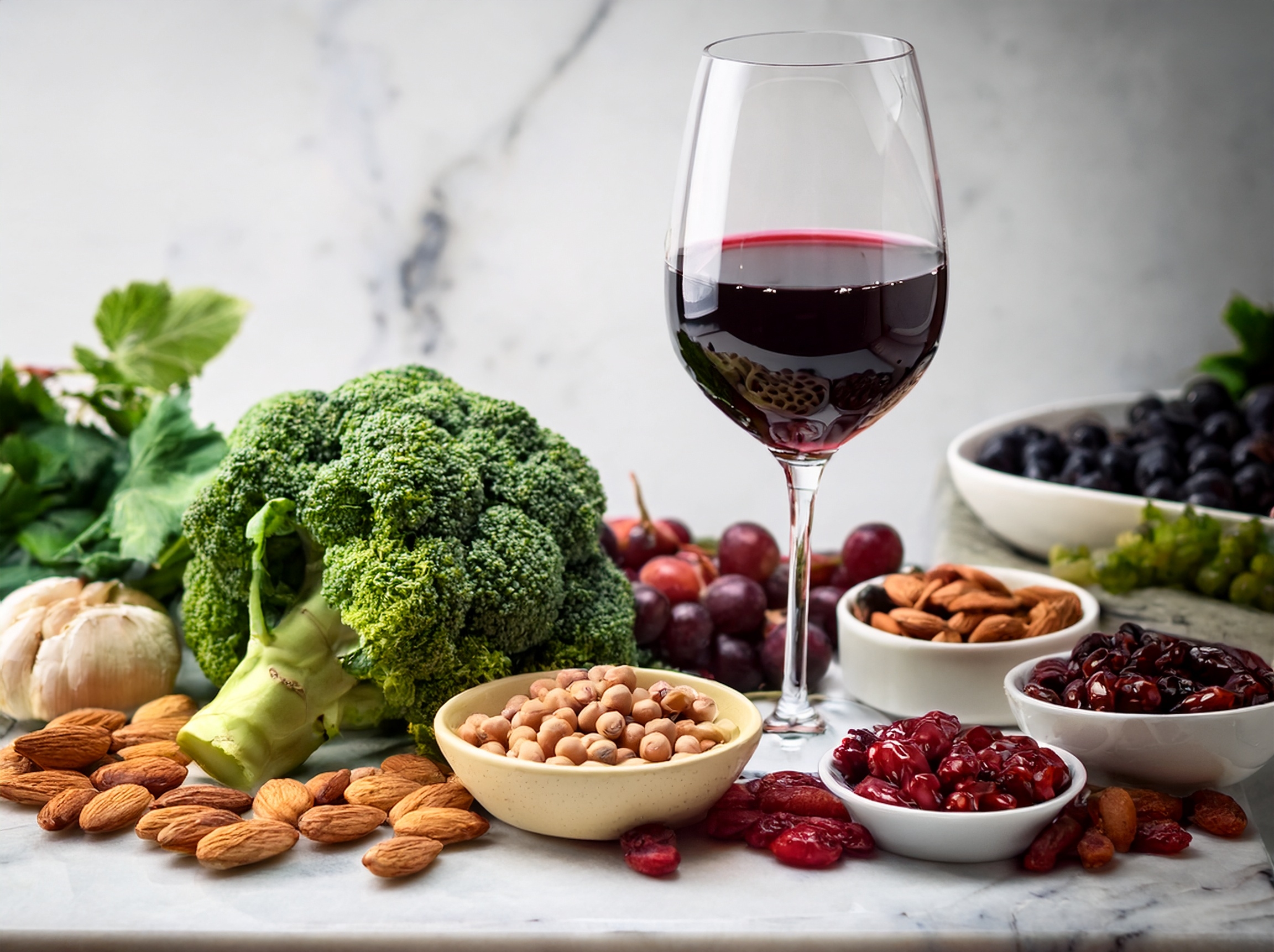
Estrogen plays an essential role in reproductive health, bone strength, mood, skin health, and many other functions throughout the body. As estrogen levels naturally change with age, particularly during menopause, many people wonder whether certain foods can help support hormonal health.
While foods don’t contain the same estrogen produced by the body, some contain naturally occurring plant compounds called phytoestrogens. These compounds can interact with estrogen receptors and may influence estrogen activity, although their effects are generally weaker than the body’s own estrogen.
Including phytoestrogen-rich foods as part of a balanced diet may offer benefits for some people, particularly during periods of hormonal change.
Understanding which foods contain these compounds can help you make informed dietary choices while maintaining realistic expectations about what they can and cannot do.
What Are Phytoestrogens?
The estrogen found in foods is not the same as the estrogen produced by the body. Instead, these foods contain phytoestrogens, naturally occurring plant compounds that can interact with estrogen receptors. Their effects are much weaker than the body’s own estrogen, and they may act differently depending on a person’s natural hormone levels.
- Isoflavones – commonly found in soybeans, tofu, tempeh, edamame, and other legumes.
- Lignans – found in flaxseeds, sesame seeds, whole grains, and some fruits.
- Coumestans – found in sprouts and certain legumes.
- Stilbenes – compounds such as resveratrol found in grapes and berries.
Many everyday foods naturally contain these compounds and can be included as part of a balanced, nutrient-rich diet.
Foods High in Phytoestrogens
Several plant foods contain phytoestrogens or nutrients that help maintain normal estrogen activity. The following options are the most researched and practical to include in a regular diet.
1. Soy and Soy-Based Foods
Soy is one of the richest sources of phytoestrogens, particularly isoflavones, which have estrogen-like properties.
Because of its high isoflavone content, soy has been widely studied for its potential role in supporting hormonal health, particularly during menopause.
For example, a study involving women with frequent menopausal hot flashes found that taking 100 mg of soy isoflavones daily significantly reduced hot flashes after 12 weeks compared with a placebo. The benefits were greatest in women with more severe symptoms, and no hormonal safety concerns were reported.
A review of 18 studies also found that soy isoflavones helped slow bone loss and improved bone mineral density in postmenopausal women, suggesting they may help support bone health after menopause.
Soy isoflavones have a chemical structure similar to estrogen, allowing them to interact with estrogen receptors. Depending on the body’s natural hormone levels, they may produce mild estrogen-like effects or compete with the body’s own estrogen.
For most healthy people, moderate soy intake is considered safe and can be part of a balanced diet.
2. Flaxseeds
Flaxseeds are one of the richest sources of lignans, a type of phytoestrogen that may influence estrogen activity in the body.
Although lignans are also found in foods like whole grains, sesame seeds, fruits, and vegetables, flaxseeds contain up to 100 times more of these compounds than most other foods.
In addition to their phytoestrogen content, flaxseeds are rich in fiber and omega-3 fatty acids, making them a nutritious choice for supporting heart and digestive health.
A 2018 review found that compounds in flaxseeds are converted by gut bacteria into substances that can interact with estrogen receptors. It also summarized two clinical studies in postmenopausal women showing that eating 10–25 g of ground flaxseed daily for 7–16 weeks favorably changed estrogen metabolism, suggesting flaxseed may help support healthy estrogen metabolism after menopause.
The same review also reported that animal studies found flaxseed combined with tamoxifen reduced tumor growth, while some human studies linked higher flaxseed intake with a lower risk of breast cancer, particularly in postmenopausal women.
However, more high-quality human studies are needed to confirm these findings.
3. Sesame Seeds
Like flaxseeds, sesame seeds are rich in lignans, a type of phytoestrogen that may influence estrogen activity in the body.
They also provide calcium, healthy fats, protein, and several vitamins and minerals that support overall health, including bone health.
A study involving 24 postmenopausal women found that eating 50 g of sesame seed powder daily for five weeks improved cholesterol levels, antioxidant status, and markers related to sex hormone metabolism. The researchers concluded that sesame may help support sex hormone status after menopause.
Although more human research is needed, adding sesame seeds to a balanced diet is an easy way to increase your intake of lignans and other beneficial plant compounds.
4. Dried Fruits
Dried fruits such as apricots, dates, prunes, and raisins naturally contain phytoestrogens, making them a concentrated source of these plant compounds. However, not all dried fruits contain phytoestrogens, with apples, cranberries, figs, and peaches reported to contain little or no detectable phytoestrogens.
They also provide fiber, antioxidants, and a variety of vitamins and minerals that support overall health.
Because dried fruits contain less water than fresh fruit, their natural sugars are more concentrated. Enjoying a small handful (about 30–40 g) as part of a balanced diet is an easy way to benefit from their nutrients while keeping portion sizes in check.
5. Cruciferous Vegetables
Cruciferous vegetables like broccoli, cabbage, Brussels sprouts, and cauliflower contain phytoestrogens, though in smaller amounts.
Broccoli, cauliflower, and white cabbage contain secoisolariciresinol, a lignan.
Brussels sprouts and broccoli sprouts provide coumestrol, a phytoestrogen that has estrogenic effects.
However, mature broccoli and cabbage do not contain detectable levels of coumestrol.
Adding cruciferous vegetables to your diet can contribute to overall phytoestrogen intake while providing fiber, vitamins, and antioxidants that support overall health.
6. Nuts
Nuts contain phytoestrogens, mainly lignans and small amounts of isoflavones, with pistachios being the richest source.
While other nuts like walnuts, almonds, and cashews provide lignans, though in lower amounts than flaxseeds or sesame seeds.
Peanuts, technically legumes, contain isoflavones and stilbenes, two classes of phytoestrogens also found in soy and grapes.
While nuts are not the most potent estrogenic foods, they offer healthy fats, antioxidants, and plant compounds that support hormonal balance as part of a nutrient-rich diet.
Eating a handful of nuts daily can help increase your intake of phytoestrogens while also providing heart-healthy fats, fiber, and antioxidants.
7. Red Grapes and Red Wine
Red grapes and red wine contain resveratrol, a phytoestrogen known for its antioxidant and anti-inflammatory properties.
Red wine has higher resveratrol levels than white wine because it is fermented with grape skins for a longer period. While moderate red wine consumption may have some health benefits, excessive alcohol intake can have negative effects on hormonal balance.
Eating fresh red grapes can be a healthier alternative to obtain the benefits of resveratrol while also enjoying a dose of fiber and vitamins.
8. Red Clover
Red clover is one of the richest natural sources of phytoestrogens, particularly isoflavones such as genistein, daidzein, biochanin A, and formononetin.
Because of its high isoflavone content, red clover has been widely studied for its potential role in supporting hormonal health during menopause. Research suggests it may help reduce menopausal symptoms such as hot flashes, night sweats, and may also support bone health in some postmenopausal women.
For example, a meta-analysis of eight trials found that red clover isoflavones moderately reduced the daily frequency of hot flashes in peri- and postmenopausal women compared with a placebo. The greatest benefits were seen in women taking at least 80 mg of isoflavones daily for 12 weeks.
Red clover is most commonly consumed as a tea or dietary supplement rather than as a food. Although the current evidence is promising, more high-quality human studies are needed to confirm its long-term benefits.
9. Berries
Berries such as blueberries, raspberries, strawberries, mulberries, and cranberries contain small amounts of phytoestrogens, including lignans, flavonoids, and resveratrol.
Although they aren’t as rich in phytoestrogens as foods like soy or flaxseeds, berries can still contribute to your overall intake of these plant compounds when eaten regularly as part of a balanced diet.
In addition to phytoestrogens, berries are packed with fiber, vitamin C, and antioxidants that help protect cells from oxidative stress and support heart health. Their natural sweetness also makes them an easy and nutritious addition to yogurt, oatmeal, smoothies, and salads.
10. Whole Grains
Whole grains like oats, barley, rye, and wheat contain phytoestrogens, particularly lignans, which are plant compounds that can interact with estrogen receptors.
They also provide fiber, which aids in digestion and helps regulate blood sugar levels, indirectly supporting hormonal health. Moreover, whole grains can aid in weight management.
Swapping refined grains for whole grains in meals can help improve overall well-being while adding a steady source of plant-based estrogen.
11. Legumes
Though soybeans are the primary source, other legumes such as chickpeas, lentils, and peas are also good sources of phytoestrogens, including isoflavones and lignans, which may help support hormonal balance.
These plant-based proteins also provide fiber, vitamins, and minerals that contribute to overall health.
Including legumes regularly in your diet can help increase your intake of phytoestrogens while providing plant protein, fiber, and other nutrients that support overall health.
12. Alfalfa
Alfalfa is a lesser-known source of phytoestrogens, including genistein, coumestrol, and kaempferol.
These naturally occurring plant compounds can interact with estrogen receptors, although their effects are weaker than the body’s own estrogen.
Alfalfa is commonly eaten as sprouts and also available as a dietary supplement. In addition to phytoestrogens, it provides vitamins, minerals, and antioxidants that contribute to overall health.
While research on alfalfa’s effects in humans is still limited, it can be included as part of a varied, balanced diet.

The Bottom Line
Phytoestrogen-rich foods such as soy, seeds, legumes, whole grains, and certain fruits and vegetables can play a supportive role in maintaining healthy estrogen activity. These plant compounds interact with estrogen receptors and may help support hormone balance, particularly during periods of hormonal fluctuation such as menopause.
However, the key is balance. Instead of relying heavily on a single food, aim to include a variety of plant-based foods that naturally contain phytoestrogens. This approach supports overall nutrition while providing the diverse compounds that benefit hormonal health.
When consumed as part of a balanced diet, phytoestrogen-rich foods can contribute to long-term wellbeing, supporting not only hormone balance but also heart health, digestion, and overall metabolic health.
References:
- Kim IS. Current Perspectives on the Beneficial Effects of Soybean Isoflavones and Their Metabolites for Humans. Antioxidants (Basel). 2021 Jun 30;10(7):1064. doi: 10.3390/antiox10071064. PMID: 34209224; PMCID: PMC8301030.
- Imhof M, Gocan A, Imhof M, Schmidt M. Soy germ extract alleviates menopausal hot flushes: placebo-controlled double-blind trial. Eur J Clin Nutr. 2018 Jul;72(7):961-970. doi: 10.1038/s41430-018-0173-3. Epub 2018 May 30. PMID: 29849181; PMCID: PMC6035149.
- Barańska A, Kanadys W, Bogdan M, Stępień E, Barczyński B, Kłak A, Augustynowicz A, Szajnik M, Religioni U. The Role of Soy Isoflavones in the Prevention of Bone Loss in Postmenopausal Women: A Systematic Review with Meta-Analysis of Randomized Controlled Trials. J Clin Med. 2022 Aug 10;11(16):4676. doi: 10.3390/jcm11164676. PMID: 36012916; PMCID: PMC9409780.
- Pabich M, Materska M. Biological Effect of Soy Isoflavones in the Prevention of Civilization Diseases. Nutrients. 2019 Jul 20;11(7):1660. doi: 10.3390/nu11071660. PMID: 31330799; PMCID: PMC6683102.
- Calado A, Neves PM, Santos T, Ravasco P. The Effect of Flaxseed in Breast Cancer: A Literature Review. Front Nutr. 2018 Feb 7;5:4. doi: 10.3389/fnut.2018.00004. PMID: 29468163; PMCID: PMC5808339.
- Wu WH, Kang YP, Wang NH, Jou HJ, Wang TA. Sesame ingestion affects sex hormones, antioxidant status, and blood lipids in postmenopausal women. J Nutr. 2006 May;136(5):1270-5. doi: 10.1093/jn/136.5.1270. PMID: 16614415.
- Alasalvar C, Chang SK, Kris-Etherton PM, Sullivan VK, Petersen KS, Guasch-Ferré M, Jenkins DJA. Dried Fruits: Bioactives, Effects on Gut Microbiota, and Possible Health Benefits-An Update. Nutrients. 2023 Mar 26;15(7):1611. doi: 10.3390/nu15071611. PMID: 37049451; PMCID: PMC10097306.
- Durazzo A, Lucarini M, Camilli E, Marconi S, Gabrielli P, Lisciani S, Gambelli L, Aguzzi A, Novellino E, Santini A, Turrini A, Marletta L. Dietary Lignans: Definition, Description and Research Trends in Databases Development. Molecules. 2018 Dec 8;23(12):3251. doi: 10.3390/molecules23123251. PMID: 30544820; PMCID: PMC6321438.
- Ohta T, Uto T, Tanaka H. Effective methods for increasing coumestrol in soybean sprouts. PLoS One. 2021 Nov 18;16(11):e0260147. doi: 10.1371/journal.pone.0260147. PMID: 34793574; PMCID: PMC8601530.
- Ali Dini*. Health Benefits of Pistachios: A Mini-Review. Nov Tech Nutri Food Sci. 7(5). NTNF. 000671. 2024.
DOI: 10.31031/NTNF.2024.07.000671. - Xuan C, Zhao C, Zhou TT, Guo JJ, Pan D, Wang ZB, He GW. Associations of urinary phytoestrogens with all-cause and cardiovascular mortality in adults: a population-based cohort study. Front Endocrinol (Lausanne). 2024 Sep 10;15:1400182. doi: 10.3389/fendo.2024.1400182. PMID: 39319255; PMCID: PMC11419972.
- Chukwumah Y, Walker LT, Verghese M. Peanut skin color: a biomarker for total polyphenolic content and antioxidative capacities of peanut cultivars. Int J Mol Sci. 2009 Nov 11;10(11):4941-4952. doi: 10.3390/ijms10114941. PMID: 20087468; PMCID: PMC2808014.
- Lephart ED. Phytoestrogens (Resveratrol and Equol) for Estrogen-Deficient Skin-Controversies/Misinformation versus Anti-Aging In Vitro and Clinical Evidence via Nutraceutical-Cosmetics. Int J Mol Sci. 2021 Oct 18;22(20):11218. doi: 10.3390/ijms222011218. PMID: 34681876; PMCID: PMC8538984.
- Chen YM, Wang IL, Zhu XY, Chiu WC, Chiu YS. Red Clover Isoflavones Influence Estradiol Concentration, Exercise Performance, and Gut Microbiota in Female Mice. Front Nutr. 2021 Apr 14;8:623698. doi: 10.3389/fnut.2021.623698. PMID: 33937304; PMCID: PMC8079722.
- Kanadys W, Barańska A, Błaszczuk A, Polz-Dacewicz M, Drop B, Kanecki K, Malm M. Evaluation of Clinical Meaningfulness of Red Clover (Trifolium pratense L.) Extract to Relieve Hot Flushes and Menopausal Symptoms in Peri- and Post-Menopausal Women: A Systematic Review and Meta-Analysis of Randomized Controlled Trials. Nutrients. 2021 Apr 11;13(4):1258. doi: 10.3390/nu13041258. PMID: 33920485; PMCID: PMC8069620.
- Otun J, Sahebkar A, Östlundh L, Atkin SL, Sathyapalan T. Systematic Review and Meta-analysis on the Effect of Soy on Thyroid Function. Sci Rep. 2019 Mar 8;9(1):3964. doi: 10.1038/s41598-019-40647-x. PMID: 30850697; PMCID: PMC6408586.
- Mauny A, Faure S, Derbré S. Phytoestrogens and Breast Cancer: Should French Recommendations Evolve? Cancers (Basel). 2022 Dec 14;14(24):6163. doi: 10.3390/cancers14246163. PMID: 36551648; PMCID: PMC9776930.
- Domínguez-López I, Yago-Aragón M, Salas-Huetos A, Tresserra-Rimbau A, Hurtado-Barroso S. Effects of Dietary Phytoestrogens on Hormones throughout a Human Lifespan: A Review. Nutrients. 2020 Aug 15;12(8):2456. doi: 10.3390/nu12082456. PMID: 32824177; PMCID: PMC7468963.
- Tucak, M.; Čupić, T.; Horvat, D.; Popović, S.; Krizmanić, G.; Ravlić, M. Variation of Phytoestrogen Content and Major Agronomic Traits in Alfalfa (Medicago sativa L.). Populations. Agronomy 2020, 10, 87. https://doi.org/10.3390/agronomy10010087
3 thoughts on “12 Estrogen-Rich Foods You Should Eat”
Comments are closed.