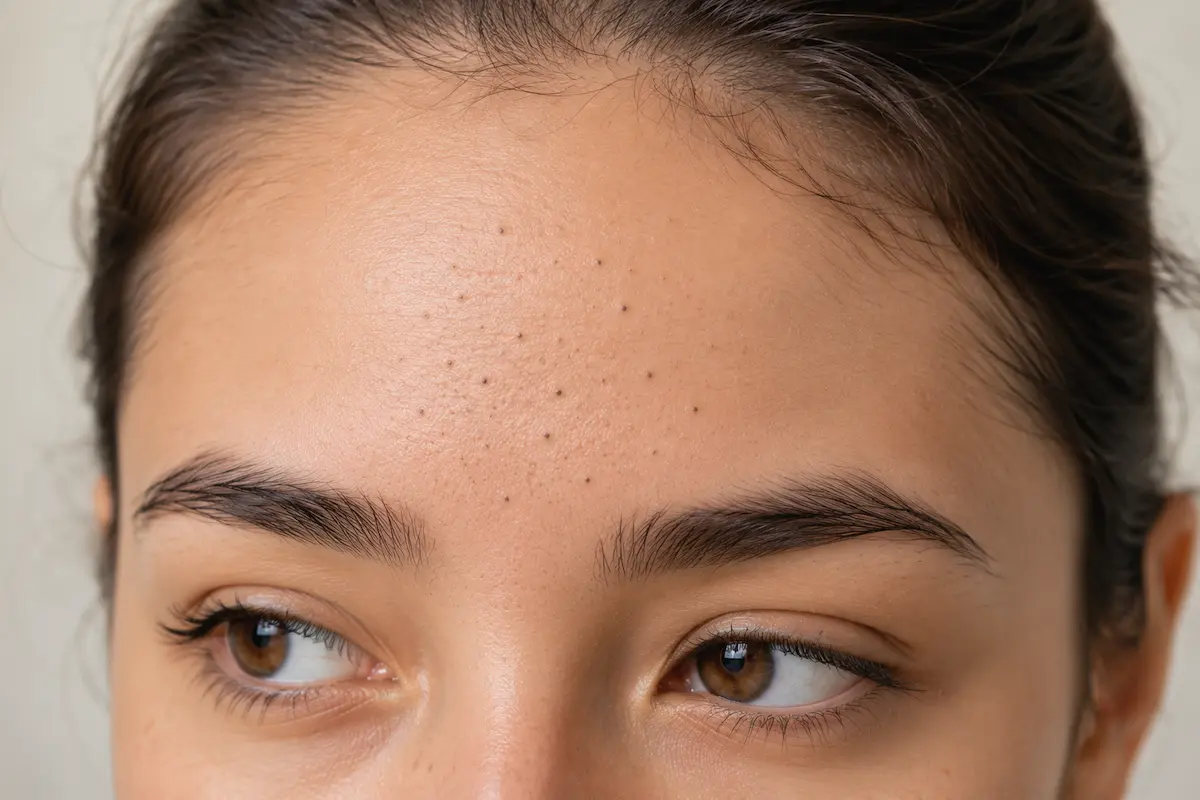
Blackheads can be frustrating. You cleanse your face, try a new product, and even remove the dark plug, only to see it appear in the same spot again.
That’s because blackheads aren’t simply dirt trapped inside your pores. They form when oil and dead skin cells build up inside a hair follicle. When the opening is exposed to air, the material inside oxidizes and turns dark.
Getting rid of stubborn blackheads isn’t about scrubbing harder or squeezing. The better approach is to keep pores clear, control excess oil, prevent new blockages, and give your skin time to respond.
This guide explains how to treat stubborn blackheads, which exfoliants can help, whether masks and steam are useful, and when professional extraction may be worth considering.
Why Are Some Blackheads So Stubborn?
Some blackheads disappear relatively quickly, while others seem to stay in the same pore for months.
Persistent blackheads can be related to:
- Excess oil production
- Dead skin cell buildup
- Naturally larger or more visible pores
- Hormonal changes
- Products that contribute to clogged pores
- Inconsistent exfoliation
- Picking or squeezing
- Skin irritation
- A tendency to develop comedonal acne
Even when you successfully remove a blackhead, the same pore can become clogged again because your skin continues to produce oil and shed skin cells.
That’s why prevention is just as important as removal.
How to Get Rid of Stubborn Blackheads
Stubborn blackheads usually need more than a one-time fix. The goal is to loosen existing buildup, keep pores clear, and reduce the chance of new blockages forming. Some treatments can help with this, while others are better viewed as optional additions to your routine.
1. Use Salicylic Acid
If stubborn blackheads are your main concern, salicylic acid is one of the most useful ingredients to consider.
Salicylic acid is a beta hydroxy acid that helps exfoliate the skin and unclog pores, making it useful for treating blackheads.
You can find it in cleansers, leave-on treatments, gels, and other acne products.
A 2023 study found that a serum containing salicylic acid and lipohydroxy acid improved open and closed comedones (clogged pores), acne severity, oil production, and skin hydration after 8 weeks. Adding a mask further improved closed comedones, with no reported adverse reactions.
If you’re new to salicylic acid, start gradually and follow the product’s directions. Using more than recommended won’t make blackheads disappear faster and can leave your skin irritated.
2. Consider Adapalene
Topical retinoids can help unclog pores and reduce inflammation. Adapalene is one example that can help clear pimples, blackheads, and whiteheads.
Unlike an extraction, a retinoid doesn’t simply remove what’s already inside a pore. It helps keep pores clear and prevent new blackheads from forming over time.
Retinoids can cause dryness, peeling, and irritation when you first start using them. Using a smaller amount, applying them less often, or using moisturizer may help reduce irritation. Follow your dermatologist’s instructions and protect your skin from the sun.
If you’re pregnant or trying to become pregnant, avoid topical retinoids and speak with your healthcare professional about safer alternatives.
3. Exfoliate Gently
Exfoliation can help remove excess dead skin cells that contribute to clogged pores.
For stubborn blackheads, chemical exfoliation is generally more useful than aggressive physical scrubbing.
Salicylic acid is particularly relevant because it can work within oily pores rather than simply removing surface flakes.
Avoid using rough scrubs, abrasive brushes, or repeatedly exfoliating the same area.
If your skin becomes red, burning, tight, or unusually sensitive, you’re probably exfoliating too aggressively.
4. Does Facial Steam Remove Blackheads?
Facial steaming may be useful as an optional step before gentle exfoliation or blackhead removal. The warmth and moisture can soften the skin and loosen surface oil and buildup, but steaming itself doesn’t remove blackheads.
If you enjoy facial steaming, keep the temperature comfortable and avoid placing your face too close to hot steam. Excessive heat can irritate the skin.
You don’t need to steam your face before every skincare treatment. For stubborn blackheads, consistent use of proven acne treatments such as salicylic acid or adapalene is more important than steaming.
5. What About a Blackhead Extractor Tool?
Comedone extractor tools can physically remove blackheads, but they’re easy to misuse.
Applying too much pressure or repeatedly working on the same area can injure the skin and increase the risk of irritation, dark marks, and scarring.
For a few stubborn blackheads that haven’t responded to your skincare routine, professional comedone extraction is the safer option.
A dermatologist can assess the lesion and use appropriate extraction techniques rather than relying on the aggressive squeezing that often happens at home.
If you do use an extractor at home, don’t use needles, pins, or other sharp objects to dig into the skin
6. Consider Professional Extraction
Some blackheads are simply more stubborn than others. If one remains despite consistent skincare, professional extraction may be an option.
A dermatologist or appropriately trained skin professional can use sterile instruments and controlled pressure to remove a comedone without the repeated squeezing that can damage your skin.
Professional extraction can be particularly useful for large, persistent blackheads that don’t respond to your usual routine.
It isn’t necessary for every blackhead, though. If your skin is responding to topical treatment, there’s usually no reason to have every pore manually extracted.
7. Can Pore Strips Remove Blackheads?
Pore strips can temporarily remove some material from the surface of open pores.
This can make your nose or another area appear smoother immediately afterward.
A study found that Bioré pore strips were effective at removing microcomedones and hair bundles, especially from the nose. Repeated use caused no inflammation or increased tenderness, and participants reported high satisfaction, although cyanoacrylate removed more material but was more aggressive.
Pore strips can remove some material from a clogged pore, but they don’t prevent new clogs from forming, so blackheads can return.
If you enjoy using them occasionally and your skin tolerates them, they can be an optional cosmetic step. They shouldn’t replace a consistent blackhead treatment.
Should You Squeeze Blackheads?
It’s better not to squeeze blackheads yourself.
Squeezing may remove some of the material temporarily, but repeatedly pressing or digging at a pore can cause inflammation and damage the surrounding skin.
It may lead to:
- Redness
- Swelling
- Scabbing
- Dark marks
- Skin injury
- Scarring
There’s also no guarantee that squeezing will remove everything inside the pore.
And even if you successfully empty it, the pore can become clogged again.
If you constantly find yourself squeezing the same blackhead, it’s usually a sign that you need a better long-term treatment
What Are Giant Blackheads?
“Giant blackheads” is a term commonly used to describe unusually large or very noticeable blackheads.
However, not every large dark spot is actually a blackhead.
A large, persistent opening may be a dilated pore, sometimes called a dilated pore of Winer. Other lesions can also resemble a large blackhead.
This matters because trying to squeeze or dig out an unusual lesion yourself can cause unnecessary damage.
How to Get Rid of Giant Blackheads
If you have a very large blackhead-like lesion that has been present for a long time, professional evaluation is a better option than repeated squeezing.
A dermatologist can determine whether it is actually a blackhead, a dilated pore, or another type of skin lesion.
Depending on what it is, treatment may involve professional extraction or another procedure.
Don’t try to cut it open, puncture it, or force the contents out with your fingernails.
How to Prevent Blackheads From Coming Back
Removing an existing blackhead is only half the job.
Because your skin continues to produce oil and shed skin cells, new blackheads can develop.
A few habits can help reduce recurring congestion.
Use your acne treatment consistently
Salicylic acid or an appropriate retinoid is more useful as part of a consistent routine than as an occasional spot treatment.
Avoid picking
Repeated squeezing can create inflammation and dark marks without preventing the next blackhead.
Keep your skincare products lightweight
Choose non-comedogenic products where possible.
Cleanse regularly
Wash your face gently to remove excess oil, sunscreen, makeup, and daily buildup.
Don’t over-wash
Washing repeatedly won’t stop your sebaceous glands from producing oil and can irritate the skin.
Give treatments time
Blackheads usually don’t disappear overnight. Consistent treatment over several weeks is more realistic.
A Simple Skincare Routine for Stubborn Blackheads
You don’t need a complicated 10-step routine.
Morning
1. Gentle cleanser
Remove overnight oil without aggressively stripping your skin.
2. Lightweight moisturizer
Choose a non-comedogenic formula.
3. Sunscreen
Use broad-spectrum sunscreen every day.
Evening
1. Cleanser
Remove makeup, sunscreen, oil, and other buildup.
2. Blackhead treatment
Use salicylic acid or another acne treatment appropriate for your skin.
3. Moisturizer
Apply a lightweight moisturizer to support the skin barrier.
Optional treatments
You can occasionally add:
- A clay mask if your skin is oily
- A charcoal mask if you enjoy using one and it doesn’t irritate your skin
- Gentle exfoliation when appropriate
You don’t need to use all of these at once.
When Should You See a Dermatologist?
Consider getting professional advice if:
- Your blackheads aren’t improving despite consistent treatment
- You have many persistent blackheads
- You’re developing large or painful lesions
- A blackhead-like spot keeps returning in exactly the same place
- You have significant dark marks or scarring
- You’re repeatedly squeezing or picking your skin
- You’re unsure whether a large dark spot is actually a blackhead
Professional evaluation is particularly important for giant blackheads or unusually large, persistent lesions.
Closing Thoughts
Getting rid of stubborn blackheads isn’t about forcing them out.
A consistent routine with treatments such as salicylic acid or topical retinoids can help keep pores clear and reduce new blockages.
Avoid squeezing or aggressively extracting blackheads. If a blackhead is unusually large or persistent, professional extraction may be a safer option.
The goal isn’t just to remove today’s blackhead, but to reduce the buildup that causes new ones.