In This Article
ToggleMost people don’t notice their teeth getting darker until they see a photo. Then it becomes obvious. Teeth rarely stay the same shade for life.
Coffee, tea, wine, smoking, aging, and even certain medications slowly stain enamel. Over time, teeth lose their brightness and look dull or yellow.
Teeth whitening is one of the most common cosmetic dental treatments because it offers visible improvement without drilling or permanent changes. But it’s also widely misunderstood. Many expect movie-star white teeth overnight. Others try random DIY methods that lead to sensitivity or uneven results. The truth sits somewhere in the middle.
Whitening can work very well, but only when you understand what it does, who it works for, and what limits it has.
This guide explains the real benefits, realistic expectations, possible risks, and how to decide if whitening is right for you.
Why Teeth Become Discolored
Teeth have two main layers. The outer layer is enamel, which is hard and slightly translucent. Beneath it is dentin, which is naturally more yellow. As enamel thins with age or wear, the darker dentin shows through. At the same time, pigments from foods and drinks get trapped in microscopic pores of enamel.
There are two main types of stains.
Extrinsic stains sit on the surface. These come from coffee, tea, red wine, tobacco, and colored foods. They respond well to whitening.
Intrinsic stains occur inside the tooth. These can be caused by aging, trauma, certain medications, or excessive fluoride during childhood. These stains are harder to treat and may not respond well to whitening alone.
Understanding the type of stain matters because it determines how effective whitening will be.
How Teeth Whitening Works
Most whitening products use hydrogen peroxide or carbamide peroxide. These chemicals break down stain molecules inside enamel and dentin. The stains become smaller and less visible, making teeth appear lighter.
Whitening does not remove enamel. It changes how light reflects off the tooth by reducing pigment concentration. When done correctly and not overused, it’s considered safe for most people with healthy teeth and gums.
Results vary. Some people see dramatic improvement. Others see only subtle changes. The starting shade, stain type, and treatment method all affect outcomes.
Benefits of Teeth Whitening
Teeth whitening offers several advantages that go beyond simply improving the color of your teeth.
Brighter Appearance
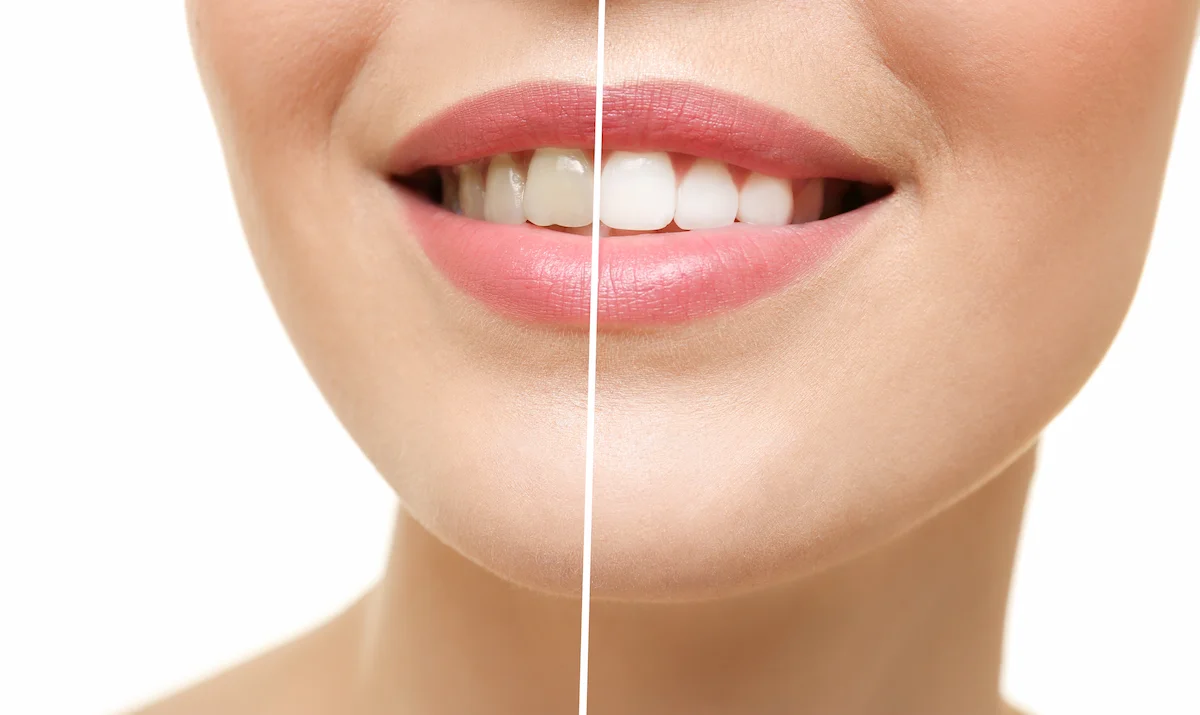
The most obvious benefit is a lighter smile. Even a small change of two shades can make teeth look cleaner and healthier. A brighter smile often makes the entire face look more refreshed.
Improved Confidence
Many people report feeling more comfortable smiling, speaking, and taking photos after whitening. This confidence boost is one of the main reasons people pursue cosmetic dental treatments.
Fast Results
Professional whitening treatments can show results in a single visit. At-home kits take longer but still produce visible improvement within one to two weeks.
Non-Invasive Treatment
Unlike veneers or crowns, whitening doesn’t permanently alter tooth structure. It’s reversible and relatively low-risk when used correctly.
Affordable Cosmetic Option
Compared to other cosmetic dental procedures, whitening is one of the least expensive ways to improve smile appearance. This makes it accessible to more people.
What Whitening Can and Cannot Fix
Whitening works best for surface stains and mild yellowing. It may not work well for:
- gray or blue discoloration
- stains from certain antibiotics
- teeth with many fillings or crowns
- severe enamel erosion
Dental restorations like crowns, veneers, and fillings do not change color with whitening. If these are visible in the front teeth, they may stand out after whitening.
Professional Whitening vs At-Home Methods
Choosing between professional and at-home whitening depends on how fast you want results and how much whitening you need.
In-Office Whitening
This is performed by a dentist using stronger whitening agents. Gums are protected, and the gel is applied carefully. Sometimes a light or heat source is used to speed the reaction.
Pros:
- fastest results
- noticeable improvement in one visit
- monitored for safety
Cons:
- higher cost
- temporary sensitivity possible
Dentist-Supervised Home Whitening
Custom trays are made to fit your teeth. A lower-strength gel is used at home over several days or weeks.
Pros:
- controlled and safer than store kits
- gradual results
- less risk of uneven whitening
Cons:
- takes longer
- requires consistency
Over-the-Counter Products
These include strips, pens, and generic trays. They’re widely available and cheaper.
Pros:
- affordable
- convenient
Cons:
- weaker formulas
- higher risk of gum irritation
- results vary
How Long Results Last
Whitening is not permanent. Results fade over time as new stains develop.
Results may last:
- several months for heavy coffee or tobacco users
- one to three years with good maintenance
To keep teeth lighter:
- brush twice daily
- rinse after staining foods
- limit smoking
- get regular dental cleanings
- consider occasional touch-up whitening
Risks and Side Effects
Like any cosmetic treatment, teeth whitening can cause mild side effects in some individuals.
Tooth Sensitivity
This is the most common side effect. Teeth may feel sensitive to cold or air during or after whitening. It usually resolves within a few days. People with existing sensitivity may experience stronger reactions.
Using desensitizing toothpaste before and after treatment can help.
Gum Irritation
If whitening gel touches the gums, it can cause temporary irritation or burning. This usually happens with ill-fitting trays or overuse.
Uneven Whitening
Teeth with fillings, bonding, or enamel wear may whiten unevenly. White spots or darker areas can become more noticeable.
Enamel Damage from Overuse
Using whitening products too frequently or leaving them on longer than recommended can weaken enamel and increase sensitivity. Follow instructions carefully.
Who Should Avoid Whitening
Whitening may not be suitable if you have:
- untreated cavities
- gum disease
- severe sensitivity
- very thin enamel
- dental restorations on front teeth
- intrinsic discoloration resistant to whitening
A dental exam before whitening is important to avoid complications.
What to Expect During Treatment
During professional whitening, a protective barrier is placed over the gums. Whitening gel is applied to the teeth and left on for a set time. Some treatments involve multiple applications in one session.
At-home whitening involves wearing trays or strips daily for a specified period. Mild sensitivity during treatment is common.
After treatment, teeth may appear slightly dehydrated and extra white for a day or two. The final shade stabilizes within a week.
How to Reduce Sensitivity
If you’re concerned about sensitivity:
- use a lower-strength whitening product
- space out treatments
- use desensitizing toothpaste
- avoid very cold foods during treatment
- follow product instructions exactly
Most sensitivity is temporary and manageable.
Common Mistakes People Make
- expecting instant dramatic results from weak products
- overusing whitening kits
- whitening without cleaning teeth first
- ignoring underlying dental problems
- assuming all stains will disappear
Whitening works best as part of overall dental care, not as a standalone fix.
Is Teeth Whitening Worth It?
For people with healthy teeth and realistic expectations, whitening is often worth it. It’s one of the simplest ways to improve smile appearance without permanent changes. The key is choosing the right method and understanding the limits.
If discoloration is severe or uneven, a dentist may recommend alternatives like bonding, veneers, or professional cleaning instead of whitening alone.
Maintenance After Whitening
To maintain results:
- brush and floss daily
- reduce staining foods and drinks
- drink dark beverages through a straw
- rinse mouth after meals
- schedule dental cleanings
- use touch-up whitening occasionally
Consistent care extends results significantly.
The Bottom Line
Teeth whitening can safely brighten your smile and improve confidence when done correctly. It works best for natural teeth with mild to moderate staining. Sensitivity and temporary irritation are common but usually manageable. Results vary and require maintenance over time.
Before starting, understand what whitening can realistically achieve. Choose a safe method, avoid overuse, and address any dental issues first.
When used appropriately, whitening is a simple cosmetic treatment that delivers noticeable improvement without invasive procedures.
2 thoughts on “Teeth Whitening: Benefits, Risks, and What to Expect”
Comments are closed.