Joint pain doesn’t show up overnight. It builds slowly. A little stiffness in the morning. A slight ache after walking. Then one day, it starts interfering with your daily routine.
Most people jump straight to painkillers. That’s a short-term fix. The real lever you can control every day is food.
What you eat directly affects inflammation. And inflammation is the root problem behind most joint pain—whether it’s from aging, overuse, or conditions like arthritis.
This doesn’t mean food will “cure” joint pain. It won’t. But the right diet can reduce inflammation, support cartilage, and improve mobility over time.
Understanding Joint Pain: Osteoarthritis vs Rheumatoid Arthritis
Osteoarthritis happens when joint cartilage wears down over time, leading to stiffness and pain. Rheumatoid arthritis is an autoimmune condition where the body attacks its own joints, causing more intense inflammation.
Both involve inflammation, which is why diet plays a role. Anti-inflammatory foods can help reduce symptoms and support joint function, but they do not treat the underlying condition.
Foods That Help Relieve Stiff and Painful Joints
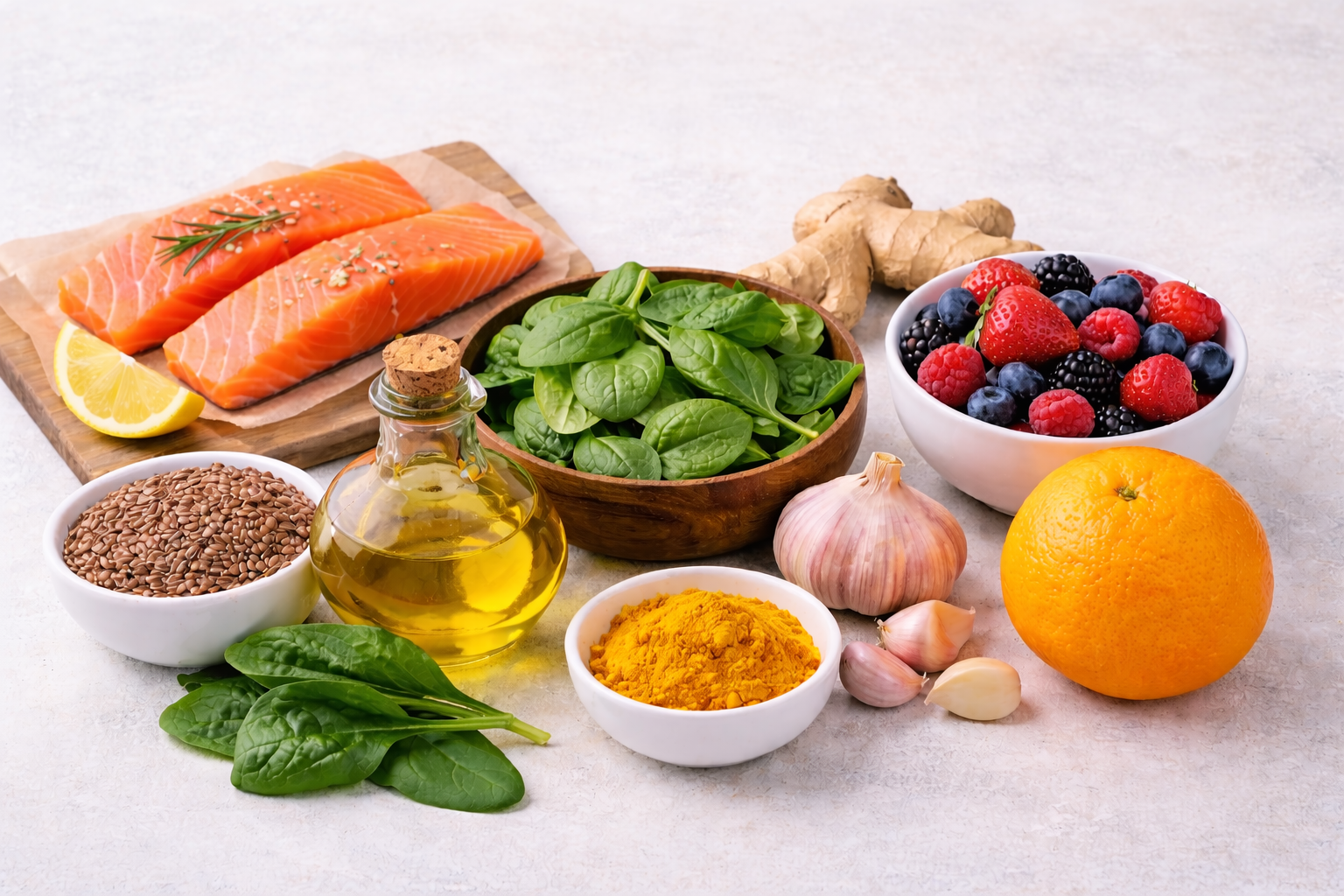
Here are practical foods that help reduce inflammation, support cartilage, and improve joint movement over time.
1. Fatty Fish
Fatty fish are one of the most effective foods for reducing inflammation.
They are rich in omega-3 fatty acids, which help lower inflammatory markers in the body. Since joint pain is often driven by inflammation, this directly supports long-term relief.
Omega-3 fats may also help protect cartilage, reduce joint stiffness, and improve mobility over time.
A review of studies suggests omega-3 fats can reduce joint pain, swelling, and overall disease activity, especially with consistent intake, though results vary depending on dosage and duration.
2–3 servings per week is enough to see benefits.
2. Turmeric
Turmeric contains curcumin, a compound known for its anti-inflammatory properties.
It works by targeting pathways that contribute to inflammation in the body.
A small clinical trial found that a turmeric extract lowered inflammation and helped reduce knee pain within a week, especially for pain at night and while standing.
A review of multiple studies also suggests turmeric can reduce osteoarthritis pain, though results vary and evidence is still limited.
But there’s a catch:
Curcumin is not absorbed well on its own.
To improve absorption:
- Combine turmeric with black pepper
- Use it in cooked dishes with fat
Used regularly, it can support joint comfort, especially in mild to moderate cases.
3. Ginger
Ginger works in a similar way to turmeric but through slightly different mechanisms.
It contains natural compounds like gingerols that have anti-inflammatory, antioxidant, and pain-relieving effects. These compounds help reduce inflammatory signals and may block certain pain pathways in the body.
A study in 30 adults with joint and muscle pain found that taking 125 mg ginger extract daily for 58 days reduced pain, stiffness, and inflammation markers, improved function, and slightly lowered use of painkillers without major side effects.
It’s easy to include:
- In tea
- In curries
- In simple home remedies
Consistency matters more than quantity here.
4. Leafy Greens
Leafy greens like spinach, kale, and amaranth leaves provide antioxidants that help protect joint tissues from damage.
They are also rich in vitamin K, which supports bone health, and magnesium, which supports muscle and nerve function.
These nutrients work together to support overall joint function.
If your diet is low in greens, improving this alone can make a noticeable difference.
Spinach, in particular, contains compounds with anti-inflammatory and antioxidant effects. Early lab and animal studies suggest it may help reduce inflammation linked to rheumatoid arthritis, but human evidence is still limited.
5. Berries
Berries are rich in antioxidants and polyphenols, which help reduce inflammation.
They also help protect cells from oxidative stress, which contributes to joint degeneration over time.
In a clinical trial, consuming strawberries daily for 12 weeks reduced pain, improved quality of life, and lowered key inflammation markers in people with knee osteoarthritis, although not all markers changed.
In another 4-month trial, people with knee osteoarthritis who consumed freeze-dried blueberries daily experienced reduced pain, stiffness, and difficulty with daily activities, along with improved walking ability, though inflammation markers did not change significantly.
Compared to sugary snacks, berries provide a better option without triggering inflammation.
6. Nuts and Seeds
Nuts and seeds provide:
- Healthy fats
- Vitamin E
- Magnesium
Vitamin E acts as an antioxidant that helps reduce inflammation.
Flaxseeds and walnuts also provide omega-3 fats, adding to their anti-inflammatory effect.
Some clinical studies suggest flaxseed and flaxseed oil may help reduce joint pain, stiffness, and improve function in people with rheumatoid arthritis, although results on inflammation markers are mixed.
While nuts offer anti-inflammatory nutrients, research directly linking them to reduced joint pain is still limited.
Stick to moderate portions—a small handful is enough.
7. Olive Oil
Olive oil contains natural compounds like oleocanthal, which have anti-inflammatory effects similar to mild pain relievers.
A study of 365 rheumatoid arthritis patients found that higher intake of olive oil and nuts was linked to lower disease activity, with stronger benefits in severe or long-term cases, though significant results were mainly seen with olive oil.
In addition, a review of human, animal, and lab studies suggests that olive oil and its compounds may help reduce inflammation, oxidative stress, and joint damage, though more high-quality clinical research is still needed.
Using olive oil regularly as your primary cooking fat is a simple way to support overall inflammation control.
8. Whole Grains
Refined carbohydrates can increase inflammation.
Whole grains are different.
They provide fiber, which helps regulate inflammation and support gut health.
In one large analysis, higher fiber intake—especially from cereals—was linked to a lower risk of rheumatoid arthritis, partly due to reduced overall inflammation.
While whole grains provide anti-inflammatory fiber, research directly linking them to reduced joint pain is still limited.
9. Green Tea
Green tea contains catechins, especially EGCG, which have strong anti-inflammatory and antioxidant effects.
These compounds help reduce inflammation and oxidative stress that can damage joints. They may also help protect cartilage and slow its breakdown over time.
Limited clinical research shows that green tea may improve pain and joint function, but more high-quality studies are still needed.
Green tea may also support healthy weight management, which plays an important role in reducing stress on the joints.
Drinking it regularly can support long-term joint health.
10. Garlic
Garlic does more than add flavor.
It contains sulfur compounds that may help reduce inflammation and slow cartilage damage. It also supports immune function, which is relevant in inflammatory joint conditions.
In one study, people who consumed more garlic and other allium vegetables had a lower risk of hip osteoarthritis. Compounds in garlic may help protect joints by slowing cartilage breakdown.
Use fresh garlic instead of processed forms. Crushing it and letting it sit for a few minutes before cooking helps activate its beneficial compounds.
11. Citrus Fruits
Citrus fruits are rich in vitamin C, which is essential for collagen production.
Collagen is a key component of cartilage, the tissue that cushions joints.
Low vitamin C intake can affect joint structure over time.
In an animal study, grapefruit juice reduced inflammation and slowed cartilage damage, with higher doses showing stronger protective effects.
However, these findings are based on animal research, so more human studies are needed.
Citrus fruits also contain hesperetin, a flavonoid that may help manage rheumatoid arthritis by reducing inflammation, oxidative stress, and immune overactivity. It may also improve symptoms, although more clinical research is needed.
Including citrus fruits regularly supports tissue repair and maintenance. You can also explore other vegetarian foods for collagen production to support joint health.
12. Pineapple
Pineapple contains bromelain, a natural enzyme with anti-inflammatory and pain-relieving properties that may help in osteoarthritis.
Some studies suggest bromelain supplements may reduce joint pain and stiffness, particularly in mild cases. However, most research is based on supplements rather than whole pineapple, and overall evidence remains limited.
Including pineapple in your diet can provide antioxidants and support overall inflammation control, but its direct effect on joint pain is likely modest.
What Actually Makes These Foods Work (And What Cancels Them Out)
Listing foods is easy. Using them properly is where most people fail.
Joint health improves when inflammation is reduced consistently—not occasionally.
That means:
- Regular intake matters more than large portions
- Combining multiple anti-inflammatory foods works better than relying on one
- Your overall diet matters more than any single “superfood”
Now the part most people ignore:
If you keep eating inflammatory foods, these benefits get cancelled out.
Cut back on:
- Sugary drinks and sweets
- Refined carbs (white bread, bakery items)
- Deep-fried foods
- Processed meats
- Excess alcohol
These increase inflammation and directly worsen joint stress over time.
Common mistakes that slow progress
1. Adding healthy foods without removing junk
You can’t out-eat inflammation.
Fix: Reduce processed foods first, then build better meals.
2. Ignoring body weight
Extra weight increases pressure on joints, especially knees.
Fix: Focus on steady, realistic fat loss.
3. Avoiding movement
Less movement leads to stiffness and weaker joint support.
Fix: Walk daily. Add light mobility work.
4. Expecting quick results
This is the biggest mistake.
Fix: Give it a few weeks of consistency before judging results.
The Bottom Line
Joint pain is rarely caused by one thing—and it won’t be solved by one food.
But your daily diet plays a significant role in how your joints feel over time.
Focus on:
- Reducing inflammation
- Supporting joint structure
- Maintaining consistency
Start simple. Add 3–4 of these foods into your routine and build from there.
That’s how you create real, lasting improvement—not quick.