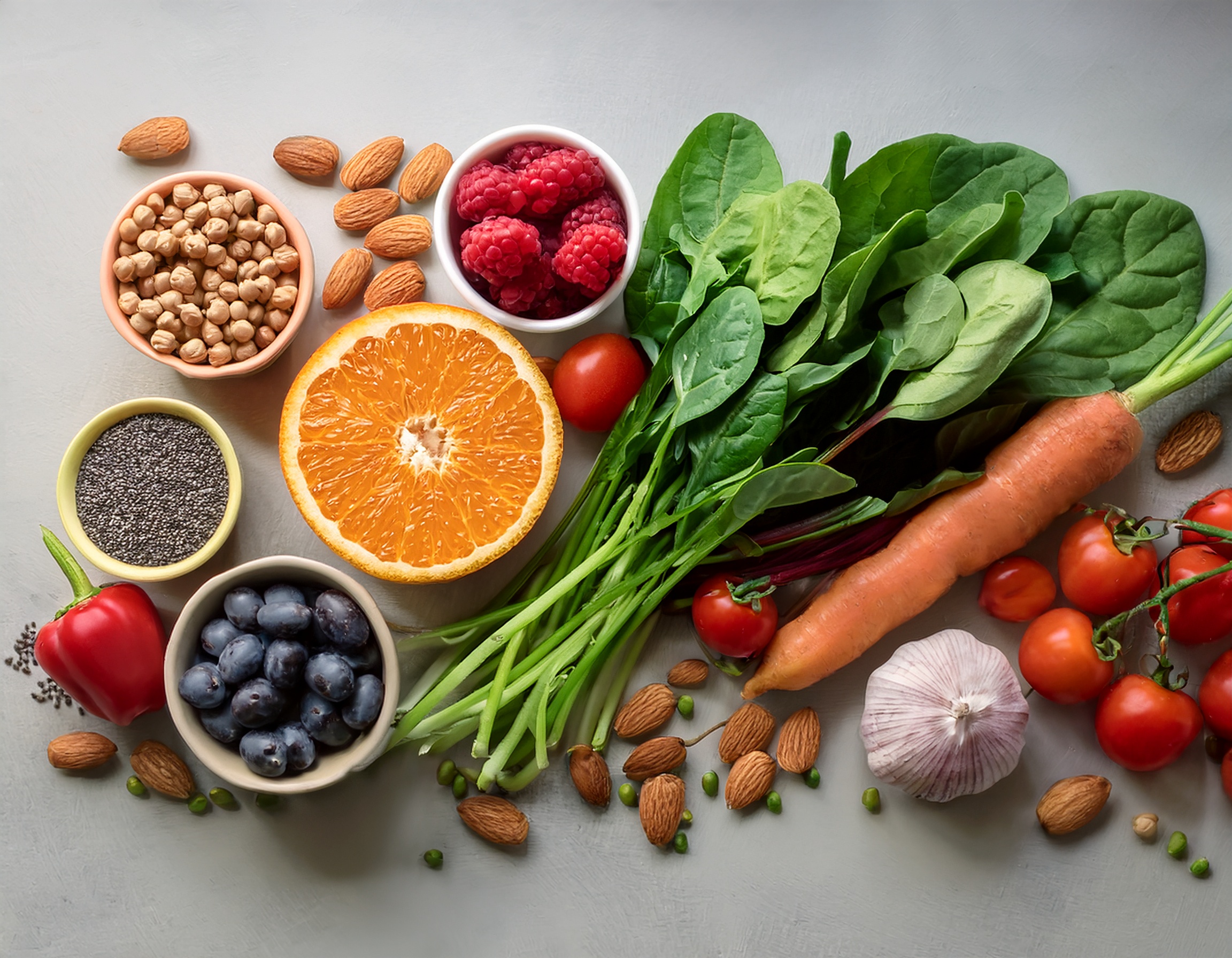
Collagen is the protein that keeps your skin firm, your joints flexible, your bones stable, and your hair strong. Its production drops with age, and the signs are obvious—fine lines, weaker joints, slower recovery, and duller skin.
Since most direct collagen sources, such as bone broth or fish, are animal-based, many vegetarians assume they’re at a disadvantage. That assumption isn’t accurate.
The good news is that even if you follow a vegetarian diet, you can still boost your collagen levels naturally. While plants don’t contain collagen, certain vegetarian foods are rich in amino acids, vitamins, and minerals that stimulate your body’s natural collagen production.
In this blog, we’ll explore some of the best vegetarian foods that naturally promote collagen production, their benefits, and how to include them in your diet.
What Is Collagen and Why Is It Important?
Collagen is one of the most abundant proteins in living organisms, playing a vital role in connecting and supporting tissues and organs, ensuring their strength and stability. It consists of 28 types, with type I, II, and III being the most common.
- Type I collagen supports skin, bone, teeth, tendon, ligament, vascular ligature
- Type II collagen is essential for cartilage and joint health.
- Type III collagen is present in muscle and blood vessels.
As you age, your body’s collagen production slows down, leading to wrinkles, sagging skin, joint pain, and brittle hair. By including vegetarian collagen-boosting foods in your diet, you can support your body’s natural ability to maintain skin elasticity, bone strength, and joint flexibility.
Vegetarian Foods for Collagen Production
Here are some of the best vegetarian foods that can boost body’s natural collagen production.
1. Soy and Soy Products
Soy-based foods are an excellent vegetarian source of genistein, glycitin, and daidzein—isoflavones that help boost collagen production, reduce collagen breakdown, and promote skin repair and firmness, making it beneficial for anti-aging and skin health.
These isoflavones also increase hyaluronic acid levels, which plumps and strengthens the skin while boosting blood flow, giving it a more youthful and radiant appearance.
Additionally, soy is a rich and complete protein source, meaning it contains all nine essential amino acids. It also provides non-essential amino acids like glycine and proline, which play a key role in collagen synthesis, helping maintain skin strength and elasticity.
Regular consumption of soy can enhance skin elasticity, reduce fine lines, and promote joint health.
You can include soy in your diet by adding tofu cubes to salads, stir-fries, or curries. Tempeh, a fermented soy product, is also a great addition to sandwiches or wraps, while soy milk can be used in smoothies or as a base for oatmeal.
2. Leafy Green Vegetables
Leafy greens like spinach, kale, fenugreek leaves, and coriander are rich in vitamin C, which plays a key role in collagen production and protects existing collagen from breaking down.
They are also rich in chlorophyll, an antioxidant that may help support the body’s natural collagen production, although research in this area is still limited.
Including leafy greens in your diet can support skin hydration, enhance bone health, and reduce signs of aging. Add them to soups, curries, dals, or green smoothies for a regular collagen boost.
3. Nuts and Seeds
Nuts and seeds such as almonds, cashews, walnuts, chia seeds, flaxseeds, and pumpkin seeds are rich in zinc, copper, and omega-3 fatty acids, which promote collagen formation.
Zinc and copper promote collagen production, while omega-3s reduce inflammation, protecting collagen from breaking down. Interestingly, zinc also helps prevent collagen damage by blocking enzymes called matrix metalloproteinases (MMPs) that degrade it.
MMPs are enzymes that break down collagen and other proteins in tissues.
Snacking on a handful of mixed nuts or adding chia and flaxseeds to your smoothies, salads, or oatmeal may boost your body’s collagen production. You can also sprinkle pumpkin or sunflower seeds over soups or stir them into yogurt for a crunchy, nutrient-packed topping.
4. Citrus Fruits
Citrus fruits like oranges, lemons, grapefruits, and sweet limes are rich in vitamin C, a vital nutrient that stimulates collagen production. Vitamin C also helps stabilize existing collagen fibers and protects the skin from free radical damage.
Consuming citrus fruits regularly may help enhance skin brightness, reduce fine lines, and support joint health. You can enjoy them as whole fruits, fresh juices, or added to fruit salads for a refreshing collagen boost.
5. Berries
Berries such as strawberries, blueberries, raspberries, and blackberries are packed with vitamin C, which protect collagen from degradation and support its production.
Berries are also rich in antioxidants, which protects collagen from damage caused by free radicals.
Adding berries to your diet may improve skin texture, help reduce wrinkles, and support overall skin health.
6. Garlic
Garlic is a surprising plant-based food that may help support collagen production. Its sulfur-containing compounds have antioxidant and anti-inflammatory properties that may help reduce wrinkles by preventing collagen breakdown.
One garlic compound called S-allylmercaptocysteine (SAMC) has shown potential to protect cartilage cells by reducing inflammation and supporting the body’s natural collagen-preserving processes.
However, garlic is usually consumed in small amounts rather than as a main ingredient, which may limit its overall impact.
Still, regularly adding garlic to curries, soups, stir-fries, and salad dressings is an easy way to boost both flavor and nutritional value.
7. Beans and Lentils
Beans and lentils are rich in protein, zinc, and copper, nutrients that play important roles in collagen formation and maintenance.
They also provide amino acids such as glycine, proline, and hydroxyproline, which support collagen production.
While they do not contain collagen themselves, including kidney beans, black beans, chickpeas, and lentils in your diet can help provide the nutrients needed to support the body’s natural collagen production.
They are also excellent sources of plant-based protein, fiber, and other beneficial nutrients.
8. Bell Peppers
Bell peppers, especially the red and yellow varieties, are loaded with antioxidants and vitamin C, which plays a crucial role in collagen formation.
They also contain capsaicin, an active compound, which helps promote collagen production and protects skin from UV radiation.
Adding bell peppers to your diet can boost collagen levels, reduce skin sagging, and protect against free radical damage.
9. Carrots and Sweet Potatoes
Carrots and sweet potatoes are packed with beta-carotene, a carotenoid that converts into vitamin A in the body.
Retinol, a form of vitamin A, helps boost collagen production and reduces MMPs—the enzymes that break down collagen.
Regularly eating these vibrant veggies may enhance skin health and protect against UV damage.
10. Avocados
Avocados are packed with healthy fats, which reduce inflammation and prevent collagen breakdown. The monounsaturated fats keep the skin hydrated and promote elasticity.
Plus, avocados are rich in vitamin E, which boosts collagen production through a specific signaling pathway. When consumed in the right amount, they enhance skin texture and help prevent wrinkles. However, excessive intake may cause oxidative stress and reduce its effectiveness.
Eating an avocado regularly can improve skin texture and prevent wrinkles. Spread avocado on toast, add it to salads, or blend it into smoothies.
For an extra collagen-boosting punch, add sunflower seeds. They’re loaded with healthy fats and provide a powerful dose of vitamin E—fulfilling over half of your daily needs in just a half-cup serving (23 grams). When combined with avocado, you get around 80% of the daily value.
Sunflower seeds also deliver essential nutrients for healthy hair—discover their amazing hair benefits!
11. Tomatoes
Tomatoes are rich in vitamin C, which boosts collagen production and prevents its breakdown.
They’re also packed with lycopene, a powerful antioxidant that protects the skin from UV damage and fights free radicals.
Use tomatoes in sauces, salads, or roast them with herbs.
Click here to discover more of their skin benefits!
12. Seaweed
Seaweed, in particular brown seaweed contains unique compounds like fucoidan, which promotes the production of collagen and also has potential skin-whitening properties.
Fucoidan not only promotes skin elasticity but also supports bone health. It enhances the release of proteins like ALP, BMP-2, and osteocalcin, which are essential for bone formation and regeneration.
Use nori sheets in sushi rolls, sprinkle seaweed flakes on salads, or add wakame to miso soup.
Vegetarian vs Animal Collagen Sources
Here’s a quick side-by-side look at how vegetarian and non-vegetarian collagen sources differ.
| Feature | Vegetarian Collagen Boosters | Animal Collagen |
|---|---|---|
| Contains collagen? | No | Yes |
| Boosts natural collagen? | Yes | Yes |
| Nutrients provided | Vitamin C, zinc, copper, antioxidants | Collagen peptides, amino acids |
| Best for | Skin, wellness, daily diet | Supplementing deficiencies |
| Absorption | Depends on diet | Hydrolyzed for fast absorption |
Vegetarian foods help the body make its own collagen, while animal-based collagen provides the protein directly.
How Much Should You Consume Daily?
A simple approach works best:
- Include 2–3 servings of collagen-boosting foods daily
- Eat at least 1 vitamin C–rich source
- Add protein sources like beans, lentils, or soy with every meal
- Include seeds or nuts at least 4–5 times a week
Consistency matters more than quantity.
Best Time to Eat Collagen-Boosting Foods
- Morning: Helps kickstart collagen production with vitamin C
- With meals: Enhances protein absorption
- Post-workout: Supports tissue repair and joint recovery
There’s no strict timing rule, but pairing vitamin C with protein improves collagen synthesis.
Foods That Block Collagen Production
Limit these for better skin and joint health:
- Excess sugar
- Ultra-processed foods
- Deep-fried foods
- Alcohol
- Smoking
- High-salt diets
These factors accelerate collagen breakdown and trigger inflammation.
Additional Ways to Boost Collagen Naturally
Apart from food, these habits support collagen levels:
- Stay hydrated
- Get enough sleep
- Protect your skin from UV exposure
- Avoid smoking
- Manage stress
- Eat protein regularly
- Maintain a balanced diet rich in antioxidants
These habits strengthen your skin and joints alongside a nutritious diet.
The Bottom Line
Following a vegetarian diet does not mean missing out on the nutrients needed to support collagen production. Foods such as soy, legumes, leafy greens, nuts, seeds, and citrus fruits provide protein, vitamins, minerals, and antioxidants that help your body produce and maintain collagen naturally.
While no single food can guarantee youthful skin or healthy joints, regularly including a variety of nutrient-rich plant foods in your diet can help support overall skin, bone, and connective tissue health.
Focus on building balanced meals with these collagen-supporting foods, and you’ll be giving your body the nutrients it needs to maintain collagen as part of a healthy lifestyle.
5 thoughts on “What Are the Vegetarian Foods That Boost Collagen?”
Comments are closed.