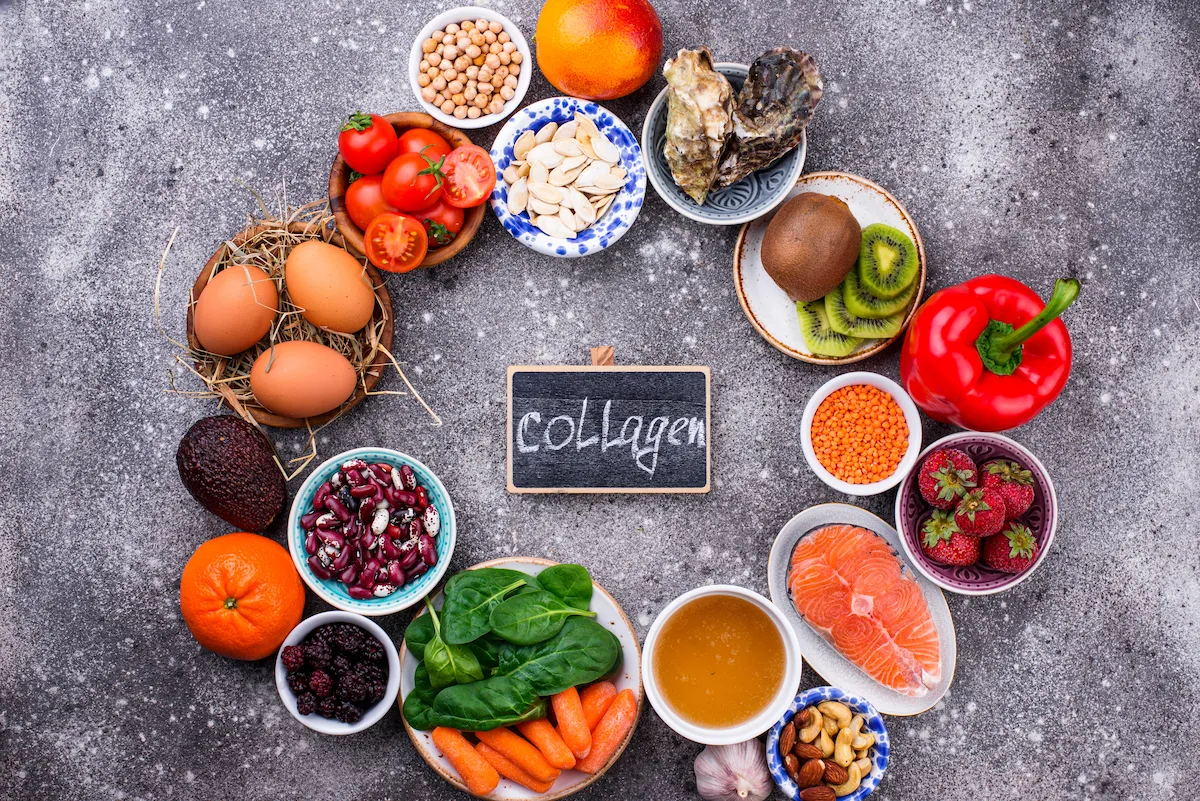
Collagen is the most abundant protein in your body, providing structure to your skin, joints, bones, and connective tissues. However, your natural collagen production gradually begins to decline with age, contributing to wrinkles, joint stiffness, and slower tissue repair.
While no food can completely stop this process, your diet can help support collagen production. Some foods naturally contain collagen, while others provide the protein, vitamin C, and minerals your body needs to make and protect it.
In this article, you’ll discover the best collagen-rich and collagen-supporting foods backed by science.
What Is Collagen and Why Is It Important?
Collagen is the most abundant protein in the body and plays a key role in keeping skin firm, joints flexible, and bones strong. It acts as a structural protein that holds tissues together and supports overall stability.
There are different types of collagen, but the most important ones are type I, II, and III. Type I supports skin, bones, and connective tissues, type II is found in cartilage and helps with joint function, and type III is present in muscles and blood vessels.
As you age, collagen production naturally declines. This can lead to visible changes like wrinkles and sagging skin, along with issues such as joint stiffness and reduced flexibility. A nutrient-rich diet can help support your body’s ability to produce and maintain collagen over time.
How Collagen from Food and Supplements Works
Collagen from food and supplements does not go directly into your skin or joints in its original form.
When you consume it, your body breaks it down into smaller components such as amino acids and peptides during digestion. These are then absorbed and used wherever the body needs them, including for building new collagen.
Collagen supplements, especially hydrolyzed collagen, are broken down into smaller peptides before consumption. This makes them easier to absorb compared to whole collagen from foods like meat or bone broth. Some studies show that these peptides can be detected in the bloodstream after intake and may be used in collagen-related processes.
However, this does not mean supplements are always superior. Whole foods provide a wider range of nutrients such as protein, vitamin C, zinc, and copper, all of which are required for collagen production and maintenance. Without these supporting nutrients, simply consuming collagen is not enough.
In practice, collagen intake works best when combined with enough protein, vitamin C, and minerals rather than relying on a single source.
Foods That Contain Collagen
These foods supply collagen or gelatin directly. Once consumed, your body breaks them down into amino acids and uses them to rebuild collagen.
1. Bone Broth
Bone broth is often considered one of the richest food sources of collagen because it is made by simmering bones and connective tissue for long periods. This process releases collagen, which breaks down into gelatin and amino acids such as glycine and proline—key building blocks used in collagen formation.
It also provides small amounts of minerals like calcium and magnesium, which support overall bone health.
However, the actual amount of these amino acids can vary widely depending on how the broth is prepared. Research shows that bone broth often provides lower and less consistent levels compared to collagen supplements.
Because of this, it is best viewed as a supportive food rather than a reliable source of collagen. It can still be included regularly in soups or cooking, but works best alongside a balanced diet that includes adequate protein and vitamin C.
If you prefer beverages, explore these drinks high in collagen for other options.
2. Chicken With Skin and Connective Tissue
Chicken, especially cuts like wings, thighs, and drumsticks, contains collagen in the skin and connective tissue. These parts are often overlooked but are nutritionally valuable.
Chicken cartilage is a natural source of type II collagen, the form found in joint cartilage. One study in adults aged 40-65 found that hydrolyzed chicken collagen reduced joint pain and stiffness and improved mobility, although this evidence is based on supplements rather than whole foods.
Slow cooking helps break down connective tissue into gelatin, providing amino acids that support collagen formation.
Including whole cuts instead of only lean breast meat is a simple way to improve collagen intake without changing your diet drastically.
3. Fish and Fish Skin
Fish contains collagen mainly in its skin, bones, and scales, with fish skin being especially rich in type I collagen—the same type found in human skin.
Research on marine collagen shows that it may be more easily absorbed than other sources due to its smaller peptide size, making it easier for the body to use.
Some clinical studies on fish-derived collagen have also shown improvements in skin hydration, texture, and wrinkle appearance, although these results are mainly based on supplements rather than whole fish.
Small fish like sardines, when eaten with bones, provide additional minerals that support overall bone structure.
4. Gelatin (Derived from Collagen)
Gelatin is a cooked form of collagen and is commonly found in foods like jelly or homemade desserts. It provides amino acids such as glycine and proline, which are used in collagen formation.
When you consume gelatin, levels of these amino acids rise in the bloodstream, meaning the body can absorb and use them.
Some evidence suggests that gelatin, especially when combined with vitamin C, may support collagen synthesis under certain conditions. However, most of this comes from controlled settings rather than everyday food intake.
While not a complete protein source, gelatin can still be added to soups, broths, or smoothies as part of a balanced diet.
5. Beef Cuts with Connective Tissue
Cuts like beef shank, oxtail, and tendon are naturally rich in collagen because connective tissue is largely made up of collagen.
When slow-cooked, this collagen breaks down into gelatin, improving both texture and releasing amino acids such as glycine and proline that are used in collagen formation.
These cuts often contain higher amounts of collagen than regular meat and provide a practical way to increase intake through whole foods.
However, most direct evidence for collagen-related benefits comes from supplement studies rather than these foods alone.
6. Pork Skin
Pork skin is a concentrated source of collagen because it is largely made up of connective tissue.
Analyses show it can contain high levels of collagen, which breaks down into gelatin during cooking. This process releases amino acids such as glycine and proline that are used in collagen formation.
It is commonly consumed as pork crackling or in slow-cooked dishes, where it contributes both texture and nutritional value.
However, pork skin is also high in fat, especially when fried, so it is best included in moderate amounts.
Most direct evidence for collagen-related benefits comes from supplement studies rather than whole foods like pork skin.
Foods That Promote Collagen Production
Eating collagen alone is not enough. Your body needs specific nutrients to produce and maintain it.
7. Egg Whites
Egg whites do not contain collagen, but they provide proline, an amino acid involved in collagen formation. Collagen is built from amino acids like proline and glycine, which are supplied through dietary protein.
Egg whites are also a low-fat source of protein that supports overall tissue repair. While not a direct source of collagen, they can contribute to collagen production as part of a balanced diet.
8. Citrus Fruits
Citrus fruits like oranges, lemons, and sweet lime are rich in vitamin C, a nutrient essential for collagen synthesis.
Without enough vitamin C, the body cannot form collagen efficiently, and deficiency can impair tissue repair. Vitamin C also acts as an antioxidant, helping protect collagen from damage.
Regular intake supports skin structure and wound healing.
9. Amla (Indian Gooseberry)
Amla is one of the richest natural sources of vitamin C and also contains antioxidants that help protect collagen from oxidative damage.
Lab research shows that amla extract can increase collagen-related activity in skin cells while reducing compounds that break collagen down. This suggests it may help support collagen balance and overall skin health over time.
10. Berries
Berries provide vitamin C along with compounds like anthocyanins, which act as antioxidants. These help reduce oxidative stress, a key factor involved in collagen breakdown.
Anthocyanins can neutralize free radicals and may help limit damage to skin proteins over time.
Some clinical studies on anthocyanin-rich extracts have shown improvements in skin appearance and oxidative stress markers, although these findings are based on concentrated forms rather than whole berries.
11. Tomatoes
Tomatoes provide vitamin C along with lycopene, a carotenoid that helps protect the skin from oxidative and UV-related damage—both of which contribute to collagen breakdown over time.
Lycopene has been studied for its role in reducing sensitivity to UV exposure, while cooking tomatoes improves its absorption. These effects are mainly protective rather than directly increasing collagen levels, although their vitamin C content still supports collagen synthesis.
12. Leafy Greens
Spinach, amaranth, and other leafy greens provide vitamin C, magnesium, and plant compounds like chlorophyll.
Vitamin C supports collagen synthesis, while magnesium plays a role in protein metabolism and tissue repair.
Chlorophyll has been studied for its potential to increase collagen precursors and improve skin-related markers in some controlled settings, although evidence is still limited.
Including leafy greens regularly helps maintain overall nutrient balance, which is essential for consistent collagen production.
13. Nuts and Seeds
Almonds, walnuts, sesame seeds, and sunflower seeds provide zinc and copper, minerals involved in collagen formation.
Copper supports cross-linking of collagen fibers, improving their strength, while zinc aids tissue repair and enzyme activity required for collagen production.
They also provide healthy fats and vitamin E, which help protect skin cells from oxidative damage and support overall skin structure.
14. Legumes
Lentils, chickpeas, and beans provide plant-based protein along with amino acids such as lysine, glycine, and proline, which are involved in collagen formation.
Some research on beans shows that these amino acids, along with minerals like iron and copper, can support collagen synthesis and stability.
While legumes do not provide collagen directly, they supply key nutrients required for its production, making them an important part of a balanced diet, especially in vegetarian diets.
15. Garlic
Garlic contains sulfur compounds such as allicin and related compounds that have been studied for their effects on collagen.
Experimental studies show these compounds can reduce collagen breakdown by limiting the activity of enzymes involved in its degradation, particularly under UV-induced stress.
Some research also suggests they may help support collagen balance in connective tissues by reducing inflammation and slowing degradation.
However, most of this evidence comes from laboratory and animal studies rather than everyday dietary intake.
In practical terms, garlic works more by helping protect collagen over time rather than directly increasing its levels.
Learn more: 12 Vegetarian foods that may support natural collagen production
Key Nutrients Required for Collagen
Collagen production depends on a combination of nutrients, not just one.
- Protein: Provides amino acids like glycine and proline
- Vitamin C: Essential for collagen synthesis
- Zinc: Supports tissue repair
- Copper: Helps form collagen fibers
- Antioxidants: Protect collagen from oxidative damage
If any of these are lacking, collagen production slows down even if protein intake is adequate.
Lifestyle Factors That Affect Collagen
Diet alone is not enough. Daily habits play a major role.
- Excess sugar damages collagen through glycation
- Smoking accelerates collagen breakdown
- Poor sleep reduces tissue repair
- Chronic sun exposure weakens collagen fibers
Improving diet without addressing these factors limits results.
How to Add Collagen-Supporting Foods to Your Diet
Most people overcomplicate this. You don’t need a perfect plan.
Focus on consistency:
- Include a protein source in every meal
- Add a vitamin C-rich food daily
- Use bone broth occasionally in cooking
- Include nuts or seeds a few times a week
- Combine plant protein with vitamin C foods
Takeaways
Collagen declines with age, but diet can slow the process.
Foods like bone broth, chicken, fish, and connective tissue provide collagen directly. Fruits, vegetables, nuts, and legumes supply the nutrients needed to produce and protect it.
There is no single food that will “boost collagen” on its own. What matters is a consistent diet that combines protein, vitamins, and minerals.
Keep it simple. Stay consistent. That’s what actually works.
5 thoughts on “15 Foods High in Collagen for Skin and Joint Health”
Comments are closed.