A typical breakfast is quick but not satisfying. Toast, cereal, or pastries digest fast, causing a spike in blood sugar followed by a drop. Within a couple of hours, hunger returns, energy dips, and cravings increase. This pattern makes it harder to stay consistent with healthy eating and often leads to overeating later in the day.
Protein changes how your body responds to food in the morning. It slows digestion, stabilizes blood sugar, and helps regulate appetite hormones. As a result, you stay full longer and feel more steady throughout the day.
This guide covers high-protein breakfast foods, with clear protein values and practical context so you can build a breakfast that keeps you full and energized for hours.
Why Protein at Breakfast Matters
Protein has a direct effect on hunger control. When you eat protein, your body releases hormones like peptide YY that signal fullness, while reducing ghrelin, the hormone that triggers hunger. This helps you stay satisfied longer after a meal.
It also slows gastric emptying, meaning food leaves your stomach more gradually. This leads to a slower, more stable release of glucose into the bloodstream, preventing energy crashes.
Another important factor is consistency. Starting the day with enough protein reduces the urge to snack and helps maintain steady eating patterns.
In practical terms, choosing protein-focused breakfasts helps you avoid mid-morning hunger and keeps energy levels stable without relying on constant snacks.
High-Protein Breakfast Ideas
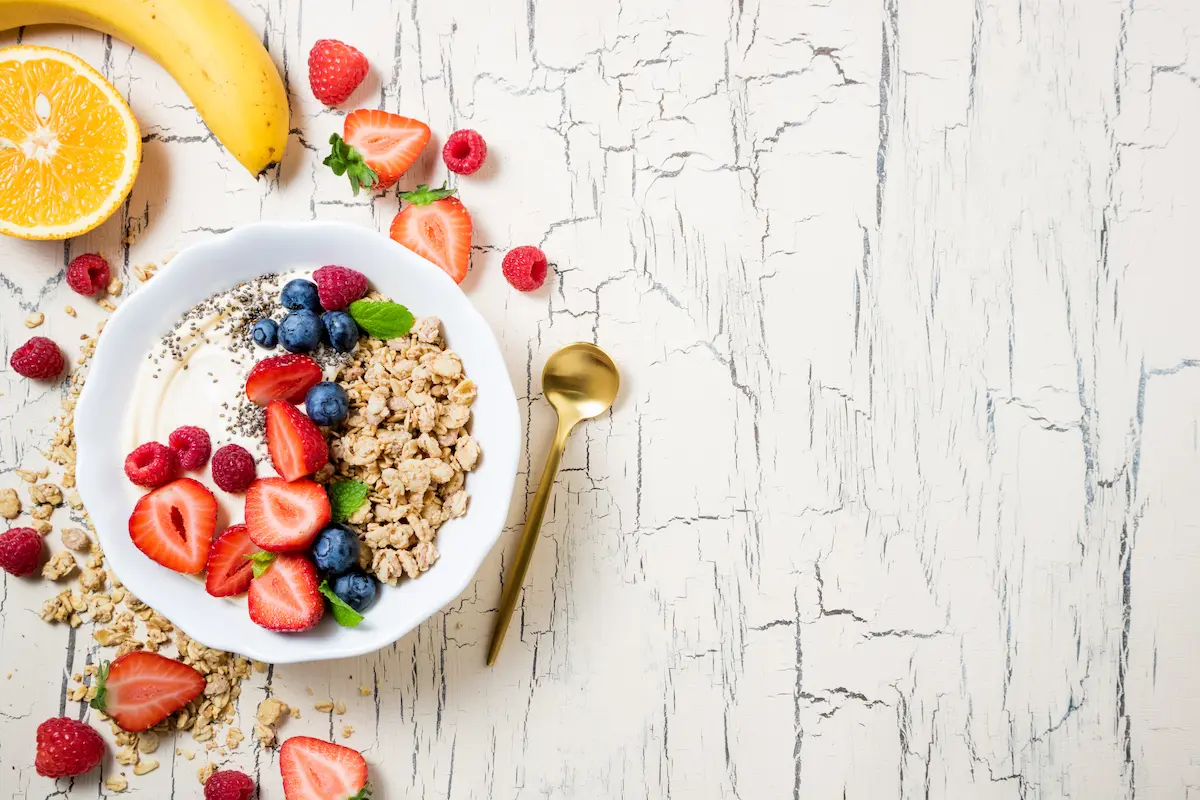
1. Greek Yogurt with Berries and Chia Seeds
Greek yogurt is one of the easiest ways to add protein to breakfast.
Start with plain Greek yogurt and top it with berries, chia seeds, and a small handful of walnuts.
The yogurt provides protein, while berries add fiber and chia seeds contribute fiber and healthy fats.
For a sweeter flavor, add a small amount of honey or some sliced banana.
A 200-gram serving of plain Greek yogurt provides about 18 g of protein, while an ounce (28 g) of chia seeds provides about 5 g of protein.
2. Vegetable Omelet
Eggs make a simple, protein-rich breakfast that can be customized with almost any vegetables you have available.
Whisk two or three eggs and cook them with spinach, bell peppers, tomatoes, mushrooms, or onions.
Add a little cheese if you like.
Serve the omelet with whole-grain toast and a piece of fruit for a more complete meal.
Two large eggs (100 g) provide 12.4 g of protein, while 1 ounce (28 g) of cheese can add around 6–7 g of protein, depending on the type.
3. Cottage Cheese with Fruit and Nuts
Cottage cheese is naturally high in protein and requires almost no preparation.
Add sliced peaches, berries, apples, or pears to a bowl of cottage cheese and top with walnuts or almonds.
The fruit adds fiber and natural sweetness, while nuts contribute healthy fats and additional protein.
One cup (110 g) of cottage cheese provides 12 g of protein, while 1 ounce (28 g) of almonds provides 6 g of protein.
4. Overnight Oats with Greek Yogurt
Overnight oats become much more filling when you add Greek yogurt.
Combine rolled oats, plain Greek yogurt, milk, chia seeds, and berries in a jar.
Refrigerate overnight, then add your favorite toppings in the morning.
The yogurt and milk increase the protein content while oats and chia seeds provide fiber.
200-gram serving of plain Greek yogurt provides about 18 g of protein, while ½ cup (40 g) of rolled oats provides 5.4 g and 2 tablespoons of chia seeds add about 5 g of protein.
5. Peanut Butter Banana Toast
Whole-grain toast topped with peanut butter and banana makes a quick breakfast when you don’t have much time.
Peanut butter contributes protein and healthy fats, while whole-grain bread provides fiber.
For additional protein, pair it with a glass of milk or a serving of Greek yogurt.
Choose peanut butter with little or no added sugar when possible.
Two tablespoons (32 g) of peanut butter provide around 7 g of protein, while one medium slice (36 g) of whole-grain bread typically contributes around 4 g.
6. Tofu Scramble
Tofu can be a useful plant-based alternative to eggs.
Crumble firm tofu into a skillet and cook it with spinach, tomatoes, bell peppers, onions, and your favorite herbs and spices.
You can add turmeric for color and black pepper for flavor.
Serve it with whole-grain toast or roasted potatoes.
100 grams of firm tofu provides around 17 g of protein, depending on the brand and variety.
7. Protein-Packed Smoothie
A smoothie can be an easy breakfast when you need something you can take with you.
Blend together Greek yogurt, milk, berries, banana, chia seeds, and peanut butter.
You can adjust the ingredients depending on how hungry you are.
Using Greek yogurt and milk gives the smoothie a substantial protein boost without requiring protein powder.
One cup of Greek yogurt provides around 18 g of protein, while 1 cup (244 g) of milk provides about 8 g and 2 tablespoons of peanut butter add around 7 g. You can also replace regular milk with 1 cup of unsweetened soy milk, which provides a similar amount of protein at 8.7 g.
Looking for more ideas? Explore 15 Smoothie ideas for weight loss.
8. Avocado and Egg Toast
Top whole-grain toast with mashed avocado and a couple of cooked eggs.
Add tomato slices, black pepper, and a squeeze of lemon for extra flavor.
The eggs provide protein, while avocado contributes fiber and unsaturated fats.
For a higher-protein breakfast, add a side of Greek yogurt or cottage cheese.
Two large eggs provide around 12 g of protein, while one medium slice (33 g) of whole-grain toast contributes about 4 g.
9. Chickpea Breakfast Bowl
Chickpeas aren’t only for lunch and dinner.
Combine cooked chickpeas with sautéed spinach, tomatoes, avocado, and a boiled egg.
Season with cumin, paprika, black pepper, and lemon juice.
Serve it warm or cold.
This is a useful option if you want a breakfast that includes both plant and animal sources of protein.
One cup (164) of cooked chickpeas provides 14–15 g of protein, while one large egg adds around 6 g of protein.
10. Chicken and Sweet Potato Breakfast Hash
Sweet potatoes and chicken make a hearty breakfast that works especially well when you have leftover cooked ingredients.
Sauté diced cooked chicken with sweet potato, spinach, bell peppers, and onions. Season with paprika, garlic, and black pepper, then top with a fried or poached egg.
The sweet potato provides complex carbohydrates and fiber, while the vegetables add color and nutrients.
A half of cooked chicken breast (98 g) provides 29 g of protein, while one large egg contributes around 6 g
11. Breakfast Burrito with Eggs and Black Beans
A breakfast burrito can be both filling and protein-rich.
Fill a whole-grain tortilla with scrambled eggs, black beans, bell peppers, tomatoes, and a little cheese.
Add avocado or salsa for extra flavor.
Black beans provide plant protein and fiber, while eggs add high-quality protein.
½ cup (86 g) of cooked black beans provides 7–8 g of protein, while two large eggs provide around 12 g.
12. Chia Seed Pudding with Greek Yogurt
Chia seeds are known for their high fiber content, but they also contribute some protein.
For a more substantial breakfast, combine chia seeds with Greek yogurt and milk.
Let the mixture sit overnight until it thickens.
Top with berries, sliced fruit, or chopped nuts before eating.
Two tablespoons of chia seeds provide about 5 g of protein, while 200 grams of plain Greek yogurt contributes around 18 g.
13. Smoked Salmon and Egg Toast
Smoked salmon pairs naturally with eggs and whole-grain toast.
Top toast with scrambled or poached eggs and a serving of smoked salmon.
Add cucumber, tomato, or leafy greens for extra vegetables.
Keep in mind that smoked salmon can be relatively high in sodium, so it doesn’t need to be an everyday breakfast for everyone.
Two large eggs provide about 12 g of protein, while 3 ounces (85 g) of smoked salmon provides roughly 16 g of protein.
14. Quinoa Breakfast Bowl
Quinoa can be used beyond savory meals.
Cook quinoa with milk and top it with Greek yogurt, berries, chia seeds, and chopped almonds.
You can add cinnamon and a small amount of honey for sweetness.
Quinoa provides plant protein and fiber, while Greek yogurt increases the overall protein content.
One cup (185 g) of cooked quinoa provides around 8 g of protein, while 2 tablespoons of chia seeds add around 5 g and 1 ounce (28 g) of almonds provides 6 g.
15. Egg and Black Bean Breakfast Tacos
Warm small whole-grain or corn tortillas and fill them with scrambled eggs and black beans.
Add chopped tomatoes, avocado, cilantro, and a squeeze of lime.
The combination of eggs and beans creates a satisfying breakfast with both protein and fiber.
Two large eggs provide about 12 g of protein, while ½ cup of cooked black beans contributes around 7–8 g.
16. Edamame and Egg Breakfast Bowl
Edamame can make a surprisingly satisfying breakfast, especially if you prefer savory meals in the morning.
Combine cooked edamame with scrambled or boiled eggs, avocado, spinach, and whole-grain rice or quinoa. Add sesame seeds, a squeeze of lemon, and a little low-sodium soy sauce for extra flavor.
The edamame and eggs provide a combination of plant and animal protein, while the vegetables and whole grains add fiber and other nutrients.
One cup (about 160 g) of cooked edamame provides around 18 g of protein, while two large eggs provide about 12 g, giving the main protein ingredients roughly 30 g of protein altogether.
17. Turkey and Egg Breakfast Sandwich
A turkey and egg sandwich is an easy option when you want a savory breakfast that provides plenty of protein without requiring much preparation.
Layer sliced roasted turkey breast and a cooked egg onto a whole-grain English muffin or whole-grain bread. Add spinach, tomato, and avocado for extra fiber, vitamins, and healthy fats.
You can warm the sandwich in a skillet or toaster oven until heated through.
Three ounces (85 g) of roasted turkey breast provide 24.4 g of protein, while one large egg adds up to 6 g.
18. Lentil and Egg Breakfast Bowl
Lentils can make an excellent savory breakfast when you have cooked leftovers available.
Combine warm lentils with a boiled egg, sautéed spinach, tomatoes, and avocado.
Season with cumin, paprika, and lemon juice.
Lentils provide plant protein and fiber, while the egg adds additional protein.
One cup (198 g) of cooked lentils provides about 18 g of protein, while one large egg contributes around 6 g.
How to Make Breakfast Higher in Protein
You don’t always need a completely new recipe.
You can simply add a protein-rich food to the breakfast you already eat.
Eating oatmeal? Add Greek yogurt, milk, chia seeds, or nuts.
Having toast? Add eggs, cottage cheese, or peanut butter.
Making a smoothie? Blend in Greek yogurt, cottage cheese, milk, or tofu.
Eating fruit? Pair it with Greek yogurt or cottage cheese.
Making cereal? Use milk and add nuts or seeds.
Small additions can make a noticeable difference.
High-Protein Breakfast Ideas Without Eggs
If you don’t eat eggs, you still have plenty of choices.
Try:
- Greek yogurt with berries and chia seeds
- Cottage cheese with fruit and nuts
- Overnight oats with Greek yogurt
- Tofu scramble
- Chickpea breakfast bowls
- Peanut butter banana toast
- Quinoa breakfast bowls
- Chia seed pudding with Greek yogurt
- Cottage cheese smoothies
Protein doesn’t have to come from eggs or meat.
Explore: 25 Vegan foods high in protein
High-Protein Breakfast Ideas for Vegetarians
Vegetarian breakfasts can provide plenty of protein when you combine different protein-rich foods.
Good options include:
- Greek yogurt
- Cottage cheese
- Eggs
- Milk
- Tofu
- Lentils
- Chickpeas
- Black beans
- Quinoa
- Nuts and seeds
For example, an egg and black bean breakfast burrito provides both animal and plant sources of protein along with fiber-rich ingredients.
High-Protein Breakfast Ideas for Weight Loss
If you’re trying to lose weight, a high-protein breakfast may help you feel fuller and make it easier to manage your overall food intake.
But protein alone doesn’t cause weight loss.
Your total calorie intake, food quality, physical activity, sleep, and other factors matter too.
Choose breakfasts that combine protein with fiber-rich foods and keep portions appropriate for your individual needs.
Greek yogurt with berries, eggs with vegetables and whole-grain toast, or cottage cheese with fruit are examples of nutrient-dense choices.
Also read: 15 High-protein foods that may aid in weight loss
What to Look for in a Healthy High-Protein Breakfast
Protein is important, but don’t let the protein number become the only thing you consider.
A balanced breakfast can include:
Protein: Eggs, Greek yogurt, cottage cheese, tofu, beans, lentils, milk, or nuts.
Fiber: Fruits, vegetables, oats, whole grains, chia seeds, or flaxseeds.
Healthy fats: Avocado, nuts, seeds, or natural nut butter.
Carbohydrates: Oats, whole-grain bread, quinoa, fruit, or potatoes.
Combining these foods can make breakfast more satisfying and provide a wider range of nutrients.
The Bottom Line
A high-protein breakfast doesn’t have to mean eating eggs every morning or drinking a protein shake.
Choose a reliable protein source and pair it with fruits or vegetables, fiber-rich carbohydrates, and healthy fats when appropriate.
The best breakfast is one that keeps you satisfied, provides useful nutrients, and fits realistically into your day.