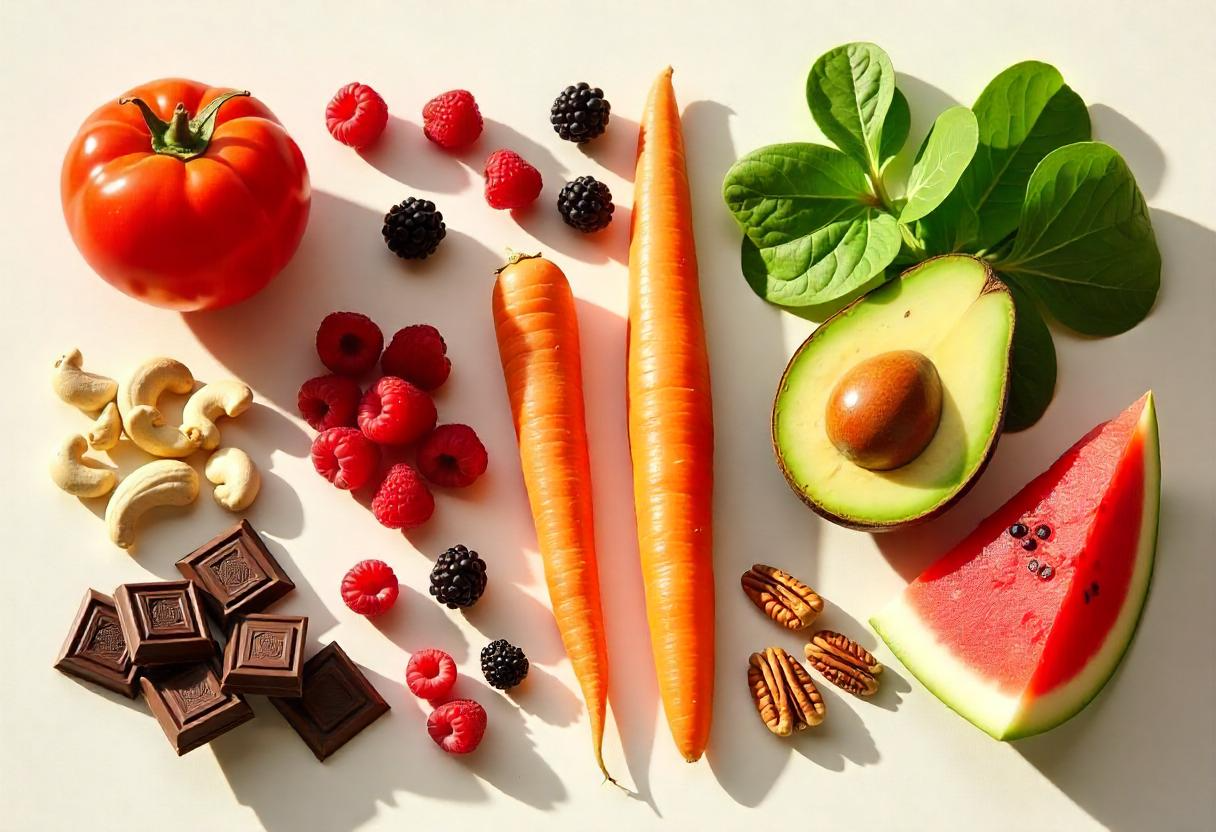
Most people know that sunscreen is essential for protecting the skin from the sun, but few realize that what you eat can also make a difference. Certain foods are rich in antioxidants and plant compounds that help your skin defend itself against UV-induced damage from within.
While a healthy diet cannot replace sunscreen or protective clothing, it can complement these measures by reducing oxidative stress, calming inflammation, and supporting the skin’s natural repair processes.
Over time, repeated sun exposure can contribute to tanning, dark spots, wrinkles, and loss of skin elasticity. Including nutrient-rich foods in your daily diet may help strengthen your skin’s resilience, slow premature aging, and promote healthier skin in the long run.
Sun-Protective Foods for Your Skin
Here are some of the best foods that can help protect your skin from sun damage and keep it healthy and glowing.
1. Tomatoes
Tomatoes are one of the best foods for supporting your skin against sun damage, largely because they are rich in lycopene.
Lycopene is a powerful antioxidant that helps protect skin cells from the harmful effects of ultraviolet (UV) rays by neutralizing damaging free radicals.
Research reviewing 21 human studies found that tomato and lycopene supplements helped reduce UV-induced skin redness, improve skin thickness and pigmentation, and increase the skin’s natural resistance to sun damage. These findings suggest lycopene-rich foods may support internal sun protection and help slow photoaging.
However, tomatoes should complement, not replace, sunscreen, protective clothing, and other sun protection measures.
Cooked tomatoes are an even better choice because heating makes lycopene easier for your body to absorb.
Enjoy them in soups, sauces, curries, salads, or as a healthy snack. Pairing tomatoes with a source of healthy fat, such as olive oil, can further boost lycopene absorption.
2. Carrots
Carrots are one of the richest dietary sources of beta-carotene, a type of antioxidant that is converted into vitamin A in the body
Beta-carotene supports skin health by boosting collagen production, enhancing cell regeneration, protecting against free radicals, and refining skin texture, making it beneficial for anti-aging and overall skin health.
Research also suggests that beta-carotene may help protect the skin from sun damage.
In a 12-week study, participants who consumed beta-carotene daily developed significantly less skin redness after UV exposure, indicating that long-term intake may strengthen the skin’s natural defense against the sun. However, it should complement, not replace, sunscreen and other sun protection measures.
Moreover, beta-carotene may help promote a more even-looking complexion by promoting melanin production and protecting skin cells from oxidative stress.
To get the most out of your carrots, enjoy them raw in salads or add them to smoothies, soups, stews, and juices.
The vibrant orange color of carrots is a sign of their high beta-carotene content, making them a nutritious addition to a skin-friendly diet.
3. Berries
Berries such as blueberries, strawberries, and raspberries are rich in antioxidants, especially vitamin C, which is vital for skin health.
Vitamin C helps neutralize free radicals caused by UV exposure, which can otherwise lead to premature aging and wrinkles. Additionally, vitamin C promotes collagen production, keeping your skin firm and elastic.
Berries also contain anthocyanins, a type of antioxidant that helps protect the skin from UV-induced inflammation and damage.
A growing body of research from cell, animal, and human studies suggests that anthocyanins may help reduce UV-induced skin damage. They appear to fight oxidative stress, support collagen production, reduce inflammation, limit DNA damage, and help prevent pigmentation, making them promising compounds for protecting against photoaging.
Enjoy a handful of fresh berries as a snack, blend them into smoothies, or add them to your morning oatmeal for a skin-boosting treat.
4. Spinach
Spinach is a leafy green packed with skin-protecting nutrients. It is rich in vitamin E, a fat-soluble antioxidant that helps protect your skin from UV damage by neutralizing free radicals.
Additionally, spinach is rich in lutein, a carotenoid that protects the skin from oxidative stress by reducing free radical formation.
A 3-month study found that women taking 20 mg of lutein daily had a 22% increase in their skin’s natural resistance to UV-induced redness. The researchers concluded that lutein may help strengthen the skin’s defense against sun-related damage, although it did not improve skin regeneration.
Lutein may also help reduce inflammation, prevent immunosuppression, and lower the risk of premature aging caused by UV damage.
Carotenoids have been shown to improve skin elasticity, hydration, texture, and reduce the appearance of wrinkles and age spots, offering additional anti-aging benefits.
You can enjoy spinach in salads, smoothies, or sautéed with olive oil for maximum absorption of its fat-soluble nutrients.
5. Avocados
Avocados are packed with monounsaturated fats, which help keep the skin hydrated and smooth.
These healthy fats form a protective barrier on the skin, preventing moisture loss and protecting against environmental damage, including sun exposure (9).
Consumption of monounsaturated fats has been linked to improved skin elasticity and reduced DNA damage caused by UV radiation (9, 10).
In addition to healthy fats, avocados are a great source of vitamin E, and carotenoids such as lutein and zeaxanthin, which further enhances skin protection (6, 11).
Avocados are incredibly versatile and can be added to salads, mashed on toast, blended into smoothies, or eaten on their own.
6. Green Tea
Green tea is well-known for its health benefits, and when it comes to skin protection, it is a true powerhouse.
Green tea contains polyphenols, particularly epigallocatechin gallate (EGCG), which have anti-inflammatory and antioxidant properties.
These polyphenols help protect the skin from UV damage by reducing the production of free radicals and preventing inflammation caused by sun exposure.
A review of studies suggests that EGCG, the main antioxidant in green tea, may help protect the skin from UV-induced damage. Research indicates that it can improve skin elasticity and hydration, help protect collagen and elastin, reduce inflammation and DNA damage, and regulate melanin production, which may contribute to a more even skin tone and slower skin aging.
Drinking green tea regularly can improve your skin’s ability to withstand sun damage and reduce the risk of sunburns. You can enjoy green tea hot or cold, or even apply it topically to soothe sunburns and calm irritated skin.
Adding lemon to the green boosts its benefits, explore the benefits of green tea with lemon here!
7. Nuts and Seeds
Nuts and seeds, such as walnuts, almonds, chia seeds, and flaxseeds, are rich in omega-3 fatty acids.
These healthy fats help protect the skin from sun damage by reducing inflammation and maintaining skin hydration. Omega-3s also play a role in strengthening the skin’s natural barrier, preventing moisture loss, and reducing the risk of sunburns (7).
A 2021 study found that women who ate 42 g of almonds daily developed greater resistance to UVB-induced skin redness than those who ate pretzels. However, almond consumption did not significantly improve skin hydration, pigmentation, oil production, or roughness during the study.
Incorporating nuts and seeds into your diet can help promote smooth, healthy skin. Add them to your morning yogurt, sprinkle them on salads, or simply enjoy a handful as a snack.
8. Dark Chocolate
Dark chocolate, particularly varieties with at least 70% cocoa content, is not only a delicious treat but also beneficial for your skin.
Dark chocolate is rich in polyphenols, especially flavanols, which have potent antioxidant and anti-inflammatory properties.
These compounds help protect the skin from UV-induced damage by neutralizing free radicals and reducing inflammation.
In a 2006 study, women who consumed high-flavanol cocoa daily developed 15–25% less UV-induced skin redness and experienced improvements in skin hydration, thickness, blood circulation, and texture compared with those consuming low-flavanol cocoa.
However, a 2014 study found that high-flavanol chocolate did not significantly increase the skin’s resistance to UV-induced redness, although it did produce a small but significant improvement in skin elasticity.
Together, these findings suggest that cocoa flavanols may support skin health, but more research is needed to confirm their photoprotective effects.
Consuming dark chocolate in moderation can provide skin-supporting antioxidants while also satisfying your sweet tooth. For the greatest benefits, choose high-quality dark chocolate with at least 70% cocoa and keep portions moderate due to its calorie and sugar content.
9. Watermelon
Watermelon may help support your skin’s natural defense against sun damage because it is one of the richest natural sources of lycopene, the antioxidant responsible for its vibrant red color.
As mentioned earlier, lycopene helps protect skin cells from UV-induced oxidative stress and may reduce signs of photoaging. Although most studies have used tomatoes or lycopene supplements rather than watermelon, watermelon can still be a valuable addition to a skin-friendly diet.
Watermelon is also over 90% water, helping keep the skin hydrated and supporting its natural barrier function.
Enjoy it as a refreshing snack on a hot day or add it to fruit salads and smoothies for a hydrating, nutrient-rich treat.
In Closing
While sunscreen and protective clothing are essential, adding skin-friendly foods to your diet can offer natural sun protection. Foods rich in antioxidants, healthy fats, and vitamins help strengthen the skin, reduce inflammation, and repair sun damage.
By incorporating these foods into your meals, you can enjoy healthier, more resilient skin all summer long.
Eat well, stay hydrated, and keep glowing!
You might also be interested in
10 Brilliant Tips for a Healthy Summer
10 Healthy and Delightful Summer Recipes
5 thoughts on “9 Skin-Healthy Foods for Natural Sun Protection”
Comments are closed.