Protein is where most people hesitate when switching to a vegan diet. The assumption is simple: no meat, no protein. That’s wrong.
A well-planned vegan diet can easily meet protein needs. In many cases, it can do it with less saturated fat, more fiber, and better long-term health outcomes. The real issue isn’t lack of protein — it’s lack of awareness.
If your meals are mostly rice, roti, and vegetables with minimal legumes or protein-rich foods, then yes, you’ll fall short. But once you understand where protein actually comes from in plant foods, everything changes.
Before getting into the foods, it’s important to understand how much protein you actually need.
How Much Protein Do You Need?
For general health, protein needs start at around 0.8 g per kg of body weight per day.
For most people, aiming for 1.0–1.6 g per kg is more practical, depending on activity level.
For example, if you weigh 60 kg, that’s roughly 60 to 96 grams per day.
If you follow a vegan diet, staying toward the higher end of this range helps meet your needs more consistently.
For those who train regularly, higher intake may be useful. The International Society of Sports Nutrition suggests around 1.4–2.0 g per kg for muscle maintenance and growth.
Vegan Sources of Protein
Here are some of the best plant-based foods that can help you meet your daily protein needs.
1. Beans and Legumes
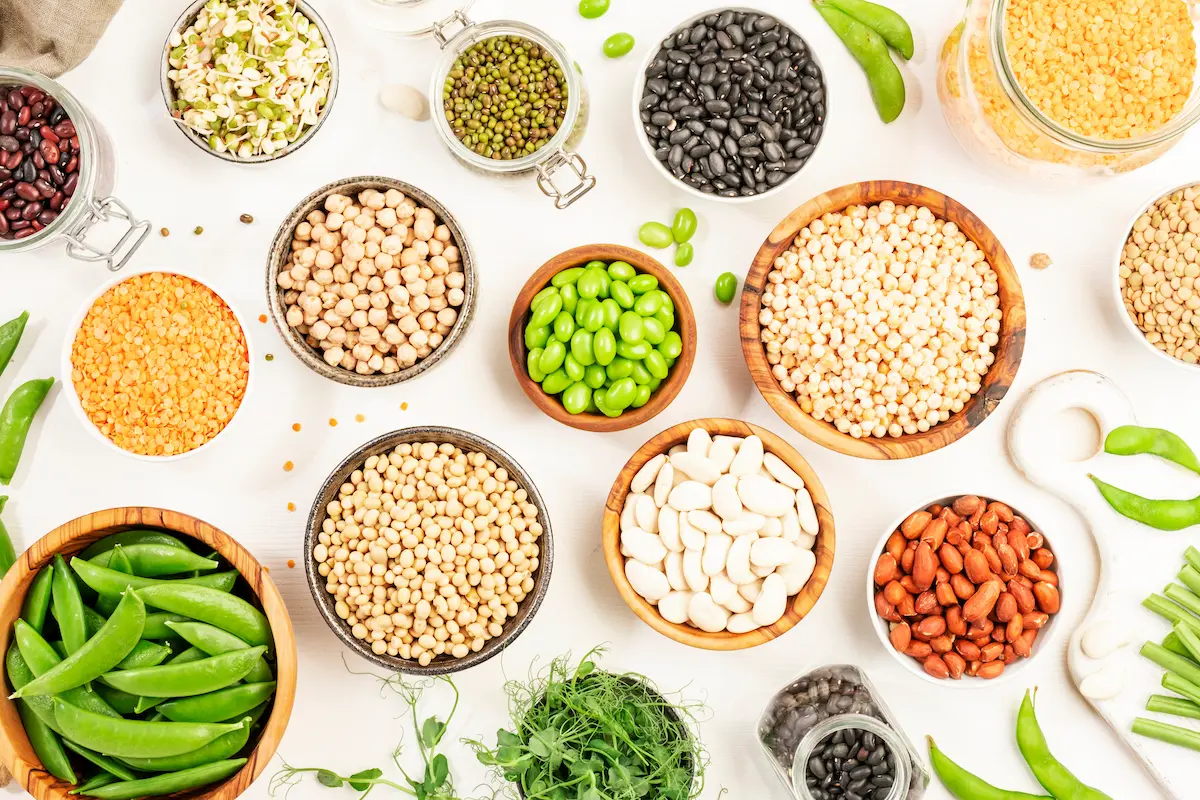
Lentils, chickpeas, black beans, and kidney beans are some of the most practical protein sources in a vegan diet. They’re affordable, widely available, and easy to include in everyday meals.
Lentils provide around 9 g of protein per 100 g cooked, or roughly 18 g per cup (198 g), making them the highest-protein option in a typical serving among these four.
Chickpeas offer about 9 g of protein per 100 g cooked, or around 14–15 g per cup (164 g). Their protein content is similar to lentils by weight, although they provide slightly less per typical cup serving.
Black beans provide about 9 g of protein per 100 g, with roughly 15 g per cooked cup (172 g).
Kidney beans are slightly lower, providing roughly 8.7 g per 100 g and about 15 g per cooked cup (177 g).
These legumes also provide fiber, iron, folate, potassium, and complex carbohydrates. Their combination of protein and fiber can make meals more filling, while pairing legumes with grains such as rice can provide a broader balance of essential amino acids across the diet.
2. Moong Beans
Moong beans are easier to digest than many other legumes. Cooked moong provides around 7 g of protein per 100 g (around 14 g per cup).
Sprouted moong beans are easier to digest and offer better nutrient absorption. The sprouting process reduces anti-nutrients like phytic acid, which helps your body absorb more minerals and lowers the chance of bloating.
This makes it a reliable daily protein option for people with sensitive digestion.
3. Soy Foods
Soybeans, tofu, tempeh, and edamame are some of the most useful plant-based protein foods, all coming from soy but offering different amounts of protein depending on how they’re prepared.
Cooked soybeans provide around 18 g of protein per 100 g, or roughly 31 g per cup (172 g), making them one of the most protein-dense whole soy foods.
Tofu contains around 8 g of protein per 100 g in softer varieties. Firmer types contain considerably more, with up to 17 g per 100 g because they contain less water.
Tempeh is particularly high in protein, providing nearly 20 g per 100 g. Its protein content is higher than most types of tofu, making it one of the more concentrated soy-based protein options.
Edamame, or young soybeans, provides about 12 g of protein per 100 g, with nearly 19 g per cup (160 g).
Soybeans are a complete protein, meaning they supply all nine essential amino acids. Tempeh is fermented, which can make it easier to digest and may reduce compounds that interfere with mineral absorption.
Because large portions of soy foods may cause digestive discomfort for some people, including them in balanced portions can be a practical approach.
4. Quinoa
Quinoa is a complete protein, meaning it provides all essential amino acids, though its overall protein content is moderate compared to legumes and soy foods.
It contains 4.4 g of protein per 100 g, with roughly 8 g per cup (185 g).
While its protein content is lower than legumes, it works well as a base when combined with higher-protein foods.
It is naturally gluten-free and serves as a good alternative to rice in balanced meals.
5. Amaranth
Amaranth provides about 4 g of protein per 100 g and around 9 g per cooked cup.
It’s rich in iron, calcium, and magnesium.
It also has a slightly nutty flavor and works well in porridges or as a rice substitute.
6. Ezekiel Bread
Ezekiel bread is made from sprouted whole grains and legumes, which improves nutrient absorption and protein quality. Two slices provide around 8 g of protein, though the exact amount varies by brand.
Compared to regular white bread, it offers more fiber and a better amino acid profile. It can be used like any other bread — for toast, sandwiches, or alongside meals.
It’s not a high-protein food on its own, but it contributes more than standard bread and fits well into a balanced diet.
7. Oats
Oats provide around 5 g of protein per half cup (dry).
They’re not a high-protein food on their own, but they’re a solid base. Add nuts, seeds, or soy milk to increase the protein content.
They also help with satiety and stable blood sugar.
8. Nuts
Nuts can add a useful amount of protein to a vegan diet, although they’re generally better viewed as supporting protein sources rather than primary ones.
Protein content per ounce (28 g):
While they are slightly lower in protein compared to nuts like peanuts or pistachios, they offer something most other nuts don’t — a good amount of omega-3 fatty acids.
Because nuts are calorie-dense, moderate portions make them easier to include as part of a balanced vegan diet.
9. Seeds
Seeds can be an easy way to add more plant-based protein to your diet, and some provide considerably more protein than others.
Chia seeds provide about 5 g of protein per 28 g. They’re particularly known for their fiber and omega-3 content, while still making a useful contribution to your daily protein intake.
Pumpkin seeds are one of the higher-protein options, providing about 9 g per 30 g. Hemp seeds are similar, with nearly 9.5 g of protein per 30 g, making them one of the most concentrated protein sources in this group. Hemp seeds are also a complete protein, providing all nine essential amino acids.
Flaxseeds come in last for protein, with only around 1.3 g per serving when ground. However, they’re still worth including because they provide alpha-linolenic acid (ALA), a plant-based omega-3 fatty acid, along with fiber.
Ground flaxseeds are also easier for the body to use than whole flaxseeds and can be mixed into oats, smoothies, or yogurt.
Seeds provide a mix of protein, fiber, healthy fats, and minerals, making them useful additions to a varied vegan diet even when their protein content is relatively modest.
10. Nutritional Yeast
Nutritional yeast provides around 5 g of protein per 2 tablespoons (10 g), though the exact amount may vary by brand.
It also contains B vitamins, including B12 (if fortified).
It has a cheesy flavor, making it useful for vegan cooking without dairy.
11. Seitan
Seitan is made from wheat gluten and provides around 18-21 g of protein per 85 g, though the exact amount varies by brand.
It has a firm, meat-like texture, making it a popular high-protein option in vegan diets.
However, it is not suitable for people with gluten intolerance.
12. Plant-Based Protein Powder
Sometimes food alone isn’t enough — especially if you have higher protein needs.
Plant-based protein powders (pea, rice, soy blends) provide 20–25 grams per scoop.
They’re useful, but not essential. Use them when convenience matters or intake is falling short.
13. Spirulina
Spirulina is a type of blue-green algae that contains around 4 g of protein per tablespoon (7 g). It is considered a complete protein and also provides iron and antioxidants.
It’s usually consumed as a powder or tablet and can be added to smoothies or water. The taste is strong, so it’s not for everyone.
While the protein content per serving is decent, the portion size is small. Think of spirulina as a supplement to your diet, not a main protein source.
Learn more: 15 High-protein foods that may aid in weight loss
A Simple Way to Build High-Protein Vegan Meals
Use this structure:
- Base: grains (rice, quinoa, oats)
- Protein core: lentils, beans, tofu, or soy
- Add-ons: seeds, nuts, or nutritional yeast
- Vegetables: for fiber and micronutrients
This approach works every time.
Final Take
A vegan diet is not low in protein. A poorly planned vegan diet is.
If you include 2–3 solid protein sources daily and stop relying on low-protein fillers, you’ll meet your needs without stress.
Keep it simple. Rotate your foods. Focus on consistency, not perfection.
11 thoughts on “13 Protein-Rich Vegan Foods to Help You Meet Your Daily Needs”
Comments are closed.