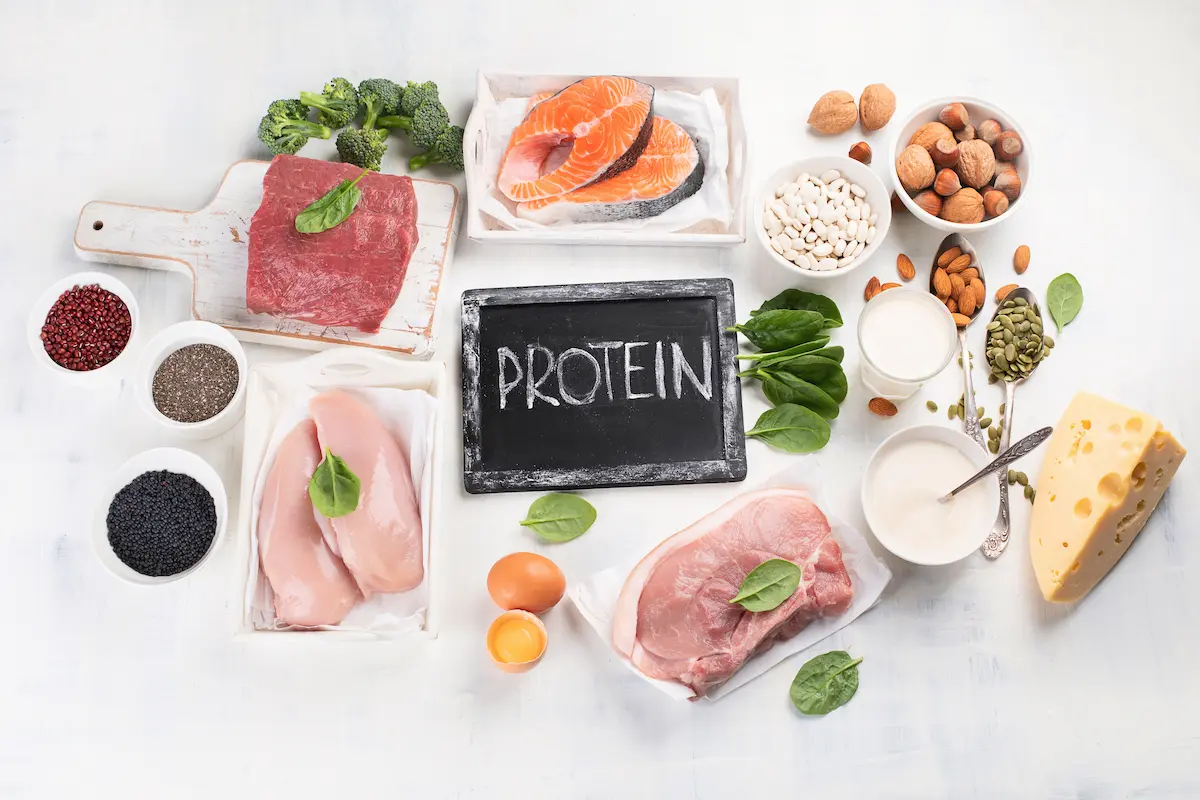
Protein is the one nutrient most people don’t eat enough of. Meals look full, but hunger shows up fast because they’re built around carbs with very little staying power.
Protein supports muscle, recovery, and many basic body functions, but it also plays a major role in keeping you full and steady between meals.
When protein is too low, energy dips, cravings rise, and it’s harder to stay satisfied between meals.
The fix is simple. Build meals around foods that actually deliver protein instead of treating it like an afterthought. You don’t need complicated plans. Just a short list of reliable foods you can use daily.
The baseline for protein intake is about 0.8 grams per kilogram of body weight per day. This supports basic body functions but is not enough when your goal is fat loss.
In a calorie deficit, your body is more likely to lose muscle. Increasing protein intake helps preserve muscle and improves satiety.
For people who are active or trying to maintain muscle during fat loss, higher intake is often beneficial. The International Society of Sports Nutrition suggests around 1.4 to 2.0 grams of protein per kg of body weight per day.
If you weigh 65 kg, that translates to roughly 91 to 130 grams of protein per day.
In practice, most people will do well in the lower to mid part of this range. Going extremely high isn’t necessary and can make your diet harder to maintain.
If you’re consistently hungry or losing strength during a calorie deficit, your protein intake is likely too low — or your overall diet needs adjustment.
1. Eggs
Eggs are one of the most efficient foods to build meals around. They cook quickly, pair with almost anything, and make an easy, satisfying addition to breakfast, lunch, or dinner.
One large egg (50 g) contains 6.2 g of protein, or 12.4 g per 100 g. They also provide nutrients like choline and vitamin B12 that support normal muscle and brain function. The yolk is one of the few natural food sources of vitamin D, making eggs a useful way to get more of this vitamin through your diet.
Egg whites provide even more protein by weight. Three egg whites (roughly 100 g) contain 10.7 g of protein, compared with 12.4 g per 100 g for whole eggs. They contain very little fat, making them an easy way to boost the protein content of omelets, scrambles, and other meals.
For a simple balance of protein and nutrients, you can combine whole eggs with extra egg whites.
2. Greek Yogurt
Greek yogurt is thicker and more filling than regular yogurt because much of the liquid has been strained out. That process makes it far more satisfying and useful as a breakfast or snack base.
It pairs well with fruit, nuts, or oats.
One cup (245 g) of plain Greek yogurt contains 21.5 g of protein, or 8.8 g per 100 g.
3. Milk
Milk is an easy addition that helps balance meals and snacks. It supports bone health and recovery while also helping meals feel more complete.
Adding it to smoothies, cereal, or coffee is a simple way to increase intake.
One cup (244 g) of milk contains around 8 g of protein along with calcium and other key nutrients.
4. Cheese
Cheese adds flavor, texture, and staying power to meals. It’s usually best used as a supporting protein source rather than the main one since portions are small and calories add up quickly.
Add a little to eggs, sandwiches, salads, or grain bowls to make meals more satisfying without much effort.
Most cheeses provide 5–9 g of protein per ounce (28 g), depending on the type.
Protein per ounce (28 g):
- Cheddar: 6.1 grams
- Mozzarella: 6.3 grams
- Parmesan: 8 grams
- Romano: 9 grams
- Swiss: 7.7 grams
- Paneer: 4.5 grams
5. Chicken Breast
Chicken breast is a practical staple for everyday meals. It cooks quickly, stores well, and fits into everything from salads to wraps and grain bowls.
Half of the chicken breast (86 g) delivers about 27 g of protein, or 31 g per 100 g.
6. Turkey
Turkey is a versatile, protein-rich option that works well in burgers, tacos, sandwiches, wraps, pasta, and grain bowls. Both ground turkey and turkey breast can fit easily into everyday meals, with leaner varieties providing plenty of protein without excessive fat.
Ground turkey provides around 27 g of protein per 100 g, while turkey breast provides around 30 g per 100 g. Turkey breast is particularly easy to prep ahead and use throughout the week, while ground turkey works well when you want something quick and versatile.
7. Lean Beef
Lean beef is dense and satisfying. It supports muscle maintenance and provides iron and B vitamins. Use moderate portions and pair with vegetables or grains for balanced meals.
A 3-ounce (85 g) serving contains 24.6 g of protein, or 29 g per 100 g.
8. Pork Loin
Pork loin is leaner than many other cuts and works well grilled or roasted. It’s filling and easy to portion across multiple meals.
A 3-ounce (85 g) cooked portion provides roughly 22.4 g of protein or 26.4 g per 100 g.
10. Salmon and Sardines
Salmon and sardines give you more than a solid protein boost. Both are fatty fish that provide omega-3 fats, making them especially useful when you want a protein-rich meal with additional nutritional value.
Salmon is easy to work into salads, grain bowls, or simple dinners with vegetables. A 3-ounce (85 g) cooked portion provides about 19 g of protein, or roughly 22 g per 100 g.
Sardines may be small, but they’re surprisingly nutrient dense. They provide protein along with omega-3 fats and calcium, and canned sardines can be eaten straight from the tin or added to salads, toast, pasta, and rice bowls.
One 92-g can provides about 22.6 g of protein, or 24.6 g per 100 g.
11. Tuna
Tuna is one of the easiest high-protein foods to keep on hand. Canned tuna needs almost no preparation and works just as well in a quick sandwich as it does in a salad, wrap, or rice bowl.
A 3-ounce (85 g) serving light, canned tuna provides 16.2 g of protein or 19 g per 100 g.
12. Halibut and Cod
If you prefer a lighter fish that still delivers plenty of protein, halibut and cod are both good options. Their mild flavor makes them easy to pair with herbs, lemon, vegetables, rice, potatoes, or whatever else is already on your plate.
A 3-ounce (85 g) cooked serving of halibut provides around 19 g of protein, or 22.5 g per 100 g. Cod provides slightly more, with about 19.4 g per 3 ounces, or roughly 23 g per 100 g.
13. Shellfish
Prawns, shrimp, crab, and lobster are another easy way to add plenty of protein without making a meal feel overly heavy. They cook quickly and can bring a substantial protein boost to stir-fries, curries, salads, pasta, and rice bowls.
A 3-ounce (85 g) cooked serving provides:
14. Beans and Legumes
If you’re looking for affordable plant-based foods that actually make a meal feel satisfying, lentils, chickpeas, and beans are hard to beat. They’re rich in protein and fiber, and each one brings something different to the plate.
Lentils are the protein standout of the group. One cooked cup (198 g) provides about 18 g of protein, or 9 g per 100 g.
Chickpeas come next, with about 14.5 g of protein per cooked cup (164 g), or 8.86 g per 100 g.
Black beans and kidney beans are remarkably similar in protein. A cooked cup of black beans (172 g) provides around 15 g, while kidney beans provide 15.3 g per cup (177 g).
15. Soy Foods
Soy foods are some of the most useful plant-based protein options, but their protein content varies quite a bit depending on the form.
Edamame leads the group with 18.5 g of protein per cooked cup (160 g), or 11.5 g per 100 g.
Tofu provides less, with about 9 g of protein per 100 g, but its neutral flavor and ability to absorb other flavors make it an easy staple for everyday meals.
Tempeh packs considerably more protein than tofu. A 100-g serving of cooked tempeh provides about 20 g, making it the most protein-dense option in this group.
Soy milk is lower in protein than the other soy foods, but it can still contribute meaningfully to your daily intake. One cup (244 g) usually provides about 9 g of protein, or 3.55 g per 100 g.
16. Nuts
Nuts and peanuts are an easy way to add more protein to your diet while also getting fiber and healthy fats. They’re particularly useful as snacks or additions to meals, although portion sizes matter because they’re calorie dense.
Peanuts come out on top among these whole-food options, with 7.31 g of protein per 28 g. Almonds provide around 6 g per 28 g, while pistachios offer 5.73 g for the same serving.
Peanut butter provides a similar amount to peanuts in a slightly larger serving. Two tablespoons (32 g) provide 7.11 g of protein, making it simple to add protein to toast, oats, smoothies, or snacks.
17. Seeds
Seeds can add a useful protein boost to meals without much effort. They’re easy to sprinkle over yogurt, oats, salads, or bowls, and each type offers a slightly different amount of protein.
Hemp seeds lead this group, with 9.48 g of protein in just 30 g. Pumpkin seeds are close behind, providing 8.56 g per 28 g.
Sunflower seeds offer 5.67 g per 30 g, while chia seeds provide about 4.7 g per 28 g.
The amounts may look modest compared with foods like lentils or tofu, but seeds are easy to combine with other protein-rich foods. Adding them to yogurt, milk, oats, or smoothies can gradually increase the protein content of a meal.
18. Quinoa and Amaranth
Quinoa and amaranth are pseudocereals that stand out from many traditional grains for their protein content. They’re especially useful in plant-based diets because both provide all nine essential amino acids.
Quinoa provides about 8.14 g of protein per cooked cup (185 g), or 4.4 g per 100 g. Amaranth is slightly higher, with around 9 g of protein per cooked cup, making it one of the more protein-rich grain-like foods.
Both are also nutrient-dense, giving you more than protein alone. Their versatility makes them easy to use as a base for meals, but their protein content is still modest compared with foods such as lentils, tofu, or tempeh.
19. Whole Grains
Whole grains can add a useful amount of protein to everyday meals, even though they don’t provide as much as legumes or soy foods.
Oats offer around 6 g of protein per cooked cup (234 g), while brown rice provides 5.54 g per cup (202 g).
Farro is another worthwhile option, providing 6–8 g of protein per cooked cup. It’s one of the more protein-rich whole grains and adds a little more protein than brown rice or whole-wheat bread in a typical serving.
20. Whole-Wheat Bread
Whole-grain bread contributes small amounts that add up across the day. Pair with eggs, nut butter, or cottage cheese.
Each slice (32 g) contains roughly 4 g of protein, or 12.4 g per 100 g.
If you’re always hungry, low on energy, or struggling to stay full between meals, protein intake is probably too low. The solution isn’t complicated. Build meals around a real protein source first. Then add carbs and vegetables around it.
Pick a few foods from this list and use them daily. Keep them stocked. Prep them ahead of time. Consistency matters more than variety.