Feeling tired all the time. Brain fog. Poor concentration. Tingling in your hands or feet. Low stamina even after a full night’s sleep.
If you follow a vegetarian diet, these symptoms could be related to vitamin B12 deficiency.
Because vitamin B12 is found naturally almost exclusively in animal-based foods, many vegetarians struggle to get enough without realizing it.
Fortunately, there are several reliable vegetarian sources that can help meet your needs.
Why Vitamin B12 Matters
Vitamin B12 plays a major role in several critical functions inside the body:
- Helps make healthy red blood cells
- Supports brain and nervous system health
- Helps protect nerves from damage
- Needed for making DNA
- Helps the body produce energy from the food you eat
- Supports important functions inside cells
Low B12 levels can eventually lead to megaloblastic anemia, nerve damage, memory problems, balance issues, and long-term neurological complications if ignored for too long.
Adults generally need around 2.4 mcg of vitamin B12 daily. During pregnancy and breastfeeding, requirements increase slightly.
How Much Vitamin B12 Do You Need?
Vitamin B12 requirements are relatively small compared to many other nutrients, but consistency matters because the body cannot produce it on its own.
Here are the recommended daily amounts for most people:
- Adults: 2.4 mcg
- Pregnant women: 2.6 mcg
- Breastfeeding women: 2.8 mcg
The challenge for vegetarians is not usually the number itself. The challenge is getting reliable intake regularly from foods that actually contain absorbable vitamin B12.
For example, a cup of milk may provide around half of the daily requirement, while some fortified cereals can provide nearly the full amount in one serving. On the other hand, many foods promoted online as “natural B12 sources” contain inconsistent or inactive forms that may not adequately support long-term needs.
Older adults and people with digestive conditions may also absorb vitamin B12 less efficiently, even when intake appears adequate.
Vegetarian Foods Rich in Vitamin B12
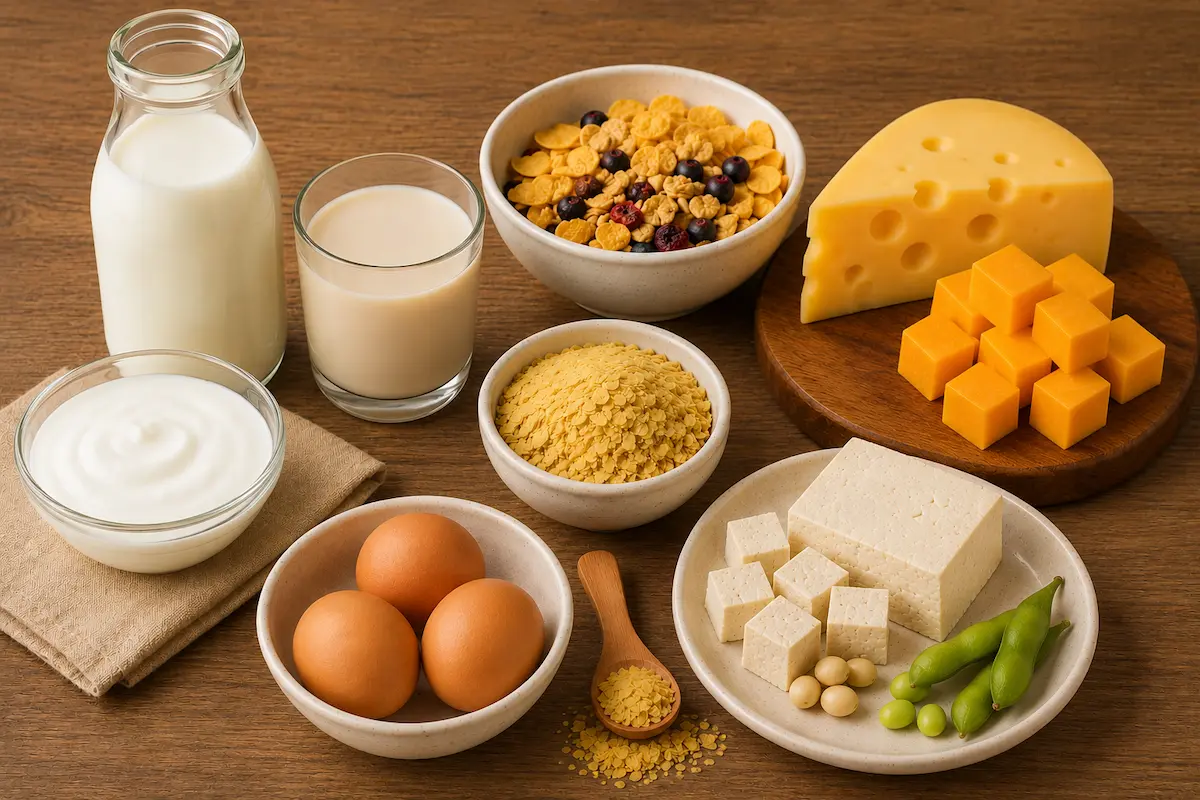
These are the vegetarian foods that are packed with vitamin B12.
1. Milk
Milk is one of the most practical vegetarian sources of vitamin B12 because many vegetarians already consume it regularly. Cow’s milk naturally contains B12, along with protein, calcium, and riboflavin.
One cup (244 g) of milk can provide around 1.3 mcg of vitamin B12, which is over half the daily requirement for many adults.
The problem is quantity. Small amounts added to tea or coffee are not enough to significantly support B12 intake. People who drink only a splash of milk daily should not assume they are meeting requirements.
Full-fat and low-fat milk both contain B12. The vitamin content does not disappear simply because the fat content changes.
2. Yogurt
Yogurt is one of the better vegetarian sources of vitamin B12, especially for people who consume dairy regularly.
A 6-ounce container (170 g) of plain yogurt can provide around 1 mcg of vitamin B12, which covers about 42% of the daily value (DV).
In addition to vitamin B12, yogurt provides protein, calcium, and probiotics. Plain yogurt is usually a better choice than heavily sweetened flavored versions that contain excess added sugar.
Traditional homemade curd can also contribute to B12 intake, although the amount varies depending on the milk and preparation method. Greek yogurt is higher in protein, but vitamin B12 levels can differ between brands.
3. Cheese
Cheese contains moderate amounts of vitamin B12, although the amount varies depending on the type. Swiss cheese is one of the richer sources, providing about 38% of the daily value per ounce. Mozzarella offers around 27% DV, while cheddar provides about 13% DV per ounce.
Cheese can help increase vitamin B12 intake, but it should not be your only source because serving sizes are usually small. It works best alongside other B12-rich dairy foods such as milk and yogurt.
Another thing to consider is calories, sodium, and saturated fat. Eating large amounts of cheese regularly, especially processed varieties, can quickly increase overall calorie and sodium intake.
4. Fortified Breakfast Cereals
Fortified cereals are one of the most effective vegetarian sources of vitamin B12 because manufacturers directly add the vitamin during processing.
Some fortified cereals provide 25% to 100% of daily B12 needs in a single serving.
This matters because naturally occurring B12 in vegetarian foods is limited. Fortification helps fill a nutritional gap that many vegetarians struggle with.
The important detail is label reading. Not all cereals are fortified equally. Some contain minimal B12 while others provide substantial amounts.
High sugar cereals should not be mistaken for healthy simply because they are fortified. Choose options with higher fiber and lower added sugar when possible.
5. Nutritional Yeast
Nutritional yeast is extremely popular among vegetarians and vegans because fortified versions can contain very high amounts of vitamin B12. Depending on the fortification level, a serving may provide around 8.3 to 24 mcg of vitamin B12, which equals roughly 346% to 1,000% of the daily value.
It has a cheesy, savory flavor and is often sprinkled on popcorn, pasta, soups, roasted vegetables, and sauces.
Only fortified nutritional yeast provides reliable amounts of vitamin B12. Unfortified products contain little or none, so always check the nutrition label before buying.
6. Fortified Plant-Based Milk
Many soy, almond, and oat milks are fortified with vitamin B12. Depending on the brand, one cup can provide around 1–3 mcg of vitamin B12, or roughly 40%–125% of the daily value.
For vegetarians who consume limited dairy, fortified plant milk can help improve vitamin B12 intake substantially. Some products provide amounts similar to cow’s milk, while others contain even more.
However, fortification levels vary widely between brands and countries, so checking the nutrition label is important.
Unsweetened fortified versions are usually better choices for daily use because they contain less added sugar. Soy milk also provides more protein than almond or rice milk, making it a more nutritionally balanced option for many people.
7. Eggs
For vegetarians who eat eggs, they can contribute moderate amounts of vitamin B12. One large egg provides around 0.4 mcg of vitamin B12, which covers roughly 17% of the daily value.
The yolk contains most of the vitamin B12, so eating only egg whites removes most of the benefit.
Eggs also provide protein, choline, selenium, and other nutrients important for brain and nerve health.
Still, eggs alone are usually not enough to fully meet vitamin B12 requirements unless they are consumed regularly alongside other sources. People following lacto-vegetarian diets without eggs generally need to rely more heavily on dairy products or fortified foods.
8. Fortified Tofu
Tofu naturally provides protein, iron, and calcium, but vitamin B12 is usually present only in fortified products.
Some fortified tofu brands can provide useful amounts of vitamin B12 for vegetarians and vegans, although the amount varies widely between products.
Because many tofu products contain little or no vitamin B12, checking the nutrition label is important instead of assuming all tofu is a reliable source.
Fortified tofu can work well alongside other vitamin B12-rich foods such as dairy products, eggs, fortified plant milk, and nutritional yeast.
Foods Commonly Mistaken as Good Sources of Vitamin B12
A major problem in nutrition content online is the spread of misleading information about “natural vegetarian B12 foods.”
Here are some examples often exaggerated:
Spirulina
Spirulina contains compounds that resemble vitamin B12 structurally, but much of it is considered inactive for humans. It should not be relied upon to prevent deficiency.
Nori
Nori, the seaweed commonly used in sushi, may contain biologically active vitamin B12, and some research suggests it could help improve B12 status in certain vegetarians.
In a small study, vegetarians who consumed 5 grams of nori daily for 4 weeks showed significant improvements in vitamin B12 levels and related health markers. Increasing the intake to 8 grams did not appear to provide additional benefits.
However, the vitamin B12 content of nori can vary depending on the product and processing method. Because of this inconsistency, nori should not be treated as a dependable primary source of vitamin B12.
Fermented Foods
Foods like kimchi, tempeh, and fermented vegetables are often marketed as B12-rich. In reality, B12 levels are inconsistent and usually too low to depend on.
Mushrooms
Certain mushrooms may contain tiny amounts of B12, but the quantities are unreliable and insufficient for most people.
Depending heavily on these foods while avoiding proven B12 sources is a mistake.
Signs You May Not Be Getting Enough Vitamin B12
Vitamin B12 deficiency symptoms can develop gradually.
Common signs include:
- Constant tiredness or weakness
- Tingling or numbness in the hands and feet
- Brain fog or poor memory
- Difficulty concentrating
- Pale or yellowish skin
- Shortness of breath
- Heart palpitations
- Mood changes or depression
- Swollen or sore tongue
- Unexplained weight loss
Long-term deficiency can eventually affect nerve health permanently in severe cases.
Older adults, people with digestive disorders, and strict vegetarians or vegans are at higher risk.
Should Vegetarians Take a Vitamin B12 Supplement?
For many vegetarians, especially those with low dairy or egg intake, supplementation is often the most practical and reliable approach.
This is not a failure of diet quality. It is simply the biological reality that B12 is difficult to obtain consistently from vegetarian foods alone.
A blood test can help determine whether levels are adequate.
Some people absorb B12 poorly even when intake appears sufficient. Conditions affecting the stomach or intestines can interfere with absorption.
Supplements are widely available in tablets, capsules, sublingual forms, and fortified foods.
The goal is consistency, not megadoses without reason.
Tips to Improve Vitamin B12 Intake on a Vegetarian Diet
- Include dairy foods regularly if tolerated
- Choose fortified cereals and plant milks carefully
- Check labels instead of assuming foods contain B12
- Avoid relying on internet myths about algae or fermented foods
- Consider periodic blood testing if following a long-term vegetarian diet
- Use supplements when intake is inconsistent or low
Final Thoughts
Vitamin B12 is one of the few nutrients that requires real planning in a vegetarian diet.
That does not mean vegetarian eating is unhealthy. It means nutritional awareness matters.
The biggest mistake is assuming that “clean eating” automatically prevents deficiency. Many nutritious vegetarian diets still fall short in vitamin B12 because the nutrient simply is not abundant in most plant foods.
Dairy foods, eggs, fortified cereals, fortified plant milks, and fortified nutritional yeast are among the most realistic options for maintaining intake.
Ignoring B12 deficiency for years can create serious health problems. Paying attention early is far easier than correcting severe deficiency later.