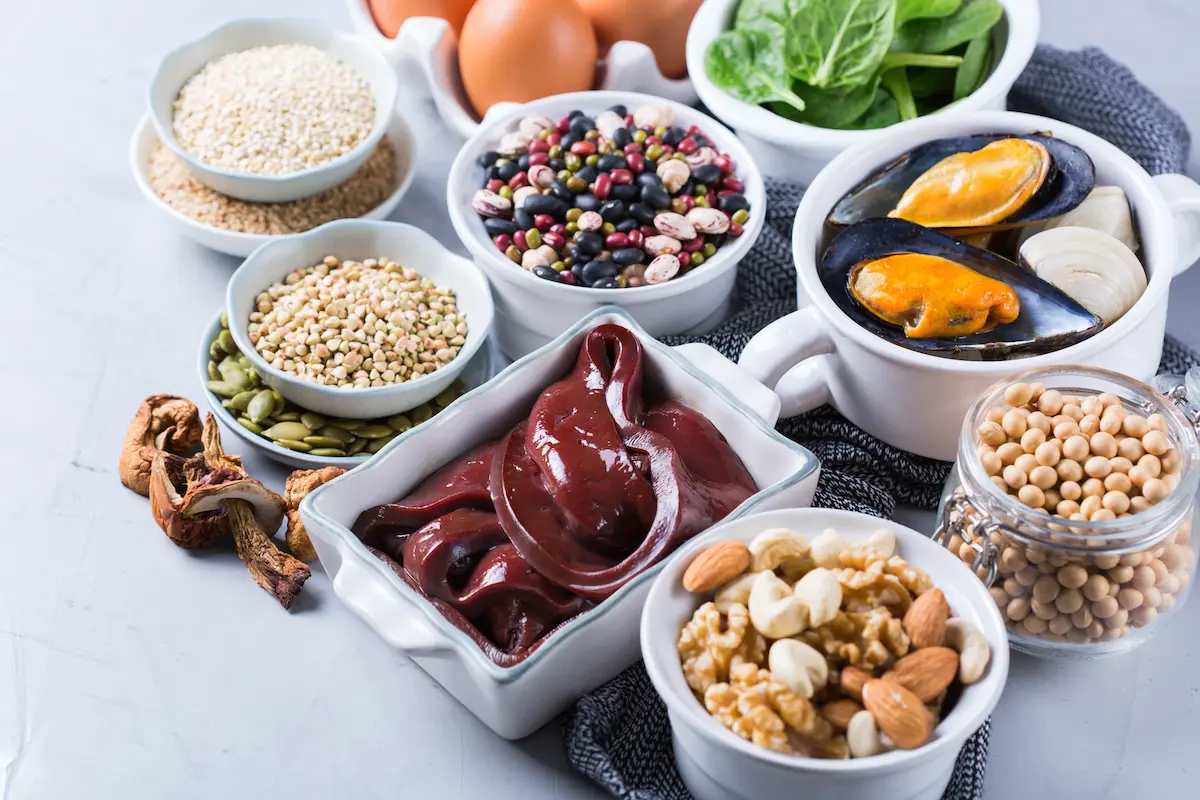
Pregnancy significantly increases your body’s need for iron to support your growing baby and the extra blood your body produces.
Without enough iron, you may develop iron deficiency or iron deficiency anemia, which can cause symptoms such as fatigue, weakness, shortness of breath, dizziness, and difficulty concentrating.
Eating a variety of iron-rich foods throughout pregnancy can help you meet your increased iron needs. Pairing these foods with strategies that improve iron absorption may further increase the amount of iron your body absorbs.
Some women may also need an iron supplement, but this should only be taken if recommended by a healthcare provider.
In this article, you’ll learn about the best iron-rich foods for pregnant women, how much iron you need during pregnancy, and practical tips to help improve iron absorption.
Why Is Iron Important During Pregnancy?
Iron plays an essential role in supporting both your health and your baby’s development. During pregnancy, iron helps:
- Produce hemoglobin, the protein in red blood cells that carries oxygen throughout your body.
- Support your baby’s growth and brain development.
- Support the growth of the placenta.
- Produce the extra red blood cells needed as your blood volume increases.
- Help prevent iron deficiency and iron deficiency anemia.
Without enough iron, your body can’t produce enough healthy red blood cells to meet the increased demands of pregnancy..
How Much Iron Do Pregnant Women Need?
According to the National Institutes of Health (NIH), pregnant women need:
27 mg of iron per day
This is considerably higher than the 18 mg per day recommended for most non-pregnant women of reproductive age.
Because meeting this requirement through food alone can be challenging for some women, many healthcare providers recommend a prenatal vitamin that contains iron. However, iron-rich foods should still form the foundation of a healthy pregnancy diet.
Heme vs. Non-Heme Iron
Iron in foods comes in two forms.
Heme Iron
Heme iron is found in animal foods and is absorbed more efficiently by the body.
Sources include:
- Lean beef
- Chicken
- Turkey
- Fish
- Seafood
Non-Heme Iron
Non-heme iron is found in plant foods.
Sources include:
- Lentils
- Beans
- Spinach
- Tofu
- Pumpkin seeds
- Fortified cereals
Although non-heme iron isn’t absorbed as well as heme iron, eating it alongside vitamin C-rich foods can significantly improve absorption.
Foods High in Iron for Pregnant Women
The following foods can help you meet your increased iron needs during pregnancy while providing other important nutrients for you and your growing baby.
1. Meat and Poultry
Meat and poultry are among the best sources of iron during pregnancy because they provide heme iron, the form your body absorbs most efficiently.
They’re also naturally rich in high-quality protein, vitamin B12, zinc, and other nutrients that support your baby’s growth and help meet your increased nutritional needs.
Among these options, lean beef is one of the richest sources, providing nearly 1.8 mg of iron per 3-ounce (85 g) serving, which is 7% of the recommended daily iron intake during pregnancy.
Dark meat chicken provides approximately 1.1 mg, while the same serving of dark meat turkey contains around 1.2 mg of iron.
Pregnancy tip: Always cook meat and poultry thoroughly to a safe internal temperature to reduce the risk of foodborne illness.
2. Seafood
Seafood can be an excellent source of iron during pregnancy while also providing high-quality protein and important nutrients such as iodine, selenium, calcium, vitamin D, and omega-3 fatty acids.
Together, these nutrients support your baby’s brain, eye, bone, and nervous system development.
Sardines provide approximately 2.5 mg of iron per 3-ounce (85 g) serving, contributing approximately 9% of your recommended daily iron intake.
Canned light tuna is another good choice, supplying around 1.3 mg of iron per 3-ounce (85 g) serving, which is 5% of the DV.
Pregnancy tip: Choose low-mercury seafood such as sardines, salmon, shrimp, trout, and canned light tuna. Avoid high-mercury fish like shark, swordfish, king mackerel, marlin, orange roughy, and tilefish.
3. Legumes
Legumes are among the richest plant-based sources of iron and are an excellent choice for pregnant women, especially those following vegetarian or plant-based diets.
Although they contain non-heme iron, pairing them with vitamin C-rich foods such as tomatoes, bell peppers, or citrus fruits can significantly improve iron absorption.
Lentils are one of the top choices, providing about 6.6 mg of iron per cooked cup (198 g), which meets about 24% of the recommended daily iron intake during pregnancy. White beans offer a similar amount, supplying 6.6 mg per cooked cup (179 g).
Soybeans are another standout, giving you 8.84 mg of iron per cooked cup (172 g). That’s about 33% of the recommended daily iron intake during pregnancy, making them one of the richest plant-based sources of iron.
Chickpeas are also a nutritious option, providing around 4.7 mg of iron per cooked cup (164 g), or about 17% of the recommended daily iron intake during pregnancy.
In addition to iron, legumes provide plant protein, fiber, folate, magnesium, and potassium, making them a nutritious choice for supporting both maternal health and your baby’s growth during pregnancy.
4. Leafy Green Vegetables
Leafy green vegetables are a nutritious way to increase your iron intake during pregnancy while providing vitamins and minerals that support both your health and your baby’s development.
Spinach and Swiss chard are two of the best choices, offering iron along with folate, vitamins A and K, magnesium, and antioxidants.
Among them, spinach stands out as one of the richest sources, providing 6.4 mg of iron per cooked cup (180 g), which covers nearly one-quarter of your daily iron needs during pregnancy.
Swiss chard contains about 4 mg of iron per cooked cup (175 g), or around 15% of your daily iron needs.
5. Amaranth and Quinoa
Amaranth and quinoa are nutritious, naturally gluten-free pseudocereals that can help increase your iron intake during pregnancy.
Amaranth provides about 5.2 mg of iron per cooked cup (246 g), which meets nearly one-fifth of your daily iron needs during pregnancy.
Quinoa is another excellent option, supplying around 2.8 mg of iron per cooked cup (185 g), or 10% of the DV for pregnant women.
In addition to iron, amaranth and quinoa provide fiber, magnesium, folate, and antioxidants.
They also contain more protein than many other grains, making them nutritious additions to salads, grain bowls, soups, and side dishes.
6. Nuts and Seeds
Nuts and seeds are convenient, nutrient-dense snacks that can help increase your iron intake during pregnancy while also providing healthy fats, plant protein, fiber, and other essential minerals.
Pumpkin seeds contain 2.5 mg of iron per ounce (28 g), or about 9% of your daily iron needs during pregnancy. Sesame seeds are another excellent source, supplying around 2.6 mg of iron per ounce (28 g).
Cashews also contribute to your iron intake, providing 7% of your Daily Value.
7. Fortified Foods
Iron-fortified foods can be one of the easiest ways to increase your iron intake during pregnancy, particularly if you’re struggling to meet your needs through food alone.
Depending on the brand, fortified breakfast cereals can provide anywhere from 4 to 18 mg of iron per serving, meeting approximately 15% to 67% of the recommended daily iron intake during pregnancy.
Many fortified cereals also contain folic acid and other essential vitamins and minerals that support a healthy pregnancy.
Tip: Choose cereals that are lower in added sugar and higher in fiber, and enjoy them with strawberries, kiwi, or orange slices to help improve iron absorption.
Tips to Improve Iron Absorption
Getting enough iron isn’t just about choosing iron-rich foods. It’s also important to help your body absorb the iron you eat.
Pair Iron-Rich Foods with Vitamin C
Vitamin C can significantly improve the absorption of non-heme iron.
Good sources include:
- Oranges
- Kiwi
- Strawberries
- Guava
- Tomatoes
- Bell peppers
- Broccoli
Avoid Tea and Coffee with Meals
Tea and coffee contain compounds that can reduce iron absorption.
Try drinking them at least one to two hours before or after meals.
Cook in Cast-Iron Cookware
Cooking acidic foods, such as tomato sauces, in cast-iron cookware may slightly increase the iron content of your meals.
Can You Get Too Much Iron During Pregnancy?
Iron is essential during pregnancy, but more isn’t always better.
Most pregnant women are unlikely to get too much iron from food because the body carefully regulates how much it absorbs.
However, taking more iron supplements than recommended can cause constipation, nausea, stomach pain, and other digestive problems.
In rare cases, very large overdoses can be dangerous and may damage organs. Unless advised by your healthcare provider, avoid taking extra iron supplements beyond your prenatal vitamin.
Signs of Iron Deficiency During Pregnancy
Iron deficiency often develops gradually. As iron levels continue to decline and iron deficiency progresses to iron deficiency anemia, the symptoms of iron deficiency may include:
- Fatigue
- Weakness
- Pale skin
- Dizziness
- Shortness of breath
- Frequent headaches
- Difficulty concentrating
- Rapid heartbeat
These symptoms can become more noticeable as iron deficiency worsens. If you experience any of them during pregnancy, talk to your healthcare provider.
Frequently Asked Questions
Can I get enough iron from food during pregnancy?
Some women can meet their iron needs through a carefully planned diet, while others may also need an iron-containing prenatal supplement. Your healthcare provider can recommend what’s appropriate based on your iron levels and overall health.
Is spinach enough to meet my iron needs during pregnancy?
Spinach is a nutritious source of iron, but it shouldn’t be your only source. Including a variety of iron-rich foods throughout the day provides a broader range of nutrients and makes it easier to meet your increased iron needs.
Should I take an iron supplement?
Many prenatal vitamins contain iron, and some women may require additional supplementation. However, iron supplements should only be taken as recommended by your healthcare provider, as excessive iron intake can cause side effects and isn’t appropriate for everyone.
Closing Thoughts
Iron is one of the most important nutrients during pregnancy because it supports healthy red blood cell production, oxygen transport, and your baby’s growth and development.
Eating a variety of iron-rich foods, pairing plant-based sources with vitamin C-rich foods, and using simple strategies to improve iron absorption can help you meet your increased iron needs.
Regular prenatal checkups and following your healthcare provider’s advice about iron supplements, when needed, are also important for supporting a healthy pregnancy.