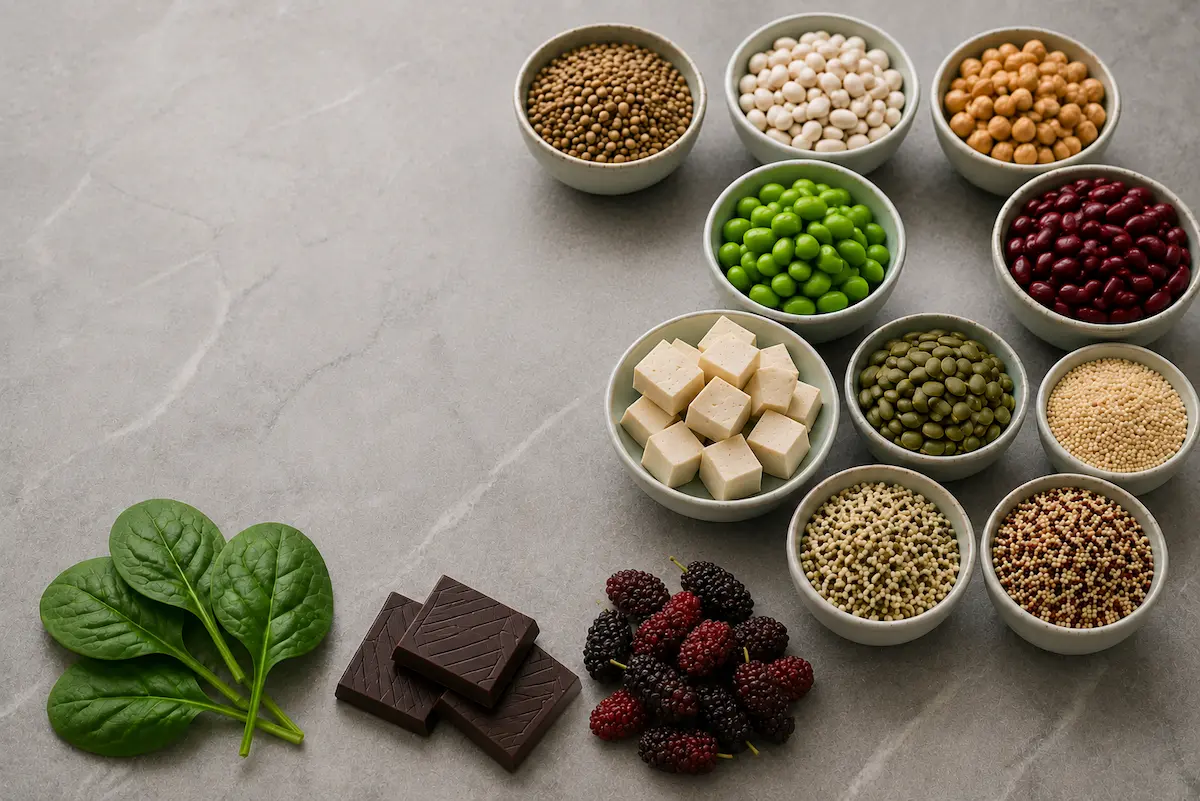
Iron is an essential mineral that helps your body produce healthy red blood cells, transport oxygen, and support energy metabolism. Getting too little iron may lead to fatigue, weakness, poor concentration, and, over time, iron deficiency anemia.
While many people associate iron with red meat, plenty of vegetarian foods are naturally rich in this important nutrient.
Legumes, soy foods, whole grains, leafy greens, nuts, and seeds can all help increase your iron intake. Pairing these foods with vitamin C-rich foods may also improve iron absorption.
In this article, you’ll discover the best vegetarian foods high in iron and how much iron they provide.
Types of Iron
Iron is found in two forms in food:
Heme Iron: Found only in animal-based foods and absorbed more efficiently by the body.
Non-Heme Iron: Found in plant foods such as beans, lentils, vegetables, grains, nuts, and seeds. Although it’s absorbed less efficiently, combining it with vitamin C-rich foods can improve absorption.
Since vegetarian diets rely entirely on non-heme iron, eating a variety of iron-rich plant foods throughout the day can help you meet your daily needs.
How Much Iron Do You Need Each Day?
According to the National Institutes of Health (NIH) Office of Dietary Supplements, iron requirements vary depending on age, sex, and life stage.
- Men: 8 mg/day
- Women (19–50 years): 18 mg/day
- Women (51+ years): 8 mg/day
- Pregnant women: 27 mg/day
- Breastfeeding women: 9 mg/day
Vegetarians may need up to 1.8 times more dietary iron than people who eat meat because non-heme iron is less readily absorbed.
The iron amounts and % Daily Value (DV) in this article are based on the FDA Daily Value of 18 mg, which is used on U.S. Nutrition Facts labels.
Best Vegetarian and Vegan Foods High in Iron
The following vegetarian foods are among the richest plant-based sources of iron and can help you meet your daily requirements as part of a balanced diet.
1. Legumes and Beans
Legumes like lentils, white beans, chickpeas, kidney beans, and black beans are some of the most useful plant-based sources of iron. They also bring plenty of fiber and plant protein to the table, making them an easy choice for satisfying, nutrient-rich meals.
Lentils are particularly impressive. One cup (198 g) of cooked lentils provides about 6.6 mg of iron, covering 37% of the Daily Value. White beans offer a very similar amount, with around 6.6 mg per cooked cup (179 g).
Chickpeas provide approximately 4.7 mg of iron per cooked cup (164 g), which is about 26% of the DV, while a cup (177 g) of cooked kidney beans delivers around 5.2 mg, or nearly 29% of the DV.
Black beans provide around 3.6 mg per cooked cup (172 g), contributing roughly one-fifth of the daily iron needs.
Pairing these legumes with tomatoes, bell peppers, lemon juice, or other vitamin C-rich foods can help your body absorb more of their non-heme iron.
2. Soy Foods
Soy foods are another excellent option for vegetarians and vegans because they combine iron with high-quality plant protein. Soybeans, edamame, tofu, and tempeh also give you plenty of variety when planning meals.
Soybeans are particularly rich in iron. One cooked cup (172 g) provides an impressive 8.8 mg, covering nearly half of the daily iron requirement. They also supply complete plant protein, calcium, magnesium, potassium, and several B vitamins.
Edamame, or young green soybeans, provides around 3.5 mg of iron per cooked cup (160 g), which is 19% of the DV. It can also make a convenient iron-rich snack, or you can toss it into salads, grain bowls, soups, and stir-fries.
Prefer something lighter? A cooked cup (160 g) of edamame provides around 3.5 mg of iron, or 19% of the DV. Tofu offers approximately 5.4 mg per 100 g, while tempeh provides around 2.1 mg per 100 g.
Use edamame as a quick snack, toss it into a grain bowl, or add tofu and tempeh to stir-fries and curries. Tempeh’s firm texture also makes it particularly good when you want something hearty and satisfying.
3. Leafy Greens
Dark leafy greens like spinach and Swiss chard aren’t just packed with vitamins. They can also make a useful contribution to your daily iron intake.
A cooked cup (180 g) of spinach provides 6.43 mg of iron, covering approximately 36% of the DV. Swiss chard isn’t far behind, with nearly 4 mg per cooked cup (175 g), providing about 22% of the DV.
Spinach also provides folate, vitamins A and K, magnesium, and antioxidants, while Swiss chard adds vitamins A, C, and K along with magnesium and potassium.
Because spinach contains oxalates that can reduce iron absorption, serving it alongside vitamin C-rich foods such as tomatoes or citrus fruits is a smart combination.
Looking for more options? Explore these vegetables high in iron
4. Seeds
Don’t let their size fool you. Seeds can pack a surprising amount of iron into a relatively small serving, while also bringing healthy fats, protein, and minerals to the table.
Pumpkin seeds are a great example. A 30-g serving provides around 2.5 mg of iron, or 14% of the daily recommended value, along with magnesium, zinc, healthy fats, and plant protein.
Sesame seeds offer around 2.6 mg in two tablespoons (18 g), meeting nearly 15% of the DV. And if you prefer hemp seeds, three tablespoons (30 g) provide around 2.4 mg of iron, or nearly 13% of the daily recommended intake.
Hemp seeds also provide complete plant protein, magnesium, zinc, phosphorus, and omega-3 and omega-6 fats.
The easiest part? You don’t need to build an entire meal around them. Sprinkle pumpkin or hemp seeds over oatmeal and yogurt, add sesame seeds to savory dishes, or use tahini in dressings and dips.
5. Quinoa and Amaranth
If you’re looking beyond the usual beans and leafy greens for plant-based iron, quinoa and amaranth are worth adding to the rotation. Both are pseudocereals that are cooked and enjoyed much like grains, while also bringing protein, fiber, and several important minerals to the table.
Amaranth takes the lead when it comes to iron, providing nearly 5.2 mg per cooked cup (246 g), which covers about 29% of the Daily Value. It’s also rich in protein, fiber, magnesium, phosphorus, and manganese.
Quinoa provides about 2.8 mg of iron per cooked cup (185 g), supplying roughly 16% of the Daily Value. Unlike many grains, quinoa is also a complete protein and provides fiber, magnesium, phosphorus, and antioxidants.
Both are easy to work into everyday meals. Use quinoa as a base for salads and grain bowls, or add amaranth to porridge, soups, and side dishes.
Pairing either with vitamin C-rich foods such as berries, citrus fruits, tomatoes, or bell peppers can also help your body absorb more of their non-heme iron.
6. Oats
Starting your morning with oats can help increase your iron intake.
One cooked cup (234 g) contains 2.11 mg of iron, contributing up to 12% of your daily iron goal.
Oats also provide beta-glucan, a soluble fiber known to support heart health and healthy cholesterol levels.
Pair them with berries or kiwi to help improve iron absorption.
7. Fortified Breakfast Cereals
Fortified breakfast cereals are one of the simplest ways to boost your iron intake.
Depending on the brand, a single serving can provide up to 18 mg of iron, enough to meet 100% of the Daily Value.
Many varieties are also fortified with B vitamins and other essential nutrients.
Choose options that are high in fiber and lower in added sugar for the greatest health benefits.
8. Cashews
Cashews are one of the better nut sources of iron, with a 1-ounce (28 g) serving providing approximately 1.9 mg.
That supplies about 11% of the recommended daily amount.
They’re also rich in healthy unsaturated fats, plant protein, copper, magnesium, and zinc.
Enjoy cashews on their own, in trail mix, or blended into creamy sauces and spreads.
9. Dark Chocolate
If you’re looking for a sweet way to add more iron to your diet, dark chocolate is worth considering.
A 1-ounce (28 g) serving of dark chocolate (70–85% cocoa) delivers about 3.4 mg of iron, enough to meet 19% of your daily iron needs.
It’s also rich in magnesium, copper, fiber, and antioxidant compounds called flavonoids that support heart health.
Enjoy dark chocolate in moderation as part of a balanced diet.
10. Mulberries
Mulberries are one of the fruits rich in iron and can be a nutritious addition to a vegetarian diet.
One cup (140 g) of fresh mulberries provides about 2.6 mg of iron, meeting approximately 14% of the DV.
They are also naturally rich in vitamin C, which can help improve the absorption of the non-heme iron they contain.
Enjoy mulberries fresh, dried, or added to yogurt, oatmeal, smoothies, or salads for an easy iron boost.
Are Vegetarian Foods High in Iron Also Vegan?
Most of the foods in this guide are naturally vegan, including lentils, beans, tofu, soybeans, quinoa, spinach, pumpkin seeds, oats, and fortified cereals. However, vegetarian diets may also include eggs and dairy products, which are not vegan.
While eggs and dairy contain some iron, they generally provide much less than many plant-based foods.
Eggs
- 2 large eggs (100 g): 1.19 mg iron (about 7% DV)
Eggs can contribute to your daily iron intake, but they aren’t considered a high-iron food.
Whole Milk
- 1 cup (244 g): 0 mg iron
Milk is a good source of calcium and protein but contains very little to no iron.
How to Improve Iron Absorption
Because plant foods contain non-heme iron, a few simple strategies can help your body absorb more of it.
Pair Iron-Rich Foods with Vitamin C
Vitamin C significantly increases the absorption of non-heme iron.
Good sources include:
- Oranges
- Strawberries
- Kiwi
- Guava
- Tomatoes
- Bell peppers
- Broccoli
- Lemon juice
For example, pair lentils with tomatoes, spinach with citrus fruits, or chickpeas with bell peppers.
Avoid Tea and Coffee with Meals
Tea and coffee contain natural compounds called polyphenols that can reduce iron absorption.
If possible, drink them at least one to two hours before or after meals.
Cook in Cast-Iron Cookware
Cooking acidic foods like tomato-based sauces in cast-iron cookware may increase the iron content of your meals.
Eat Iron-Rich Foods Throughout the Day
Instead of relying on one meal, include iron-rich foods at breakfast, lunch, dinner, and snacks to help meet your daily needs.
Who May Need More Iron?
Although most healthy adults can meet their iron needs through a balanced diet, some groups are more likely to require additional iron.
Women of reproductive age: Monthly menstrual blood loss increases iron requirements.
Pregnant women: Iron needs rise significantly to support the developing baby and increased blood volume, making it especially important to include iron-rich foods during pregnancy.
Vegetarians and vegans: Because plant foods contain non-heme iron, they may need a higher dietary intake.
Frequent blood donors: Regular blood donation removes iron from the body and can reduce iron stores over time.
Athletes: Intense physical activity may increase iron requirements due to greater red blood cell turnover and iron losses.
Final Thoughts
A well-planned vegetarian diet can provide plenty of iron through foods such as legumes, soy foods, whole grains, seeds, leafy greens, and fortified cereals.
To maximize iron absorption, pair these foods with vitamin C-rich fruits and vegetables whenever possible.
If you think you may have iron deficiency, talk to a healthcare provider for proper testing and treatment.