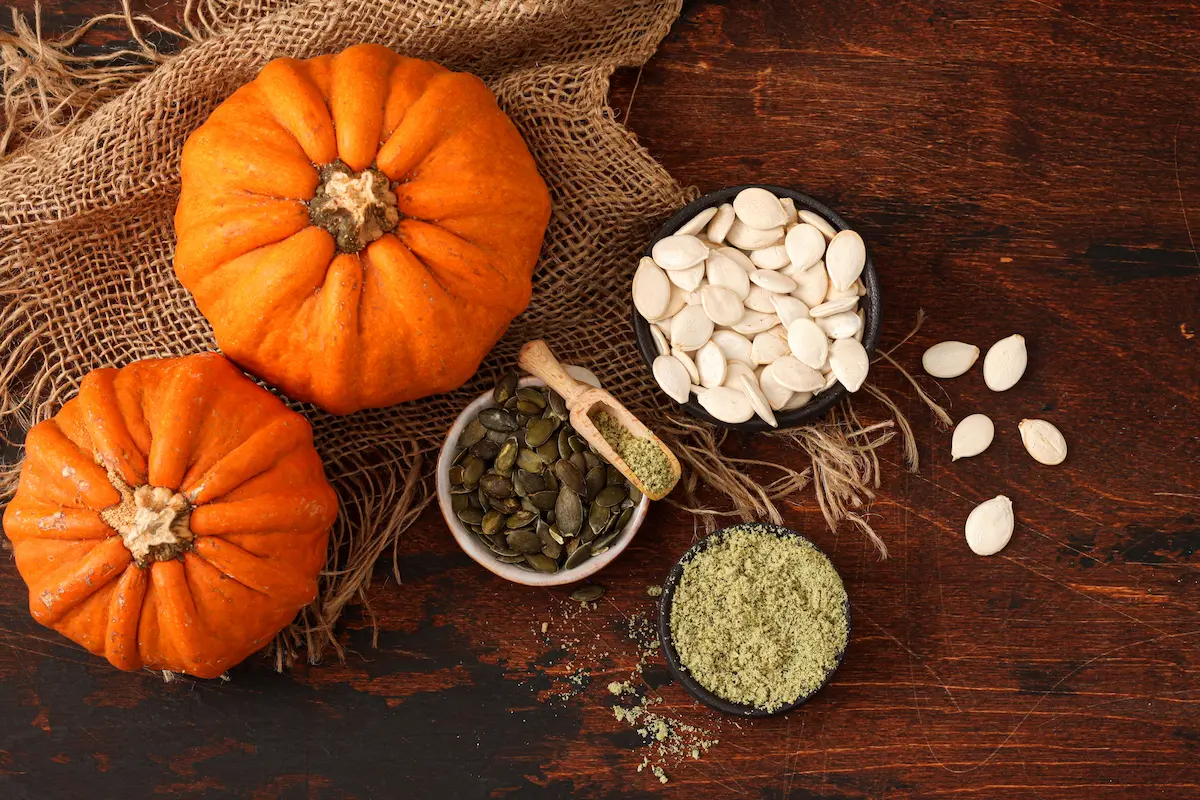
Pumpkin seeds are easy to ignore, but nutritionally, they are one of the most powerful seeds you can eat.
A small handful delivers protein, fiber, healthy fats, magnesium, zinc, iron, and antioxidants — nutrients linked to better fullness, heart health, immunity, muscle function, and sleep quality.
They are especially valuable because many people do not get enough magnesium, fiber, or zinc from their diet. Pumpkin seeds offer a simple way to fill those gaps without major dietary changes.
They are also practical. You can add them to oatmeal, curd, salads, smoothies, or eat them roasted as a snack. Unlike many trendy “superfoods,” pumpkin seeds are affordable, easy to store, and realistic to eat regularly.
This article discusses some of the most important pumpkin seeds benefits and why these nutrient-dense seeds can be a valuable addition to a balanced diet.
Nutritional Value
A 30-gram serving of pumpkin seeds contain:
- Energy: 154 kcal
- Protein: 8.97 g
- Total fat: 12 g
- Carbohydrates: 5.61 g
- Fiber: 1.53 g
- Iron: 2.51 mg (14% Daily Value)
- Magnesium: 150 mg (36% DV)
- Phosphorus: 345 mg (28% DV)
- Potassium: 207 mg (4% DV)
- Zinc: 1.9 mg (17% DV)
- Copper: 0.366 mg (41% DV)
- Manganese: 1.24 mg (54% DV)
Health Benefits
Below are some of the most important pumpkin seeds benefits and why they deserve a place in a balanced diet.
1. Rich in Magnesium
Pumpkin seeds are one of the richest natural sources of magnesium, a mineral involved in hundreds of processes throughout the body.
Magnesium helps support normal muscle and nerve function, energy production, blood sugar regulation, and heart health.
Because many people don’t get enough magnesium from their diets, regularly eating magnesium-rich foods such as pumpkin seeds can help support overall health.
A small handful of pumpkin seeds provides a significant amount of the daily magnesium requirement, making them an easy and nutritious addition to meals and snacks.
2. High in Plant Protein
Pumpkin seeds contain a good amount of plant-based protein compared to many snack foods.
Protein is important for muscle maintenance, tissue repair, immune function, and hormone production. It can also help increase fullness after meals. Many people rely heavily on refined carbohydrate snacks that digest quickly and leave them hungry again soon after eating.
Adding pumpkin seeds to meals can improve satiety because they provide a combination of protein, healthy fats, and fiber. This combination slows digestion and may help reduce unnecessary snacking.
For vegetarians and vegans, pumpkin seeds can also help diversify protein intake. They should not be treated as a complete replacement for major protein sources like legumes, dairy, soy foods, eggs, fish, or meat, but they can still make a meaningful contribution to daily intake.
3. May Support Heart Health
Pumpkin seeds contain several nutrients linked with heart health, including magnesium, unsaturated fats, fiber, antioxidants, and phytosterols.
Some studies suggest that diets rich in unsaturated fats and nutrient-dense foods like pumpkin seeds may help support healthier LDL and HDL cholesterol levels over time when combined with a balanced diet.
A review of research on Cucurbitaceae seeds also found that pumpkin seeds contain compounds that may help reduce oxidative stress and support healthy blood pressure and heart function.
However, more high-quality human studies are needed to confirm their long-term effects.
4. May Help Improve Sleep Quality
Pumpkin seeds naturally contain magnesium and tryptophan, two nutrients connected with sleep regulation.
Tryptophan is an amino acid involved in the production of serotonin and melatonin. Melatonin helps regulate the sleep-wake cycle.
A review of 40 studies found that tryptophan may help increase sleepiness and shorten the time it takes to fall asleep, especially in people with mild sleep difficulties.
Magnesium also plays a role in relaxation and nervous system regulation. A review of clinical trials in older adults found that magnesium supplementation may help people fall asleep faster, although more high-quality research is still needed.
While pumpkin seeds aren’t a treatment for insomnia, including magnesium-rich foods as part of a balanced diet may help support healthy sleep.
5. Good Source of Zinc for Immune Health
Pumpkin seeds are rich in zinc, an essential mineral needed for immune function, wound healing, and cell growth.
Zinc helps support the normal development and function of immune cells. Low zinc intake may weaken immune response and increase susceptibility to infections.
The body does not store large amounts of zinc, so regular dietary intake matters. Pumpkin seeds are one of the better plant-based zinc sources, especially useful for people who consume little or no meat.
An animal study also found that pumpkin seed supplementation may help support immune activity, although more human research is still needed.
6. Rich in Antioxidants
Pumpkin seeds contain a wide range of antioxidants, including vitamin E compounds, carotenoids, flavonoids, phenolic acids, and phytosterols.
These compounds help protect cells from oxidative stress caused by unstable molecules known as free radicals. Over time, excessive oxidative stress is linked with inflammation, aging, and several chronic health conditions.
Research on pumpkin seeds has found that they contain antioxidant plant compounds such as caffeic acid, ferulic acid, rutin, and epicatechin, which may contribute to their protective effects in the body.
Regularly eating antioxidant-rich foods like pumpkin seeds as part of a balanced diet may help support better long-term health.
7. Helps Increase Fiber Intake
Fiber intake is too low in many diets, especially those built around refined and ultra-processed foods.
Pumpkin seeds provide fiber, particularly when eaten with their outer shell. Fiber supports digestive health, bowel regularity, fullness after meals, and steadier blood sugar levels by slowing digestion.
Diets low in fiber are linked with constipation and poorer gut health. At the same time, many people increase fiber too quickly or forget to drink enough water, which can lead to bloating and discomfort.
Gradually increasing fiber intake and staying hydrated usually works better. Adding pumpkin seeds to meals, yogurt, oats, or salads is one simple way to increase fiber without making major changes to your diet.
8. May Help Support Healthy Blood Sugar
Pumpkin seeds contain protein, fiber, magnesium, and healthy fats, all of which may help support more stable blood sugar levels.
Foods that digest slowly generally have a more gradual effect on blood glucose compared to refined snacks or sugary foods. Magnesium is also involved in insulin function and glucose metabolism.
A small study found that eating 65 grams of pumpkin seeds with a high-carbohydrate meal reduced post-meal blood sugar levels by about 35% compared to a meal without seeds.
However, researchers noted that longer-term studies are still needed.
9. May Support Long-Term Cellular Health
Pumpkin seeds contain antioxidants, lignans, phytosterols, and other plant compounds that may help protect cells from oxidative stress, a process linked to aging and many chronic diseases.
Research into the potential health effects of these compounds is still developing.
A laboratory study found that lignans and flavonoids in pumpkin seed extract affected estrogen-related activity in breast cancer cells and observational research has found associations between higher seed intake and a lower risk of breast cancer.
However, these findings do not prove that pumpkin seeds prevent or treat cancer. More high-quality human studies are needed to better understand their long-term health effects.
10. May Support Prostate Health
Pumpkin seeds have long been studied for their potential role in prostate health, particularly in men with benign prostatic hyperplasia (BPH), a common condition where the prostate gland becomes enlarged with age.
BPH can cause symptoms such as frequent urination, weak urine flow, difficulty emptying the bladder, and waking up multiple times during the night to urinate.
A 12-month clinical study involving more than 1,400 men with BPH found that whole pumpkin seeds helped improve urinary symptoms and quality of life compared to placebo. Researchers believe that compounds in pumpkin seeds, including phytosterols, zinc, antioxidants, and healthy fats, may contribute to these effects.
However, the evidence is still developing, and pumpkin seeds should not be viewed as a replacement for medical treatment when symptoms are severe.
Easy to Add to Everyday Meals
One of the biggest advantages of pumpkin seeds is practicality.
A healthy food is far more useful when people can realistically eat it consistently. Pumpkin seeds require no complicated preparation and work in both sweet and savory dishes.
You can add them to:
- Oatmeal
- Smoothies
- Yogurt or curd
- Salads
- Stir-fries
- Soups
- Homemade trail mix
- Chutneys
- Energy balls
- Granola
Roasted pumpkin seeds also work well as a replacement for heavily processed snack foods like chips or fried mixtures.
However, portion size still matters. Pumpkin seeds are nutrient-dense but also calorie-dense because of their fat content. Eating excessive amounts regularly can increase calorie intake quickly.
For most people, 1 to 2 tablespoons daily is a practical amount within a balanced diet.
Are Roasted Pumpkin Seeds Healthy?
Yes, roasted pumpkin seeds can still be healthy.
Dry roasting usually preserves most nutrients fairly well. However, heavily salted or oil-fried packaged versions may contain excess sodium or added fats.
Lightly roasting pumpkin seeds at home is often the better option. Overheating can damage some healthy fats, so extremely high temperatures are not ideal.
Unsalted or lightly salted versions are generally the best choice for regular consumption.
Who Should Be Careful With Pumpkin Seeds?
Pumpkin seeds are healthy for most people, but there are a few things to keep in mind.
People with seed allergies should avoid them completely.
Eating large amounts suddenly may cause bloating or digestive discomfort because of the fiber and fat content.
Salted packaged varieties may not be ideal for people trying to reduce sodium intake.
Pumpkin seeds are also calorie-dense. Constant overeating, even of healthy foods, can still contribute to unwanted weight gain.
Moderation matters.
Closing Thoughts
Pumpkin seeds are one of the most underrated nutrient-dense foods available.
They provide magnesium, zinc, healthy fats, fiber, antioxidants, and plant protein in a small serving size that is easy to include in everyday meals. Their biggest strength is not hype. It is practicality. They are affordable, versatile, shelf-stable, and nutritionally useful without requiring major dietary changes.
Most importantly, pumpkin seeds work best as part of an overall healthy eating pattern. They are not a miracle food, detox ingredient, or shortcut to perfect health. But consistently replacing low-quality snacks with nutrient-rich foods like pumpkin seeds is the kind of realistic change that can genuinely improve diet quality over time.
4 thoughts on “10 Science-Backed Benefits of Pumpkin Seeds”
Comments are closed.