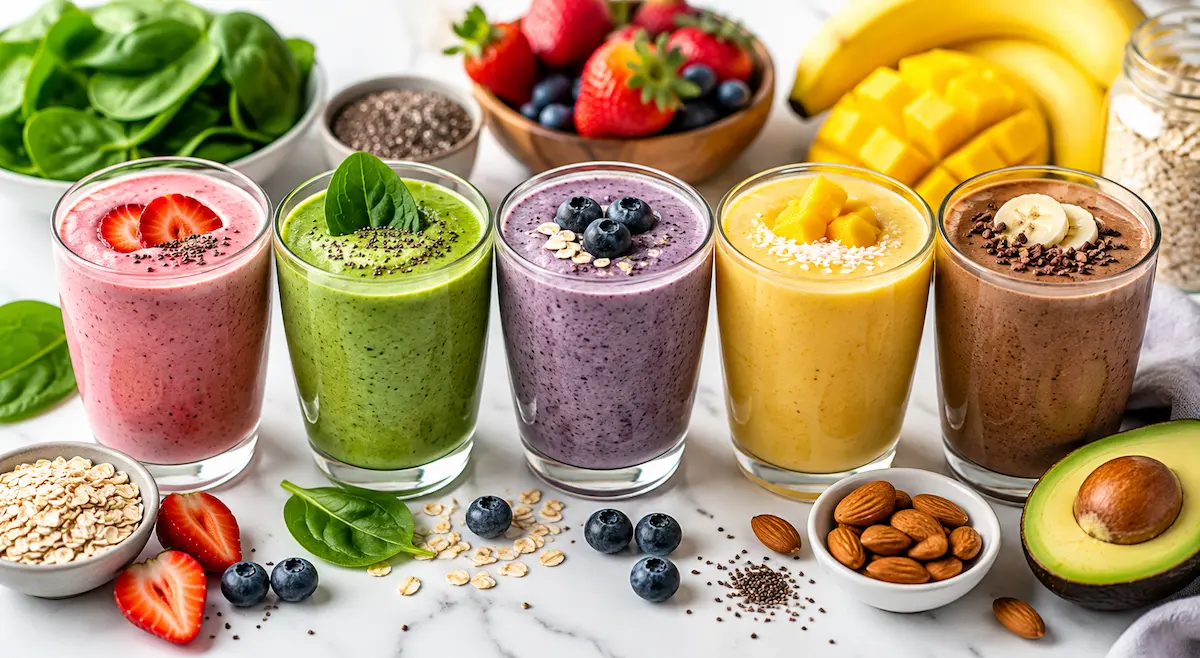
Smoothies have a reputation for being a “healthy” choice, but not every smoothie supports weight loss. Many café and store-bought versions contain more sugar than a soft drink and can easily exceed 500 calories before you’ve even finished breakfast.
A well-made smoothie can be a convenient way to support weight loss when it’s built with the right ingredients. Combining protein, fiber, and healthy fats helps keep you satisfied, making it easier to manage hunger and stick to your calorie goals.
In this article, you’ll find 15 smoothie ideas that may help with your weight loss journey, along with their nutrition per serving, and practical tips for making smoothies more filling without turning them into calorie-heavy drinks.
What Makes a Smoothie Good for Weight Loss?
A weight-loss-friendly smoothie should help control hunger instead of causing blood sugar spikes that leave you hungry again shortly afterward.
The best smoothies usually include:
- A source of protein like Greek yogurt, cottage cheese, milk, kefir, or protein powder
- Fiber-rich fruits and vegetables
- Healthy fats from chia seeds, flaxseeds, walnuts, or nut butter
- Minimal added sugar
- Plenty of liquid without excessive fruit juice
Aim for around 15–25 grams of protein and at least 5 grams of fiber whenever possible.
Smoothie Ideas That May Support Weight Loss
These smoothie combinations are designed to provide protein and fiber while keeping added sugar low. You can adjust the portions depending on your calorie and nutritional needs.
1. Berry Greek Yogurt Smoothie
If you enjoy fruity smoothies, berries are one of the easiest ingredients to start with.
Blend frozen mixed berries with plain Greek yogurt, half a banana, chia seeds, and unsweetened almond milk. The berries provide fiber and antioxidants, while Greek yogurt gives the smoothie a substantial protein boost.
The banana adds natural sweetness, so you don’t need much, if any, added sugar.
Nutrition per serving: Approximately 300 calories, 16 g of protein, and 13 g of fiber (1, 2, 3, 4, 5).
2. Green Spinach and Pineapple Smoothie
A handful of spinach can add plenty of nutrients without contributing many calories.
Combine spinach with pineapple, half a banana, Greek yogurt, coconut water, and ground flaxseed. Pineapple and banana provide natural sweetness, while Greek yogurt and flaxseed make the smoothie more satisfying.
This is a good option when you want something fruity but still want a meaningful amount of protein.
Nutrition per serving: Approximately 285 calories, 15 g of protein, and 6 g of fiber (2, 3, 6, 7, 8, 9).
If you want to increase the fiber and healthy fats, you can add another tablespoon of ground flaxseed, which will also slightly increase the calories and protein.
3. Strawberry Oatmeal Breakfast Smoothie
Oats aren’t just for your breakfast bowl. They can also make a smoothie more substantial.
Blend strawberries with rolled oats, Greek yogurt, low-fat milk, and cinnamon. The oats provide fiber and carbohydrates, while Greek yogurt and milk increase the protein content.
The result is a thicker smoothie that can work particularly well as a breakfast.
Nutrition per serving: Approximately 360 calories, 25 g of protein, and 7 g of fiber per serving (2, 10, 11, 12).
4. Peanut Butter Banana Protein Smoothie
Peanut butter and banana make a classic combination, but portion size matters because peanut butter is calorie-dense.
Blend one banana with a tablespoon of natural peanut butter, vanilla protein powder, unsweetened almond milk, and ground flaxseed.
The protein powder provides concentrated protein, while peanut butter and flaxseed add healthy fats.
Nutrition per serving: Approximately 380 calories, 22 g of protein, and 11 g of fiber per serving (2, 5, 9, 13, 14).
Note: The nutritional values of vanilla protein powder can vary by brand. Check the nutrition label when choosing a protein powder.
5. Chocolate Avocado Smoothie
You don’t need to give up chocolate flavors while trying to lose weight.
Combine a small amount of avocado with unsweetened cocoa powder, chocolate protein powder, milk, and half a banana.
Avocado gives the smoothie a creamy texture and contributes fiber and unsaturated fat, while cocoa provides rich chocolate flavor without needing much added sugar.
Nutrition per serving: Approximately 330 calories, 21 g of protein, and 8 g of fiber per serving (3, 12, 15, 16, 17).
Note: The nutritional values of chocolate protein powder may vary by brand. Check the nutrition label when choosing a protein powder.
6. Apple Cinnamon Smoothie
If you like the combination of apples and cinnamon, this smoothie makes a simple breakfast or snack.
Blend a chopped apple with Greek yogurt, rolled oats, cinnamon, and milk.
Keeping the apple whole rather than using apple juice means you retain its fiber while avoiding the concentrated calories and sugar of juice.
Nutrition per serving: Approximately 436 calories, 24 g of protein, and 8 g of fiber per serving (2, 11, 12, 18).
7. Mango Cottage Cheese Smoothie
Cottage cheese can make a smoothie surprisingly creamy while adding plenty of protein.
Blend cottage cheese with frozen mango, milk, and chia seeds.
Mango provides natural sweetness, while cottage cheese and chia seeds help make the smoothie more filling.
If you prefer a tangier flavor, add a squeeze of lime.
Nutrition per serving: Approximately 340 calories, 26 g of protein, and 7 g of fiber per serving (4, 12, 19, 20).
8. Blueberry Flax Smoothie
Blueberries and flaxseed make a simple combination when you want a smoothie with plenty of plant foods.
Blend blueberries with Greek yogurt, unsweetened almond milk, and ground flaxseed.
Blueberries provide fiber and plant compounds, while flaxseed contributes fiber and unsaturated fats.
Nutrition per serving: Approximately 217 calories, 14 g of protein, and 6 g of fiber per serving (2, 5, 9, 21).
9. Coffee Protein Smoothie
If you normally start your morning with coffee, you can combine your coffee and breakfast into one drink.
Blend chilled brewed coffee with vanilla protein powder, half a banana, and milk.
This can be particularly convenient on busy mornings when you don’t have time to prepare a separate breakfast.
Keep in mind that caffeine affects people differently. If it interferes with your sleep, avoid having this smoothie late in the day.
Nutrition per serving: Approximately 260 calories, 24 g of protein, and 6 g of fiber per serving (3, 12, 14, 22).
10. Tropical Kefir Smoothie
Kefir gives this smoothie a creamy consistency while providing protein and beneficial microorganisms.
Blend plain kefir with mango, pineapple, and chia seeds.
The fruit provides natural sweetness and fiber, while chia seeds add additional fiber and healthy fats.
Choose plain kefir rather than a heavily sweetened flavored variety to keep added sugar lower.
Nutrition per serving: Approximately 380 calories, 13 g of protein, and 10 g of fiber per serving (4, 7, 23, 24).
11. Cherry Vanilla Smoothie
Frozen cherries can add plenty of flavor without requiring added sugar.
Blend cherries with Greek yogurt, milk, and a little vanilla extract.
The Greek yogurt and milk provide protein, while cherries contribute fiber and plant compounds.
You can add a few ice cubes if you prefer a thicker texture.
Nutrition per serving: Approximately 280 calories, 20 g of protein, and 3 g of fiber per serving (2, 12, 25, 26).
12. Raspberry Almond Smoothie
Raspberries are particularly useful when you’re trying to increase the fiber content of your smoothie.
Blend raspberries with Greek yogurt, unsweetened almond milk, and almond butter.
The raspberries provide substantial fiber, while Greek yogurt supplies protein and almond butter contributes healthy fats.
Because almond butter is calorie-dense, stick to the recommended portion rather than adding it freely.
Nutrition per serving: Approximately 257 calories, 16 g of protein, and 11 g of fiber per serving (2, 5, 27, 28).
13. Kiwi Spinach Smoothie
Kiwi and spinach make a refreshing combination with plenty of color and nutrients.
Blend two kiwis with spinach, Greek yogurt, water, and chia seeds.
Kiwi provides vitamin C and fiber, while spinach adds nutrients with very few calories. Greek yogurt and chia seeds make the smoothie more satisfying.
Nutrition per serving: Approximately 230 calories, 15 g of protein, and 10 g of fiber per serving (2, 4, 6, 29).
14. Cottage Cheese Berry Smoothie
If you want a particularly creamy, protein-rich smoothie, cottage cheese is worth trying.
Blend cottage cheese with mixed berries, milk, and ground flaxseed.
The berries provide fiber and natural sweetness, while cottage cheese gives the smoothie a substantial amount of protein.
You can add cinnamon or vanilla extract if you want more flavor without adding much sugar.
Nutrition per serving: Approximately 300 calories, 25 g of protein, and 8 g of fiber per serving (1, 9, 12, 19).
15. Chocolate Cherry Oat Smoothie
This combination can satisfy a chocolate craving while still providing a substantial amount of protein and fiber.
Blend frozen cherries with unsweetened cocoa powder, rolled oats, chocolate protein powder, and milk.
The oats provide fiber and carbohydrates, while the protein powder helps make this smoothie more filling.
Nutrition per serving: Approximately 300 calories, 21 g of protein, and 7 g of fiber per serving (12, 16, 17, 25).
How to Make a Weight-Loss Smoothie More Filling
A smoothie can leave you hungry an hour later if it’s mostly fruit and liquid.
A few simple changes can make it much more satisfying.
Add a Protein Source
Protein is one of the most important components of a meal-replacement smoothie.
Good choices include:
- Greek yogurt
- Cottage cheese
- Milk
- Unsweetened soy milk
- Plain kefir
- Protein powder
- Silken tofu
Increase the Fiber
Fiber can help make a smoothie more filling while adding relatively few calories.
Try adding:
- Chia seeds
- Ground flaxseed
- Oats
- Raspberries
- Berries
- Kiwi
- Spinach
- Other leafy greens
Use Whole Fruit Instead of Juice
Whole fruit provides fiber that is largely lost when fruit is turned into juice.
Instead of adding orange juice, apple juice, or pineapple juice to your smoothie, use whole fruit and add water, milk, or unsweetened plant milk for the liquid.
Measure Calorie-Dense Ingredients
Nut butters, nuts, seeds, avocado, and coconut products can all be nutritious, but they are also relatively calorie-dense.
Adding several large spoonfuls can quickly turn a moderate-calorie smoothie into a very high-calorie one.
Use measured portions rather than adding them freely.
Common Smoothie Mistakes That Can Slow Weight Loss
Even nutritious ingredients can add up quickly.
Some of the most common mistakes include:
- Using several bananas in one smoothie
- Adding fruit juice instead of water or milk
- Pouring in large amounts of honey or maple syrup
- Adding multiple servings of nut butter
- Choosing sweetened yogurt
- Skipping protein
- Drinking a smoothie in addition to a full meal when you intended it to replace the meal
A smoothie can be healthy and still contain too many calories for your individual needs.
The ingredients and portions both matter.
Are Smoothies Good for Breakfast When Trying to Lose Weight?
They can be.
A breakfast smoothie containing protein, fiber, and nutrient-rich ingredients can be a convenient way to start the day.
For example, a smoothie made with Greek yogurt, berries, chia seeds, and milk provides substantially more protein and fiber than a smoothie made mostly from fruit juice and banana.
If you’re hungry again soon after drinking your smoothie, look at the protein, fiber, and overall portion rather than simply making the smoothie larger.
What Is the Best Liquid for a Weight-Loss Smoothie?
There isn’t one best option.
Water, unsweetened almond milk, low-fat milk, unsweetened soy milk, and plain kefir can all work well.
Your choice depends on the flavor, texture, protein content, and calories you want.
Unsweetened soy milk is particularly useful when you want a plant-based liquid with a meaningful amount of protein.
Fruit juice can also be used occasionally, but it adds calories and sugar without providing the fiber found in whole fruit.
Can You Drink a Smoothie Every Day for Weight Loss?
You can, provided it fits into your overall diet and calorie needs.
However, you don’t need to drink a smoothie every day to lose weight.
If you enjoy them, rotating different fruits, vegetables, protein sources, and seeds can help keep your diet varied.
Also remember that chewing whole foods can be more satisfying for some people than drinking the same ingredients in liquid form.
Conclusion
Smoothies can be a useful part of a weight-loss diet when they’re made with protein, fiber-rich ingredients, healthy fats, and little or no added sugar.
The goal isn’t to make the lowest-calorie smoothie possible. Choose one that’s satisfying, nutritious, and fits your overall calorie needs.