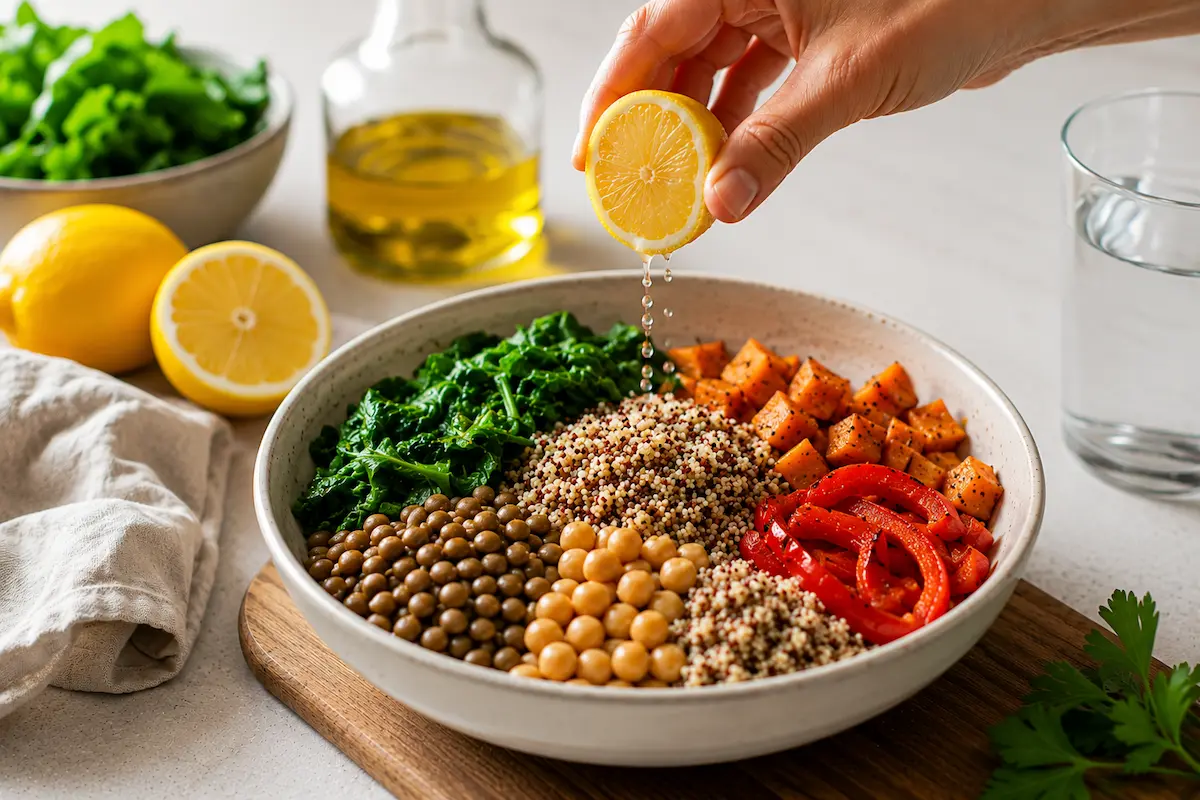
Eating iron-rich foods is important, but your body doesn’t absorb all the iron you eat.
Iron absorption depends on the type of iron in your food, the foods you eat together, and even beverages like coffee and tea. While some habits can improve absorption, others may reduce it.
This is especially important for people at higher risk of iron deficiency, including women with heavy menstrual periods, pregnant women, vegetarians, vegans, children, endurance athletes, and frequent blood donors.
In this guide, you’ll learn how iron absorption works and practical strategies to help your body absorb more iron from the foods you eat.
What Is Iron Absorption?
Iron absorption is the process by which your body absorbs iron from food and moves it into the bloodstream, where it’s used to make hemoglobin, support muscle function, and carry out many other essential functions.
Most iron absorption occurs in the upper part of the small intestine. Your body adjusts how much iron it absorbs based on its needs—absorption increases when iron stores are low and decreases when they’re sufficient.
However, several dietary and lifestyle factors also influence iron absorption. That’s why two meals containing the same amount of iron may not provide the same amount of usable iron.
Heme Iron vs. Non-Heme Iron
Understanding the two forms of dietary iron is the first step toward improving iron absorption.
Heme Iron
Heme iron is found only in animal-based foods such as:
- Beef
- Lamb
- Chicken
- Turkey
- Fish
- Shellfish
This form of iron is absorbed much more efficiently than plant-based iron. In healthy adults, the body typically absorbs about 15% to 35% of heme iron.
Because heme iron is less affected by other foods eaten during the same meal, it’s generally easier for the body to utilize.
Non-Heme Iron
Non-heme iron is found in plant foods and iron-fortified products, including:
- Lentils
- Beans
- Chickpeas
- Soybeans
- Tofu
- Spinach
- Pumpkin seeds
- Quinoa
- Oats
- Fortified breakfast cereals
The body absorbs non-heme iron less efficiently, usually around 2% to 20%, depending on the meal composition.
Fortunately, several simple strategies can significantly improve the absorption of non-heme iron, making it easier to meet your daily iron needs on a vegetarian or vegan diet.
Factors That Affect Iron Absorption
Iron absorption isn’t determined by the amount of iron in your food alone. Several factors can either increase or decrease the amount your body absorbs.
These include:
- The type of iron (heme or non-heme)
- Vitamin C intake
- Calcium consumed during the meal
- Tea and coffee
- Phytates found in some whole grains and legumes
- Polyphenols in certain beverages and foods
- Your current iron status
- Digestive health
- Certain medications
- Cooking methods
Many of these factors are easy to modify, allowing you to improve iron absorption through simple dietary adjustments.
How to Increase Iron Absorption from Food
The following tips can help your body absorb more iron from the foods you eat while helping you avoid common factors that reduce iron absorption.
1. Pair Iron-Rich Foods With Vitamin C-Rich Foods
Vitamin C is one of the most effective nutrients for improving the absorption of non-heme iron.
It converts iron into a form that’s easier for the body to absorb while reducing the effects of compounds that normally inhibit iron absorption.
Excellent sources of vitamin C include:
- Oranges
- Strawberries
- Kiwi
- Guava
- Bell peppers
- Broccoli
- Tomatoes
- Brussels sprouts
- Lemon juice
Simple meal combinations include:
- Lentil soup with tomatoes
- Spinach salad with strawberries
- Oatmeal topped with kiwi
- Bean chili with bell peppers
- Tofu stir-fry with broccoli
- Chickpea salad with lemon juice
Even a modest amount of vitamin C during a meal can noticeably increase the absorption of plant-based iron.
2. Include Heme Iron Sources When Appropriate
If you eat animal products, including a source of heme iron can improve your overall iron intake.
Good choices include:
- Lean beef
- Chicken
- Turkey
- Fish
- Shellfish
Heme iron is naturally absorbed more efficiently than non-heme iron and is less affected by other dietary factors.
In addition, eating meat, poultry, or fish with plant-based iron sources may also enhance the absorption of non-heme iron in the same meal, a phenomenon sometimes referred to as the “meat factor.”
3. Cook With Cast-Iron Cookware
Cooking in cast-iron pots or skillets can increase the iron content of certain foods, particularly acidic dishes such as tomato sauce.
Small amounts of iron are released from the cookware into the food during cooking. While the increase varies depending on the food and cooking time, it may contribute to overall iron intake over time.
This simple change won’t replace an iron-rich diet, but it can be one additional strategy to support healthy iron intake.
4. Avoid Drinking Tea or Coffee With Iron-Rich Meals
Tea and coffee are among the most common dietary factors that reduce iron absorption.
They contain natural compounds called polyphenols, which bind to non-heme iron in the digestive tract and make it harder for your body to absorb.
One study found that drinking tea with a meal reduced non-heme iron absorption by 62%, while coffee reduced it by 35%. In the same study, orange juice increased iron absorption by 85%.
If you have iron deficiency or are trying to improve your iron levels, consider drinking tea or coffee between meals rather than with iron-rich meals. Instead, choose water or a vitamin C-rich beverage, such as orange juice, with meals to help support iron absorption.
This recommendation is especially important for people with iron deficiency or those at higher risk of developing it.
5. Be Mindful of Calcium Intake Around Iron-Rich Meals
Calcium is important for healthy bones, muscles, and nerves, but consuming large amounts of calcium with an iron-rich meal may temporarily reduce the absorption of both heme and non-heme iron.
In one study, consuming 300–600 mg of calcium with a meal reduced iron absorption by 50–60%. Since this amount is commonly found in everyday meals, the timing of calcium intake may matter if you’re trying to improve your iron absorption.
This doesn’t mean you should avoid calcium-rich foods. Instead, if you’ve been advised to increase your iron absorption, consider consuming calcium-rich foods or calcium supplements at a different time than iron-rich meals or iron supplements.
Calcium-rich foods include:
- Milk
- Yogurt
- Cheese
- Calcium-fortified plant-based beverages
- Calcium supplements
6. Soak, Sprout, or Ferment Legumes and Grains
Many nutritious plant foods naturally contain compounds called phytates (also known as phytic acid).
These compounds can bind to non-heme iron and reduce the amount your body absorbs.
Research suggests that even small amounts of phytates can significantly reduce iron absorption. However, traditional food preparation methods that lower phytate levels may increase iron absorption by as much as 12 times from cereal- and legume-based foods.
Fortunately, there are several simple ways to reduce phytate levels at home:
- Soak dried beans before cooking.
- Sprout legumes and whole grains.
- Choose fermented foods such as tempeh or sourdough bread.
- Thoroughly cook beans and legumes after soaking.
While these methods don’t remove phytates completely, they can improve the absorption of iron and other minerals, making plant-based foods even more nutritious.
7. Take Iron Supplements Correctly
If your healthcare provider recommends an iron supplement, taking it correctly can help improve absorption and reduce side effects.
General tips include:
- Take your supplement exactly as directed.
- If advised, take it with a source of vitamin C, such as orange juice or a piece of fruit.
- Avoid taking it at the same time as calcium supplements, dairy products, tea, or coffee, as they can reduce iron absorption.
- If it causes stomach discomfort, speak with your healthcare provider about whether taking it with a small amount of food or trying a different formulation may help.
Never start taking iron supplements without medical advice. Too much iron can be harmful and may lead to serious health complications.
8. Address Underlying Digestive Conditions
Healthy digestion plays an important role in iron absorption. However, certain medical conditions can reduce your body’s ability to absorb iron, even if you eat enough iron-rich foods.
These include:
- Celiac disease
- Inflammatory bowel disease (IBD)
- Chronic gastritis
- Previous stomach or intestinal surgery
Some medications, particularly those that reduce stomach acid, may also interfere with iron absorption.
If you have persistent iron deficiency despite eating an iron-rich diet or taking iron supplements as directed, speak with your healthcare provider. They can evaluate whether an underlying digestive condition or another medical issue may be affecting your iron absorption.
9. Choose Iron-Fortified Foods When Needed
Iron-fortified foods can help increase iron intake, especially for people who struggle to meet their needs through diet alone.
Common examples include:
- Breakfast cereals
- Infant cereals
- Some breads
- Certain plant-based beverages
When comparing products, look for options that provide a meaningful amount of iron while being lower in added sugars and higher in fiber whenever possible.
Fortified foods can be particularly helpful for children, vegetarians, vegans, and people with increased iron requirements.
Common Mistakes That Can Reduce Iron Absorption
Many people unknowingly make choices that limit the amount of iron their body absorbs.
Common mistakes include:
- Drinking tea or coffee with iron-rich meals.
- Consuming large amounts of calcium alongside iron-rich foods or supplements.
- Not including vitamin C-rich foods with plant-based sources of iron.
- Relying on a single iron-rich meal instead of eating iron-rich foods throughout the day.
- Taking iron supplements without medical guidance.
- Assuming all iron-rich foods are absorbed equally.
Making a few simple adjustments to meal planning can often improve iron absorption without major dietary changes.
Who Should Pay Extra Attention to Iron Absorption?
While healthy iron absorption is important for everyone, some groups have a greater risk of developing iron deficiency and may benefit from paying closer attention to dietary habits.
These include:
- Women with heavy menstrual periods
- Pregnant women
- Infants and young children
- Adolescents during periods of rapid growth
- Vegetarians and vegans
- Frequent blood donors
- Endurance athletes
- People with digestive disorders that affect nutrient absorption
For these groups, combining iron-rich foods with strategies that improve absorption can help support healthy iron levels as part of an overall balanced diet.
Takeaways
Getting enough iron isn’t just about eating iron-rich foods—it’s also about helping your body absorb the iron you consume.
Pairing iron-rich foods with vitamin C-rich foods and limiting factors that reduce iron absorption can help you get more iron from your diet.
If you think you have iron deficiency, speak with your healthcare provider for evaluation and appropriate treatment.