Getting your first period can feel exciting, confusing, or even a little scary, especially when you have no idea when it will happen. Your body usually gives you clues before your first period arrives, but they can be easy to miss.
You may notice changes in your breasts, vaginal discharge, body shape, skin, or even your mood. Some girls notice several changes, while others notice only one or two.
Knowing what to look for can make the whole experience feel much less surprising.
When Does Your First Period Usually Start?
Most girls get their first period between ages 8 and 15, although there is a wide range of what is considered normal.
Your first period usually happens after your body has already started going through puberty. It does not suddenly appear without any changes beforehand. In many cases, puberty changes have been happening for a couple of years before the first period begins.
One of the biggest clues is breast development. Once your breasts start developing, your first period may still be some time away, but it is a sign that your body is moving through puberty.
What Are the Signs Your First Period Is Coming Soon?
Your body may show several signs that your first period is getting closer. These changes do not happen in exactly the same order or at the same age for everyone.
1. Your Breasts Start Developing
Breast development is often one of the earliest noticeable signs of puberty and is the first sign of puberty in about 85% of girls.
You may first notice small, firm areas developing underneath your nipples. Over time, your breasts gradually become larger and more developed as puberty progresses.
Your first period often comes about two years after breast development begins, although the timing can vary from person to person.
So, if your breasts have recently started developing, your first period may still be some time away. It simply means your body is moving through the normal changes of puberty.
2. You Start Getting Pubic and Underarm Hair
Another common sign of puberty is the appearance of hair around your pubic area.
At first, the hair may be light, thin, and sparse. As puberty continues, it usually becomes darker, thicker, and curlier. You may also notice hair beginning to grow under your arms.
Puberty doesn’t follow exactly the same order for everyone. In one longitudinal study, pubic hair was the first noticeable sign of puberty in 53% of girls, showing that it can appear before other visible changes.
3. You Notice Vaginal Discharge
Vaginal discharge is one of the signs that your body is going through puberty and your first period may be getting closer.
You may notice a clear, white, or slightly cloudy fluid in your underwear. It can be thin and watery or thicker and creamy.
This type of discharge is a normal part of puberty. As your hormone levels change, you may start noticing more vaginal discharge before your first period. The amount and texture can also change from day to day. That does not necessarily mean anything is wrong.
However, discharge with a strong, unpleasant smell or significant itching, burning, or pain should be checked by a healthcare professional.
4. Your Body Shape May Change
As puberty progresses, your body may start to look different. You may notice changes in your height, body shape, hips, and where your body stores fat.
These changes happen gradually as your body moves through puberty. They can happen before your first period, but they are not a reliable way to predict exactly when it will begin.
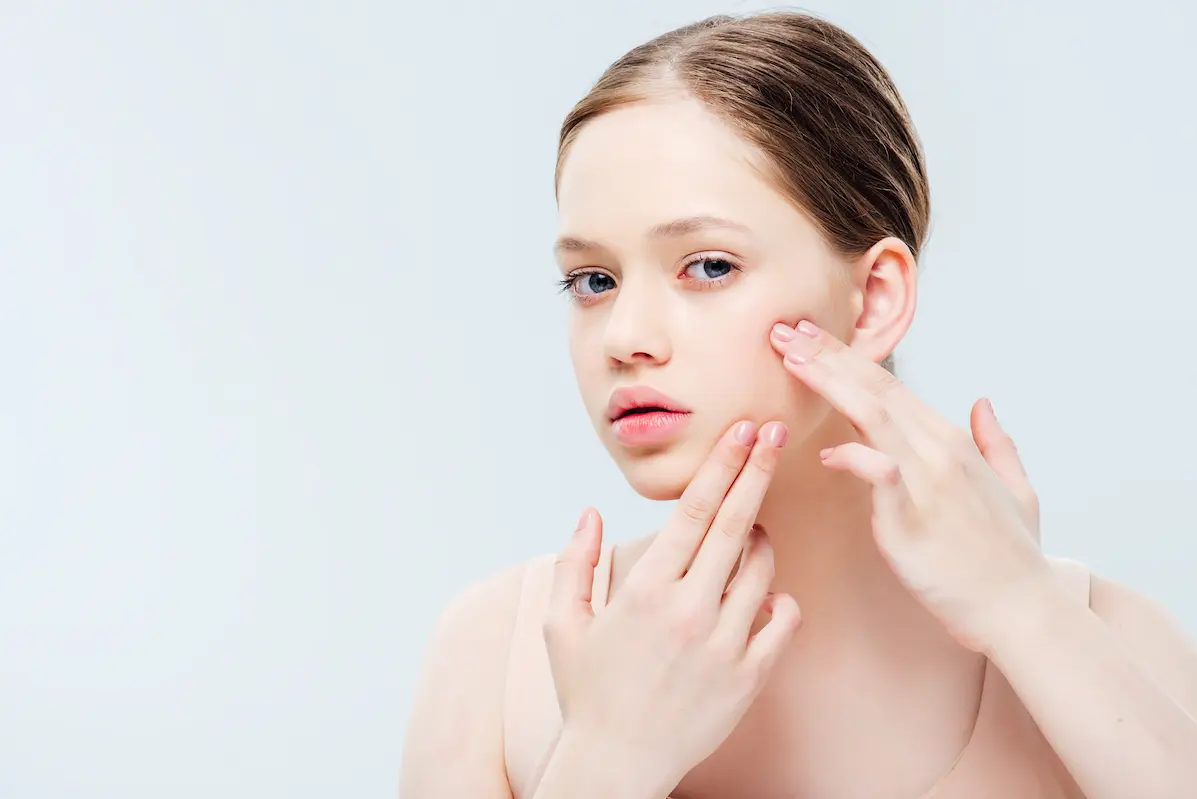
5. You May Notice More Pimples
Hormonal changes during puberty can make your skin produce more oil. You may notice oilier skin, blackheads, whiteheads, or pimples, especially on your face.
Acne is common during puberty and may appear as early as 2½ years before your first period, although it is not a reliable way to predict exactly when your period will start.
6. You May Notice More Body Odor
You may start sweating more than you did as a child, and your underarms may develop a stronger smell.
During puberty, your sweat glands become more active. Bacteria on your skin can break down sweat and create body odor.
This is a normal part of puberty, but like acne, it does not tell you exactly when your first period will begin.
7. You May Grow Taller Quickly
A noticeable growth spurt is a common part of puberty. You may suddenly find that your clothes or shoes feel smaller as you grow more quickly than before.
For many girls, the fastest period of height growth happens before the first period.
Research suggests that peak height growth typically occurs about 1–1½ years before menarche, although the timing varies from person to person. You can continue growing after your first period, but growth usually slows down.
How Do You Know Your First Period Is Really Close?
There is no way to predict the exact day your first period will arrive.
However, if you have already developed breasts, have pubic or underarm hair, and have been noticing vaginal discharge for several months, your first period may be getting closer.
The important thing to remember is that there is no perfect countdown.
Your body follows its own timeline.
You could notice several signs and still wait months before your first period. Another girl may experience similar changes and get her first period sooner.
Both can be completely normal.
What Does Your First Period Look Like?
Your first period may not look like the bright red blood you might expect.
It can start as:
- A few reddish-brown spots
- Pink or red marks in your underwear
- Brown discharge
- Light bleeding that comes and goes
Your first few periods may also be irregular. You might have one period and then wait several weeks or even months for the next one.
That does not automatically mean something is wrong. It can take time for your menstrual cycle to become more regular during the first few years.
What Should You Do When Your First Period Starts?
If you notice blood in your underwear or when you wipe, try not to panic.
Your first period is a normal part of growing up.
You can use a pad or another menstrual product that feels comfortable for you. If you are at school or away from home, you can also ask a trusted adult, teacher, school nurse, or friend for help.
It can be useful to keep a pad in your school bag once you start noticing puberty changes. You do not need to know exactly when your first period will happen. Having one with you simply means you will be prepared if it arrives unexpectedly.
What If You Have No Signs of Your First Period Yet?
Everyone develops at a different pace.
Some girls start puberty earlier, while others start later. Having fewer visible changes than your friends does not automatically mean anything is wrong.
However, it is worth talking with a healthcare professional if you are 15 and have not had your first period, or if you are 13 and have not developed any signs of puberty.
They can look at your overall growth and development and determine whether everything is progressing normally.
When Should You Get Help?
Most changes during puberty are completely normal, but some symptoms deserve attention.
Talk to a healthcare professional if you have severe or persistent abdominal pain, unusual vaginal discharge with a strong odor, significant itching or burning, or other symptoms that concern you.
And when your first period does arrive, remember that you do not have to figure everything out by yourself.
It is okay to ask questions.
The Bottom Line
Your first period usually does not happen completely out of nowhere. Breast development, pubic hair, vaginal discharge, body changes, acne, body odor, and other puberty changes can all happen before it.
But there is no exact set of signs that can tell you, “Your period will start tomorrow.”
Your body has its own schedule.
If you are noticing several signs of puberty, your first period may be getting closer. The best thing you can do is understand what is happening, keep a menstrual product nearby, and remember that everyone’s timeline is different.