A snack should do more than keep you busy until dinner. The best ones hit that sweet spot between something you genuinely want to eat and something that leaves you feeling satisfied afterward.
That doesn’t mean reaching for another handful of almonds every afternoon. You can have warm cinnamon apples with walnuts, crispy roasted chickpeas, avocado toast, berry yogurt bark, hummus with crunchy vegetables, or even dark chocolate with strawberries.
These anti-inflammatory snack ideas are built around fruits, vegetables, legumes, whole grains, nuts, seeds, and other minimally processed foods that can fit into an overall eating pattern associated with better inflammatory health.
Anti-Inflammatory Snack Ideas
Whether you’re craving something sweet, savory, crunchy, or creamy, there’s plenty of room to make your snack both satisfying and nourishing. Here are 15 simple combinations that bring together wholesome ingredients without making snack time feel complicated.
1. Warm Cinnamon Apples with Walnuts & Greek Yogurt
This tastes a little like apple pie without actually turning snack time into dessert.
Slice an apple and warm it briefly in a skillet with cinnamon until the edges soften and become fragrant. Spoon it over plain Greek yogurt and finish with chopped walnuts.
The contrast is the best part: warm, juicy apples against cool yogurt and crunchy walnuts.
Apples provide fiber and walnuts contribute unsaturated fats, including plant-based omega-3 alpha-linolenic acid. Yogurt adds protein, making this more substantial than fruit alone.
2. Crispy Roasted Chickpeas with Smoked Paprika
If you usually reach for chips when you want something crunchy, try chickpeas roasted until their edges become crisp.
Toss drained chickpeas with olive oil, smoked paprika, cumin, garlic powder, and black pepper, then roast until golden and crunchy.
They’re savory, smoky, and satisfying enough to feel like a real snack rather than a bowl of “healthy food.”
Chickpeas provide fiber and plant protein, while olive oil and spices add flavor without needing a heavily processed coating.
The key to crunch: Dry the chickpeas thoroughly before roasting.
3. Berry, Chia & Greek Yogurt Bark
This one feels much more indulgent than it actually is.
Spread plain Greek yogurt thinly over a parchment-lined tray and scatter blueberries, raspberries, sliced strawberries, and chia seeds over the top. Freeze until firm, then break it into pieces.
The frozen berries give little bursts of tartness while the yogurt makes the whole thing creamy.
Berries provide fiber and plant compounds, while chia contributes fiber and alpha-linolenic acid.
For a chocolate version: Add a light sprinkle of unsweetened cocoa nibs before freezing.
4. Avocado & Tomato Whole-Grain Toast
Sometimes the best snack is simply good ingredients on good toast.
Mash ripe avocado over a slice of whole-grain bread, then add juicy tomato slices, black pepper, lemon juice, and fresh basil.
The avocado makes the toast creamy, while the tomato and lemon keep it bright rather than heavy.
Avocado and olive oil are sources of monounsaturated fat, while whole grains contribute fiber and other nutrients. Whole grains are generally favored over refined grains in healthy dietary patterns.
5. Hummus With Roasted Carrots & Cucumber
Move beyond the standard bowl of hummus and carrot sticks.
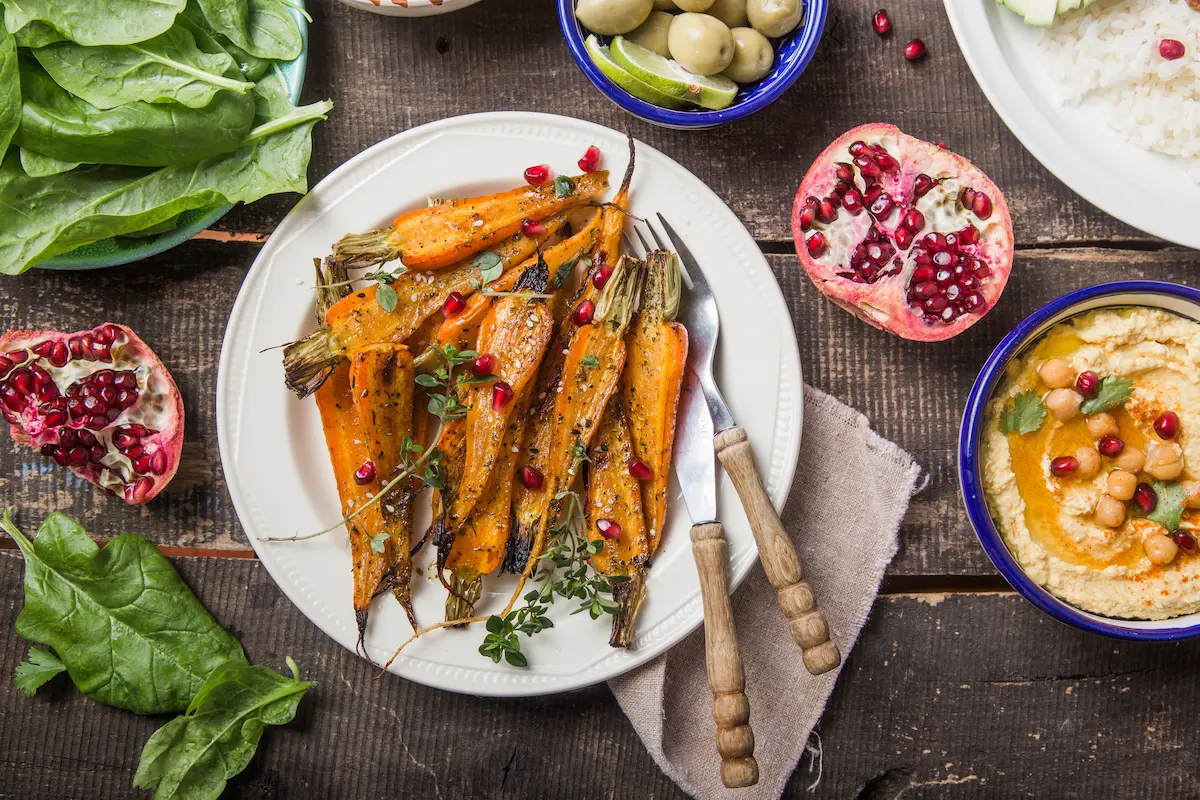
Roast some carrot sticks until their edges caramelize, then serve them alongside cool cucumber and hummus. The warm-and-cold combination makes this surprisingly satisfying.
Chickpeas form the base of hummus, bringing fiber and plant protein, while carrots and cucumber add vegetables in an easy snack format.
For more flavor: Dust the roasted carrots with cumin before they go into the oven.
6. Pear Slices with Almond Butter & Cinnamon
This is one of those combinations that requires almost no preparation but tastes thoughtfully put together.
Slice a ripe pear and serve it with almond butter and a little cinnamon. The pear is crisp and juicy against the rich almond butter.
Nuts and nut butters provide unsaturated fats and can make fruit more satisfying than eating it alone.
7. Edamame With Lemon, Sesame & Chili
Edamame deserves a place beyond the appetizer section.
Warm shelled edamame and toss it with lemon juice, sesame seeds, a little extra-virgin olive oil, and chili flakes. Eat it warm or chilled.
The beans are naturally savory and provide plant protein and fiber, while lemon and chili keep the snack lively.
For a more substantial bowl: Add shredded cabbage and sliced cucumber for extra crunch.
8. Dark Chocolate, Strawberries & Pistachios
Yes, chocolate can have a place in an otherwise nourishing snack.
Choose dark chocolate with a high cocoa content and pair a few pieces with fresh strawberries and a small handful of pistachios.
The combination works because you get something sweet, something juicy, and something crunchy in every bite. Choose dark chocolate with at least 70% cocoa solids for a richer chocolate flavor and more cocoa than lower-cocoa varieties.
Keep it balanced: Let the strawberries provide most of the sweetness rather than choosing a heavily sweetened chocolate.
9. White Bean & Herb Crostini
White beans can make an unexpectedly good snack spread.
Mash them with olive oil, lemon juice, garlic, parsley, and black pepper until chunky and creamy. Spoon the mixture onto small pieces of toasted whole-grain bread.
The beans create a creamy texture without needing mayonnaise or a heavy cheese spread.
10. Blueberry-Walnut Chia Pudding
This is a good make-ahead option when you want something waiting in the refrigerator.
Stir chia seeds into unsweetened milk or yogurt and let them thicken. Layer with blueberries, chopped walnuts, and a little cinnamon.
The berries bring freshness, while chia and walnuts provide fiber and unsaturated fats.
Make it more interesting: Warm a handful of blueberries briefly and spoon them over the chilled pudding.
11. Savory Popcorn with Olive Oil & Herbs
Popcorn doesn’t have to be covered in butter to be satisfying.
Make plain air-popped popcorn and toss it with a small amount of extra-virgin olive oil, dried oregano, garlic powder, black pepper, and a pinch of nutritional yeast if you enjoy its savory flavor.
Whole-grain popcorn provides fiber, while the herbs and olive oil turn it into something much more interesting than plain popcorn.
12. Roasted Sweet Potato Rounds with Tahini
These are somewhere between a snack and a miniature appetizer.
Slice sweet potato into rounds, roast until tender and caramelized, then drizzle with tahini and lemon. Finish with sesame seeds and chopped parsley.
The sweetness of the roasted sweet potato works beautifully with the nutty tahini and sharp lemon.
Sweet potatoes provide fiber and carotenoids, while tahini contributes unsaturated fats and minerals.
13. Apple-Walnut Overnight Oat Cups
Think of these as a snack-sized version of apple-cinnamon oatmeal.
Mix rolled oats with plain yogurt or milk, diced apple, chia seeds, cinnamon, and chopped walnuts. Refrigerate overnight and portion into small jars or containers.
The oats and fruit provide fiber, while the walnuts add texture and unsaturated fat. Whole grains such as oats are a common component of healthy eating patterns.
For a fresher finish: Add a few diced apple pieces just before eating instead of mixing all of them in overnight.
14. Cucumber, Avocado & Pumpkin Seed Bites
For something fresh and crunchy, layer thick cucumber slices with mashed avocado and toasted pumpkin seeds.
Add lemon zest, black pepper, and a little fresh dill.
There is no cooking involved, but the combination has enough contrast to feel more substantial than plain vegetables.
15. Berry-Almond Whole-Grain Toast
This is for the days when you want something sweet but don’t want a pastry.
Spread almond butter over toasted whole-grain bread and top with sliced strawberries or blueberries. Add cinnamon and a scattering of chopped almonds.
The nut butter gives the toast richness, while the berries provide tartness and freshness.
Don’t mash the berries: Keeping them sliced gives you little bursts of fruit with every bite.
What Makes a Snack Anti-Inflammatory?
There isn’t a single food that turns an ordinary snack into an “anti-inflammatory” one.
The more useful way to think about these snacks is as small examples of a broader eating pattern that emphasizes anti-inflammatory foods, including vegetables, fruits, legumes, whole grains, nuts, seeds, unsaturated fats, herbs, and spices, while limiting highly refined and heavily processed foods.
That distinction matters. Research on inflammation generally looks at overall dietary patterns, not whether eating one particular snack produces a measurable anti-inflammatory effect.
How to Build a More Satisfying Snack
A useful snack doesn’t need to be complicated.
Try pairing two or more foods that bring different qualities:
- Fruit + nuts or nut butter
- Vegetables + hummus
- Whole-grain toast + avocado
- Yogurt + berries + seeds
- Chickpeas + spices
- Whole grains + healthy fats
This often makes a snack more satisfying than eating a single food by itself.
And don’t underestimate texture. Something creamy paired with something crunchy, or something warm paired with something cold, can make a simple snack feel considerably more interesting.
The Bottom Line
An anti-inflammatory snack doesn’t need to look like a carefully measured bowl of “superfoods.”
It can be warm cinnamon apples with walnuts, crispy chickpeas straight from the oven, avocado toast, a few pieces of dark chocolate with strawberries, or roasted sweet potato with lemony tahini.
The bigger picture matters more than any individual snack. Build your day around a variety of minimally processed foods—especially vegetables, fruits, legumes, whole grains, nuts, seeds, fish, and healthy unsaturated fats—and these little meals can fit naturally into that pattern.
And when a snack happens to be crunchy, creamy, warm, sweet, salty, or chocolatey enough to make you genuinely look forward to it, even better.