Dinner should give you something to look forward to—not leave you choosing between another plain salad and a meal that feels too heavy.
These anti-inflammatory dinner ideas take a different approach. Think lemony salmon with crispy potatoes, smoky chickpea tacos, herb-filled chicken bowls, creamy lentil curry, roasted vegetables with tahini, and colorful grain bowls piled high with good things. They’re built around vegetables, legumes, whole grains, fish, nuts, seeds, olive oil, herbs, and spices—the kinds of foods that commonly make up Mediterranean-style and other healthy dietary patterns associated with better inflammatory health.
And no, you don’t need to eat the same salmon-and-broccoli dinner every night.
Anti-Inflammatory Dinner Ideas to Try Tonight
Eating for better inflammatory health doesn’t mean giving up flavor or settling for the same meals every week. These dinner ideas make it easy to bring more vegetables, legumes, whole grains, fish, healthy fats, herbs, and spices into your evening meal, with plenty of variety to keep dinner interesting.
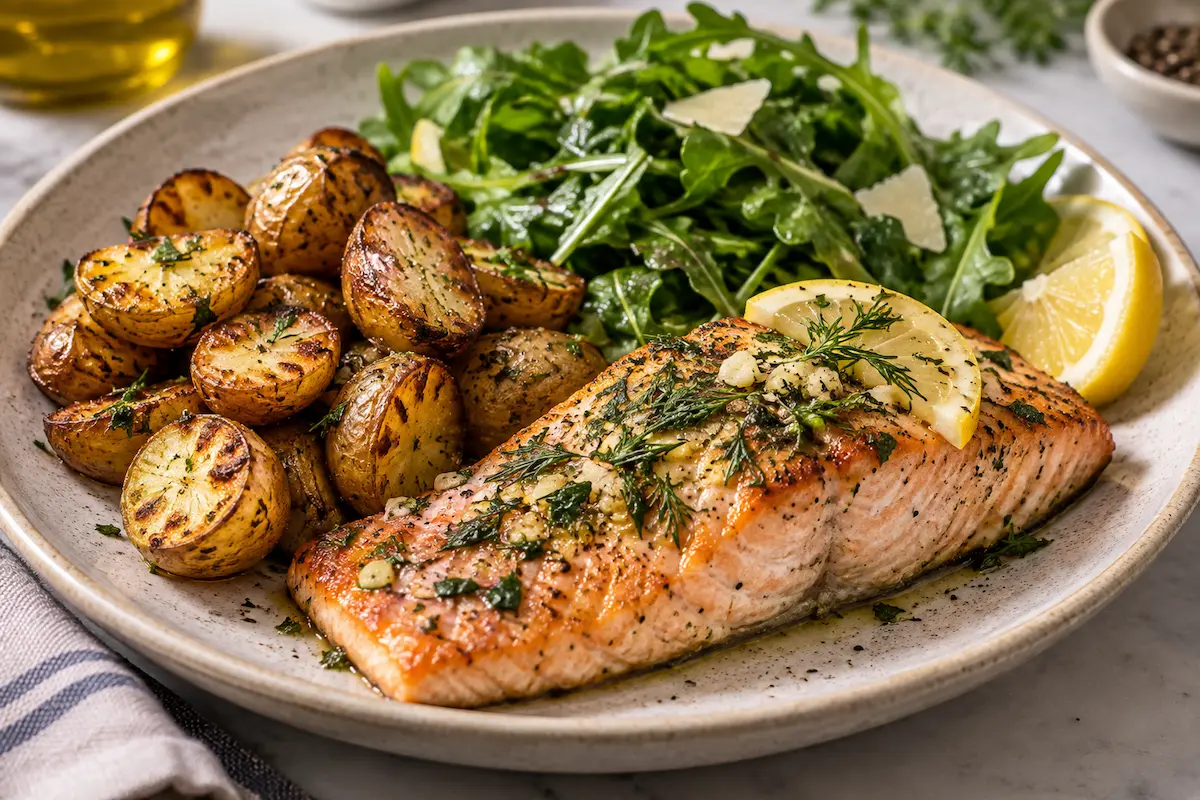
1. Lemon-Herb Salmon with Crispy Potatoes & Greens
This is the kind of dinner that looks impressive on a plate but is surprisingly straightforward.
Roast baby potatoes until their edges are deeply golden, then serve them alongside a fillet of salmon seasoned with garlic, lemon, dill, and black pepper. Add a generous handful of arugula or wilted spinach and finish everything with extra-virgin olive oil and another squeeze of lemon.
Salmon supplies long-chain omega-3 fatty acids, while the greens, potatoes, herbs, and olive oil bring more of the foods emphasized in Mediterranean-style eating.
2. Smoky Black Bean & Avocado Tacos
These aren’t the tacos that need a mountain of cheese and sour cream to taste good.
Warm black beans with smoked paprika, cumin, garlic, and a little chili. Spoon them into whole-grain or corn tortillas with avocado, shredded cabbage, tomatoes, red onion, and fresh cilantro.
The contrast is what makes them work: creamy avocado, smoky beans, crisp cabbage, and bright lime.
Black beans contribute fiber and plant protein, while avocado, vegetables, and seeds or nuts can provide unsaturated fats and other nutrients found in healthy dietary patterns.
Make them restaurant-worthy: Char the tortillas briefly in a dry skillet before assembling.
3. Mediterranean Chicken, Farro & Roasted Vegetable Bowl
This is a dinner you can make once and happily eat again the next day.
Pile cooked farro into a bowl with lemon-herb chicken, roasted zucchini, bell peppers, cherry tomatoes, cucumber, and a handful of arugula. Add Kalamata olives and a spoonful of hummus, then drizzle with olive oil and lemon.
Farro gives the bowl a chewy whole-grain base, while the vegetables provide color and variety. Chicken offers a lean protein option without making meat the centerpiece of the meal.
For meal prep: Keep the cucumber, greens, and dressing separate until you’re ready to eat.
4. Creamy Red Lentil Curry with Spinach
You won’t miss the cream in this deeply spiced lentil curry.
Red lentils simmer with tomatoes, onion, garlic, ginger, turmeric, cumin, and a modest amount of coconut milk until they become soft and velvety. Fold in spinach right at the end and serve over brown rice or quinoa.
The lentils do most of the work here, creating a rich texture while supplying fiber and plant protein. Tomatoes, spinach, ginger, garlic, and spices add a broad range of plant compounds.
If you like heat: Add fresh chili or a pinch of cayenne rather than relying on a heavy sauce.
5. Charred Broccoli & White Bean Pasta With Lemon-Garlic Breadcrumbs
This gives broccoli a starring role rather than making it a side dish.
Whole-grain pasta is tossed with deeply charred broccoli, creamy white beans, garlic, lemon zest, red pepper flakes, and extra-virgin olive oil. Finish it with crisp whole-grain breadcrumbs and plenty of parsley.
The broccoli gets browned enough to develop those caramelized edges, while the white beans melt slightly into the pasta and create a surprisingly creamy texture without needing a heavy sauce. The lemon keeps the whole dish bright.
Don’t skip the char: Let the broccoli develop dark golden edges before tossing it with the pasta. That’s where much of the flavor comes from.
6. Miso-Ginger Salmon With Sesame Greens
This dinner takes the flavors in a completely different direction.
Brush salmon with a thin mixture of miso, fresh ginger, garlic, and a touch of sesame oil before roasting. Serve it over brown rice with sautéed bok choy, spinach, or broccoli and a scattering of sesame seeds.
The salmon brings omega-3 fats, while the vegetables and whole grain round out the meal. Miso adds intense savory flavor, so you don’t need much.
Watch the salt: Miso can be quite salty, so balance the dish with plenty of fresh ginger, lime, and vegetables rather than adding extra soy sauce.
7. Roasted Cauliflower Steaks with Herbed Chickpeas & Tahini
This is a dinner that proves vegetables don’t have to play second fiddle.
Cut thick slabs of cauliflower and roast them until the edges become deeply browned. Serve them over warm chickpeas tossed with parsley, garlic, lemon, and olive oil, then drizzle with tahini.
The roasted cauliflower becomes nutty and caramelized, while the chickpeas make the plate substantial enough to count as dinner.
For a sharper finish: Whisk lemon juice into the tahini until it becomes thin enough to drizzle.
8. Tomato, White Bean & Spinach Skillet with Whole-Grain Toast
Some of the best dinners are the ones that happen in one pan.
Simmer white beans with crushed tomatoes, garlic, onion, oregano, and red pepper flakes. Fold in spinach until wilted, then finish with olive oil and fresh basil.
Spoon it into shallow bowls and serve with toasted whole-grain bread for soaking up the tomato-rich sauce.
Beans bring fiber and plant protein, while tomatoes, spinach, garlic, and herbs make the dish anything but bland.
For extra richness: Add a small amount of crumbled feta just before serving.
9. Ginger-Lime Tofu Stir-Fry with Broccoli & Cashews
This is for nights when you want something fast, colorful, and full of texture.
Brown cubes of tofu until golden, then toss them with broccoli, bell peppers, snow peas, ginger, garlic, and a light lime-based sauce. Finish with roasted cashews and serve over brown rice.
The tofu supplies plant protein, while the vegetables provide variety and the cashews add crunch and unsaturated fats.
The trick to better tofu: Pat it dry well before cooking so it browns instead of releasing water into the pan.
10. Mediterranean Stuffed Bell Peppers with Lentils & Quinoa
Bell peppers make surprisingly good little edible bowls.
Fill halved peppers with cooked lentils, quinoa, chopped tomatoes, onion, garlic, parsley, oregano, and a little olive oil. Roast until the peppers soften and their edges begin to blister.
The filling has enough texture to make the peppers satisfying without relying on ground meat or a large amount of cheese.
11. Sardine, Tomato & White Bean Mediterranean Plate
Not every dinner needs to be cooked from scratch.
Arrange sardines, creamy white beans, ripe tomatoes, arugula, cucumber, olives, and red onion on a large plate. Drizzle generously with extra-virgin olive oil and lemon, then serve with whole-grain bread.
Sardines are an excellent source of long-chain omega-3 fatty acids, while beans, vegetables, olive oil, and whole grains fit naturally into a Mediterranean-style pattern.
If sardines are too strong for you: Use canned salmon or another oily fish instead.
12. Sweet Potato, Lentil & Kale Grain Bowls
This bowl leans into everything good about roasted vegetables.
Roast cubes of sweet potato until caramelized, then layer them over cooked farro or quinoa with warm lentils and shredded kale. Add pumpkin seeds and a lemon-tahini dressing.
The sweetness of the roasted potato works beautifully against the earthy lentils and slightly bitter greens.
For the best texture: Massage the raw kale briefly with a little lemon juice and olive oil before adding it to the bowl.
13. Garlic-Rosemary Chicken with White Beans & Greens
Think of this as a rustic Mediterranean dinner made in one skillet.
Brown chicken with garlic and rosemary, then add white beans, cherry tomatoes, spinach, and a splash of broth. Let everything simmer until the tomatoes soften and the beans absorb some of the savory juices.
It’s simple, but the rosemary and garlic make the whole kitchen smell like you’ve been cooking for hours.
Don’t discard the pan juices: Spoon them over the chicken and beans when serving.
14. Roasted Eggplant & Chickpea Tomato Stew
Eggplant becomes almost silky when it has enough time in the oven.
Roast cubes of eggplant until browned, then fold them into a tomato sauce with chickpeas, garlic, onion, cumin, smoked paprika, and fresh herbs.
The chickpeas make the stew hearty, while the roasted eggplant gives it a richness that doesn’t require cream.
15. Walnut Pesto Whole-Grain Pasta with Spinach & Tomatoes
Pesto doesn’t have to mean pine nuts and parmesan.
Blend walnuts with fresh basil, garlic, extra-virgin olive oil, lemon juice, and a small amount of parmesan if desired. Toss it through whole-grain pasta with wilted spinach and roasted cherry tomatoes.
The walnuts give the pesto a rich, almost buttery texture, while the tomatoes add sweetness and acidity.
For leftovers: Reserve a little pasta water before draining and use it to loosen the pesto when reheating.
16. Moroccan Chickpea & Vegetable Tagine
This is one for when you want dinner to smell incredible before you even sit down.
Simmer chickpeas with carrots, zucchini, tomatoes, onion, garlic, cumin, coriander, cinnamon, and a little paprika until the vegetables are tender and the sauce is thick.
Serve it over whole-grain couscous or quinoa and finish with fresh cilantro.
The combination of legumes, vegetables, whole grains, herbs, spices, and olive oil fits comfortably within the broader principles of Mediterranean-style and plant-forward eating patterns.
17. Lemon-Garlic Shrimp with Quinoa & Roasted Vegetables
This is a good choice when you want something light but don’t want a light dinner.
Roast zucchini, peppers, and cherry tomatoes while quickly sautéing shrimp with garlic, lemon, olive oil, and parsley. Serve everything over fluffy quinoa.
The shrimp cooks in minutes, making this particularly useful on evenings when you don’t have much time.
For more punch: Add lemon zest and a pinch of chili flakes to the shrimp just before serving.
18. Black Lentil & Roasted Vegetable Buddha Bowl
Black lentils hold their shape beautifully, making them ideal for a substantial grain bowl.
Layer them with roasted carrots, broccoli, red cabbage, quinoa, avocado, and pumpkin seeds. Finish with a creamy tahini-lemon dressing.
Every bite is different: earthy lentils, sweet roasted carrots, crisp cabbage, creamy avocado, and crunchy seeds.
For a meal-prep version: Roast a large tray of vegetables at once and change the dressing throughout the week.
19. Herbed Cod With Tomato, Olive & White Bean Relish
Cod is mild enough to let the other ingredients take center stage.
Bake the fish with garlic, lemon, and oregano, then spoon over a warm relish made from tomatoes, white beans, parsley, olives, and olive oil.
The beans give the dish more substance, while the tomatoes and lemon keep the fish tasting fresh rather than heavy.
If you prefer a stronger fish flavor: Swap the cod for salmon or sardines.
20. Roasted Vegetable & Hummus Flatbread
This is the kind of dinner that feels somewhere between homemade pizza and a Mediterranean mezze plate.
Spread whole-grain flatbread with hummus, then pile on roasted zucchini, peppers, red onion, and cherry tomatoes. Bake until the edges are crisp and finish with arugula, parsley, toasted seeds, and a drizzle of olive oil.
The hummus adds creaminess and plant protein, while the roasted vegetables provide sweetness and depth.
Don’t add the greens before baking: A handful of fresh arugula on top gives the flatbread a much better contrast of warm and crisp.
What Makes a Dinner Anti-Inflammatory?
There isn’t a single food or official meal plan that qualifies as “anti-inflammatory.”
A balanced eating pattern that supports overall health commonly emphasizes foods that support a healthy inflammatory response, including vegetables and fruits, legumes, whole grains, nuts and seeds, fish, and unsaturated fats such as olive oil.
These foods provide combinations of fiber, omega-3 fatty acids, unsaturated fats, and plant compounds such as polyphenols. Herbs and spices can add flavor and plant compounds too, but they shouldn’t be treated as standalone treatments for chronic inflammation.
How to Build an Anti-Inflammatory Dinner Without Overthinking It
You don’t need to follow a rigid dinner formula.
Start with a protein source such as fish, chicken, tofu, beans, or lentils. Add several vegetables, then choose a fiber-rich carbohydrate such as quinoa, farro, brown rice, potatoes, or whole-grain bread when you want one.
Finish with a source of unsaturated fat—olive oil, avocado, nuts, seeds, or tahini—and use herbs, spices, garlic, ginger, lemon, or vinegar to make everything taste good.
That’s enough structure to create dozens of different dinners without eating the same meal on repeat.
The Bottom Line
Eating for better inflammatory health doesn’t have to mean making dinner feel like a prescription.
A smoky black bean taco can fit. So can a bowl of lentils and roasted vegetables, a sheet-pan chicken dinner, a salmon plate, or a warm skillet of white beans and tomatoes.
What matters is the pattern you build over time: more vegetables, legumes, whole grains, nuts, seeds, fish, and healthy fats, and less reliance on highly processed foods, refined carbohydrates, and processed meats.
The best anti-inflammatory dinner is ultimately one that is nutritious enough to support your health—and delicious enough that you actually want to make it again tomorrow.