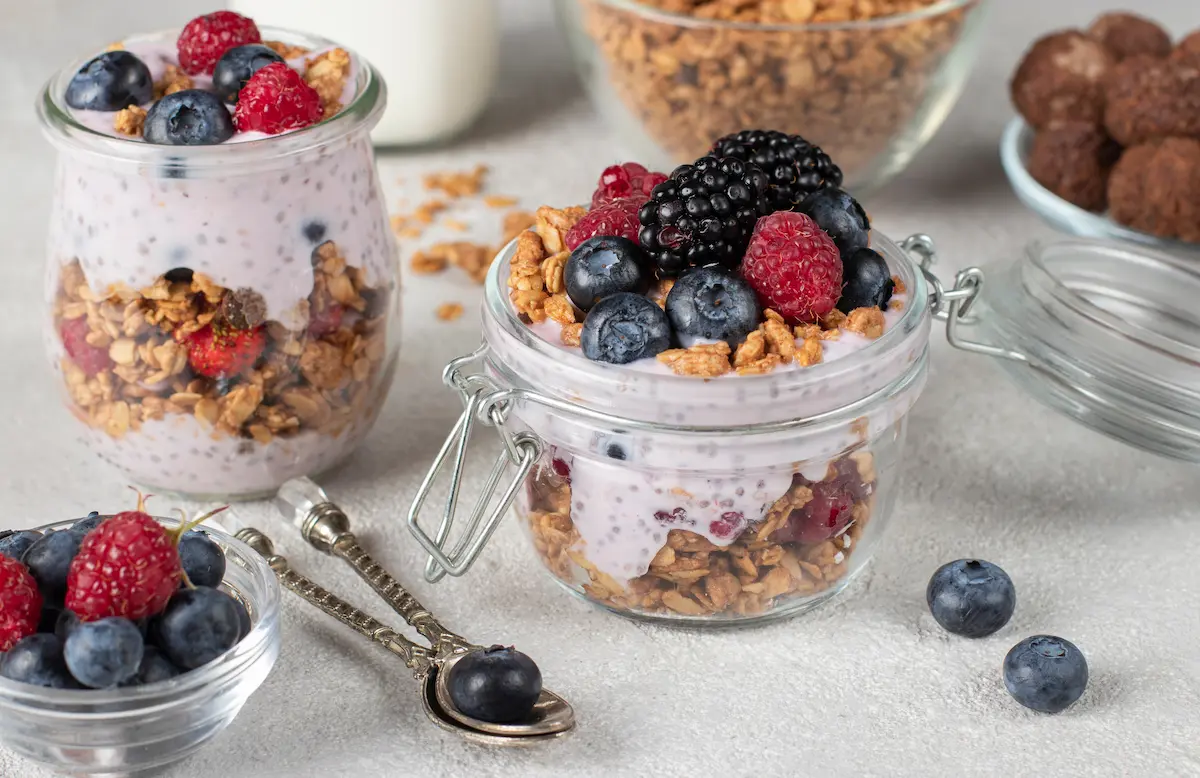
Breakfast can be the meal you rush through—or the one that quietly sets the tone for the rest of your morning. And eating in a way that supports a lower-inflammatory dietary pattern doesn’t mean settling for plain oatmeal and a handful of berries every day.
Think warm sweet potatoes with smoky black beans, creamy Greek yogurt layered with berries and walnuts, eggs simmered in spiced tomatoes, or avocado toast topped with salmon and fresh herbs. These breakfasts bring together vegetables, fruit, legumes, whole grains, nuts, seeds, fish, and other foods commonly found in Mediterranean-style eating patterns.
Anti-Inflammatory Breakfast Ideas
Here are 15 anti-inflammatory breakfast ideas that are colorful, satisfying, and different enough to keep breakfast from feeling like a chore.
1. Warm Berry, Walnut & Cinnamon Oatmeal
Start with a bowl of steel-cut or rolled oats cooked until creamy, then pile on warm blueberries or raspberries, chopped walnuts, ground flaxseed, and cinnamon.
The combination has plenty going on without becoming complicated. The berries bring color and tartness, walnuts add richness and crunch, while oats and flaxseed make the bowl more substantial.
Oats and other minimally refined whole grains are commonly included in anti-inflammatory dietary patterns, while berries, walnuts, and flax provide fiber and plant compounds.
Make it interesting: Finish with a spoonful of unsweetened Greek yogurt for a cool, creamy contrast.
2. Mediterranean Eggs with White Beans & Tomatoes
Forget the idea that eggs need to be served with toast and bacon.
Warm white beans in a skillet with cherry tomatoes, garlic, spinach, extra-virgin olive oil, and oregano. Crack a couple of eggs over the top and let them cook gently until the whites are set and the yolks remain soft.
The beans make this much heartier than ordinary scrambled eggs, while the tomatoes and spinach add freshness and color. A little crumbled feta can work well here, too, although it isn’t necessary.
3. Greek Yogurt with Berries, Walnuts & Chia
For mornings when you want something cold and effortless, build breakfast like a layered dessert—but keep the ingredients simple.
Spoon thick plain Greek yogurt into a bowl and add blueberries, strawberries, walnuts, chia seeds, and a dusting of cinnamon. If you need more sweetness, add a small amount of fruit rather than turning the bowl into a sugar-heavy parfait.
Yogurt can provide protein, while berries, walnuts, and chia contribute fiber and unsaturated fats. More broadly, fermented foods such as yogurt can fit into a varied, minimally processed eating pattern.
For extra texture: Add a small handful of unsweetened whole-grain granola just before eating.
4. Sweet Potato & Black Bean Breakfast Hash
This is for mornings when you want breakfast to feel like a proper meal.
Roast or pan-cook cubes of sweet potato until browned around the edges, then toss them with black beans, red onion, spinach, cumin, smoked paprika, and olive oil. Top with a fried or poached egg and a spoonful of avocado.
The sweet potato brings natural sweetness against the smoky beans and spices, while the beans make the dish filling enough to carry you through the morning.
Make it brighter: Add lime juice, cilantro, and a little diced tomato just before serving.
5. Avocado Toast with Smoked Salmon & Dill
There is a reason avocado toast has stayed around: the basic combination is hard to beat.
Use a slice of hearty whole-grain bread as the base, then add mashed avocado, smoked or cooked salmon, fresh dill, cucumber, and lemon.
The result is creamy, salty, fresh, and pleasantly rich without needing a heavy sauce. Salmon provides long-chain omega-3 fatty acids, while avocado and olive oil-based toppings fit the unsaturated-fat emphasis of Mediterranean-style eating.
6. Spinach, Mushroom & Herb Egg Frittata
A frittata is one of the easiest ways to make vegetables feel like the main event at breakfast.
Sauté mushrooms, spinach, onion, and garlic before folding them into beaten eggs with fresh herbs. Bake until just set, then serve warm or at room temperature with sliced tomatoes and whole-grain toast.
The mushrooms bring a savory, almost meaty quality, while the spinach keeps the dish fresh rather than heavy.
7. Chia Pudding with Raspberries, Pistachios & Cocoa
Chia pudding doesn’t have to taste like a health-food compromise.
Soak chia seeds in unsweetened milk or a fortified plant milk until thick and spoonable. Layer it with raspberries, chopped pistachios, and a light dusting of unsweetened cocoa powder.
The raspberries provide tartness against the richer cocoa and pistachios, while chia seeds contribute fiber and plant-based omega-3 alpha-linolenic acid.
For a more indulgent texture: Add a spoonful of plain Greek yogurt between the layers.
8. Savory Oatmeal with Greens, Egg & Avocado
If sweet oatmeal has never appealed to you, take it in a completely different direction.
Cook oats with water or low-sodium broth, then top them with sautéed kale or spinach, a soft-boiled egg, avocado, scallions, and freshly ground black pepper.
The oats become more like a creamy grain bowl than traditional porridge. The greens add freshness, while the egg and avocado bring richness.
9. Buckwheat Pancakes with Warm Berries & Walnuts
Pancakes can fit into a nourishing breakfast without becoming a dessert.
Make pancakes with buckwheat flour and top them with warmed blueberries, chopped walnuts, and a spoonful of plain yogurt. Keep the added sugar modest and let the fruit provide most of the sweetness.
Buckwheat offers a whole-grain-style option with a distinctly nutty flavor, while berries and walnuts bring the colorful plant foods and unsaturated fats emphasized in healthy dietary patterns.
Skip the syrup overload: A small drizzle of pure maple syrup is plenty when the berries are warm and juicy.
10. Turmeric Tofu Scramble with Peppers & Greens
Tofu takes on whatever flavors you give it, which makes it particularly useful for a savory breakfast.
Crumble firm tofu into a skillet with turmeric, black pepper, garlic, red bell pepper, onion, and spinach. Cook until the vegetables soften and the tofu picks up a little color.
It’s colorful, savory, and substantial without feeling greasy.
Turmeric and other herbs and spices are commonly included among foods associated with anti-inflammatory dietary patterns, although evidence does not justify treating turmeric or any other individual ingredient as a standalone treatment for inflammation.
Serve it with: Whole-grain toast and sliced avocado.
11. Apple, Cinnamon & Walnut Quinoa Breakfast Bowl
Quinoa doesn’t have to wait until lunch.
Serve warm cooked quinoa with diced apple, cinnamon, walnuts, ground flaxseed, and a splash of milk or unsweetened plant milk. The quinoa gives the bowl a pleasantly chewy texture that makes it feel more substantial than ordinary porridge.
The apple brings sweetness and freshness, while the walnuts and flaxseed add richness and texture.
For a cozy version: Cook the apple briefly with cinnamon before spooning it over the quinoa.
12. Chickpea & Avocado Breakfast Toast
This is a good option when you want something fast but more substantial than plain avocado toast.
Mash chickpeas roughly with avocado, lemon juice, black pepper, parsley, and a little extra-virgin olive oil. Spread the mixture over toasted whole-grain bread and finish with sliced tomatoes.
The chickpeas add plant protein and fiber, while avocado provides a creamy texture without needing mayonnaise or a heavy spread.
Add some heat: Sprinkle with chili flakes or finely sliced jalapeño.
13. Berry-Chia Overnight Oats with Almond Butter
Prepare this one the night before and breakfast is waiting in the refrigerator.
Combine rolled oats, chia seeds, plain yogurt or milk, blueberries, raspberries, and a small spoonful of almond butter. Let everything soften overnight, then add fresh berries and chopped almonds in the morning.
Unlike a sugary flavored oatmeal packet, the sweetness here comes primarily from fruit, while oats, chia, and nuts give the bowl more staying power.
Best texture: Keep some of the berries whole instead of mixing everything together.
14. Mediterranean Sardine & Tomato Toast
For a breakfast that breaks completely away from the usual sweet options, try sardines.
Layer whole-grain toast with mashed avocado or hummus, then add sardines, sliced tomatoes, parsley, lemon zest, and cracked black pepper.
Sardines are rich in long-chain omega-3 fatty acids and are one of the oily fish commonly included in Mediterranean-style eating patterns.
The combination is salty, bright, creamy, and surprisingly fresh.
If sardines are too strong for you: Use canned salmon instead.
15. Warm Lentil Breakfast Bowl with Greens & Poached Egg
Lentils at breakfast might sound unusual, but this combination works especially well on colder mornings.
Warm cooked lentils with sautéed spinach, roasted tomatoes, garlic, and olive oil. Add a poached egg on top and finish with lemon juice and fresh herbs.
The lentils provide fiber and plant protein, while the greens and tomatoes add color and freshness. The runny egg yolk ties everything together and turns the bowl into something that feels much more like a complete meal.
For extra texture: Add toasted pumpkin seeds just before serving.
What Makes a Breakfast Anti-Inflammatory?
There isn’t one official “anti-inflammatory breakfast,” and no single ingredient needs to carry the entire meal.
The stronger evidence is around overall eating patterns. Mediterranean-style diets emphasize vegetables, fruits, legumes, whole grains, nuts, seeds, olive oil, herbs, spices, and fish. These foods provide combinations of fiber, unsaturated fats, vitamins, minerals, and plant compounds rather than relying on one supposed superfood.
A recent meta-analysis of 33 trials found that Mediterranean diets significantly reduced some inflammation markers, including hs-CRP, IL-6, and IL-17, although several other markers showed no significant changes.
How to Build a Better Anti-Inflammatory Breakfast
You don’t need to follow a complicated formula every morning. Instead, try to bring together a few different food groups.
Start with a fiber-rich base, such as oats, quinoa, whole-grain bread, beans, lentils, or fruit.
Add a protein source, such as eggs, Greek yogurt, tofu, beans, lentils, or fish.
Then bring in color and variety with berries, leafy greens, tomatoes, peppers, apples, or other fruits and vegetables.
Finally, include a source of unsaturated fat, such as walnuts, chia seeds, flaxseed, avocado, pumpkin seeds, or olive oil.
This approach gives you plenty of flexibility without turning breakfast into a checklist.
Learn more: 15 Anti-inflammatory foods to add to your diet
The Bottom Line
An anti-inflammatory breakfast doesn’t need to look like a bowl of carefully measured “superfoods.”
It can be a warm skillet of eggs, tomatoes, and beans. It can be creamy oats piled with berries and walnuts. It can be avocado toast with salmon, a smoky sweet potato hash, or even a savory lentil bowl.
What matters most is the overall pattern: more minimally processed plant foods, fiber-rich whole grains and legumes, nuts and seeds, healthy fats, and fish when you eat it, with less emphasis on heavily refined and highly processed breakfast foods.
The best breakfast is ultimately the one that is nourishing enough to support your day—and appealing enough that you actually want to make it again.