Getting enough vitamin D from food can be surprisingly difficult when you follow a vegetarian diet. You can eat a varied diet filled with vegetables, fruits, grains, nuts, and legumes and still fall short because very few foods naturally contain much vitamin D.
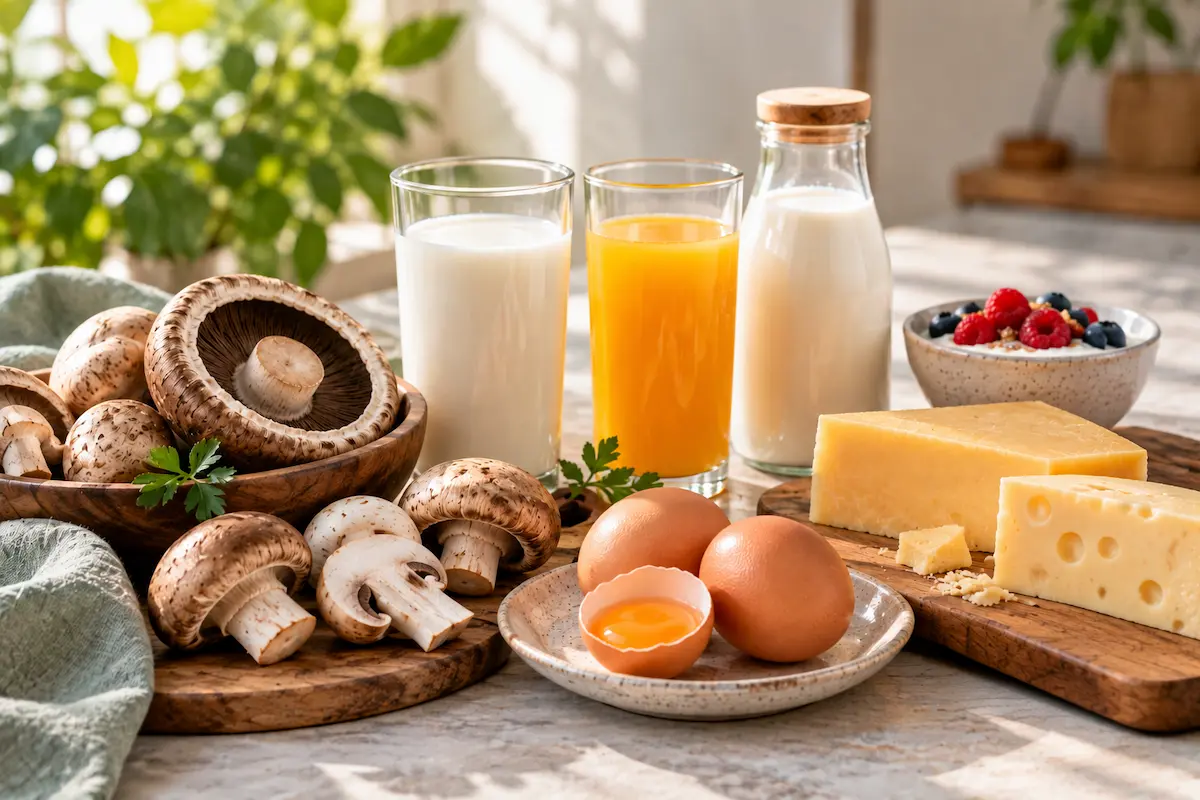
Fortunately, there are a few vegetarian options worth knowing about. Mushrooms, egg yolks, some cheeses, and fortified foods can all contribute to your vitamin D intake.
And because food is only part of the picture, sunlight and supplements may also matter depending on your diet and vitamin D status.
How Much Vitamin D Do You Need?
Most adults need 600 IU (15 mcg) of vitamin D per day, according to the National Institutes of Health. Adults over 70 need slightly more, with a recommended intake of 800 IU (20 mcg) per day.
These amounts are general recommendations for healthy people. Someone with a confirmed deficiency may need a different amount for a period of time.
Your needs can also vary depending on age and individual circumstances.
Vegetarian Foods High in Vitamin D
There are not many naturally rich vegetarian sources of vitamin D. That is why it is more useful to focus on the foods that can actually contribute meaningful amounts rather than creating a long list of foods that contain only tiny amounts.
Here are the main options to know.
1. Mushrooms
Mushrooms can be an excellent vegan source of vitamin D, especially when they are exposed to sunlight or ultraviolet (UV) light. Like humans, mushrooms can produce vitamin D when exposed to UV radiation. However, they produce vitamin D2, while our skin produces vitamin D3.
Maitake, also known as hen-of-the-woods, provides 19.7 mcg (784 IU) of vitamin D per cup (70 g), which is 131% of the Daily Value (DV).
Some mushrooms, including shiitake, cremini, portobello, and white mushrooms, are treated with UV light to increase their vitamin D content.
For instance, a single cup (72 g) of sliced cremini mushrooms exposed to UV light contains 23 mcg (922 IU) of vitamin D, providing 154% of the DV.
Similarly, one cup (70 g) of UV-exposed white mushrooms provides 18.3 mcg (735 IU) of vitamin D, or about 123% of the DV.
Portobello mushrooms are another excellent source when exposed to UV light. One cup (86 g) of UV-exposed portobello mushrooms provides 24.4 mcg (980 IU) of vitamin D, which is about 163% of the DV.
However, there is an important catch: not all mushrooms contain significant amounts of vitamin D, and wild mushrooms should only be eaten when they have been reliably identified as safe. Some poisonous varieties can resemble edible mushrooms and may cause symptoms such as nausea, vomiting, diarrhea, abdominal pain, dizziness, confusion, seizures, or liver failure—even death.
2. Egg Yolk
If you eat eggs, the yolk can provide some vitamin D. Egg whites contain protein but very little vitamin D, while the yolk contains most of the vitamin D found in an egg.
However, eggs are not an exceptionally rich source. Yolks from two eggs (34 g) provide 1.84 mcg (74 IU) of vitamin D, which is 12% of the Daily Value.
The vitamin D content of eggs can also vary depending on how hens are raised. Eggs from hens that spend time outdoors in sunlight may contain 3–4 times more vitamin D than eggs from hens kept indoors. However, free-range eggs purchased from supermarkets do not necessarily have high vitamin D levels.
A hen’s diet can also affect the vitamin D content of its eggs. One study found that increasing vitamin D₃ in hens’ feed increased the amount of vitamin D₃ in their egg yolks. This suggests that both the hen’s diet and exposure to sunlight can influence the vitamin D content of eggs.
Try adding eggs to breakfast, salads, sandwiches, or vegetable dishes for an easy combination of protein and nutrients.
3. Cheese
Cheese can contribute some vitamin D to the diet, although it is generally not a major source. The amount varies depending on the type of cheese and how it is produced, and some cheeses may also be fortified with vitamin D.
For example, regular cheeses such as cheddar and mozzarella provide very little vitamin D, with less than 1% of the Daily Value per serving. However, some fortified cheeses can provide considerably more. One ounce (28 g) of American cheese fortified with vitamin D provides 2.1 mcg (84.3 IU) of vitamin D, or about 14% of the Daily Value.
Cheese can still fit into a balanced vegetarian diet and provides other nutrients, including protein and calcium. However, because some cheeses are also relatively high in saturated fat and sodium, it is better viewed as part of your overall diet rather than a primary source of vitamin D.
If you specifically want to increase your vitamin D intake, check the nutrition label to see whether a particular cheese is fortified with vitamin D.
4. Fortified Foods
Since very few vegetarian foods naturally contain much vitamin D, fortified foods can be especially useful. During processing, vitamin D may be added to certain foods to help increase their vitamin D content.
Depending on the product and where you live, fortified options may include breakfast cereals, yogurt, tofu, and some plant-based foods.
Some fortified breakfast cereals can provide 10% of the DV of vitamin D in a single serving, making them an easy addition to breakfast. Fortified yogurt can also contribute to your daily vitamin D intake, with some varieties providing up to 20% of the DV per serving.
Fortified tofu may provide vitamin D as well, although the amount can vary considerably between products. Some plant-based foods, including certain dairy alternatives, may also be fortified with vitamin D.
However, fortification is not universal, and the amount of vitamin D can differ substantially from one product to another. Always check the nutrition label to see whether a product is fortified and how much vitamin D it actually provides.
5. Fortified Drinks
Fortified drinks can be one of the easiest ways to add vitamin D to a vegetarian diet. During processing, vitamin D may be added to certain dairy and plant-based drinks, making them convenient sources of this nutrient.
For example, fortified cow’s milk can provide about 3 mcg of vitamin D, along with protein and calcium.
Plant-based options such as soy milk, almond milk, and oat milk may also be fortified with vitamin D, providing 2.5–3.6 mcg (13–18% of the DV) per serving.
Some fortified orange juices can also provide vitamin D. A serving may contain about 2.5 mcg (99.6 IU) of vitamin D, or 17% of the DV.
Because fortification varies between products, check the nutrition label to see whether vitamin D has been added and how much each serving provides. Comparing labels can help you choose a drink that contributes a meaningful amount of vitamin D to your diet..
Can You Get Vitamin D From Sunshine?
Sunlight is another way your body gets vitamin D.
Your skin can make vitamin D when it is exposed to UVB radiation from sunlight. This is why vitamin D is sometimes called the “sunshine vitamin.”
But there is no universal amount of sunlight that guarantees enough vitamin D for everyone. How much vitamin D your skin produces can be affected by:
- Skin tone
- Age
- Time of day
- Season and length of day
- Location
- Cloud cover
- Clothing
- How much skin is exposed
- Sunscreen use
Because these factors vary from person to person, it is difficult to give a specific amount of sun exposure that will provide enough vitamin D.
More sun is not necessarily better. Excessive UV exposure increases the risk of skin damage and skin cancer.
So, sunlight can contribute to vitamin D status, but deliberately increasing sun exposure or going without sun protection is not recommended as a way to get more vitamin D.
Do Vegetarians Need Vitamin D Supplements?
Not everyone needs a vitamin D supplement. Whether supplementation is appropriate can depend on your vitamin D intake, sun exposure, and individual circumstances.
Vitamin D supplements are available as vitamin D2 and vitamin D3. Both can raise blood levels of vitamin D, but research shows that vitamin D3 generally increases 25(OH)D levels more than vitamin D2 and maintains higher levels for longer.
If you follow a vegetarian or vegan diet, it is also worth checking the source of the vitamin D in a supplement. Vitamin D3 is commonly produced from lanolin obtained from sheep’s wool, but animal-free vitamin D3 made from lichen is also available.
Because vitamin D supplements come in different doses, avoid taking high amounts without a clear reason. If you have been diagnosed with vitamin D deficiency, follow the dosage recommended by your healthcare professional rather than choosing a high-dose supplement on your own.
Takeaways
There are only a handful of useful vegetarian sources of vitamin D, so focus on foods that provide meaningful amounts rather than long lists of foods containing tiny amounts.
UV-exposed mushrooms, egg yolks, some cheeses, and vitamin D-fortified foods are among the main dietary options to know about. Sunlight can also help your body make vitamin D, while supplements may be useful when dietary intake is insufficient or a deficiency has been diagnosed.
The simplest approach is to check food labels, include fortified foods regularly when appropriate, and avoid assuming that every vegetarian food naturally contains vitamin D.