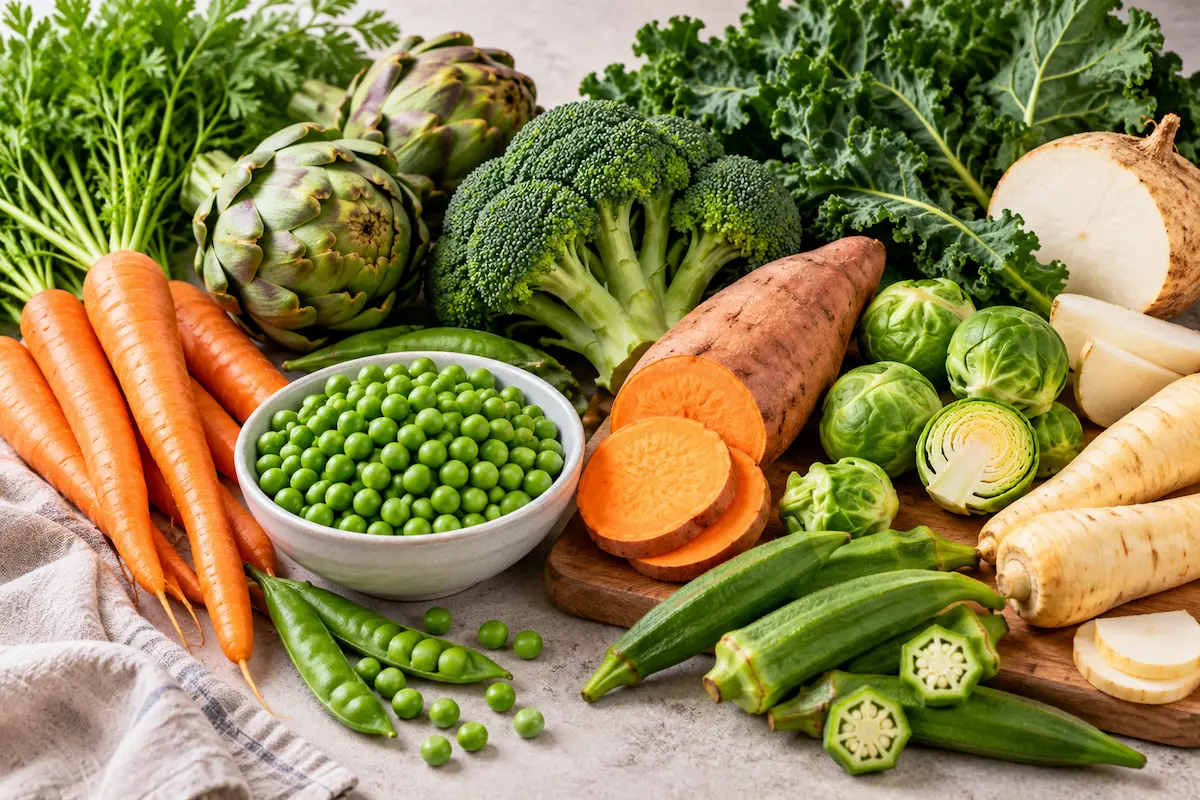
If you are trying to eat more fiber, you probably think of oats, beans, or chia seeds first. But vegetables can make a surprisingly big contribution too.
From peas and artichokes to broccoli and sweet potatoes, many vegetables provide fiber along with vitamins, minerals, antioxidants, and plenty of food volume. Adding more of them to your meals can support digestion, help you feel satisfied, and make your overall diet more nutrient-dense.
The trick is knowing which vegetables are especially good sources of fiber and how to eat more of them without making your meals complicated.
How Much Fiber Do You Need?
Fiber needs vary depending on your age, sex, and overall calorie needs. As a general guide, women should aim for about 25 grams of fiber per day, while men should aim for around 38 grams.
Vegetables can make a significant contribution toward these daily targets, but you do not need to get all of your fiber from vegetables. Fruits, beans, lentils, whole grains, nuts, and seeds can also help you meet your daily needs.
What Vegetables Are High in Fiber?
You don’t need to rely on the same few foods to get more fiber. These vegetables offer a simple way to increase your intake while adding variety and nutrients to your meals.
1. Green Peas
Green peas are one of the easiest ways to add a meaningful amount of fiber to everyday meals.
With about 9 g of fiber in 160 g of cooked green peas, they can make a noticeable contribution to your daily intake.
They also provide plant-based protein, vitamin C, vitamin K, folate, and other nutrients, making them a satisfying addition to meals.
2. Artichokes
Artichokes are among the most fiber-rich vegetables you can add to your diet.
One medium (120 g) cooked artichoke delivers about 7 g of fiber.
They also provide folate, vitamin C, magnesium, and other plant compounds.
If you’ve never cooked whole artichokes before, steaming or roasting is a simple place to start.
3. Brussels Sprouts
Brussels sprouts provide a useful combination of fiber and nutrients.
One cup (156 g) of cooked Brussels sprouts supplies 4 g of fiber.
They also provide vitamin C, vitamin K, and glucosinolates, plant compounds found in cruciferous vegetables such as broccoli, kale, cabbage, and cauliflower. These compounds can form substances such as sulforaphane, which may have antioxidant and anti-inflammatory effects.
4. Broccoli
Broccoli is another cruciferous vegetable that provides fiber and various antioxidant compounds.
Around 5 g of fiber comes from a cup (156 g) of chopped, cooked broccoli, along with vitamin C, vitamin K, folate, and other nutrients.
And don’t overlook the stalks. They’re edible too—slice them thinly and cook them with the florets, or add them to soups and stir-fries instead of throwing them away.
5. Sweet Potatoes
Sweet potatoes provide fiber along with complex carbohydrates, potassium, vitamin C, and beta-carotene.
One medium baked sweet potato (114 g) with the skin delivers about 3.8 g of fiber.
Keeping the skin on can help retain more fiber and antioxidants, so give the potato a good scrub before cooking.
6. Carrots
Carrots are an easy everyday source of fiber. One cup (128 g) of chopped raw carrots provides about 3.6 g of fiber.
They also provide beta-carotene, which your body can convert into vitamin A.
Learn more: 16 Foods high in vitamin A
7. Green Beans
Green beans provide fiber along with vitamin C, vitamin K, and folate.
One cup (125 g) of cooked green beans contains 4 g of fiber.
For a balanced plate, serve them alongside a protein source and a whole grain. A quick steam or sauté is all they need before seasoning.
8. Parsnips
Parsnips are a root vegetable with a pale color and naturally sweet, slightly earthy flavor.
They are a good source of fiber, with 5.6 g per cup (156 g) of cooked parsnips, along with vitamin C, vitamin K, folate, and potassium.
9. Kale
Kale provides fiber along with vitamins A, C, and K.
A cup of cooked kale has about 5 g of fiber, and its sturdy leaves hold up well in both raw and cooked dishes.
For salads, massage raw kale briefly with your dressing to soften the leaves. Prefer cooked vegetables? Add it to soups, stews, or stir-fries.
10. Jicama
Jicama is a crisp, mildly sweet root vegetable that is often enjoyed raw.
One cup (130 g) of raw jicama provides about 6.4 g of fiber and is also a good source of vitamin C. It has a high-water content, which contributes to its crisp, refreshing texture.
Additionally, jicama contains inulin and other fructooligosaccharides, which are fermentable carbohydrates with prebiotic properties.
11. Okra
Okra is a useful source of fiber, with 4 g of fiber per cup (160 g) of cooked okra.
It also contains vitamin C, folate, and other nutrients. But one of okra’s most interesting features is its mucilage, a viscous type of soluble fiber that gives the vegetable its characteristic texture. Because it forms a gel-like substance, mucilage may slow carbohydrate digestion and absorption.
Early research on okra and blood sugar is promising, although more high-quality human studies are needed.
12. Cauliflower
Cauliflower is a versatile cruciferous vegetable that can add fiber while keeping meals relatively light.
A cup of chopped, cooked cauliflower supplies about 3 g of fiber, along with vitamin C, vitamin K, folate, and various plant compounds.
13. Winter Squash
Winter squash includes varieties such as butternut, acorn, and kabocha, which are known for their firm texture and naturally sweet flavor.
One cup serving (205 g) of cooked winter squash provides roughly 5.7 g of fiber, although the amount varies by variety, along with potassium, vitamin C, and carotenoid plant compounds.
14. Asparagus
Asparagus adds a modest amount of fiber along with folate, vitamin C, vitamin K, and other nutrients.
A cup of cooked asparagus contributes about 4 g of fiber. It also contains fructans, including inulin-type carbohydrates that can be fermented by gut bacteria.
An experimental study found that asparagus’s fiber- and fructan-rich components supported the growth of beneficial probiotic bacteria without promoting the growth of tested harmful strains, suggesting potential prebiotic effects.
15. Collard Greens
Collard greens are a hearty leafy vegetable that can add a meaningful amount of fiber along with vitamins and minerals.
One cup (130 g) of cooked collard greens delivers about 5.6 g of fiber, making them a worthwhile addition to a fiber-rich diet.
They also bring plenty of vitamin K, along with vitamin A, vitamin C, and folate.
16. Corn
Corn is botanically a grain, but it is commonly eaten as a vegetable and can still contribute useful fiber to your diet.
A single cup (149 g) of cooked corn delivers about 3.6 g of fiber, along with carbohydrates, folate, and several other nutrients.
Wondering which fruits are high in fiber? Check out these fiber-rich fruits.
How to Increase Fiber Without Bloating
If you currently eat very little fiber, increase your intake gradually.
A sudden jump in fiber can cause gas, bloating, and abdominal discomfort, particularly if your digestive system is not used to it.
Increase portions slowly and drink enough fluids throughout the day. Eating a variety of fiber sources can also help you gradually build a higher-fiber diet.
Are Raw or Cooked Vegetables Better for Fiber?
Both can be part of a healthy diet.
Cooking can change the texture and volume of vegetables, making it easier to eat larger portions. It can also make some vegetables easier to digest.
The fiber itself generally remains present after cooking, although the amount can vary depending on the vegetable, cooking method, and water loss.
The best choice is simply the form you enjoy and can eat regularly.
Takeaways
High-fiber vegetables such as green peas, artichokes, Brussels sprouts, broccoli, okra, and collard greens can make it easier to increase your daily fiber while adding vitamins, minerals, and beneficial plant compounds to your diet.
Rather than focusing on one “best” vegetable, aim for variety. If you’re increasing your fiber intake, do so gradually and drink enough fluids to help your digestive system adjust.