Potassium is an essential mineral that functions as an electrolyte in your body, helping regulate fluid balance, support nerve signals, and maintain normal muscle and heart function.
Getting enough potassium may help maintain healthy blood pressure, support bone density, and lower the risk of certain types of kidney stones.
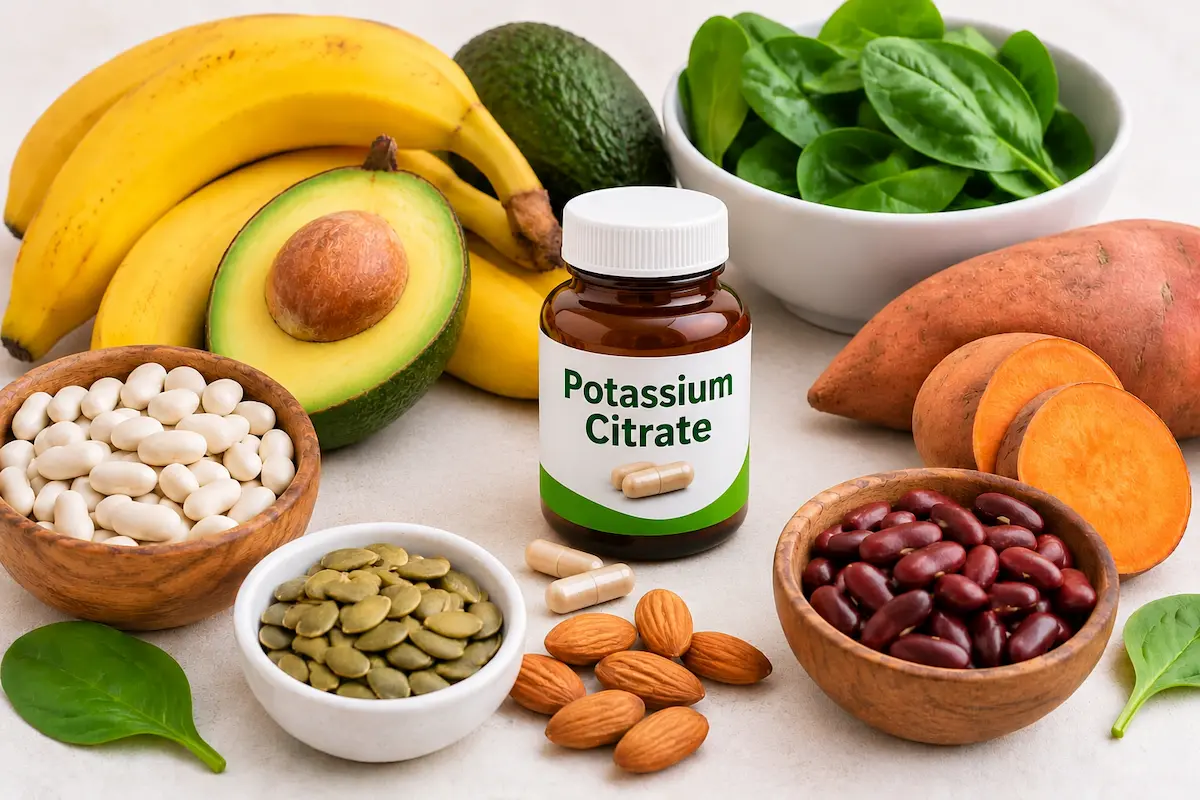
Since your body cannot produce this mineral on its own, you need to get it through foods such as bananas, potatoes, spinach, beans, and avocados.
Let’s explore its health benefits, daily requirements, food sources, and possible side effects.
1. Helps Regulate Blood Pressure
One of the best-known benefits of potassium is its role in maintaining healthy blood pressure.
Potassium helps balance the effects of sodium in the body. It supports sodium excretion through urine and helps relax blood vessel walls, both of which can contribute to healthy blood pressure levels.
A 2013 review found that increasing potassium intake lowered systolic blood pressure by an average of 3.49 mmHg and diastolic blood pressure by 1.96 mmHg. The reductions were particularly noticeable in people with hypertension.
A 2026 review of 19 trials involving 803 participants with untreated hypertension reported similar findings. Potassium supplementation reduced clinic systolic blood pressure by an average of 5.3 mmHg and diastolic blood pressure by 4.5 mmHg.
Including potassium-rich foods such as spinach, bananas, potatoes, beans, and avocados in your diet, while limiting excess sodium, can help support healthy blood pressure and overall cardiovascular health.
2. May Support Normal Heart Function
Your heart depends on potassium to maintain its normal electrical activity and rhythm.
Potassium helps regulate the electrical activity that controls your heartbeat. It works alongside sodium and calcium to coordinate the electrical signals involved in heart muscle contraction and relaxation. While potassium and sodium help generate and maintain the electrical impulses, calcium plays a key role in triggering heart muscle contraction.
Getting enough potassium may also support cardiovascular health by helping maintain healthy blood pressure.
A meta-analysis of 11 studies showed that people with a daily potassium intake 1,640 mg higher had a 21% lower risk of stroke.
Similarly, a meta-analysis of 16 cohort studies involving more than 639,000 participants found that those with the highest potassium intakes had a 15% lower risk of stroke compared with those with the lowest intakes. Interestingly, the association remained significant even after accounting for blood pressure.
Although these findings do not prove that potassium directly prevents stroke or cardiovascular disease, they suggest that adequate potassium intake may contribute to better cardiovascular health.
3. Supports Healthy Muscle Function
Your muscles need potassium to contract and relax properly.
Potassium helps maintain the electrical signals that allow your muscle cells to respond to nerve stimulation. It works alongside sodium to maintain the electrical balance needed for normal muscle movement.
From walking and running to lifting objects and exercising, your muscles rely on adequate potassium to function properly.
When potassium levels become too low, muscle function can be affected. You may experience muscle weakness, fatigue and, in severe cases, muscle paralysis.
4. Promotes Healthy Nerve Function
Your nervous system constantly sends messages between your brain and the rest of your body, helping you move, feel sensations and control automatic functions.
Potassium works alongside sodium to maintain the electrical balance in nerve cells, allowing them to send and receive signals. When a nerve impulse occurs, sodium moves into the cell, followed by potassium moving out to restore its electrical balance.
The sodium-potassium pump then helps maintain these ion levels by moving sodium out of cells and potassium back in, preparing nerve cells to continue transmitting signals.
5. Helps Maintain Fluid and Electrolyte Balance
Your body needs the right balance of fluids and electrolytes to keep its cells functioning properly.
Potassium is the most abundant positively charged electrolyte inside your cells, while sodium is the main electrolyte responsible for regulating fluid volume outside cells, including your blood plasma.
Potassium helps maintain the fluid volume inside cells and works alongside sodium to maintain the electrical and chemical balance across cell membranes. This balance is also important for normal nerve transmission, muscle contraction and kidney function.
Your kidneys also play an important role by adjusting how much potassium is removed through urine, helping maintain healthy potassium levels in your body.
6. May Help Reduce the Risk of Kidney Stones
Getting enough potassium through your diet may help lower the risk of developing certain types of kidney stones, particularly calcium-containing stones.
Low potassium intake may reduce calcium reabsorption in the kidneys, increasing the amount of calcium excreted in urine and potentially contributing to stone formation.
An analysis of three large studies involving over 193,000 adults found that higher potassium intake was associated with a lower risk of kidney stones. It was also linked to higher urinary citrate, pH and volume, which may help prevent stone formation.
Potassium citrate is also prescribed in certain cases to prevent recurrent kidney stones. Its benefits are largely attributed to citrate, which binds to calcium in urine and helps prevent crystal formation.
Although these findings are promising, more research is needed to establish the protective effect of dietary potassium.
7. May Help Maintain Healthy Bone Density
Potassium may also play a role in maintaining healthy bones.
One possible explanation is its role in acid-base balance. Potassium-rich foods, particularly fruits and vegetables, provide alkaline compounds that may help reduce dietary acid load and calcium loss through urine.
Some studies have found a positive association between potassium intake and bone mineral density. For example, a 2017 study of 7,187 adults found that higher potassium intake was associated with greater bone mineral density, particularly at the hip and femoral neck.
Similarly, a two-year clinical trial noted that potassium citrate supplementation improved bone mineral density at the lumbar spine. However, participants also received calcium and vitamin D.
Despite these findings, a review found insufficient evidence that reducing dietary acid load prevents osteoporosis.
While potassium may contribute to bone health, more research is needed to determine whether dietary potassium independently improves bone density or reduces fracture risk.
8. May Support Healthy Blood Sugar Regulation
Potassium may also play a role in normal blood sugar regulation because it is needed for insulin release from the pancreas. Low blood potassium levels can interfere with this process and may contribute to impaired glucose control.
Some observational studies have linked lower potassium levels with a higher risk of developing type 2 diabetes. For example, the CARDIA study found that young adults with the lowest urinary potassium levels were more than twice as likely to develop diabetes over 15 years.
However, a meta-analysis of eight studies found no significant association between dietary potassium intake and diabetes risk.
More research is needed to determine whether increasing potassium intake can directly improve blood sugar control or reduce the risk of type 2 diabetes.
How Much Potassium Do You Need Per Day?
Your daily potassium requirement depends on your age, sex, and stage of life.
According to the National Institutes of Health, the adequate intake (AI) for adults is:
| Group | Daily potassium intake |
|---|---|
| Adult men (19 years and older) | 3,400 mg |
| Adult women (19 years and older) | 2,600 mg |
| Pregnant women | 2,900 mg |
| Breastfeeding women | 2,800 mg |
These values represent adequate intake levels, not minimum requirements or individual treatment targets. Recommendations may vary by country and health authority.
Best Food Sources of Potassium
You can get potassium from a variety of everyday foods. Fruits, vegetables, legumes, dairy products, nuts, and certain animal-based foods are all good sources.
Some potassium-rich foods to include in your diet are:
- Bananas
- Avocados
- Potatoes
- Sweet potatoes
- Spinach
- Beans and lentils
- Tomatoes
- Oranges
- Yogurt
- Dried apricots
Eating a variety of these foods throughout the day can help you meet your potassium needs without relying on supplements.
What Happens If You Don’t Get Enough Potassium?
Inadequate potassium intake over time may contribute to increased blood pressure, greater urinary calcium loss, and a higher risk of kidney stones.
Severe potassium deficiency in the blood, known as hypokalemia, can cause muscle weakness, fatigue, constipation, and irregular heartbeats.
However, low dietary intake alone rarely causes severe hypokalemia in otherwise healthy people. Prolonged vomiting, diarrhea, certain medications, and kidney problems can also lead to potassium depletion.
If you experience persistent muscle weakness, unusual fatigue, or heart palpitations, consult a healthcare professional. A blood test can determine whether your potassium levels are low.
Can Potassium Cause Side Effects?
Getting potassium from food is generally safe for healthy people with normal kidney function because the kidneys remove excess amounts through urine.
However, very high amounts of potassium from supplements or potassium-based salt substitutes can cause hyperkalemia, a condition in which potassium levels in the blood become dangerously high.
Severe hyperkalemia may cause muscle weakness, paralysis, heart palpitations, tingling or numbness, and potentially life-threatening irregular heart rhythms.
People with chronic kidney disease, heart failure, adrenal insufficiency, or certain types of diabetes may be at greater risk. Certain medications, including ACE inhibitors and potassium-sparing diuretics, can also increase potassium levels by reducing its removal through urine.
If you have kidney problems or take medications that affect potassium levels, consult your healthcare professional about how much potassium you should consume from food and supplements.
Final Thoughts
Potassium supports several essential functions in your body, including maintaining healthy blood pressure, regulating heart rhythm, and supporting normal muscle movement and nerve signaling. It may also contribute to better bone health and help lower the risk of certain types of kidney stones.
Potassium is also involved in insulin release, although more research is needed to determine whether higher potassium intake can directly improve blood sugar control or reduce the risk of diabetes. Maintaining adequate potassium intake is an important part of supporting your overall health.
Include a variety of potassium-rich foods in your daily diet to help meet your needs and support overall health.