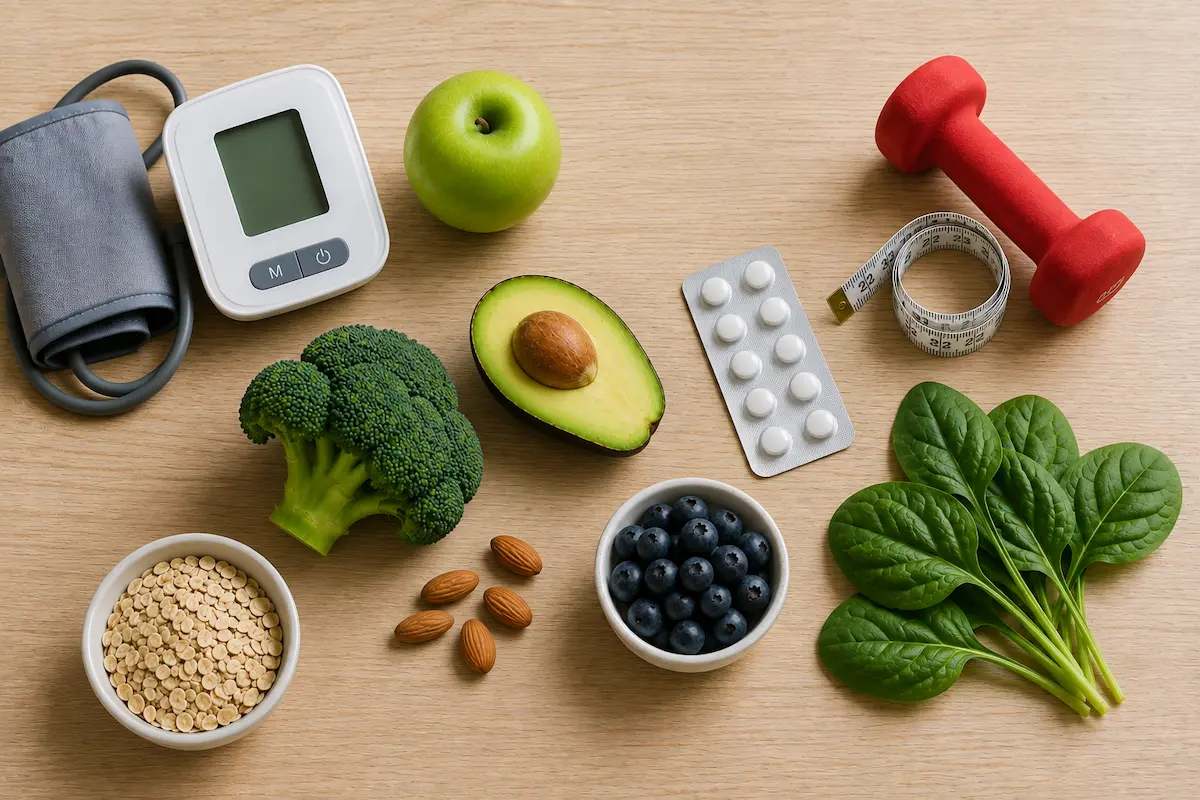
High blood pressure often develops quietly. You can feel completely healthy while your heart and blood vessels are working harder than they should.
Because it often causes no noticeable symptoms, many people don’t realize their blood pressure is high until a routine checkup reveals it.
Everyday habits can make a meaningful difference. What you eat, how active you are, how well you sleep, how you manage stress, and whether you take prescribed medications consistently can all affect your blood pressure over time.
In this guide, you’ll learn practical, evidence-based ways to support healthy blood pressure naturally and when lifestyle changes may not be enough.
What Is a Healthy Blood Pressure?
Blood pressure measures the force of blood pushing against the walls of your arteries as your heart pumps.
A blood pressure reading includes two numbers:
- Systolic pressure (top number): The pressure in your arteries when your heart contracts and pumps blood.
- Diastolic pressure (bottom number): The pressure in your arteries when your heart relaxes between beats.
For most adults, a normal blood pressure reading is below 120/80 mmHg. Blood pressure naturally fluctuates throughout the day and can be affected by factors such as physical activity, stress, caffeine, and the time of day.
How to Lower Blood Pressure Naturally
There’s no single fix for high blood pressure. A combination of healthy eating, regular activity, good sleep, and other daily habits can make a meaningful difference.
Here are evidence-based ways to support healthier blood pressure levels.
1. Follow the DASH Diet
The DASH diet is one of the most well-studied dietary approaches for supporting healthy blood pressure.
It emphasizes vegetables, fruits, whole grains, beans and other legumes, nuts, seeds, and low-fat or fat-free dairy while limiting sodium, sweets, sugary drinks, and foods high in saturated fat.
Rather than focusing on a single “blood pressure-lowering” food, DASH provides an overall eating pattern designed to support cardiovascular health.
A review of 30 trials involving 5,545 adults found that the DASH diet lowered systolic blood pressure by 3.2 mmHg and diastolic blood pressure by 2.5 mmHg compared with control diets. The evidence was rated moderate quality.
For more heart-friendly food choices, explore our guide to foods for heart health.
2. Reduce Your Sodium Intake
Most people consume more sodium than they realize.
While the salt shaker contributes some sodium, much of the sodium in the diet comes from packaged, processed, and restaurant foods.
A high-sodium diet can cause the body to retain more sodium and water, which can increase blood volume and raise blood pressure, particularly in people who are salt-sensitive.
A 2020 review found that reducing sodium lowered systolic blood pressure by 4.26 mmHg and diastolic blood pressure by 2.07 mmHg. Greater reductions occurred with larger sodium decreases, particularly in older adults and those with higher blood pressure.
Simple ways to reduce sodium intake:
- Cook more meals at home.
- Read food labels.
- Choose lower-sodium products when available.
- Limit processed meats.
- Reduce instant noodles and packaged soups.
- Flavor foods with herbs, garlic, lemon juice, or spices instead of extra salt.
Even modest reductions in sodium intake can help support healthier blood pressure.
3. Eat More Potassium-Rich Foods
Potassium helps counter some of sodium’s effects on blood pressure and plays important roles in normal nerve, muscle, and blood-vessel function.
Getting enough potassium from food may help support healthy blood pressure. Research suggests that increasing potassium intake can lower blood pressure, particularly in people with hypertension and those consuming higher amounts of sodium.
Some potassium-rich foods include bananas, potatoes, spinach, beans, yogurt, avocados, and oranges.
If you have kidney disease or another condition that affects potassium levels, talk with your healthcare professional before significantly increasing your potassium intake.
Certain medications can also raise potassium levels, so increasing potassium substantially isn’t appropriate for everyone.
4. Choose Whole Grains More Often
Whole grains like oats, brown rice, and barley contain more fiber and nutrients than refined grains and can be a simple way to improve the overall quality of your diet.
A meta-analysis shows that higher whole-grain intake was associated with a lower risk of developing hypertension. However, refined grains showed no clear association, and the researchers noted substantial differences between the whole-grain studies.
Whole grains are best viewed as one part of an overall heart-healthy eating pattern rather than a standalone way to lower blood pressure.
5. Stay Physically Active
Regular physical activity is one of the most effective lifestyle habits for supporting healthy blood pressure. Exercise helps your heart work more efficiently and can improve blood vessel function over time.
A large meta-analysis of 270 trials involving 15,827 people found that aerobic, resistance, combined, and other forms of exercise significantly reduced both systolic and diastolic blood pressure.
You don’t need to exercise for hours to see benefits. Another meta-analysis found that increasing aerobic exercise was associated with progressively lower blood pressure, with the greatest reduction occurring around 150 minutes of exercise per week.
6. Maintain a Healthy Weight
Excess body weight can put additional strain on the heart and increase the risk of high blood pressure. If you have overweight or obesity, even modest weight loss may help improve blood pressure.
A meta-analysis found that losing an average of 5.1 kg reduced systolic blood pressure by 4.44 mmHg and diastolic pressure by 3.57 mmHg. Larger weight losses produced greater reductions, supporting weight loss for hypertension management.
Rather than relying on restrictive diets, focus on sustainable eating habits, regular physical activity, and gradual changes you can maintain over time.
7. Limit Alcohol
Alcohol can raise blood pressure, particularly when consumed regularly or in larger amounts.
If you drink, reducing your intake can help support healthier blood pressure. Research has found that cutting back on alcohol can lower blood pressure, with greater reductions seen among people who drink more heavily.
If you don’t drink, there’s no reason to start for cardiovascular benefits. The 2025 American Heart Association blood pressure guideline recommends reducing or eliminating alcohol to help prevent or treat high blood pressure.
8. Get Enough Sleep
Sleep and blood pressure are closely connected.
Getting too little sleep may increase your risk of developing high blood pressure. A meta-analysis of studies involving 173,734 adults found that sleeping less than 7 hours was associated with a higher risk of hypertension, particularly among women and adults under 60.
Sleep apnea is another important concern. A 2018 review found that obstructive sleep apnea was associated with a higher risk of hypertension, with the risk increasing as sleep apnea became more severe.
Most adults should aim for around 7–9 hours of quality sleep each night. Keeping a consistent sleep schedule and following a regular bedtime routine can also help support better sleep quality.
9. Manage Stress in Healthy Ways
Stress can temporarily raise blood pressure, and ongoing stress may also encourage habits such as overeating, smoking, or drinking more alcohol.
Finding healthy ways to manage stress may help support both mental and cardiovascular health.
Research suggests that techniques such as breathing exercises, meditation, mindfulness, and yoga may help lower blood pressure in the short term, although the certainty of the evidence remains limited.
Healthy ways to unwind include:
- Walking outdoors
- Deep breathing exercises
- Meditation
- Yoga
- Reading
- Spending time with family and friends
- Engaging in hobbies you enjoy
10. Watch Your Caffeine Intake
Caffeine can temporarily raise blood pressure, although the effect varies between people. Coffee, tea, energy drinks, and other caffeinated beverages may cause short-term increases.
A meta-analysis found that caffeine supplementation increased systolic blood pressure by about 1.94 mmHg and diastolic blood pressure by 1.66 mmHg, with larger increases at higher doses.
However, coffee appears to be a different story over the long term. An earlier review found no significant effect of regular coffee consumption on blood pressure or the risk of developing hypertension, although the evidence was considered low quality.
You don’t necessarily need to avoid coffee or caffeine, but if you notice repeated blood pressure increases after consuming caffeinated drinks, consider reducing your intake.
11. Eat More Nitrate-Rich Vegetables
Some vegetables naturally contain nitrates, which the body can convert into nitric oxide. Nitric oxide helps relax blood vessels, which may support healthy blood pressure.
Research suggests that increasing dietary nitrate raised nitrate levels in the blood and was linked to modest reductions in systolic and diastolic blood pressure, along with improvements in several measures of blood-vessel health.
Foods that boost nitric oxide production include beetroot, spinach, arugula, lettuce, Swiss chard, and other leafy greens.
Beetroot has been studied particularly well. A meta-analysis of 11 trials involving 349 adults with hypertension found that daily beetroot juice providing 200–800 mg of nitrate reduced clinical systolic blood pressure by 5.31 mmHg, but evidence certainty was low and diastolic BP was unaffected.
This makes nitrate-rich foods a reasonable addition to a heart-healthy diet, but they shouldn’t be considered a replacement for prescribed blood pressure treatment.
12. Monitor Your Blood Pressure at Home
Home monitoring can help you understand how your blood pressure changes over time and provide useful information for your healthcare professional.
For more reliable readings:
- Sit quietly for five minutes beforehand.
- Keep both feet flat on the floor.
- Support your arm at heart level.
- Avoid caffeine, smoking, and exercise for at least 30 minutes beforehand.
- Take readings at consistent times when monitoring regularly.
The 2025 AHA guideline recommends home blood pressure monitoring to improve blood pressure control.
13. Take Medications Exactly as Prescribed
Lifestyle changes are important, but they do not replace medication when medication is medically necessary.
If you’ve been prescribed blood pressure medication, take it exactly as directed, even if you feel completely well. High blood pressure often causes no noticeable symptoms, so feeling fine doesn’t necessarily mean your blood pressure is controlled.
If you experience side effects or want to stop or change your medication, speak with your healthcare professional rather than stopping it on your own.
Looking for food ideas? Explore foods that may help lower blood pressure.
When to Seek Medical Advice
Make an appointment if:
- Your home blood pressure readings remain consistently high.
- You experience repeated readings that concern you.
- Lifestyle changes aren’t improving your numbers.
- You have a family history of high blood pressure or heart disease.
- You’re pregnant and develop elevated blood pressure.
Seek emergency medical care immediately if you have severely elevated blood pressure along with symptoms such as:
- Chest pain
- Severe shortness of breath
- Sudden weakness or numbness
- Difficulty speaking
- Vision changes
- Severe headache
- Confusion
Does Drinking More Water Lower Blood Pressure?
Staying hydrated is important for cardiovascular health. The American Heart Association notes that adequate hydration helps the heart pump blood through the body more easily and helps muscles work efficiently. When you’re well hydrated, the heart doesn’t have to work as hard.
But does drinking more water actually lower blood pressure? The research doesn’t give us a clear yes.
A study of 20 healthy adults found that drinking about 2 extra liters of water daily for two weeks increased daytime blood pressure slightly, while nighttime blood pressure stayed unchanged. Participants also reported less dizziness (vertigo) during the increased-water period.
A longer study found a different result. A trial of 141 healthy men aged 55–75 found that increasing water intake by 1.5 liters daily for six months did not significantly change blood pressure, blood sodium, kidney function, or quality of life. Most participants increased their intake by about 1 liter.
This means there isn’t enough evidence to say that simply drinking more water reliably lowers blood pressure.
Staying adequately hydrated is still important for normal cardiovascular function, but drinking extra water shouldn’t be considered a treatment for hypertension.
The Bottom Line
Keeping your blood pressure in a healthy range isn’t about finding one miracle food or following a perfect routine.
Consistent habits such as eating well, staying active, getting enough sleep, managing stress, and reducing sodium can make a meaningful difference over time.
Because high blood pressure often develops without obvious symptoms, regular monitoring is also important. Tracking your numbers and addressing consistently high readings early can help protect your heart, brain, kidneys, and overall health.