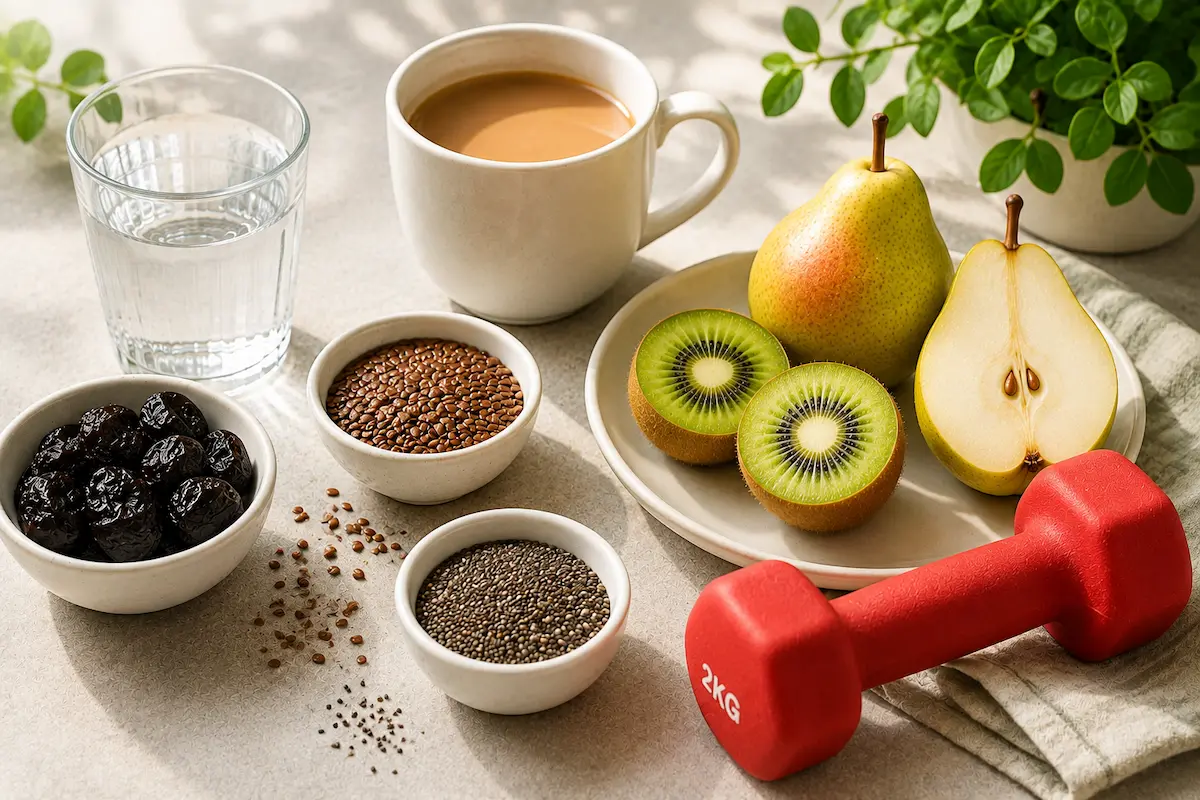
Constipation is a common digestive problem that generally refers to having fewer than three bowel movements per week, passing hard or dry stools, straining during bowel movements, or feeling like you can’t completely empty your bowels. It can leave you feeling bloated, uncomfortable, and sluggish, making everyday life more difficult.
Many factors can contribute to constipation, including not eating enough fiber, drinking too little water, a lack of physical activity, certain medications, pregnancy, changes in routine, or underlying medical conditions. Identifying the underlying cause is an important step toward finding lasting relief.
While laxatives may provide temporary relief, long-term improvement often comes from simple lifestyle changes.
In this article, you’ll learn science-backed ways to relieve constipation naturally and when to seek medical advice.
How to Relieve Constipation
Fortunately, several simple changes to what you eat and how you go about your day can make bowel movements easier and help relieve constipation.
1. Eat More Fiber
Increasing your fiber intake can help relieve and prevent constipation. Fiber can increase stool bulk and improve stool consistency, making bowel movements easier to pass.
A 2022 review found that fiber supplementation improved constipation, stool frequency, and stool consistency. Psyllium and doses above 10 g daily were particularly effective, especially when used for at least four weeks, although bloating and gas may increase.
Most adults should aim for 25–38 grams of fiber per day, but many people consume much less than this.
High-fiber foods include legumes, fruits, vegetables, whole grains, nuts, and seeds. If you’re currently eating little fiber, increase your intake gradually and drink enough fluids to help your digestive system adjust and reduce the chance of bloating or gas.
2. Eat Prunes
Prunes are one of the best-studied fruits for constipation and may help improve bowel regularity. They contain fiber and sorbitol, a natural sugar alcohol that can draw water into the intestines and help soften stool.
A 2014 review found that eating 100 g of prunes daily for three weeks improved stool frequency and consistency more than 22 g of psyllium in people with constipation. However, researchers noted that more rigorous studies are needed.
If you’re not used to eating prunes, start with a smaller amount and increase gradually to reduce the chance of gas or bloating.
3. Eat Kiwi
Kiwifruit may be a useful addition to a diet for constipation, with several clinical trials investigating its effects on bowel regularity.
Its fiber and high water content may help support softer stools and more regular bowel movements.
A meta-analysis found that kiwifruit may increase bowel movement frequency and improve stool consistency compared with placebo or psyllium. However, researchers rated the overall evidence as low certainty and called for larger, more rigorous studies.
4. Drink Enough Water
Staying well hydrated can help support normal bowel function and is particularly important when increasing your fiber intake. Fiber works by absorbing water and adding bulk to stool, while adequate fluid intake can help your digestive system adjust to a higher-fiber diet.
A 2-month trial found that adding 2 liters of mineral water daily to a fiber-rich diet improved outcomes in adults with chronic constipation.
Another trial found that increased water intake improved stool weight, supported beneficial gut bacteria, and helped reduce temporary abdominal symptoms during fiber supplementation.
However, drinking extra water alone may not relieve constipation in everyone. Adequate hydration is best viewed as part of an overall approach that includes enough fiber and other healthy bowel habits.
5. Exercise Regularly
Regular physical activity may help improve bowel regularity and reduce constipation symptoms. Activities such as walking, swimming, cycling, or yoga can be especially useful if you spend much of the day sitting.
A review of nine trials involving 680 people found that exercise improved constipation symptoms, although the researchers noted a high risk of bias and called for better-quality studies.
Aim to stay physically active throughout the week, choosing activities you can comfortably maintain
6. Try Psyllium Husk
Psyllium is one of the best-studied fiber supplements for constipation.
As a soluble, viscous fiber, psyllium absorbs water and forms a gel that increases stool bulk and can improve stool consistency.
A review of 16 trials found that fiber supplements helped improve constipation, bowel movement frequency, and stool consistency. Psyllium showed particularly promising results, especially at doses above 10 g daily and when used for at least four weeks, although gas was more common.
Start with a small amount, increase gradually, and drink enough fluids to help reduce the chance of bloating or gas.
7. Don’t Ignore the Urge
Ignoring the urge to have a bowel movement regularly may contribute to constipation. When you feel the need to go, try to respond rather than repeatedly delaying it.
Establishing a regular bathroom routine may also help. Trying to have a bowel movement 15–45 minutes after breakfast can take advantage of the natural increase in colon activity that follows eating.
8. Improve Toilet Posture
Your position on the toilet may influence how easily you pass stool.
Raising your feet on a small footstool brings your knees above your hips and creates a more squat-like position. This may change the anorectal angle and potentially make evacuation easier.
One small study in six healthy volunteers found that squatting increased the anorectal angle compared with sitting, making the rectoanal canal straighter. The researchers suggested that greater hip flexion may allow stool to pass with less straining.
However, a study of 41 people with constipation found that using a footstool changed toilet posture but did not improve how easy evacuation felt or the time needed to pass the test. This suggests that using a footstool to create a squat-like posture may not benefit everyone with constipation.
9. Consider Probiotic Foods
Your gut is home to trillions of microorganisms that play important roles in digestion and overall health. Some probiotic strains may also help improve bowel regularity, although their effects vary considerably by strain and study.
A 2022 review found that some probiotics improved constipation symptoms and increased bowel movement frequency, with Bifidobacterium lactis showing benefits. However, probiotics did not significantly improve stool consistency, and the researchers noted considerable differences and limitations among the studies.
Foods containing live cultures include yogurt, kefir, kimchi, sauerkraut, and some other fermented foods. However, most clinical trials have studied specific probiotic supplements rather than fermented foods, so these foods shouldn’t be assumed to have the same effects on constipation.
Probiotic foods can be part of an overall healthy diet, but their effects on constipation may vary.
10. Drink Warm Beverages or Coffee
Many people find that a warm drink or coffee in the morning helps trigger a bowel movement, although the evidence is stronger for coffee than for other beverages.
Older studies have found that coffee can stimulate bowel activity. One study of 12 healthy adults found that both caffeinated and decaffeinated coffee increased colonic activity compared with water, with caffeinated coffee producing a stronger effect.
Another study found that coffee increased colon activity within four minutes in people who reported that it triggered the urge to have a bowel movement, while hot water had no effect.
Warm water or herbal tea can still be pleasant ways to stay hydrated, but there isn’t strong evidence that they directly stimulate bowel movements. If coffee worsens anxiety, heartburn, or digestive symptoms, there’s no need to rely on it for constipation relief.
11. Eat More Prebiotic Foods
Prebiotic fibers provide fuel for beneficial gut bacteria. When these fibers are fermented in the colon, they produce short-chain fatty acids and other compounds that may support a healthy gut environment.
Good sources of prebiotic fibers include garlic, onions, leeks, asparagus, bananas, oats, chicory root, Jerusalem artichokes, and legumes.
Research on specific prebiotic fibers is promising. A meta-analysis found that inulin improved stool frequency, consistency, transit time, and stool hardness in people with chronic constipation. However, it did not significantly improve pain or bloating.
Adding a variety of prebiotic-rich foods can support overall digestive health, although the constipation benefits of individual foods are less well established.
12. Consider Glucomannan
Glucomannan is a soluble fiber extracted from the konjac root. It absorbs water and forms a gel-like substance that adds bulk to stool and may make bowel movements easier to pass.
A small study found that glucomannan increased weekly bowel movements and slightly eased bowel movements in adults with constipation.
Because glucomannan expands when mixed with liquid, always take it with plenty of water.
13. Review Dairy Intake
There isn’t strong evidence that dairy products cause constipation in most adults, so routinely avoiding them isn’t necessary. However, some people may notice that certain dairy foods worsen their digestive symptoms.
The strongest evidence linking dairy to constipation comes from studies in children with chronic constipation.
In a study of 70 children who hadn’t improved with laxatives, 71% improved after following a cow’s-milk-free diet for four weeks, compared with 11% in the control group. Both groups also received laxatives and high-fiber foods during the study.
If you suspect dairy is contributing to your symptoms, talk with a healthcare professional before eliminating it completely, particularly if you rely on dairy for calcium, protein, or vitamin D.
14. Short-Term Use of Laxatives May Help
If dietary and lifestyle changes aren’t enough to relieve constipation, over-the-counter laxatives may provide short-term relief.
Several types of laxatives are available, and each works in a different way:
- Bulk-forming laxatives such as psyllium increase stool bulk by absorbing water.
- Osmotic laxatives such as polyethylene glycol and magnesium hydroxide draw water into the intestines to soften stool.
- Stool softeners help make stool easier to pass.
- Stimulant laxatives such as senna and bisacodyl stimulate intestinal contractions to promote bowel movements.
These medications can be effective, but the appropriate type depends on the cause and severity of constipation. If you need laxatives regularly or have been using them for a long time, talk with a healthcare professional about the safest approach.
Foods That May Help Relieve Constipation
Some of the best high-fiber foods for constipation include:
- Prunes
- Kiwis
- Pears
- Apples
- Raspberries
- Chickpeas
- Oats
- Chia seeds
- Flaxseeds
- Broccoli
- Sweet potatoes
- Artichokes
When to See a Doctor
Occasional constipation is common, but persistent constipation should not be ignored.
Seek medical attention if constipation:
- Doesn’t improve with dietary and lifestyle changes or treatment
- Keeps coming back or becomes a recurring problem
- Is accompanied by severe or persistent abdominal pain
- Causes blood in the stool or rectal bleeding
- Leads to unexplained weight loss
- Begins suddenly or involves a sudden change in bowel habits
- Is accompanied by vomiting, fever, or inability to pass gas
These symptoms may indicate an underlying condition that requires medical evaluation
Closing Thoughts
Constipation is common, but simple lifestyle changes can often help relieve it.
Eating more fiber-rich foods, drinking enough water, staying physically active, and developing healthy bathroom habits may help restore regular bowel movements.
If constipation persists despite these changes or is accompanied by warning signs such as severe abdominal pain, rectal bleeding, or unexplained weight loss, seek medical advice to identify and treat any underlying cause.