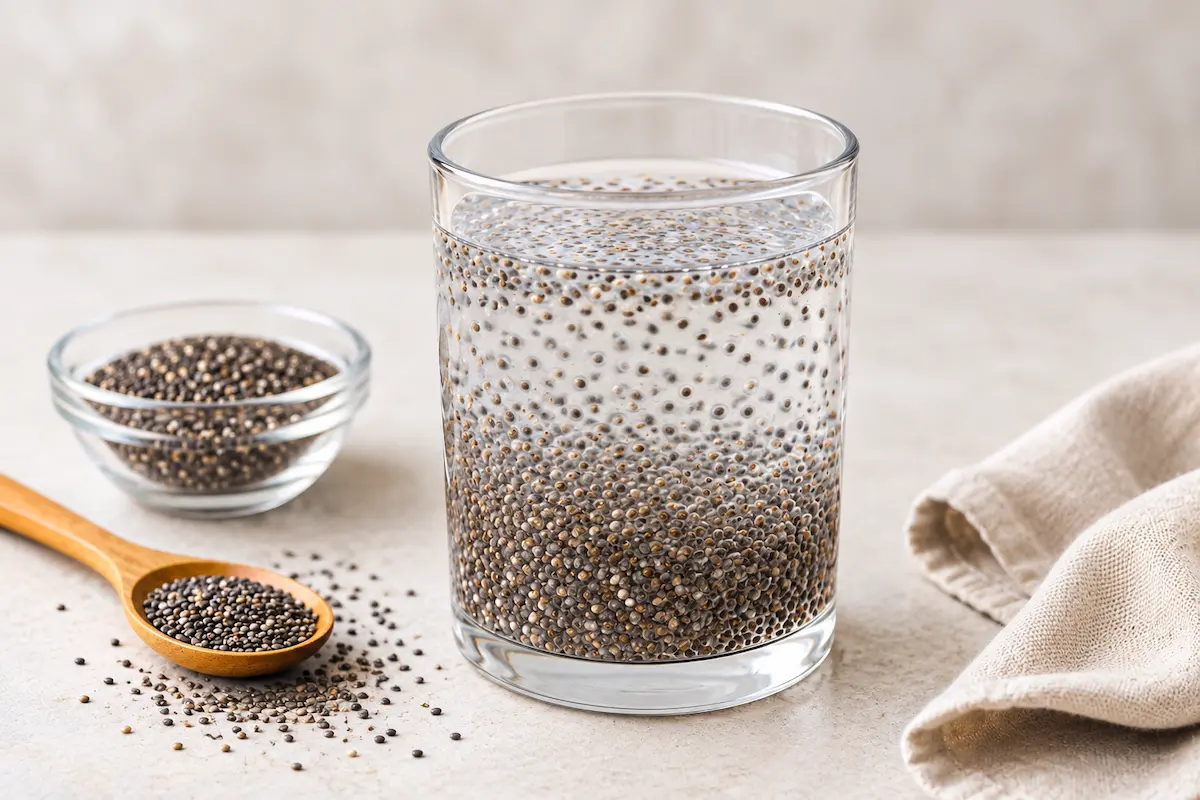
Chia seed water has become one of the most popular weight loss drinks on social media. Some people claim it melts belly fat, curbs cravings, and helps you lose weight with little effort.
While these claims sound appealing, the science tells a different story. Chia seed water won’t burn fat on its own, but chia seeds are rich in fiber, protein, healthy fats, and essential nutrients that may help increase fullness and support a calorie-controlled diet.
So, does chia seed water actually help with weight loss?
In this article, we’ll look at what the research says, its potential benefits, and the best way to include it in a healthy lifestyle.
How Chia Seed Water May Support Weight Loss
Chia seed water has become popular because it addresses several factors that influence appetite and eating habits. While none of these effects are dramatic on their own, together they may make healthy weight management more sustainable.
It’s Exceptionally High in Fiber
Just two tablespoons (28 g) of chia seeds provide nearly 10 g of fiber, which is around one-third of the recommended daily intake for many adults.
Dietary fiber may support modest weight loss by helping reduce food intake and, in some cases, eating frequency, although the overall effect appears to be small.
Unfortunately, most adults consume far less fiber than recommended. Adding chia seeds to your routine is a simple way to help close that gap.
Explore: 18 High-fiber foods that may aid in weight loss
It May Help You Feel Fuller After Meals
One of the biggest reasons people overeat isn’t a lack of self-control. It’s persistent hunger.
When chia seeds absorb water, they swell and form a thick gel. This may slow gastric emptying and help you feel full for longer, potentially delaying the return of hunger.
While research on chia seed water and satiety is limited, a study of 24 healthy adults found that eating 7 or 14 g of chia seeds with yogurt before lunch reduced hunger, cravings, and expected food intake while increasing fullness and lowering energy intake at lunch.
Feeling full for longer doesn’t automatically cause weight loss, but it may help reduce unnecessary snacking and make portion control easier.
For people who often feel hungry between meals, this may be a useful advantage.
It Supports Healthier Blood Sugar Control
Meals high in refined carbohydrates or added sugars can cause blood sugar to rise quickly. For some people, this can be followed by a drop in blood glucose that may leave them feeling hungry, tired, or craving more food.
Because chia seeds are rich in soluble fiber, they can slow carbohydrate digestion and absorption, which may help moderate the rise in blood glucose after a meal.
This may help support steadier blood sugar levels and, for some people, make it easier to manage hunger and cravings throughout the day.
It Adds Nutrition Without Relying on Processed Diet Products
Many products marketed for weight loss are expensive, heavily processed, or loaded with artificial ingredients.
Chia seeds are different.
They’re a whole food that naturally provides:
- Fiber
- Plant-based omega-3 fatty acids (ALA)
- Protein
- Calcium
- Magnesium
- Phosphorus
- Manganese
- Antioxidants
These nutrients won’t directly burn fat, but they contribute to a balanced diet that supports overall health while you’re trying to lose weight.
It Can Replace Higher-Calorie Beverages
Sometimes the biggest benefit of chia seed water isn’t what it contains, but what it replaces.
A glass made with 1 tablespoon (about 14 g) of chia seeds provides roughly 70 calories, so chia seed water isn’t calorie-free. However, it can still be a lower-calorie alternative to many sugary drinks.
Sugary drinks are an easy source of excess calories because they provide little fullness compared with solid foods.
Replacing soft drinks, sweetened fruit juices, flavored coffees, or energy drinks with chia seed water can help reduce your intake of added sugar and calories over time.
If you enjoy flavored drinks, try adding fresh lemon, lime, cucumber, mint, or berries to your chia seed water instead of sugar.
What the Research Says
Despite the popularity of chia seed water on social media, the scientific evidence is more balanced than many viral posts suggest.
Chia seeds are rich in fiber, healthy fats, and several important nutrients. Their high fiber content may help some people feel fuller for longer, which can support healthier eating habits.
However, when researchers have looked specifically at weight loss, the results have been mixed.
It’s also worth noting that most available research has studied chia seeds themselves, rather than chia seed water specifically. Research on chia seed water and weight loss is still limited.
A 6-month trial of 77 overweight or obese adults with type 2 diabetes found that adding Salba-chia to a calorie-restricted diet led to greater weight loss (1.9 kg) and a larger reduction in waist circumference (3.5 cm) than the control diet.
But broader evidence is less convincing. A 2025 review found that chia did not significantly reduce body weight, BMI, body fat, or waist circumference overall.
This suggests that chia seeds may be a useful addition to a healthy diet, but they shouldn’t be considered a weight-loss food on their own.
This doesn’t mean chia seeds are useless for weight management. They provide plenty of fiber and may help some people feel fuller, potentially supporting healthier eating habits.
Rather than viewing chia seed water as a fat-burning drink, it’s more accurate to see it as one small tool that may support appetite control and healthier eating as part of a balanced lifestyle.
How to Use Chia Seed Water for Weight Loss
If you decide to include chia seed water in your routine, think of it as a supportive habit rather than a weight-loss hack. The way you use it matters far more than simply drinking it every day.
Suggested Serving Size
A practical serving is 1 to 2 tablespoons of chia seeds soaked in 8–12 ounces (240–350 mL) of water. Allow the seeds to soak for at least 20–30 minutes so they fully absorb the liquid and develop their characteristic gel-like texture.
Starting with 1 tablespoon may be a better option if you aren’t used to eating much fiber. This gives your digestive system time to adjust and may reduce the likelihood of bloating or gas.
Drink it Before a Meal If it Helps You Feel Fuller
Some people find that drinking chia seed water about 20–30 minutes before a meal helps take the edge off their appetite, making it easier to eat appropriate portions.
This won’t work for everyone, but if you’re someone who often arrives at meals extremely hungry, it’s a simple strategy worth trying.
Use it to Replace Sugary Beverages
One of the easiest ways to reduce excess calories is by replacing high-sugar drinks with lower-calorie alternatives.
Instead of soda, sweetened iced tea, or sugary coffee drinks, try plain chia seed water flavored with fresh lemon, lime, cucumber, mint, or berries. The biggest benefit often comes from cutting back on added sugar rather than from the chia seeds themselves.
Pair it With a Balanced, High-Protein, High-Fiber Diet
Chia seed water shouldn’t be treated as a meal replacement or a quick fix. It works best alongside meals that include lean protein, vegetables, fruits, whole grains, legumes, nuts, and healthy fats.
Protein and fiber complement each other, helping keep you satisfied for longer than either nutrient alone.
Stay Hydrated
Because chia seeds absorb a large amount of water, it’s important to drink enough fluids throughout the day. Staying well hydrated supports healthy digestion and helps fiber move comfortably through your digestive system.
Best Time to Drink Chia Seed Water
There isn’t one perfect time to drink chia seed water. The best time depends on your routine, eating habits, and what works for you. Consistency matters more than timing.
Before Meals
Drinking chia seed water 20–30 minutes before breakfast or lunch may help you feel fuller before eating, potentially making portion control easier. However, it won’t automatically reduce how much you eat, and individual responses vary.
As a Mid-Morning or Afternoon Snack
If you tend to reach for biscuits, chips, or sweets between meals, chia seed water can be a more nutritious alternative. Pairing it with protein, such as Greek yogurt, a boiled egg, or nuts, can make the snack more filling.
Before Exercise
Chia seed water can contribute to hydration and provide some carbohydrates, healthy fats, and fiber. It’s not a sports drink or performance enhancer, but it can fit into a balanced pre-workout snack.
At Night
There’s no special weight-loss benefit to drinking chia seed water at night. If you have it in the evening, avoid a large amount right before bed if nighttime bathroom trips disturb your sleep.
Ultimately, the best time is whenever it fits comfortably into your routine and helps you maintain a healthy eating pattern.
How to Make Chia Seed Water
One reason chia seed water has become so popular is because it’s incredibly simple to prepare. You only need a few ingredients, and the recipe takes just a couple of minutes.
Ingredients
- 1–2 tablespoons chia seeds
- 8–12 ounces (240–350 mL) water
Instructions
- Pour the water into a glass or jar.
- Stir in the chia seeds thoroughly.
- Let the mixture sit for at least 20–30 minutes, stirring once or twice during the first few minutes to prevent clumping.
- Once the seeds have absorbed the water and formed a gel-like texture, add lemon juice or other optional ingredients if desired.
- Stir again before drinking.
You can also prepare chia seed water the night before and store it in the refrigerator. It generally keeps well for up to two or three days in a sealed container.
If you’re trying chia seed water for the first time, start with 1 tablespoon of seeds instead of two. This allows your digestive system to adjust gradually to the extra fiber.
Learn more: How to make chia seed water (the right way)
Is Chia Seed Water Safe?
For most healthy adults, chia seed water is safe when consumed as part of a balanced diet. Because chia seeds are very high in fiber and absorb liquid, introducing too much too quickly may cause bloating, gas, or stomach discomfort.
Start with a smaller amount if you’re not used to high-fiber foods, and make sure you’re getting enough fluids. Avoid swallowing large amounts of dry chia seeds, particularly if you have difficulty swallowing.
If you take medication for blood pressure or blood sugar, speak with your healthcare professional before making a major change to your chia seed intake, as chia may modestly affect these levels.
Frequently Asked Questions
Does chia seed water burn belly fat?
No. Chia seed water doesn’t specifically target belly fat or directly increase fat burning. It may support weight management by helping with fullness or replacing higher-calorie drinks, but losing belly fat requires reducing overall body fat.
How long does it take to see results?
There is no set timeline because chia seed water doesn’t directly cause weight loss. If it helps you reduce calorie intake or improve your eating habits, any weight loss is likely to be gradual.
Can I drink chia seed water every day?
Yes. For most healthy adults, it can be part of a balanced diet. If you’re not used to high-fiber foods, start with a smaller amount and increase gradually while drinking enough fluids.
Should I drink chia seed water on an empty stomach?
You can, but there is no evidence that drinking it on an empty stomach leads to greater weight loss. Choose a time that fits comfortably into your routine.
Conclusion
Chia seed water can be a nutritious addition to a healthy diet, but it isn’t a fat-burning or detox drink.
Its fiber content may help with fullness and appetite control, while replacing sugary drinks can reduce calorie and added sugar intake.
The evidence doesn’t support chia seed water as a standalone weight-loss solution. Instead, think of it as one small habit that may support healthy eating when combined with a balanced diet, regular physical activity, adequate sleep, and good hydration.