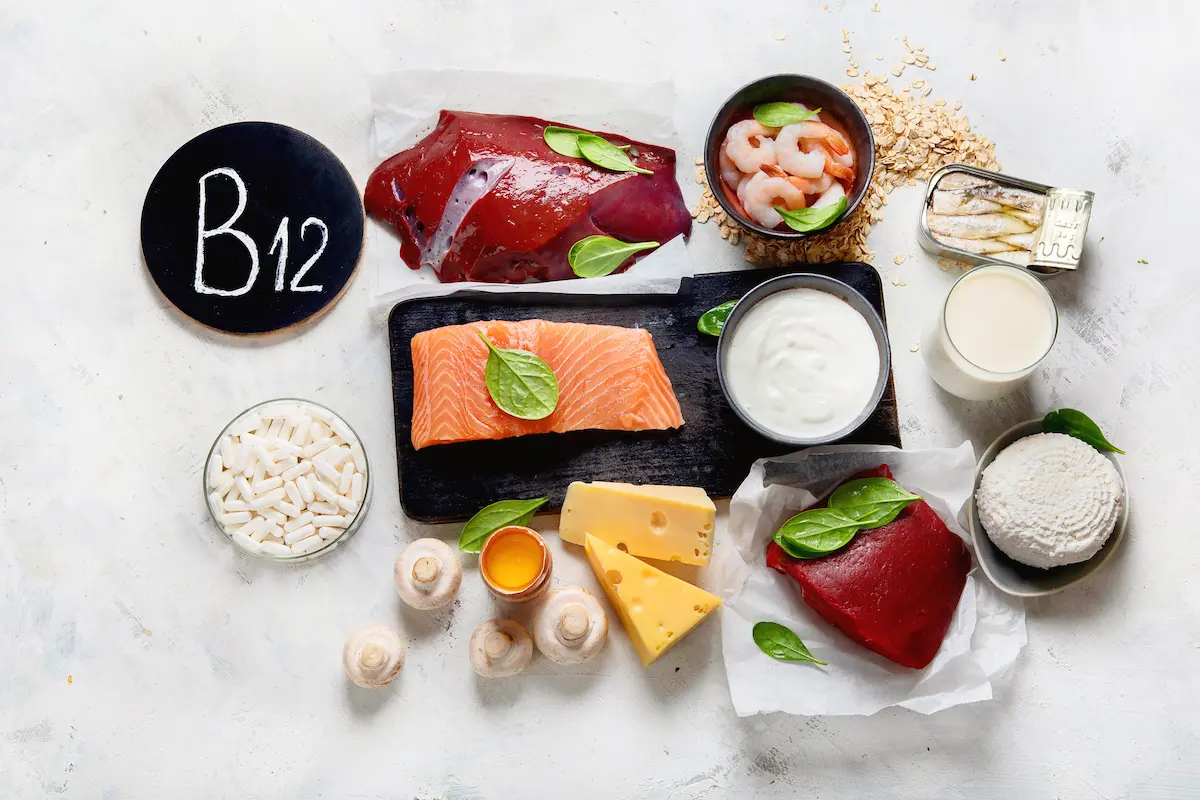
Have you ever wondered whether the foods you eat every day provide enough vitamin B12 to keep your body functioning properly? This essential nutrient plays a much bigger role than you might think.
Vitamin B12 supports red blood cell production and nerve function. When you don’t get enough, it can lead to deficiency, causing anemia, persistent fatigue, weakness, and neurological symptoms such as numbness and tingling in the hands and feet.
Your body cannot produce vitamin B12 on its own, so you must obtain it through food or supplements. Most adults need 2.4 mcg daily, but getting enough can be challenging if your diet lacks reliable sources.
Fortunately, plenty of foods can help you meet your daily needs. Fish, shellfish, meat, eggs, and dairy products are naturally rich in vitamin B12, while fortified cereals, nutritional yeast, and plant-based milk offer options for vegetarians and vegans.
Let’s look at some of the best food sources, how much vitamin B12 they contain, and how much they contribute to your daily requirement.
1. Shellfish
Shellfish are among the richest natural sources of vitamin B12. Clams, oysters, and crab are particularly good choices, and they offer more than just this essential vitamin. They also contain protein, iron, zinc, selenium, and other nutrients that support overall health.
Clams stand out for their exceptionally high B12 content. A 3-ounce (85 g) serving of cooked mollusk clams contains 84 mcg of vitamin B12, equivalent to a remarkable 3,504% of your daily B12 requirement.
Oysters are another excellent option. The same serving size delivers 24.5 mcg, providing approximately 10 times the recommended daily intake.
If you prefer crab, an 85-g serving of cooked Dungeness crab supplies 8.84 mcg of vitamin B12, accounting for 368% of the amount your body needs each day.
The actual amount can vary depending on the species.
2. Organ Meats
When it comes to vitamin B12, organ meats deserve special attention. Liver and kidneys are particularly concentrated sources, so even a modest serving can supply several times the amount most adults need in a day.
Beef liver is one of the richest dietary sources, with a single serving (85 g) providing 60 mcg of vitamin B12, equivalent to an impressive 2,500% of the Daily Value (DV). Chicken liver is another excellent source of vitamin B12, giving you 14.3 mcg or 595% DV per 85-g serving.
They also supply iron, copper, vitamin A, biotin, and high-quality protein.
Kidneys are worth including in this list, too. A 3-ounce serving of cooked lamb kidney delivers 67.1 mcg of vitamin B12, which is an outstanding 2,796% of the recommended daily intake. The same serving of cooked beef kidney contains 21.2 mcg, supplying 883% of the amount needed each day.
Both also provide protein, selenium, and other essential nutrients.
Although these organ meats are highly nutritious, liver requires some caution because it contains very high amounts of preformed vitamin A. Eating it too frequently or in large portions can lead to excessive vitamin A intake. Pregnant women should avoid liver because excess preformed vitamin A can harm fetal development.
3. Beef
If organ meats aren’t part of your regular diet, ordinary cuts of beef can still help you get more vitamin B12. Beef is also a good source of high-quality protein, iron, zinc, and other nutrients.
One serving (85 g) of cooked ground beef supplies 2.24 mcg of vitamin B12, meeting 93% of your daily B12 requirement.
You can include lean beef in stir-fries, salads, sandwiches, soups, or main meals. Choose leaner cuts and enjoy moderate portions as part of a varied diet.
4. Fish
Seafood isn’t limited to shellfish when it comes to vitamin B12. Several fish varieties contain meaningful amounts of this vitamin, while oily fish such as sardines and salmon also provide omega-3 fatty acids.
Just one standard can (75 g) of canned sardines provides 6.7 mcg of vitamin B12, which is 279% of the DV. They also offer protein, vitamin D, and calcium, especially when you eat the soft bones.
Salmon and trout are other nutritious choices. You’ll get about 2.4 mcg of vitamin B12 from 3 ounces of cooked Atlantic salmon, which is nearly all you need in a day. Trout provides even more, with nearly 6.4 mcg in the same serving size, equivalent to 265% of the daily value.
Tuna is another convenient way to meet your daily B12 needs. One 3-ounce serving of canned light tuna in water contains approximately 2.2 mcg, providing 92% of the daily value. It also supplies protein and selenium.
However, mercury levels vary among tuna species. Canned light tuna generally contains less mercury than albacore tuna.
5. Eggs
Eggs are another convenient source of vitamin B12, particularly for people following a vegetarian diet that includes eggs. They also provide high-quality protein, choline, selenium, and vitamin D.
Two large eggs (100 g) contain 0.82 mcg of vitamin B12, supplying 34% of the recommended daily intake. Most of this vitamin is found in the yolk, so eating the whole egg provides more B12 than eating only the egg white.
Whether you prefer boiled eggs, omelets, or scrambled eggs, they are easy to include in everyday meals.
6. Dairy Products
For people who consume dairy, milk, yogurt, and cheese offer convenient ways to get vitamin B12 throughout the day. These foods also provide nutrients such as calcium, protein, and phosphorus.
Dairy products offer more than just vitamin B12. Research suggests that B12 from dairy may be more easily absorbed by the body than the same amount obtained from meat or eggs.
Milk is an easy place to start. One cup (244 g) of whole milk contains approximately 1.3 mcg of vitamin B12, providing more than half of your daily requirement.
Yogurt is also a good source, with a 6-ounce (170 g) serving of plain yogurt supplying approximately 26% of the daily recommended value.
Cheese can contribute to your intake too, although the amount varies by variety. One slice (21 g) of cheddar cheese provides 0.22 mcg of vitamin B12, equivalent to 9% of your daily B12 requirement. While Swiss cheese contains 0.63 mcg per slice (21 g), accounting for 26% of the DV.
Keep portions in mind, as some cheeses can be high in saturated fat and sodium.
7. Fortified Nutritional Yeast
For people who avoid animal products, fortified foods become especially important. Nutritional yeast is a popular choice because of its savory, cheese-like flavor and its ability to add vitamin B12 to plant-based meals.
Not all nutritional yeast contains this vitamin. Only fortified varieties provide reliable amounts. A ¼-cup (15 g) serving of fortified nutritional yeast can deliver up to 17.6 mcg of vitamin B12, equivalent to 733% of the daily value.
However, the actual amount varies by brand, so check the nutrition label before buying.
You can sprinkle it over popcorn, pasta, roasted vegetables, soups, or salads.
8. Fortified Breakfast Cereals
Fortified breakfast cereals offer another option for people who want to increase their vitamin B12 intake without relying on animal foods. Manufacturers add this vitamin during processing, so certain cereals can provide a useful amount in a single serving.
One serving of fortified breakfast cereal can provide around 1.5 mcg of vitamin B12, meeting 63% of the DV. However, the amount varies by brand, fortification level, and serving size.
To make a more balanced breakfast, choose cereals that provide a good amount of fiber and contain minimal added sugar. You can enjoy them with milk or a fortified plant-based alternative for additional vitamin B12.
9. Fortified Plant-Based Milk
If you prefer dairy-free alternatives, fortified plant-based milk can be a convenient way to get vitamin B12. Soy milk, almond milk, and oat milk are widely available in fortified varieties, making them useful options for people who avoid dairy.
One cup (244 g) of fortified soy milk provides approximately 40% of the DV of vitamin B12, while the same serving of fortified almond milk supplies 35%.
Fortified oat milk can provide even more. One serving (244 g) containing 1.24 mcg of vitamin B12 supplies 52% of the DV.
However, not all plant-based milk contains vitamin B12. The amount depends on the brand and fortification level, so check the nutrition label to see whether vitamin B12 has been added and how much each serving provides.
Fortified soy milk is particularly useful because it also supplies plant-based protein. If you follow a vegan diet, include fortified plant-based milk or other reliable vitamin B12 sources regularly, as unfortified varieties generally contain little to no vitamin B12.
Can Vegetarians and Vegans Get Enough Vitamin B12?
Vitamin B12 can be harder to obtain if you follow a vegetarian or vegan diet because most natural food sources come from animal products, including meat, fish, eggs, and dairy.
If you follow a vegetarian diet, you can get vitamin B12 from:
- Milk and yogurt
- Cheese
- Eggs
- Vitamin B12-fortified breakfast cereals
- Fortified nutritional yeast
- Fortified plant-based milk
For vegans, fortified foods and vitamin B12 supplements are particularly important because unfortified plant foods generally do not provide reliable amounts of this nutrient.
You may come across claims that fermented foods, mushrooms, seaweed, and spirulina are good plant-based sources of vitamin B12. However, their vitamin B12 content can be inconsistent, and some contain inactive B12 analogues that cannot meet your body’s needs.
If you follow a strict vegan diet, consider speaking with a healthcare professional about choosing an appropriate vitamin B12 supplement to ensure you get enough.
Learn more: 8 Vegetarian foods high in vitamin B12
Final Thoughts
Vitamin B12 is essential for healthy red blood cell production, nerve function, and DNA synthesis. Including enough vitamin B12-rich foods in your daily diet can help you meet your nutritional requirements and reduce the risk of deficiency.
Fish, shellfish, meat, eggs, and dairy products are some of the best natural sources. If you follow a vegetarian or vegan diet, fortified foods and appropriate supplementation can help fill nutritional gaps.
The key is to choose reliable sources of vitamin B12 and pay attention to your daily intake, particularly if you have a higher risk of deficiency or difficulty absorbing this nutrient.