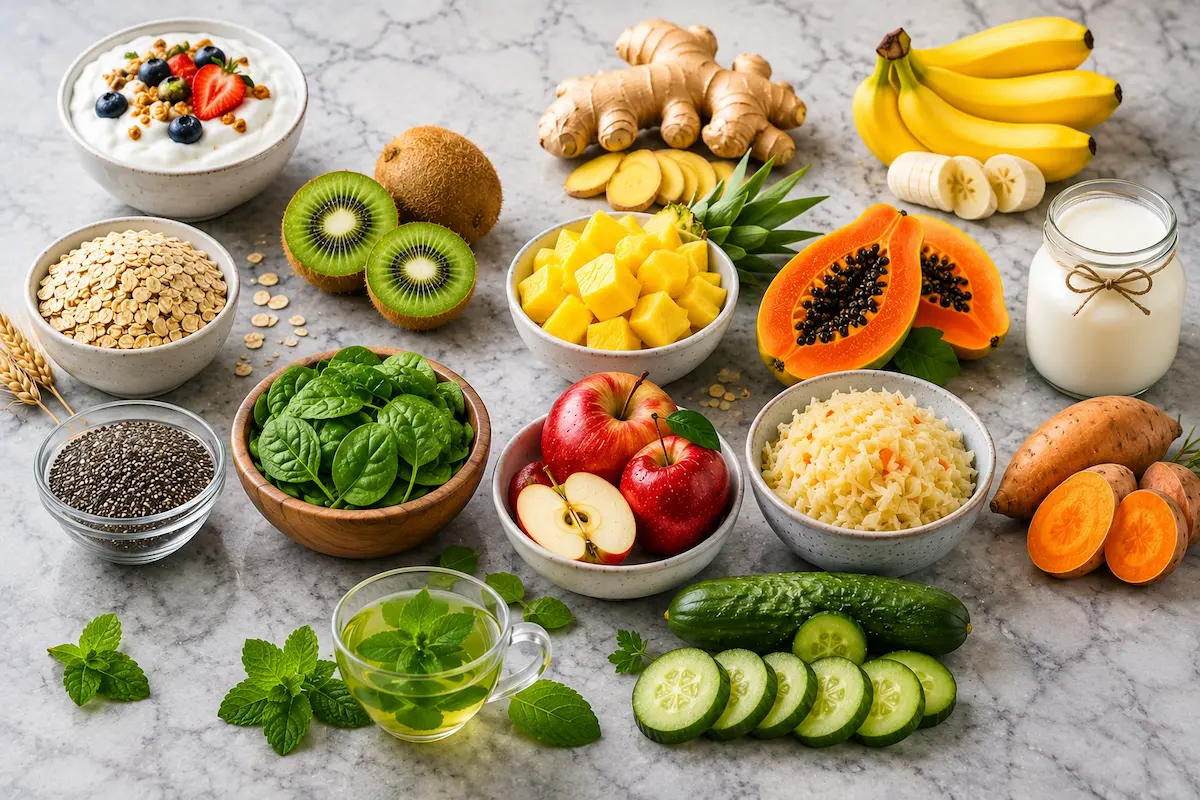
Most people do not think about digestion until something starts going wrong.
Bloating after meals. Constipation that keeps returning. Acid reflux from foods that never used to cause problems. Feeling overly full after a few bites. Random stomach discomfort that makes eating feel unpredictable.
Quick fixes like detox drinks, antacids, and restrictive diets may temporarily mask symptoms, but digestion usually improves through consistent eating habits and the right foods.
Certain foods can help support digestion by improving gut bacteria balance, supporting regular bowel movements, and helping the digestive system work more smoothly overall.
This article covers some of the best foods for better digestion and gut health.
Foods That May Improve Digestion
The foods below are some of the best options for better digestion.
1. Yogurt
Yogurt is one of the most useful foods for digestion because it contains live beneficial bacteria that help support the gut microbiome.
Research suggests the beneficial bacteria in yogurt, particularly Lactobacillus and Streptococcus species, may support digestive health by improving gut bacteria balance, bowel regularity, and overall gut function.
Some studies have also linked yogurt intake to potential benefits for issues like lactose intolerance, constipation, diarrhea, and digestive discomfort.
For the greatest benefit, choose plain yogurt with live and active cultures, as flavored varieties often contain large amounts of added sugar.
2. Ginger
Ginger has long been used for digestive discomfort for one reason: it actually affects digestion mechanics.
It may help stimulate stomach emptying, which means food moves through the stomach more efficiently instead of sitting heavily after meals. This can reduce bloating, nausea, and the uncomfortable “overfull” feeling many people experience.
For instance, a study in healthy adults found that ginger helped food move through the stomach faster and increased stomach contractions involved in digestion. Researchers suggested these effects may help support smoother digestion and could potentially benefit people with digestive discomfort.
3. Bananas
Bananas are easy to digest and may help support regular bowel movements. They contain soluble fiber and resistant starch, particularly when slightly underripe, which help nourish beneficial gut bacteria and support healthy stool consistency.
Research suggests that green bananas are especially rich in resistant starch and pectin, two compounds associated with improved bowel function and digestive health. Some of this resistant starch reaches the colon, where it is fermented by beneficial gut bacteria.
Because bananas are gentle on the digestive system, they are often well tolerated during periods of mild digestive discomfort or loose stools.
4. Oats
Oats support digestion mainly because of their soluble fiber content.
This fiber absorbs water and forms a gel-like texture in the digestive tract, helping stool move more smoothly through the intestines.
Oats also contain beta-glucan, a type of soluble fiber that may help feed beneficial gut bacteria and improve digestion. Research suggests it may also help increase short-chain fatty acid production, which plays a role in digestion and gut function.
Unlike extremely high-fiber foods that can feel harsh on sensitive digestion, oats are usually well tolerated and easy to include regularly through oatmeal, overnight oats, or smoothies.
5. Kiwi
Kiwi is one of the strongest fruits for digestion because it contains actinidin, a natural enzyme that helps break down proteins more efficiently.
This makes kiwi especially useful after protein-heavy meals, where digestion can sometimes feel slow or heavy.
Reviews of clinical studies suggest kiwifruit may help improve stool frequency while reducing abdominal discomfort, indigestion, and constipation-related symptoms, particularly in people with IBS-C or functional constipation.
Kiwi also provides fiber and water, which support smoother stool movement through the intestines.
6. Pineapple
Pineapple supports digestion mainly because of bromelain, a natural enzyme that helps break down proteins.
Bromelain may help improve protein digestion, nutrient absorption, and digestive comfort while potentially reducing bloating, inflammation, and digestive irritation. Some studies also suggest it may support gut health through its effects on digestive enzymes and gut bacteria, although more research is still needed.
The important distinction is moderation. Large amounts of pineapple may irritate sensitive mouths or stomachs because of its acidity and enzyme activity. Moderate portions are usually better tolerated while still providing digestive benefits.
Fresh pineapple generally contains more active bromelain than heavily processed or canned varieties.
7. Papaya
Just like kiwi and pineapple, papaya also contains digestive enzymes, particularly papain, which helps break down proteins more efficiently.
A clinical study found that a papaya preparation helped improve constipation and bloating in people with ongoing digestive discomfort. Researchers also noted potential benefits for heartburn and IBS-related symptoms, although larger studies are still needed to confirm these effects.
It also provides water and fiber, both of which support smoother digestion and bowel regularity.
Ripe papaya tends to be easier on the digestive system than many acidic fruits, making it a practical option for people who experience stomach sensitivity.
8. Kefir
Kefir is similar to yogurt but typically contains a wider variety of beneficial bacteria and yeasts. This greater microbial diversity may help support gut balance and digestion more effectively in some individuals.
Studies also suggest kefir may improve lactose digestion, bowel regularity, and overall digestive comfort.
Kefir is also thinner than yogurt, which makes it easier for some people to consume regularly. Its probiotic content may help support digestive health by influencing the gut microbiome.
Plain, unsweetened kefir is the better choice over heavily sweetened flavored versions.
9. Chia Seeds
Chia seeds absorb water and develop a gel-like texture that helps support bowel movement regularity. They provide soluble fiber, which helps soften stool and improve movement through the digestive tract.
Just one ounce (28 g) of chia seeds provides nearly 10 g of fiber, which is one reason they can have such a noticeable effect on digestion.
Research suggests chia fiber may also support beneficial gut bacteria and intestinal function, which may further contribute to smoother digestion.
This can be particularly helpful for constipation caused by low fiber intake or inadequate hydration.
The key is soaking them properly. Dry chia seeds without enough fluid can worsen digestive discomfort instead of improving it.
10. Spinach
Spinach supports digestion through its fiber, water, and magnesium content. Magnesium helps support muscle contractions in the intestines, which plays a role in regular bowel movements.
Spinach also contains plant compounds that beneficial gut bacteria can use as fuel. Some research suggests spinach may help increase gut microbiome diversity and support the production of compounds linked to intestinal health and lower inflammation.
Cooking spinach lightly may improve digestibility for people who experience bloating from large amounts of raw greens.
11. Apples
Apples contain pectin, a type of soluble fiber that supports healthy digestion and gut bacteria. Pectin helps regulate bowel movements by absorbing water and improving stool consistency.
Research also suggests apple compounds like pectin and polyphenols may help support intestinal function and beneficial gut bacteria throughout the digestive tract.
Apples also provide fluid and natural carbohydrates that are generally easy for most people to tolerate.
Eating apples with the skin provides more fiber, although peeled apples may be easier to digest during periods of stomach sensitivity.
12. Sauerkraut
Sauerkraut is a fermented food that naturally contains beneficial bacteria produced during fermentation. These bacteria may help support gut microbiome diversity and digestion.
A clinical study found that both fresh and pasteurized sauerkraut may influence certain gut bacteria after regular consumption. Researchers also observed increased short-chain fatty acid levels with pasteurized sauerkraut, compounds linked to gut and intestinal health.
Sauerkraut also provides fiber, offering additional digestive benefits alongside its fermentation-derived compounds.
13. Sweet Potatoes
Sweet potatoes support digestion because they provide fiber along with a high water content. Their fiber helps support regular bowel movements, while their softer texture after cooking makes them easier to digest than many processed carbohydrate foods.
Research suggests fiber from sweet potatoes may also help support beneficial gut bacteria and increase short-chain fatty acids linked to intestinal health. Some studies have also observed improvements in intestinal function and nutrient absorption.
They also contain potassium, which supports muscle function throughout the body, including the digestive tract.
14. Peppermint
Peppermint may help relax digestive tract muscles, which is why it is commonly used for bloating and digestive discomfort.
A review of 12 clinical trials also found that peppermint oil helped reduce abdominal pain and overall digestive symptoms in some people with irritable bowel syndrome (IBS).
Peppermint tea is often a gentler option than concentrated peppermint products. However, it may worsen symptoms in people with acid reflux because it can relax the valve between the stomach and esophagus.
15. Cucumbers
Cucumbers are not high in fiber compared to many vegetables, but they support digestion in another important way: hydration.
The digestive system functions better when fluid intake is adequate. Stool consistency, bowel movement frequency, and overall digestive comfort all depend partly on hydration status.
Cucumbers also tend to be light and easy to tolerate, making them useful for people who feel uncomfortable after heavier meals.
Their high water content can support overall digestive balance without adding digestive heaviness.
What Usually Damages Digestion
Poor digestion is rarely caused by one food alone.
More often, it is a combination of habits:
- Eating too quickly
- Low fiber intake
- Inadequate hydration
- Excessive ultra-processed foods
- Inconsistent meal timing
- Lack of physical movement
- Chronic overeating
Many people also increase fiber too aggressively after years of low-fiber eating. That often backfires and causes more bloating instead of improving digestion.
Digestive improvement works better when changes are gradual and consistent.
How to Actually Improve Digestion Long Term
The most effective strategy is not extreme elimination diets or expensive supplements.
It is building meals around foods that consistently support digestion while reducing foods that constantly irritate the gut.
That usually means:
- More fiber from whole foods
- Regular hydration
- Fermented foods in moderate amounts
- Slower eating
- Better meal consistency
- Less reliance on ultra-processed foods
The digestive system responds best to stability, not extremes. Learn more in our guide on how to improve digestion.
The Bottom Line
Better digestion is usually the result of repeated daily habits, not quick fixes.
The foods above support digestion because they improve gut bacteria balance, bowel movement regularity, digestive efficiency, or hydration. None of them work instantly, but consistent intake can make digestion noticeably smoother over time.
The goal is not “perfect digestion.” The goal is a digestive system that functions predictably, comfortably, and efficiently most of the time.
That comes from feeding it properly on a regular basis.
2 thoughts on “15 Foods for Better Digestion”
Comments are closed.