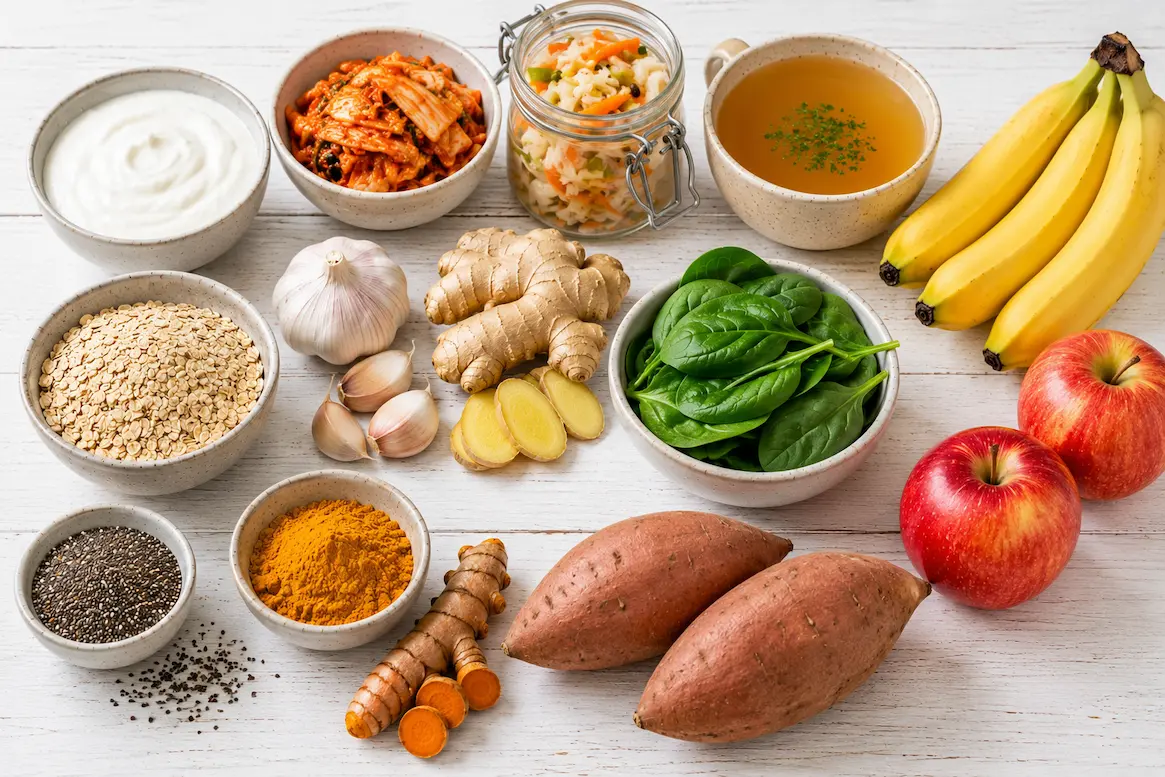
Bloating after meals. Irregular bowel movements. Low energy. Food sensitivities. That constant heavy feeling after eating.
These are some of the most common signs that your gut may not be functioning at its best.
While no single food can “heal” every digestive problem, certain foods provide nutrients that help support the gut lining, nourish beneficial bacteria, and promote a healthier digestive environment.
In this article, you’ll discover some of the best foods to support long-term gut health and digestion.
Foods That May Support Intestinal Barrier Function and Reduce Gut Inflammation
Below are foods that may help support gut bacteria, digestion, and overall gut health over time.
1. Yogurt
Yogurt is one of the simplest ways to introduce beneficial bacteria into the gut. It contains live cultures like Lactobacillus and Bifidobacterium, which help support a healthier microbiome.
These bacteria compete with harmful microbes and improve the digestion of lactose and other nutrients. Regular intake can also ease symptoms like bloating and mild constipation.
In a clinical trial involving 260 participants, consuming 250 g of probiotic yogurt daily for 8 weeks significantly reduced intestinal permeability in people with IBD compared to plain yogurt, showing measurable improvement in gut barrier function.
What matters is quality. Flavored yogurts high in sugar work against these benefits. Plain, unsweetened yogurt with live cultures is what actually supports gut health.
2. Fermented Foods
Fermented vegetables can offer a broader range of microbes than many standard yogurts, especially when naturally fermented. They contain diverse bacteria and enzymes that support digestion and microbial balance.
Research on fermented plant foods shows that compounds produced during fermentation can improve gut microbial diversity, strengthen the intestinal barrier, and help regulate immune and inflammatory responses, although much of this evidence comes from animal and preclinical studies.
A more diverse microbiome is more resilient and better linked to stable digestion and immune function.
Start small. Fermented foods are potent. A tablespoon or two daily is enough to support gut balance without overwhelming digestion.
3. Bone Broth
Bone broth provides nutrients that support the gut lining, including gelatin, collagen, and amino acids like glutamine, glycine, and proline.
Glutamine plays a key role in maintaining the integrity of the intestinal barrier. When this barrier weakens, unwanted particles can pass through, triggering inflammation and digestive discomfort.
Animal research shows that bone broth may reduce gut inflammation and tissue damage. In one study, mice given bone broth for 10 days before induced ulcerative colitis had lower inflammatory markers and less colon damage.
However, most evidence comes from animal studies. While these nutrients are linked to gut barrier support, human research on bone broth itself is still limited.
4. Bananas (Especially Slightly Unripe)
Bananas provide resistant starch, a type of carbohydrate that bypasses digestion and feeds beneficial gut bacteria.
In a 2011 study, daily banana consumption for 60 days increased beneficial Bifidobacteria and significantly reduced bloating, although changes in short-chain fatty acids were not significant.
Animal studies add more context. Green banana resistant starch has been shown to reduce gut inflammation and support intestinal barrier function, especially when combined with probiotics, suggesting a stronger combined effect.
Slightly unripe bananas contain more resistant starch than fully ripe ones, making them more effective for supporting gut bacteria. They also help regulate bowel movements and improve stool consistency.
5. Oats
Oats are rich in beta-glucan, a soluble fiber that acts as a prebiotic by feeding beneficial gut bacteria. This helps increase the production of short-chain fatty acids such as butyrate, which support gut health and the integrity of the intestinal barrier.
Unlike some fibers, beta-glucan is generally well tolerated and forms a gel-like consistency in the digestive tract, helping support healthy digestion.
Research shows that oat beta-glucan can increase beneficial gut bacteria and improve microbial activity, while animal studies suggest it may help reduce gut inflammation and support the intestinal barrier.
6. Garlic
Garlic contains prebiotic fibers that feed beneficial gut bacteria like Bifidobacterium and help support microbial balance in the digestive tract.
It also provides sulfur compounds like allicin, which may help regulate inflammation and influence gut microbial activity.
In a 2-month trial, women taking garlic extract showed trends toward increased levels of beneficial bacteria like Bifidobacterium and Faecalibacterium, suggesting garlic may help support a healthier gut environment.
However, garlic is not tolerated equally by everyone. People with IBS or FODMAP sensitivity may experience bloating or digestive discomfort from large amounts.
7. Ginger
Ginger improves digestion efficiency. It may help stimulate digestive enzymes, enhance gastric emptying, and regulate inflammation in the digestive tract.
A review of clinical trials suggest ginger supports digestive health through its anti-inflammatory, antioxidant, and antiulcer properties, although researchers note that more large human studies are still needed.
This makes it useful for people who experience heaviness, bloating, or slow digestion after meals.
It also helps reduce nausea and supports smoother movement of food through the digestive tract. Even small amounts, like in tea or meals, can make a noticeable difference.
8. Leafy Greens
Leafy greens help create a healthier environment for gut bacteria. They provide fiber that feeds beneficial microbes and supports the production of short-chain fatty acids linked to gut and colon health.
Research also highlights sulfoquinovose, a natural plant sugar found in green leafy vegetables that acts as a food source for specific beneficial gut bacteria and helps support microbial balance in the gut.
Compounds found in greens like kale, broccoli, and cabbage may also help regulate inflammation, support intestinal barrier function, and positively influence the gut microbiome. Some studies have even shown reduced colitis severity in animal models fed cruciferous vegetables.
These greens are also rich in polyphenols, carotenoids, folate, and antioxidants that support digestion and overall gut health.
9. Apples
Apples are rich in pectin, a soluble fiber that acts as a prebiotic and feeds beneficial gut bacteria.
A review of research suggests pectin may increase beneficial microbes like Bifidobacterium, Faecalibacterium prausnitzii, and Lachnospira, although researchers note that more human studies are still needed to confirm these effects.
Pectin also helps improve stool consistency and supports regular bowel movements by absorbing water in the digestive tract.
Animal research further suggests apple-derived pectin may help support gut barrier function and reduce inflammation linked to poor gut health.
Eating apples with the skin provides the highest amount of fiber and beneficial plant compounds.
10. Chia Seeds
Chia seeds are rich in soluble fiber that absorbs water and forms a gel-like texture in the digestive tract.
This helps soften stool, improve bowel regularity, and support smoother digestion.
Research on chia mucilage also suggests it may influence the growth of beneficial gut bacteria like Lactobacillus, while the seed’s fiber acts as a prebiotic that supports overall gut health.
Chia seeds additionally provide omega-3 fats, polyphenols, and antioxidants that may help regulate inflammation and support the intestinal environment.
11. Turmeric
Turmeric contains curcumin, a compound known for its strong anti-inflammatory effects.
Chronic inflammation in the gut can damage the intestinal lining and interfere with normal digestion. Curcumin may help regulate this inflammation and support intestinal health over time.
Research suggests that curcumin can influence gut bacteria composition and interact directly with the gut microbiome, which researchers believe may contribute to its digestive and gastrointestinal benefits.
In a 6-month trial involving people with ulcerative colitis in remission, curcumin supplementation significantly reduced relapse rates and improved disease activity scores compared to placebo, suggesting potential benefits for intestinal inflammation and gut health.
Combining turmeric with black pepper can significantly improve curcumin absorption and effectiveness.
12. Sweet Potatoes
Sweet potatoes provide resistant starch and soluble fiber, which act as prebiotics by nourishing beneficial gut bacteria.
As these fibers are fermented in the colon, they produce short-chain fatty acids that help support colon health, the intestinal barrier, and a healthy inflammatory response.
Purple sweet potatoes are also rich in anthocyanins. Animal research suggests these compounds may help support beneficial bacteria such as Bifidobacterium and Lactobacillus, strengthen the intestinal barrier, and reduce intestinal inflammation.
However, more human studies are needed to confirm these effects.
What Most People Get Wrong About Gut Healing
The biggest mistake is expecting quick results.
Gut healing is not a 3-day detox. It’s a process of consistently feeding the right bacteria, repairing the gut lining, and reducing irritation. If you eat these foods occasionally, nothing changes.
The second mistake is overloading fiber too quickly. This backfires. A damaged gut struggles with sudden high fiber intake, leading to more bloating and discomfort.
Start slow. Add one or two foods at a time. Let your system adapt.
The third mistake is ignoring consistency. Gut bacteria respond to what you eat daily, not occasionally. Irregular eating patterns lead to unstable gut conditions.
How to Use These Foods Effectively
You don’t need complicated meal plans. You need structure.
Include one probiotic source daily (yogurt or fermented foods).
Add one or two prebiotic foods (oats, bananas, garlic, lentils).
Include anti-inflammatory foods (turmeric, ginger).
Support the gut lining (bone broth).
That’s enough to create measurable improvement.
Keep meals simple and repeatable. Complexity is not what heals the gut — consistency is.
The Bottom Line
Gut healing is targeted, not random.
You’re not just eating “healthy foods.” You’re feeding specific bacteria, repairing tissue, and improving digestion mechanics.
The foods listed above do exactly that. No hype, no trends — just clear function.
Stick to them consistently, introduce them gradually, and give your gut time to recover.