Breakfast can be an easy place to add more fiber to your day, but many common breakfast foods don’t provide much of it.
A pastry, refined cereal, or plain toast may fill you up for a while, only to leave you hungry again soon after.
The good news is that you don’t need a complicated breakfast to get more fiber. A few simple swaps—such as choosing oats over refined cereal, adding berries or chia seeds to yogurt, or pairing whole-grain toast with avocado—can make a noticeable difference.
High-Fiber Breakfast Ideas
From warm oatmeal and yogurt bowls to savory wraps and breakfast tacos, here are 20 simple ways to add more fiber to your morning.
1. Oatmeal with Berries and Chia Seeds
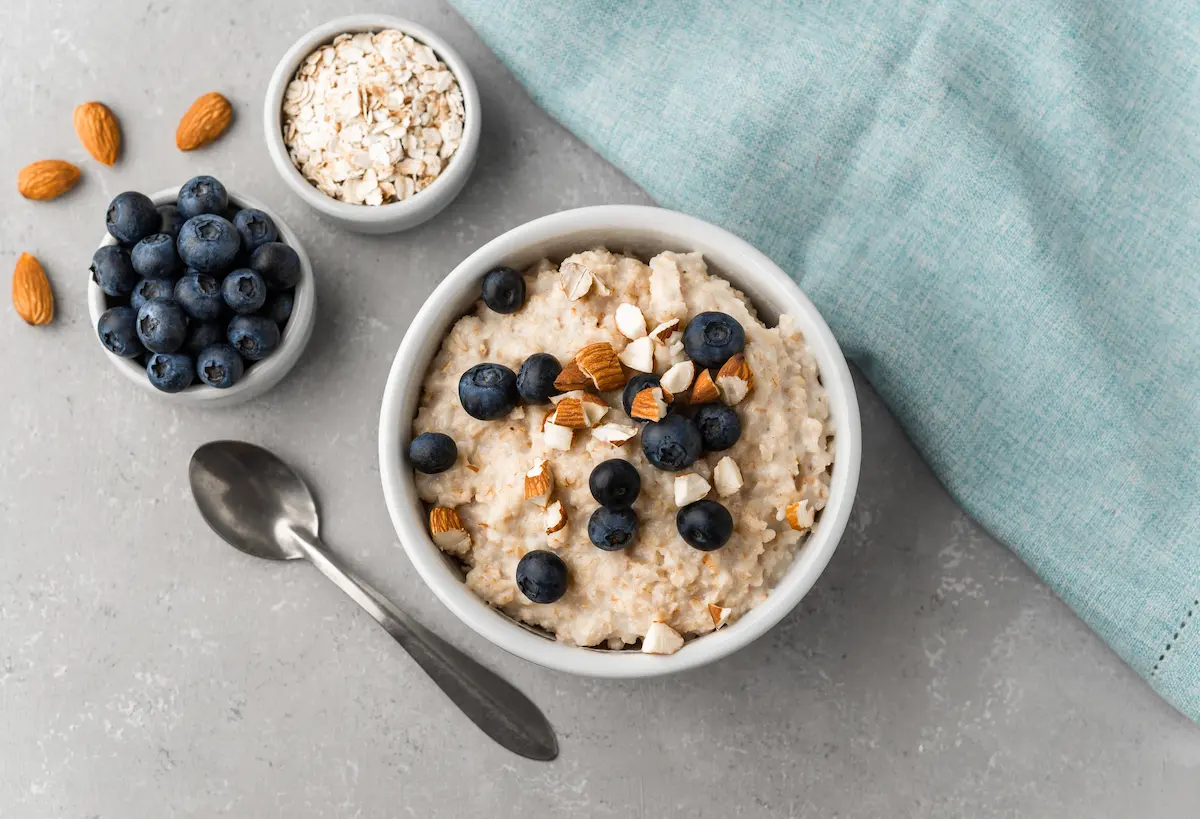
A warm bowl of oatmeal is one of the easiest ways to start your day with fiber. Top cooked oats with strawberries, blueberries, raspberries, or blackberries, then add a spoonful of chia seeds.
The oats provide soluble fiber, while berries and chia seeds add even more fiber along with other nutrients. For a more filling breakfast, add Greek yogurt, milk, or a handful of nuts.
Fiber per serving: 10.4 grams (1, 2, 3)
2. Greek Yogurt with Berries and Chia Seeds
Greek yogurt is naturally low in fiber, but it’s easy to turn it into a high-fiber breakfast.
Add a generous serving of berries, 1–2 tablespoons of chia seeds, and a small handful of walnuts or almonds. The combination gives you protein, fiber, and healthy fats in one bowl.
Choose plain Greek yogurt and add fruit for sweetness instead of relying on heavily sweetened varieties.
Fiber: About 10 grams (2, 3, 4)
3. Avocado Toast on Whole-Grain Bread
Avocado toast can be a surprisingly good source of fiber when you choose the right bread.
Mash half an avocado over two slices of whole-grain bread and top with an egg. You can also add tomatoes or pumpkin seeds. Avocado provides fiber and healthy fats, while whole-grain bread adds additional fiber.
Fiber per serving: 12-14 grams (5, 6, 7, 8)
4. Chia Seed Pudding
Chia seeds are particularly useful when you’re trying to increase your fiber intake. Mix chia seeds with milk or unsweetened soy milk and let the mixture sit in the refrigerator overnight.
In the morning, top it with berries, sliced banana, nuts, or shredded coconut.
Because chia seeds absorb liquid and form a gel-like texture, chia pudding can also be a convenient make-ahead breakfast.
Fiber per serving: 11–13 grams (2, 3)
5. Apple Cinnamon Overnight Oats
Combine rolled oats with milk or yogurt, chopped apple, chia seeds, and cinnamon. Refrigerate overnight and you’ll have breakfast ready in the morning.
Keep the apple peel on when possible, since the skin contributes additional fiber, along with antioxidants.
For more protein, stir in Greek yogurt or a spoonful of nut butter.
Fiber per serving: 11 grams (3, 9, 10)
6. Whole-Grain Toast with Peanut Butter and Banana
Spread natural peanut butter over whole-grain toast and add sliced banana on top.
Bananas provide fiber, while whole-grain toast and peanut butter make the meal more satisfying. Choose peanut butter without a lot of added sugar when possible.
You can also sprinkle chia or ground flaxseeds over the top for an extra fiber boost.
Fiber per serving: 11–16 grams (11, 12, 13)
7. Berry Smoothie with Chia Seeds
Smoothies can be an easy way to add several fiber-rich foods to breakfast.
Blend berries with Greek yogurt, milk or unsweetened soy milk, spinach, and chia seeds. Using whole fruit rather than fruit juice helps you keep the fiber that would otherwise be lost.
If you’re making a smoothie specifically to stay full, include a protein source along with the fruit and fiber.
Fiber per serving: 7 grams (2, 3, 14)
8. Egg and Vegetable Whole-Grain Breakfast Wrap
Eggs don’t contain fiber, but that doesn’t mean an egg breakfast has to be low in fiber.
Fill a whole-grain tortilla with scrambled eggs, spinach, bell peppers, tomatoes, and avocado. Add black beans for even more fiber and protein.
It’s a simple way to turn a basic egg breakfast into a more balanced meal.
Fiber per serving: 14-22 grams (5, 7, 14, 15, 16, 17)
9. Black Bean Breakfast Bowl
Beans aren’t just for lunch and dinner.
Make a savory breakfast bowl with black beans, scrambled eggs, avocado, tomatoes, salsa, and a small serving of brown rice or quinoa.
Black beans are rich in fiber and can make breakfast considerably more filling.
Fiber per serving: 13.6 grams (5, 7, 17, 18, 19)
10. Cottage Cheese with Fruit and Ground Flaxseed
Cottage cheese provides protein but little fiber on its own. Pair it with fiber-rich toppings to create a more balanced breakfast.
Try cottage cheese with sliced pears, berries, kiwi, or an apple, then sprinkle ground flaxseed and chopped walnuts over the top.
Fiber per serving: 7-9 grams (2, 10, 20, 21)
11. High-Fiber Breakfast Cereal with Fruit
A high-fiber whole-grain cereal can be a convenient option on busy mornings.
Look for cereals made primarily from whole grains and with a substantial amount of fiber per serving. Pair the cereal with milk or yogurt and add berries, sliced banana, or another piece of fruit.
Check the nutrition label because some cereals marketed as healthy can still contain a considerable amount of added sugar.
Fiber per serving: 5-6 grams (2, 13, 19)
12. Whole-Grain Pancakes with Berries
Pancakes don’t have to be a low-fiber breakfast.
Use whole-wheat flour or a combination of whole-grain ingredients, then top your pancakes with fresh berries and a spoonful of Greek yogurt.
Adding ground flaxseed or chia seeds to the batter can increase the fiber further.
Fiber per serving: 10–13 grams (2, 3, 21, 22)
13. Sweet Potato and Egg Breakfast
Sweet potatoes are an easy way to bring more fiber into a savory breakfast.
Roast or microwave a sweet potato and top it with a fried or poached egg, avocado, spinach, and pumpkin seeds.
You can prepare the sweet potato ahead of time to make busy mornings easier.
Fiber per serving: 13 grams (5, 8, 14, 23)
14. Avocado and Chickpea Toast
For a plant-based option, mash chickpeas and avocado together and spread the mixture over whole-grain toast.
Add tomatoes, cucumber, lemon juice, or herbs for extra flavor.
Both chickpeas and avocado contribute fiber, while the whole-grain bread adds another source.
Fiber per serving: About 22 grams (5, 7, 11, 24, 25)
15. Apple and Almond Butter Oatmeal
Cook rolled oats with milk or water and stir in diced apples and cinnamon. Finish with almond butter and ground flaxseed.
The oats, apple, flaxseed, and almonds all contribute fiber, while the nuts and seeds add healthy fats.
Fiber per serving: 11.4 grams (4, 9, 10, 26)
16. Breakfast Quinoa Bowl
Quinoa isn’t only for savory meals.
Cook quinoa and serve it warm with milk, berries, banana, walnuts, cinnamon, and chia seeds. You can prepare several servings ahead of time and reheat them during the week.
Quinoa also provides some protein, making it a useful alternative to traditional breakfast grains.
Fiber per serving: 11 grams (2, 3, 13, 27, 28)
17. Whole-Grain English Muffin With Avocado and Egg
Choose a whole-grain English muffin and top it with mashed avocado and a cooked egg.
Add sliced tomato or spinach for extra vegetables and fiber.
It’s quick enough for a weekday breakfast but more filling than a refined-grain breakfast sandwich.
Fiber per serving: 11 grams (5, 7, 29)
18. Raspberry and Flaxseed Yogurt Bowl
Start with plain Greek yogurt and add raspberries, ground flaxseed, chia seeds, and a small handful of almonds.
Raspberries are particularly useful when you’re looking for fruit with more fiber. The seeds and nuts increase the fiber further while adding healthy fats.
Fiber per serving: 10–14 grams (3, 4, 21, 30)
19. Vegetable and Bean Breakfast Tacos
Fill small whole-grain tortillas with black beans, scrambled eggs or tofu, sautéed peppers, onions, spinach, and avocado.
Top with salsa and fresh cilantro.
The combination of beans, vegetables, avocado, and whole grains makes these tacos much higher in fiber than a typical breakfast taco made primarily with refined grains.
Fiber per serving: 21 grams (5, 14, 15, 16, 17, 18, 31)
20. Pear and Walnut Overnight Oats
Mix rolled oats with milk or yogurt, chopped pear, walnuts, chia seeds, and cinnamon. Refrigerate overnight and enjoy cold or warm the next morning.
Leave the pear skin on for additional fiber, and add Greek yogurt if you want more protein.
Fiber per serving: 12 grams (3, 9, 20, 28)
How Much Fiber Should You Have at Breakfast?
There isn’t a separate official fiber target specifically for breakfast. Your goal is to get enough fiber throughout the entire day.
For adults, daily fiber needs generally vary by sex:
- Women: 25 grams per day
- Men: 38 grams per day
A practical approach is to build breakfast around at least two or three fiber-rich foods rather than relying on one ingredient.
For example:
Oatmeal + berries + chia seeds
or
Whole-grain toast + avocado + vegetables
or
Greek yogurt + raspberries + flaxseed
This makes it easier to work toward your daily fiber needs without having to think about fiber at every meal.
How to Make Your Breakfast Higher in Fiber
You don’t necessarily need to completely change what you eat. Small additions can make a familiar breakfast much more fiber-rich.
Choose whole grains
Replace refined white bread, regular tortillas, or refined cereals with whole-grain versions when possible.
Look for “whole grain” or “whole wheat” near the beginning of the ingredient list.
Add fruit instead of juice
Whole fruit provides fiber, while most fruit juices contain little to no fiber.
Add high-fiber fruits like berries, apples, pears, kiwi, oranges, or bananas to breakfast instead of drinking fruit juice.
Sprinkle in seeds
Chia seeds, ground flaxseed, hemp seeds, and pumpkin seeds can be added to oatmeal, yogurt, smoothies, or toast.
Even a tablespoon can make your breakfast more nutritious.
Add beans
Beans may not be the first food you think of at breakfast, but they’re one of the easiest ways to increase both fiber and plant protein.
Try black beans in breakfast tacos, burritos, bowls, or alongside eggs.
Don’t forget vegetables
Spinach, tomatoes, peppers, mushrooms, onions, and other vegetables can easily be added to eggs, wraps, breakfast bowls, and savory toast.
How to Increase Fiber Without Feeling Bloated
If you’re not used to eating much fiber, increase your intake gradually rather than adding large amounts overnight. Drink enough fluids throughout the day, particularly as you increase fiber. This gives your digestive system time to adjust and may help reduce bloating or constipation.
Some high-fiber foods, such as beans, may cause more gas or bloating when you first add them. Start with smaller portions and gradually increase them as tolerated.
Conclusion
A high-fiber breakfast doesn’t need to be complicated.
Start with a whole grain, fruit, vegetables, beans, nuts, or seeds, and combine a few of them into a meal you actually enjoy. Oatmeal with berries and chia seeds, avocado toast, yogurt bowls, breakfast wraps, and bean-based bowls are all simple ways to get more fiber into your morning.
And you don’t have to get all your fiber at breakfast. What matters most is building a diet that provides enough fiber consistently throughout the day.