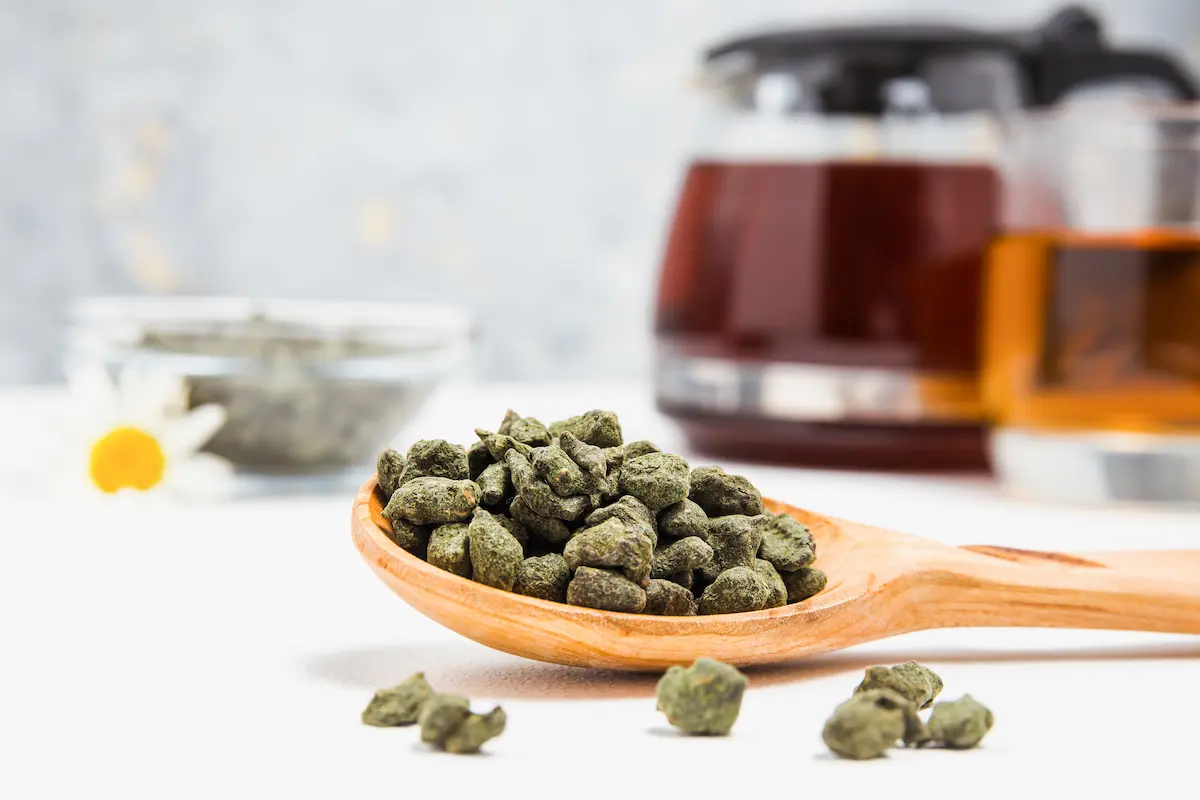
Walk into any tea shop and you’ll likely find green tea, black tea, herbal tea, and oolong tea. Yet despite being one of the world’s traditional teas, oolong often receives far less attention than green tea.
In recent years, it has gained popularity for its potential benefits for weight management, heart health, blood sugar control, and brain function.
While some of these claims are supported by research more than others, oolong tea contains antioxidants and other plant compounds that may contribute to overall health.
Before exploring its potential health benefits, it’s helpful to understand what oolong tea is and what makes it different from other types of tea.
What Is Oolong Tea?
Oolong tea is made from the leaves of Camellia sinensis, the same plant used to produce green, black, and white tea. The main difference lies in how the leaves are processed.
Unlike green tea, which is minimally oxidized, and black tea, which is fully oxidized, oolong tea is partially oxidized. This gives it a flavor that ranges from light and floral to rich and roasted, depending on how it’s processed.
Like other traditional teas, oolong naturally contains polyphenols, antioxidants, caffeine, and L-theanine, compounds that are thought to contribute to many of its potential health benefits.
Health Benefits
Here are some of the most notable benefits of oolong tea and what current research suggests.
1. Rich in Antioxidants
One of the biggest reasons oolong tea attracts attention is its antioxidant content.
It contains polyphenols, catechins, theaflavins, and other plant compounds that help protect cells from oxidative stress, a process linked to aging and the development of many chronic diseases.
Research from laboratory, animal, and a limited number of human studies suggests these antioxidants may help reduce oxidative stress. However, more high-quality human studies are needed to confirm the long-term health benefits of oolong tea..
2. May Improve Heart Health
Heart disease remains one of the leading causes of death worldwide, making heart health an important consideration for most adults.
Some observational studies suggest that people who regularly drink oolong tea may have a lower risk of cardiovascular disease. Researchers believe its polyphenols and other antioxidants may help support heart health by reducing oxidative stress and inflammation.
These bioactive compounds may also promote healthy blood vessel function and help maintain healthy blood pressure, cholesterol, and blood sugar levels.
However, most of the current evidence comes from observational research, and more high-quality clinical trials are needed to confirm these long-term benefits.
3. May Support Weight Management
Weight loss is probably one of the most talked-about oolong tea benefits.
Some research suggests that oolong tea may support weight management by slowing carbohydrate digestion and influencing gut bacteria. These effects may increase the production of short-chain fatty acids, which help regulate fat metabolism.
Supporting these findings, a 6-week study found that drinking 8 grams of oolong tea daily helped many overweight and obese adults lose weight and improve blood fat levels. Researchers suggest it may work by improving fat metabolism and reducing fat absorption through catechins.
However, the current evidence remains limited, and oolong tea should not be considered a fat-burning or weight-loss drink. Any benefits are likely to be modest and are best viewed as part of an overall healthy lifestyle.
4. May Help Support Healthy Blood Sugar Levels
Some research suggests that oolong tea may help support healthy blood sugar levels.
Compounds in oolong tea may influence carbohydrate digestion and glucose metabolism, which could help improve blood sugar control.
A small 2003 study in people with type 2 diabetes found that drinking 1.5 liters of oolong tea daily significantly lowered blood sugar and fructosamine levels compared with water. Researchers concluded that oolong tea may help support diabetes treatment.
However, not all studies have found benefits. In a 2010 study on healthy adults, drinking oolong tea for five days did not improve blood sugar, insulin levels, or glucose metabolism.
These findings suggest that oolong tea may offer blood sugar benefits in some people, particularly those with type 2 diabetes, but more high-quality research is needed to confirm its effects.
5. May Support Brain Function
The caffeine and L-theanine found in
oolong tea may work together to support cognitive function.
Research has linked tea consumption with improvements in attention, alertness, and certain aspects of mental performance.
A review of 50 trials found that L-theanine alone, and especially when combined with caffeine, may improve attention, reaction time, and mood in healthy adults.
In another study involving 716 adults aged 55 and older, regular tea consumption, including black and oolong tea, was associated with better memory, executive function, information processing speed, and overall cognitive performance.
That said, no beverage can replace fundamentals such as adequate sleep, stress management, and regular physical activity.
6. May Improve Bone Mineral Density
Bone health is influenced by many factors, including nutrition, physical activity, age, and hormonal status.
Some research suggests that regular oolong tea consumption may support bone health.
In a study involving 476 postmenopausal women, oolong tea drinkers had higher bone mineral density than non-tea drinkers. The benefits were most noticeable among women who drank 1 to 5 cups daily, suggesting that moderate consumption may be beneficial.
Supporting these findings, a study of more than 1,000 adults found that long-term tea consumption, including green, oolong, and black tea, was associated with higher bone mineral density. The benefits were greatest among those who had consumed tea regularly for more than 10 years.
However, oolong tea should not be viewed as a substitute for nutrients such as calcium, vitamin D, and protein, which remain essential for maintaining strong bones.
7. May Help Manage Eczema
Oolong tea contains polyphenols with antioxidant and anti-inflammatory properties that may help support healthy skin.
In a study on people with difficult-to-treat eczema, drinking 1 liter of oolong tea daily improved symptoms in 63% of participants after one month, with benefits persisting in 54% after six months. Researchers suggest that the anti-allergic effects of tea polyphenols may contribute to these improvements.
However, this study focused on people with atopic dermatitis, and more high-quality research is needed to determine whether oolong tea provides similar benefits for overall skin health.
Versatile and Easy to Include in the Diet
Unlike many health foods that require significant preparation, oolong tea is easy to incorporate into daily life.
It can be enjoyed hot or iced and pairs well with a variety of meals.
Because it has a more complex flavor than many other teas, it can be satisfying without requiring sweeteners.
This makes it a practical beverage for people trying to reduce added sugar intake.
Potential Downsides of Oolong Tea
While oolong tea offers several potential benefits, it is not suitable for everyone.
Caffeine Sensitivity
While moderate caffeine intake is generally considered safe for most healthy adults, excessive consumption may cause side effects such as anxiety, restlessness, insomnia, digestive problems, and a rapid heartbeat.
If this applies to you, limiting intake or avoiding tea later in the day may help.
May Affect Iron Absorption
Research suggests that flavonoids, natural plant compounds found in tea, may reduce iron absorption and influence proteins involved in iron metabolism. While this may be beneficial for people with iron overload, excessive intake could increase the risk of iron deficiency in susceptible individuals.
Not a Miracle Health Drink
Perhaps the biggest downside is unrealistic expectations.
Oolong tea is often marketed as a fat-burning, detoxifying, disease-preventing super beverage.
The reality is far less dramatic.
Its benefits are best viewed as part of an overall healthy lifestyle rather than a standalone solution.
Final Thoughts
Oolong tea sits somewhere between green tea and black tea in both flavor and processing, giving it a unique taste profile and nutritional composition.
It provides antioxidants, polyphenols, caffeine, and L-theanine that may support heart health, brain function, hydration, blood sugar regulation, and overall wellness.
At the same time, it is important to keep expectations realistic.
Oolong tea cannot replace healthy eating habits, exercise, quality sleep, or medical treatment when needed.
The greatest benefit may simply be that it offers a flavorful, low-calorie alternative to sugar-sweetened beverages while supplying beneficial plant compounds that support long-term health.
For most healthy adults, enjoying a few cups of unsweetened oolong tea as part of a balanced lifestyle can be a simple and enjoyable way to add variety to their daily routine.