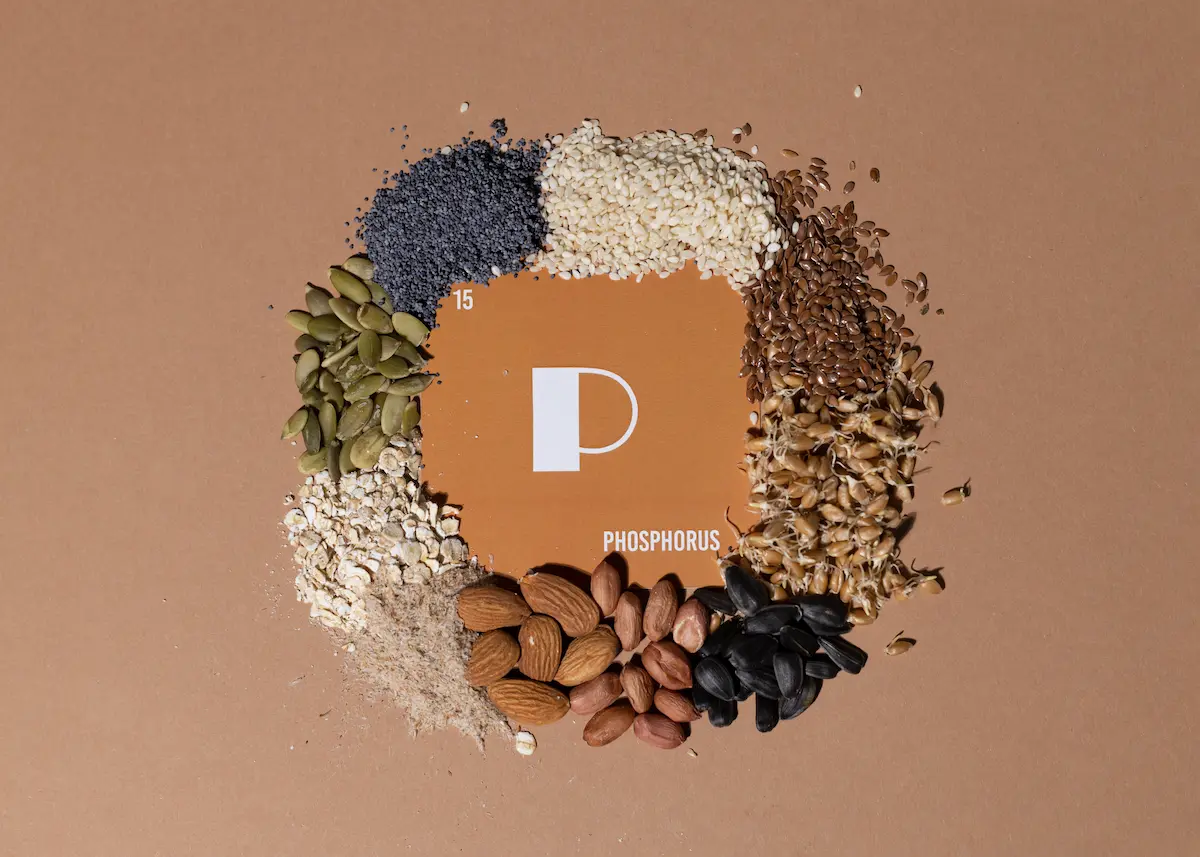
Phosphorus is one of the most important minerals in the body, yet it rarely gets the same attention as calcium, iron, or protein. It plays a major role in building strong bones and teeth, supporting energy production, and maintaining healthy cells.
In fact, phosphorus is the second most abundant mineral in the body after calcium. Most adults need around 700 mg per day, and many whole foods naturally provide substantial amounts.
Protein-rich foods like fish, poultry, dairy, beans, soy foods, nuts, and seeds tend to be some of the best sources. However, the source matters. Whole foods naturally rich in phosphorus usually come packaged with other beneficial nutrients, while highly processed foods often contain phosphate additives that can quickly increase intake.
Fortunately, meeting your phosphorus needs is not difficult when your diet includes a variety of nutrient-dense foods.
What Foods Are High in Phosphorus
Here are some of the best foods rich in phosphorus and how much they provide.
1. Poultry
Chicken and turkey are some of the most practical phosphorus-rich foods because they are high in protein and easy to include in everyday meals.
A 100-gram serving of cooked chicken breast provides around 240 mg of phosphorus, covering roughly 34% of the Daily Value (DV).
And the same serving of roasted turkey contains approximately 222 mg of phosphorus, delivering around 32% DV.
Fresh poultry is usually a better choice than heavily processed meats because processed varieties often contain phosphate additives and excess sodium.
2. Organ Meats
Organ meats are among the most nutrient-dense foods you can eat, and they are naturally rich in phosphorus.
For instance, a 100-gram serving of chicken liver contains 405 mg of phosphorus, providing approximately 58% of the daily requirement.
Beef liver offers even more in the same serving, providing roughly 500 mg and covering about 71% of your daily needs.
Organ meats also provide iron, vitamin B12, folate, copper, and vitamin A in large amounts, making them highly nutritious even in small servings.
3. Fatty Fish
Fatty fish are among the best sources of phosphorus while also supplying omega-3 fatty acids, vitamin D, selenium, and high-quality protein.
Salmon contains around 250 mg per 100 grams, meeting roughly 36% of daily phosphorus needs.
Sardines deliver even more, with the same serving offering about 490 mg, which covers nearly 70% of the Daily Value.
Mackerel is another excellent option, providing roughly 280 mg per 100 grams, enough to meet about 36–40% of your daily requirement.
Beyond phosphorus, fatty fish support heart health, brain function, muscle recovery, and overall nutrition.
4. Seafood
Seafood can significantly increase phosphorus intake while also supplying protein, selenium, iodine, zinc, and vitamin B12.
Oysters provide around 194 mg per 100 grams, which is about 28% of the DV.
Shrimp contains approximately 240 mg, while crab offers around 234 mg in the same serving.
Tuna is even richer, delivering roughly 346 mg per 100 grams, covering close to half of the Daily Value.
Scallops rank among the best seafood sources of phosphorus, providing about 420–430 mg per 100 grams, which meets around 60% of daily phosphorus requirements.
Including a variety of seafood in your diet can help improve overall nutrient intake while keeping meals more balanced.
5. Beans and Lentils
Beans and lentils are excellent plant-based sources of phosphorus while also supplying fiber, protein, folate, iron, and slow-digesting carbohydrates.
A cooked cup (198 grams) of lentils provides roughly 350–360 mg of phosphorus, enough to meet over half of daily needs.
White beans are another rich source, delivering around 200 mg per cup, while cooked black beans contain approximately 240 mg.
Kidney beans also contribute a good amount, with a cooked cup (177 grams) providing roughly 240–250 mg of phosphorus.
Beans and lentils are especially valuable because they are affordable, filling, and easy to add to soups, curries, salads, and rice dishes.
6. Nuts and Seeds
Nuts and seeds are some of the most concentrated plant-based sources of phosphorus while also supplying healthy fats, fiber, minerals, and plant protein.
A 30-gram serving of pumpkin seeds contains roughly 340–350 mg of phosphorus, enough to meet nearly half of daily needs.
Sunflower seeds are similarly rich, providing around 220 mg in the same serving.
Among nuts, Brazil nuts deliver 206 mg of phosphorus per ounce (28 grams), while cashews provide about170 mg.
Almonds are another good option, offering around 136 mg per ounce along with vitamin E and magnesium.
Regularly including nuts and seeds in meals or snacks can help increase phosphorus intake while improving overall nutrient quality.
7. Dairy Foods
Dairy foods naturally provide phosphorus along with calcium and protein, making them important for bone strength and muscle function.
A single cup (244 grams) of milk contains around 246 mg of phosphorus, while plain yogurt provides around 233 mg in the same serving.
Greek yogurt is another excellent source, providing roughly 330 mg of phosphorus per cup while also supplying large amounts of protein.
Cheddar cheese also contributes a good amount, with one ounce (28 grams) delivering around 130 mg of phosphorus.
Including a variety of dairy foods in your diet can help support overall nutrient intake while making it easier to meet daily phosphorus needs.
8. Soy Foods
Soy foods are among the richest plant-based sources of phosphorus.
One cooked cup (172 grams) of soybeans contains 421 mg of phosphorus, enough to meet about 60% of daily needs.
Tofu also provides a substantial amount, with 100 grams containing around 180–250 mg depending on the variety.
Tempeh is another excellent option, supplying roughly 250 mg per 100 grams, which covers about 36% of the Daily Value.
In addition to phosphorus, soy foods are rich in protein, iron, potassium, and other important nutrients, making them especially valuable in vegetarian and vegan diets.
9. Eggs
Eggs are an affordable and widely available source of phosphorus.
Two large eggs (100 grams) contain approximately 172 mg, providing around 25% of the Daily Value.
Most of the phosphorus is found in the yolk, which also supplies choline, selenium, vitamin B12, and healthy fats.
10. Whole Grains
Whole grains naturally retain more phosphorus than refined grains because much of the mineral is concentrated in the bran and germ.
A cooked cup (234 grams) of oats contains around 180 mg of phosphorus, covering approximately 26% of daily needs.
Brown rice is another good source, with one cooked cup (202 grams) providing roughly 208 mg.
Whole grains also supply fiber, complex carbohydrates, and additional minerals that support overall health.
11. Amaranth
Amaranth is a nutrient-dense pseudo-grain naturally rich in phosphorus.
One cooked cup (246 grams) provides approximately 360–370 mg of phosphorus, covering around 52% of the Daily Value.
It also contains magnesium, manganese, iron, and plant protein.
12. Quinoa
Quinoa is another phosphorus-rich pseudo-grain that provides more protein than many traditional grains.
A cooked cup (185 grams) contains around 280 mg of phosphorus, delivering roughly 40% of your daily phosphorus needs.
Quinoa also provides magnesium, fiber, and important amino acids.
Can You Get Too Much Phosphorus?
For most healthy people, phosphorus deficiency is uncommon because the mineral is naturally present in many foods.
The bigger concern in modern diets is often excessive phosphorus intake from processed foods containing phosphate additives.
These additives are commonly found in processed meats, packaged baked goods, fast food, cola beverages, processed cheese, and instant foods. They are absorbed extremely well by the body, often more readily than naturally occurring phosphorus.
People with chronic kidney disease need to be especially careful because impaired kidneys may struggle to remove excess phosphorus from the blood.
That does not mean healthy people should avoid phosphorus-rich whole foods. Foods that naturally contain phosphorus also provide protein, vitamins, healthy fats, and other important nutrients that support overall health.
The real issue is relying too heavily on ultra-processed foods that contain large amounts of rapidly absorbed phosphate additives without offering much nutritional value.
Simple Ways to Add More Phosphorus-Rich Foods to Your Diet
Adding phosphorus-rich foods does not require major dietary changes.
A few practical strategies include:
- Add pumpkin seeds to oatmeal, yogurt, or salads
- Replace refined grains with quinoa or lentils a few times per week
- Include fish like salmon or sardines regularly
- Use yogurt as a snack or breakfast base
- Add beans to soups, curries, wraps, and rice dishes
- Choose minimally processed protein foods more often
- Use eggs as an easy high-protein meal option
The quality of the overall diet matters more than obsessing over a single mineral.
Final Thoughts
Phosphorus does far more than most people realize.
It helps support bones, teeth, energy production, muscle function, and cellular repair. Fortunately, many nutritious foods naturally provide phosphorus along with protein, healthy fats, fiber, vitamins, and other minerals.
The best approach is not chasing phosphorus supplements or processed “high-protein” products packed with additives.
Instead, focus on nutrient-dense whole foods like fish, lentils, dairy, beans, seeds, eggs, tofu, and quality protein sources.
That approach supports phosphorus intake naturally while improving the overall quality of the diet at the same time.