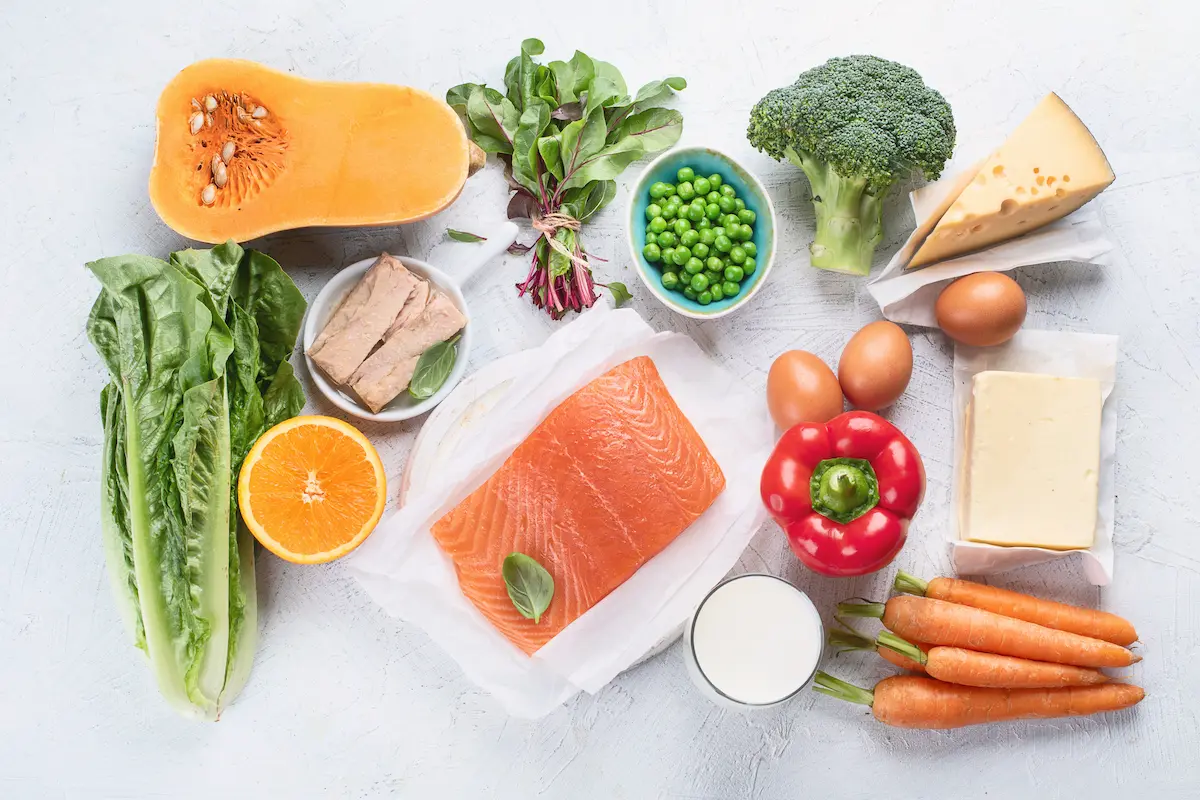
Vitamin A does a lot more than support healthy eyesight. Your body needs it for immune function, growth and development, reproduction, and the normal maintenance of tissues and organs. And getting enough doesn’t necessarily mean reaching for a supplement.
Some of the best sources are foods you may already have in your kitchen. Bright orange sweet potatoes and carrots are packed with beta-carotene, while eggs, dairy, and fish provide preformed vitamin A that your body can use directly. Dark leafy greens such as spinach can also provide substantial amounts of provitamin A.
The key is knowing which foods provide meaningful amounts and how to include them in everyday meals.
In this article, you’ll discover animal and plant-based foods that are high in vitamin A and how much vitamin A each one provides.
How Much Vitamin A Do You Need?
The amount of vitamin A you need depends on your age and sex. For most adults, the recommended intake is:
- Men: 900 mcg per day
- Women: 700 mcg per day
- Pregnancy: 770 mcg per day
- Breastfeeding: 1,300 mcg per day
Vitamin A comes in two main forms. Preformed vitamin A is found in animal foods such as liver, eggs, dairy, and fish. Provitamin A carotenoids, including beta-carotene, occur mainly in plant foods and can be converted into vitamin A by the body.
For reference, the FDA Daily Value (DV) for vitamin A is 900 mcg per day. The amounts below are listed to help you see how much each food contributes toward this daily value.
Foods Rich in Vitamin A?
The foods below include some exceptionally concentrated sources as well as everyday foods that can help you build a vitamin A-rich diet.
1. Liver
If you’re looking for a food that packs an impressive amount of vitamin A into a small serving, liver is hard to beat.
Just 3 ounces (85 g) of cooked beef liver provide 8,020 mcg of vitamin A, nearly 9 times the Daily Value. Chicken liver is also an excellent source, providing roughly 3–4 times the Daily Value in a serving.
Liver is much more than a source of vitamin A. It is packed with vitamin B12, iron, copper, riboflavin, biotin, and high-quality protein, making it one of the most nutrient-dense animal foods.
Because it contains large amounts of preformed vitamin A, moderation matters. Pregnant women should avoid liver and liver products because excessive preformed vitamin A can harm your baby’s development.
2. Cod Liver Oil
Cod liver oil is another exceptionally concentrated source of preformed vitamin A, so even a small amount can make a substantial contribution to your daily intake.
Just one teaspoon (4.5 g) of cod liver oil supplies 1350 mcg of vitamin A, which is 1.5 times the vitamin A most adults need in a day. It also provides omega-3 fatty acids and vitamin D.
Because of its concentrated vitamin A content, more is not necessarily better. Stick to the serving size on the product label and be cautious about combining cod liver oil with high-dose vitamin A supplements.
3. Butternut Squash
Butternut squash has a naturally sweet flavor, but its nutritional profile is what makes it particularly useful. Its orange flesh is rich in beta-carotene.
A cooked cup (205 g) contains 1,140 mcg of vitamin A, putting it well above the amount most adults need each day.
Butternut squash also contributes fiber, potassium, vitamin C, and magnesium. Its combination of carotenoids and other nutrients makes it a particularly useful plant food for a nutrient-rich diet.
4. Sweet Potatoes
That familiar orange flesh is a clue to what’s inside. Sweet potatoes are loaded with beta-carotene, which your body can convert into vitamin A as needed.
A medium baked sweet potato weighing around 114 g provides 1,100 mcg of vitamin A, enough to supply more than your daily requirement in one serving.
Along with beta-carotene, sweet potatoes provide fiber, potassium, vitamin C, and manganese. Their fiber content can also contribute to digestive health and greater meal satisfaction.
5. Carrots
Carrots are probably the first food many people think of when vitamin A comes up, and there’s a good reason for that. Their bright orange color comes largely from beta-carotene.
A single carrot weighing around 61 g contains 509 mcg of vitamin A, contributing about 57% of the Daily Value.
They’re also an easy source of fiber, potassium, and vitamin K.
Eat them raw with hummus, roast them with dinner, or add them to soups and stews. Carrots can also be enjoyed as carrot juice, although juicing changes their fiber content and nutritional profile.
6. Leafy Greens
Don’t overlook leafy greens when looking for foods high in vitamin A.
Spinach stands out among them. One cup of cooked spinach provides 943 mcg of vitamin A, or 105% of the Daily Value, making it one of the richest leafy green sources on this list.
Turnip greens are another excellent choice. One cooked cup (144 g) provides 549 mcg of vitamin A, covering 61% of the DV. Swiss chard comes close behind, with 536 mcg of vitamin A in one cooked cup (175 g), or 60% of the DV.
Collard greens provide 333 mcg of vitamin A per cooked serving (130 g), contributing 37% of the DV.
Romaine lettuce is another option, especially if you prefer your greens raw. One shredded cup (47 g) provides 205 mcg of vitamin A, or about 23% of the DV.
Kale rounds out the group. One cup (118 g) of cooked kale contains 172 mcg of vitamin A, providing 19% of the DV.
Together, these leafy greens also provide vitamin K, vitamin C, folate, calcium, and fiber.
7. Pumpkin
Pumpkin deserves a place on your plate even when it’s nowhere near pumpkin-pie season. Its deep orange color comes from carotenoids, including beta-carotene.
One cup (245 g) of cooked pumpkin provides 706 mcg of vitamin A, giving you 78% of the DV.
It also supplies fiber and potassium, while its carotenoid content adds to its overall nutritional value.
Regularly eating orange and yellow vegetables such as pumpkin is an easy way to increase your intake of provitamin A carotenoids.
8. Fatty Fish
Fatty fish like bluefin tuna, salmon, and king mackerel are better known for their protein and omega-3 fats, but some varieties can also make a meaningful contribution to your vitamin A intake.
Bluefin tuna stands out among them. Three ounces (85 g) provide 643 mcg of vitamin A, or roughly 71% of the Daily Value.
King mackerel and pickled Atlantic herring provide around 214 and 219 mcg, respectively, contributing about 24% of the DV per 3-ounce serving.
Rainbow trout provides 85 mcg of vitamin A per 85-gram serving, while salmon contains around 59 mcg. Although these amounts are more modest, both fish are also valued for their protein and omega-3 fatty acids.
One thing to keep in mind is mercury. While fatty fish can provide valuable nutrients, mercury levels vary considerably between species.
The FDA advises people who are pregnant, may become pregnant, breastfeeding, and young children to choose fish lower in mercury. King mackerel is among the fish they recommend avoiding because of its high mercury content, while salmon and herring are listed among the lower-mercury “Best Choices.”
9. Shellfish
Shellfish such as clams and oysters can contribute some vitamin A while providing several other nutrients that are important for overall health.
A 3-ounce (85 g) serving of clams provides 145 mcg of vitamin A, covering 16% of the daily vitamin A requirement.
Oysters provide 124 mcg in the same serving size, or about 14% of the recommended intake.
Both are especially good sources of vitamin B12 and also provide protein, iron, zinc, and selenium. Oysters are particularly well known for their zinc content, a mineral involved in immune function, wound healing, and DNA synthesis.
10. Cantaloupe
Cantaloupe is a refreshing way to get vitamin A from fruit. Its orange flesh contains beta-carotene, while its high water content makes it particularly hydrating.
A single cup (160 g) of cantaloupe cubes provides 270 mcg of vitamin A, giving you about one-third of your daily vitamin A needs.
It also provides substantial amounts of vitamin C and potassium and is about 90% water, making it a refreshing and hydrating fruit.
Cantaloupe also contains lutein and zeaxanthin, carotenoids that are found in the retina and play an important role in eye health.
11. Cheese
Cheese can be a convenient way to add some vitamin A to your diet while also providing protein and calcium. Ricotta is a particularly useful option.
Half a cup (124 g) of ricotta provides 149 mcg of vitamin A, contributing 17% of the recommended daily intake.
Other cheeses, including Limburger, cheddar, Camembert, and Roquefort, provide around 8–11% of the DV per ounce (28 g), depending on the type.
Cheese also supplies protein, calcium, phosphorus, and vitamin B12, although its overall nutritional profile varies considerably between varieties.
12. Eggs
Eggs aren’t among the most concentrated vitamin A foods, but they’re easy to include regularly and provide a useful combination of nutrients.
Two large eggs contain 180 mcg of vitamin A, supplying roughly 20% of the Daily Value.
While whole eggs contain preformed vitamin A, they are also a source of lutein and zeaxanthin, carotenoids that may support eye health.
Eggs also supply choline, vitamin B12, selenium, riboflavin, and high-quality protein, making them a nutrient-dense food despite their relatively modest vitamin A content.
13. Apricots
Fresh apricots offer a modest but useful amount of vitamin A, particularly from beta-carotene.
One cup (165 mcg) of sliced fresh apricots provides 158 mcg of vitamin A, which is 18% of the daily recommended intake.
They’re also a source of vitamin C, potassium, and fiber.
Dried apricots are more concentrated, so their vitamin A content is higher by weight, but they’re also more calorie-dense and contain more concentrated natural sugars.
14. Red Bell Peppers
Red bell peppers may not contain as much vitamin A as sweet potatoes or leafy greens, but they offer a useful amount while bringing plenty of vitamin C to your plate.
A half cup of raw red bell pepper provides 117 mcg of vitamin A, or about 13% of the Daily Value.
Red bell peppers also contain capsiate, a compound that doesn’t cause the burning sensation associated with capsaicin.
Research has explored its potential effects in obesity and metabolic disorders, although more research is needed to understand its benefits in humans.
15. Mango
Mango brings a little more sweetness to your vitamin A intake. Its golden-orange flesh contains beta-carotene along with other carotenoids.
A single cup (165 mcg) of mango pieces contains 89 mcg of vitamin A, contributing around 10% of the Daily Value.
Mango is also a source of vitamin C, fiber, and folate. Research, including human studies, suggests that eating mango may improve diet quality, support healthy blood sugar levels, and help reduce oxidative stress.
Emerging research has also explored its potential benefits for heart, brain, skin, and gut health, although more research is needed to understand these effects fully.
16. Whole Milk
Milk can quietly contribute to your vitamin A intake without requiring any major changes to your diet.
A single cup of whole milk provides 78 mcg of vitamin A, or around 9% of the Daily Value. Fortified milk can provide slightly more, with 112 mcg per cup, or 12% of the DV.
It also provides protein, calcium, phosphorus, vitamin B12, and riboflavin.
Fortified dairy products may contain different amounts, so check the nutrition label if you’re comparing brands or types of milk.
How to Get More Vitamin A From Food
You don’t need to eat all of these foods to meet your vitamin A needs. In fact, a varied diet makes it much easier.
Try combining different sources throughout the week:
- Add spinach or kale to eggs.
- Roast carrots and sweet potatoes with dinner.
- Mix pumpkin into oatmeal or soups.
- Snack on cantaloupe or mango.
- Add red bell peppers to salads and stir-fries.
- Include fatty fish such as salmon or trout in your meals.
- Include eggs and dairy as convenient animal sources of vitamin A.
- If you eat liver, keep portions modest because it is exceptionally high in preformed vitamin A.
- Use a variety of leafy greens, orange vegetables, fruits, and other vitamin A-rich foods rather than relying on supplements.
When eating plant foods rich in beta-carotene, adding a source of healthy fat to the same meal may help your body absorb more of these carotenoids. Try pairing them with foods such as olive oil, avocado, nuts, seeds, or eggs.
Can You Get Too Much Vitamin A?
Yes, particularly from preformed vitamin A found in foods such as liver and in supplements containing retinol.
Very high intakes of preformed vitamin A can cause toxicity, with symptoms such as severe headache, blurred vision, nausea, dizziness, muscle aches, and problems with coordination.
This is different from getting beta-carotene from vegetables and fruits. High intakes of beta-carotene do not cause the same problems as preformed vitamin A, although consuming large amounts can temporarily turn the skin yellow-orange.
Pregnancy deserves particular attention. Excessive preformed vitamin A can harm a developing baby, which is why pregnant women should avoid liver and liver products and should not take high-dose vitamin A supplements unless specifically advised by a healthcare professional.
For adults, the tolerable upper intake level (UL) for preformed vitamin A is 3,000 mcg per day. The UL is the maximum daily intake unlikely to cause adverse health effects. It applies to preformed vitamin A from food, drinks, and supplements, but not to beta-carotene or other provitamin A carotenoids.
Frequently Asked Questions
Which food is highest in vitamin A?
Beef liver is one of the most concentrated natural sources of preformed vitamin A. Among plant foods, sweet potatoes, pumpkin, butternut squash, spinach, and other dark green or orange vegetables provide large amounts of provitamin A carotenoids.
Which fruit has the most vitamin A?
Mango, cantaloupe, and apricots are useful fruit sources of provitamin A carotenoids. They provide less vitamin A than foods such as liver or sweet potatoes, but they’re easy to include in a varied diet.
Is vitamin A good for your eyes?
Yes. Vitamin A is essential for normal vision and helps maintain the function of the retina. Severe vitamin A deficiency can impair the ability to see in low light.
The Bottom Line
Vitamin A is essential for healthy vision, immune function, skin, growth, and normal development. Fortunately, you can get enough from a varied diet without relying on supplements.
Sweet potatoes, carrots, leafy greens, pumpkin, eggs, dairy, and colorful fruits can all contribute to your intake, while foods such as liver provide much more concentrated amounts.
Focus on variety rather than a single “best” food. A colorful, balanced diet can provide the vitamin A your body needs along with a wide range of other nutrients.