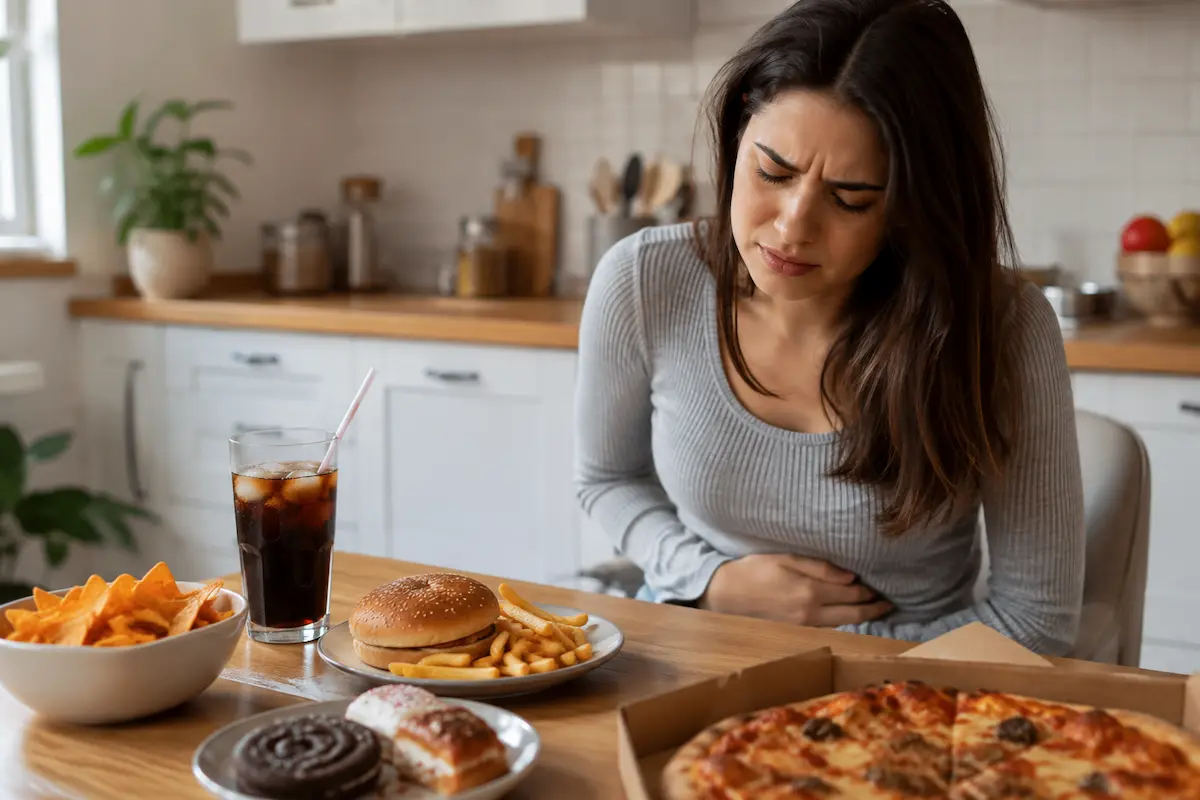
Period cramps are already uncomfortable. The last thing you want is to unknowingly make them worse with what you eat.
Some foods can contribute to inflammation, bloating, water retention, or digestive discomfort, which may make period pain feel more intense. You do not necessarily have to avoid these foods completely, but knowing which ones may be worth limiting during your period can make a noticeable difference in how you feel.
Here are the foods most likely to work against you when cramps are already bothering you.
Why Can Food Make Period Pain Feel Worse?
Period pain happens mainly because the uterus produces substances called prostaglandins. These substances help the uterus contract so it can shed its lining during menstruation. Higher prostaglandin activity is associated with stronger uterine contractions and more painful cramps.
Some foods contain compounds with anti-inflammatory properties that may support the body’s inflammatory balance and potentially help with period pain. On the other hand, diets high in certain processed foods may be associated with more inflammation and menstrual symptoms. However, research on individual foods is still limited.
That is why it is more useful to look at your overall eating pattern rather than blaming one particular food for painful periods.
What Foods Can Make Period Pain Worse?
Not every food affects everyone in the same way. But if you notice that your cramps, bloating, or discomfort tend to get worse after certain foods, your diet may be worth looking at.
1. Salty Foods
Eating a lot of sodium can increase bloating. In a 2019 study, people who consumed more sodium were more likely to report bloating.
During your period, you may already feel bloated or uncomfortable, so eating very salty foods may make that feeling more noticeable.
Common high-sodium foods include:
- Potato chips
- Packaged soups
- Instant noodles
- Salted nuts
- Processed meats
- Pickles
- Packaged snacks
- Fast food
You do not need to avoid salt completely. The bigger concern is regularly consuming large amounts of sodium, particularly if you notice that salty foods make your bloating worse. need to eliminate salt completely. The bigger issue is regularly eating very salty foods, especially when you are already feeling bloated during your period.
2. Cola Drinks
That can of cola may seem harmless, but drinking it regularly could be worth reconsidering if you struggle with painful periods.
In a study of 258 Spanish university students, researchers found that drinking cola was associated with a higher likelihood of dysmenorrhea (painful periods). However, because the study was observational, it could not prove that cola directly causes period pain.
This does not mean you need to completely avoid cola. But if you regularly experience painful periods, cutting back on frequent cola consumption may be worth considering.
3. Ultra-Processed Foods
Chips, instant noodles, frozen pizza, fast food, packaged pastries, and ready-to-eat meals can be convenient when you’re busy. But if they make up a large part of your diet, they may not be the most supportive choices during your period.
A study of 432 female university students found that higher ultra-processed food intake was associated with more PMS symptoms, including pain, fatigue, irritability, anxiety, appetite changes, and sleep problems. It was not associated with bloating.
You don’t have to cut these foods out completely. What matters more is how often you eat them and what the rest of your diet looks like.
4. Too Much Caffeine
Your morning coffee does not automatically mean your cramps will get worse. However, some research has found that higher caffeine intake is associated with a greater likelihood of painful periods.
Caffeine is found in coffee, tea, energy drinks, cola, chocolate, and some supplements. The study shows an association, not that caffeine directly causes period pain. If you notice that your symptoms are worse after consuming a lot of caffeine, cutting back may be worth trying.
5. Foods That Make You Bloated
Sometimes the problem is not that a particular food directly causes period pain. It is that the food makes your digestive symptoms worse.
Some people become more sensitive to bloating, gas, constipation, or diarrhea around their period.
If you know that certain foods regularly trigger digestive discomfort for you, eating large portions of them during your period may make abdominal discomfort harder to tolerate.
Your own pattern matters here. There is no universal list of foods that everyone needs to avoid.
What About Other Foods?
You may also hear that fried foods, processed foods, sugary foods, and foods high in saturated fat can increase inflammation and therefore worsen period pain. However, research directly linking these individual foods to dysmenorrhea is still limited.
Some studies have found associations between overall dietary patterns and menstrual pain, but this does not mean that eating one particular food will make your cramps worse.
Rather than completely avoiding these foods, focus on your overall eating pattern and pay attention to how your body responds.
What About Dairy?
Dairy does not need to be avoided simply because you are on your period.
For people with lactose intolerance, dairy products can cause bloating, gas, abdominal pain, or diarrhea. Others can eat dairy without experiencing these symptoms.
Research also doesn’t support telling everyone with period pain to eliminate dairy. In fact, One study found that female university students who consumed three or four servings of dairy daily had fewer dysmenorrhea symptoms than those who consumed no dairy. However, more research is needed.
If you consistently notice digestive symptoms after certain dairy products, pay attention to that pattern rather than assuming all dairy is a problem.
What About Chocolate?
Chocolate is a common period craving, and you don’t necessarily need to give it up. Dark chocolate may even help with period pain. A small study found that 70% dark chocolate was associated with reduced menstrual pain, although more research is needed.
Dark chocolate also contains magnesium and flavonoids, which may have potential benefits during your period.
If you enjoy chocolate, choosing dark chocolate and having a reasonable portion can be a simple option rather than avoiding it completely..
Should You Completely Avoid These Foods During Your Period?
Usually, no.
There is no need to create a long list of foods that you are afraid to eat every month.
Instead, look at how much you are eating and how your body responds.
If you notice that a very salty meal leaves you extremely bloated, or that several sugary foods make you feel sluggish, that is useful information.
You can reduce those foods without completely eliminating them.
A balanced diet is more sustainable than trying to eat perfectly for a few days every month.
What Should You Eat During Your Period?
Instead of focusing only on what to remove, think about what you can add.
Build your meals around foods such as:
- Vegetables and fruits
- Whole grains
- Beans and lentils
- Nuts and seeds
- Eggs, fish, or other protein sources
- Foods rich in iron
- Sources of calcium and magnesium
- Healthy fats such as those found in nuts, seeds, and olive oil
Drinking enough fluids can also help you feel better, particularly if you tend to experience bloating or constipation during your period.
The goal is not a special “period diet.” It is simply a balanced eating pattern that gives your body the nutrients and energy it needs.
Learn more: 15 Foods that help relive period pain
When Period Pain Is Not Normal
Food choices can influence how you feel, but severe period pain should not automatically be blamed on your diet.
Talk to a healthcare professional if your period pain:
- Is severe enough to interfere with school, work, or normal activities
- Is getting progressively worse
- Does not improve with usual pain-relief measures
- Causes you to regularly miss activities
- Comes with very heavy bleeding
- Occurs with pain between periods
- Causes pain during sex or bowel movements
Severe menstrual pain can sometimes be linked to conditions such as endometriosis, adenomyosis, or fibroids. Changing your diet alone will not treat these conditions.
Final Thoughts
There is no single food that causes period pain for everyone. Instead of completely banning foods, pay attention to your own patterns and focus on your overall diet.
And if period pain is severe every month or regularly disrupts your life, don’t assume you simply have to live with it. It deserves to be taken seriously.