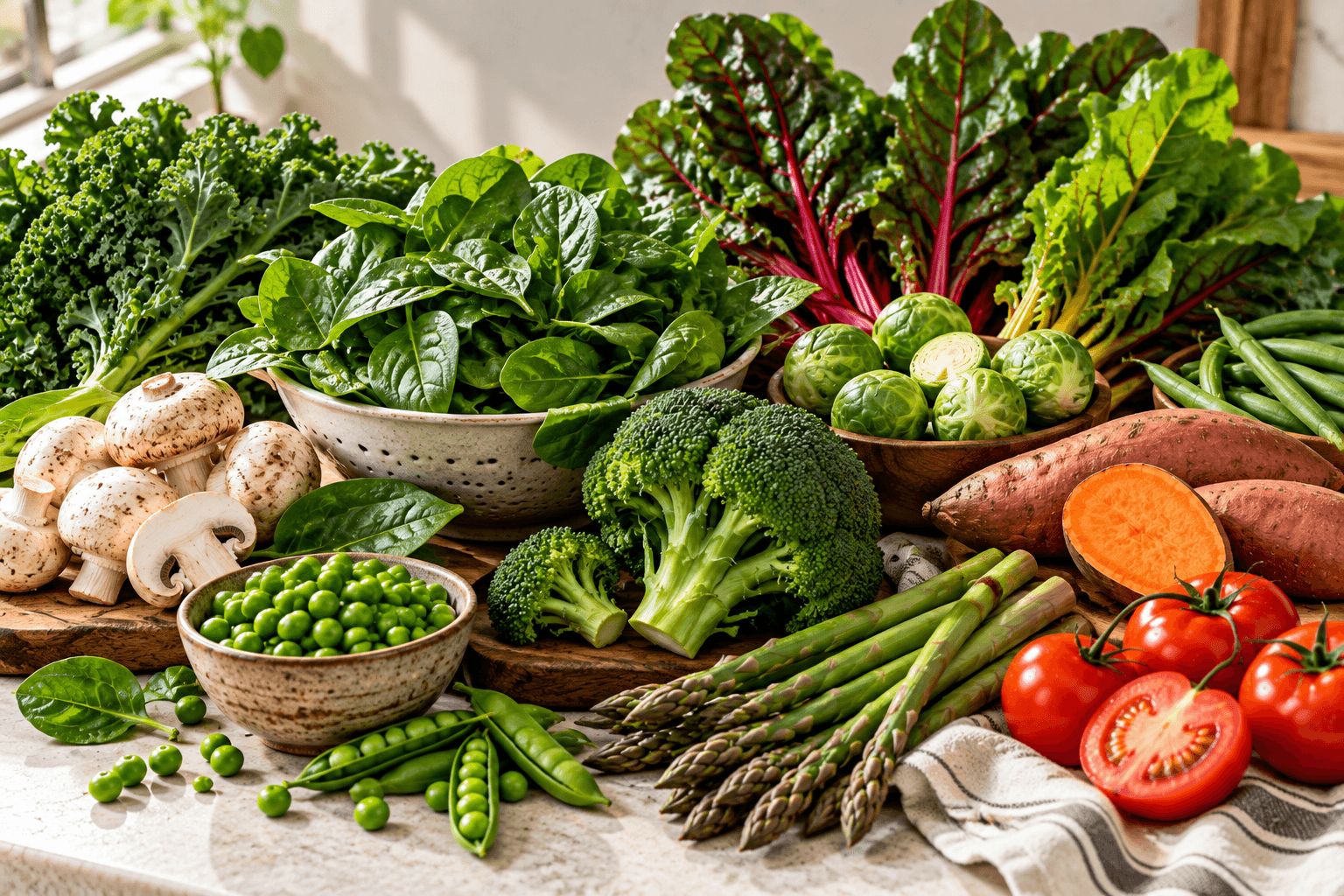
Feeling tired more often than usual? Iron may be one nutrient worth paying attention to—especially if your diet is mostly plant-based.
Iron helps your body make hemoglobin, the protein in red blood cells that carries oxygen throughout your body. While meat and seafood are well-known sources of iron, you can also get a meaningful amount from vegetables and other plant foods.
The key is knowing which vegetables contain iron and how to eat them in a way that helps your body absorb more of it.
How Much Iron Do You Need?
Your iron needs depend on your age, sex, life stage, and other factors.
For many adults, the recommended intake is around 8 mg per day for men and postmenopausal women, while premenopausal women generally need 18 mg per day.
Pregnancy increases iron requirements further.
Because individual needs can vary, someone with diagnosed iron deficiency may need more iron than can realistically be obtained through vegetables alone.
Vegetables Rich in Iron
Not all vegetables provide the same amount of iron, but several can make a meaningful contribution to your daily intake. Here are 13 vegetables worth adding to your diet, along with how much iron they provide.
1. Spinach
Spinach is one of the better-known plant sources of iron.
A cooked cup (180 g) of spinach delivers 6.4 mg of iron, supplying 36% of the Daily Value (DV).
Because spinach contains non-heme iron, pairing it with a source of vitamin C can help your body absorb more of it.
2. Swiss Chard
One cup (175 g) of cooked Swiss chard provides about 4 mg of iron, giving you 22% of your daily iron needs.
Swiss chard has another standout feature: it is particularly rich in vitamin K and also provides magnesium and potassium.
Its slightly earthy flavor works well in cooked dishes. You can sauté the leaves with garlic, add them to soups, or mix them into beans and lentils.
3. White Mushrooms
A cooked cup (156 g) of white mushrooms delivers 2.7 mg of iron, giving you 15% of the Daily Value.
Mushrooms also have a distinctive nutritional feature: white button mushrooms are a rich dietary source of ergothioneine, a betaine amino acid with antioxidant properties.
They are also one of the few vegetarian food sources of vitamin D, particularly when mushrooms are exposed to UV light.
Learn more: 7 Superfoods high in vitamin D
4. Beet Greens
Beet greens are often discarded, but the leafy tops can contribute a useful amount of iron.
Fill a cup (144 g) with cooked beet greens and you’ll get 2.7 mg of iron, or roughly 14% of the recommended Daily Value.
While beet greens are a good source of iron, beets are not. A beet (82 g) provides only 0.35 mg of iron, or 2% of the Daily Value. Its deep red color can make it seem iron-rich, but that color actually comes from betalains, plant compounds responsible for its characteristic color.
Beet greens are also packed with vitamin K and provide vitamin C, beta-carotene, potassium, and lutein and zeaxanthin.
5. Green Peas
Add a cup (160 g) of cooked green peas to your meal and you’ll get about 2.5 mg of iron, offering nearly 14% of your daily iron requirement.
Peas are unusual among vegetables because they provide a meaningful amount of both protein and fiber. A cooked cup supplies about 8.6 g of protein and nearly 9 g of fiber.
6. Broccoli
One cup (156 g) of cooked broccoli provides 1 mg of iron, or about 6% of the amount recommended each day.
But broccoli has another standout compound: glucoraphanin, which can be converted into sulforaphane when the vegetable’s cells are damaged. Sulforaphane has been studied for its ability to activate cellular defense pathways that help protect cells from oxidative stress.
Broccoli is also a good source of vitamin C, which can improve absorption of non-heme iron iron from the meal.
Pair broccoli with beans, lentils, tofu, or another plant-based iron source.
7. Brussels Sprouts
A cooked cup (156 g) of Brussels sprouts provides 1.9 mg of iron, which works out to 10% of the DV.
Like broccoli, Brussels sprouts are cruciferous vegetables and contain glucosinolates, sulfur-containing compounds that give these vegetables some of their characteristic flavor and aroma.
They also contain vitamin C, which can help support the absorption of non-heme iron eaten in the same meal.
8. Kale
A single cup (118 g) of cooked kale provides about 1 mg of iron, contributing 6% toward the Daily Value.
Kale also provides vitamin C and vitamin K, along with carotenoids such as lutein and zeaxanthin.
As a cruciferous vegetable, it also contains glucosinolates, naturally occurring compounds found in vegetables like broccoli and Brussels sprouts.
9. Green Beans
You’ll get 0.8 mg of iron from a cup (125 g) of cooked green beans. That’s approximately 5% of your daily iron needs, along with vitamin C and fiber.
Combine them with lentils, chickpeas, tofu, or other iron-rich foods rather than relying on green beans as your main source of iron.
10. Potato
One medium baked potato with the skin (173 g) provides about 1.9 mg of iron, giving you around 8% of the recommended daily amount.
Potatoes are also notable for their potassium content, and keeping the skin on adds fiber and other nutrients.
For a more iron-focused meal, top a baked potato with beans and vegetables or serve it alongside a lentil curry.
11. Sweet Potatoes
A medium baked sweet potato with the skin (114 g) provides about 0.8 mg of iron, putting roughly 4% of the Daily Value on your plate.
Its standout feature is beta-carotene, the orange pigment that the body can convert into vitamin A.
They aren’t exceptionally high in iron, but they can still fit into an iron-rich diet alongside foods such as beans, lentils, tofu, or seeds.
12. Asparagus
A cup (180 g) of cooked asparagus contains 1.6 mg of iron, accounting for roughly 9% of the Daily Value.
Asparagus also contains inulin-type fructans. These fibers are resistant to digestion and have prebiotic properties, meaning they can be utilized by certain beneficial gut microorganisms.
Learn more: 20 Foods rich in prebiotics
13. Tomatoes
One large raw tomato (182 g) provides about 0.5 mg of iron, contributing 3% of your daily iron needs.
What makes tomatoes particularly interesting is lycopene, the red carotenoid responsible for much of their color.
Cooking can make lycopene more available for absorption by breaking down the plant’s cellular structure.
How to Help Your Body Absorb More Iron From Vegetables
Getting enough iron is only part of the equation. Your body also needs to absorb it.
Here are a few simple ways to improve absorption:
Pair Plant-Based Iron with Vitamin C
Vitamin C can increase the absorption of non-heme iron.
Try combining iron-containing vegetables with:
- Bell peppers
- Tomatoes
- Broccoli
- Citrus fruits
- Kiwi
- Strawberries
- Guava
- Lemon or lime juice
Avoid Drinking Tea or Coffee with Iron-Rich Meals
Tea and coffee contain compounds called polyphenols that can reduce the absorption of non-heme iron when consumed with meals.
If you are trying to maximize iron absorption, consider drinking them between meals instead.
Include Other Plant-Based Iron Sources
Vegetables do not have to do all the work.
Beans, lentils, chickpeas, tofu, tempeh, nuts, seeds, and fortified foods can provide substantial amounts of plant-based iron.
Combining several sources throughout the day can make it easier to meet your needs.
Are Vegetables Enough to Prevent Iron Deficiency?
Vegetables can contribute to your iron intake, but they may not always be enough on their own.
People who eat little or no animal products, have heavy menstrual bleeding, are pregnant, donate blood frequently, or have certain digestive conditions may have higher iron needs or a greater risk of deficiency.
If you have symptoms such as persistent fatigue, weakness, dizziness, shortness of breath, or unusual cravings for non-food substances, talk with a healthcare professional rather than assuming you simply need more iron-rich foods.
A blood test can help determine whether you actually have iron deficiency.
The Bottom Line
There are plenty of vegetables that can contribute to your iron intake, especially leafy greens, peas, broccoli, and other nutrient-rich choices.
But don’t focus on one “best” vegetable. Variety matters. Combine plant-based iron sources with vitamin C-rich foods, include beans and lentils regularly, and avoid tea or coffee alongside iron-rich meals when you’re trying to maximize absorption.
With the right combinations, vegetables can be an important part of an iron-rich diet.