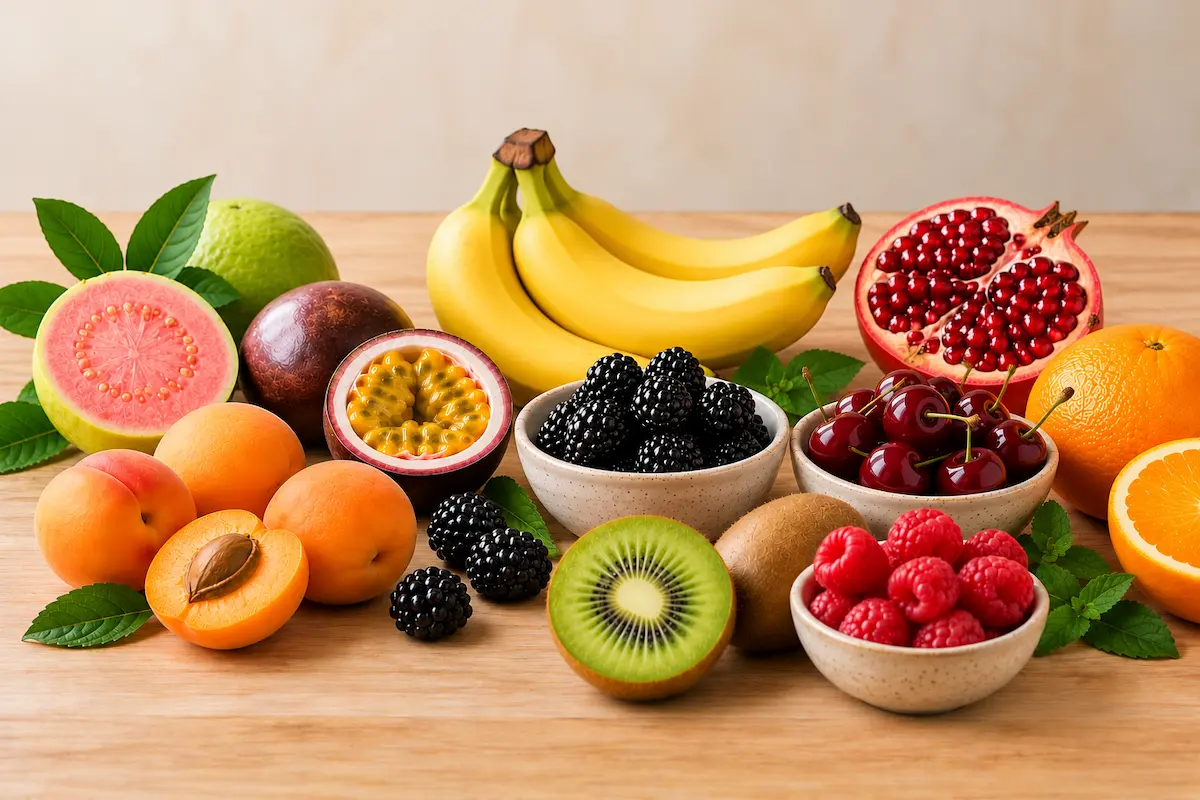
When you think of protein-rich foods, fruits probably aren’t the first thing that comes to mind. Eggs, lentils, yogurt, and beans usually get more attention. However, some fruits contain more protein than others and can contribute to your daily intake.
For general health, most adults need around 0.8 grams of protein per kilogram of body weight each day. If you exercise regularly, particularly to build or maintain muscle, your needs may be higher, with around 1.4–2.0 grams per kilogram daily suggested for active individuals.
Guava, jackfruit, avocados, and blackberries are a few fruits worth knowing about. Although they provide much less protein than foods such as legumes, dairy products, and meat, they also offer fiber, vitamins, minerals, and beneficial plant compounds.
This article explores 13 fruits to consider, how much protein they provide, and other nutritional benefits.
Which Fruits Have the Most Protein?
Although fruits aren’t major sources of protein, some offer more than others. Pairing them with protein-rich foods such as yogurt, nuts, or seeds can help you create a more balanced and satisfying snack.
1. Guava
Guava stands out among fresh fruits for its impressive combination of protein, fiber, and vitamin C. It also contains carotenoids and other plant compounds with antioxidant properties.
Vitamin C supports immune function and collagen formation, while fiber helps maintain healthy digestion.
Protein content: One cup of guava (165 g) provides 4.2 g of protein.
2. Passion Fruit
With its fragrant pulp and crunchy edible seeds, passion fruit offers more than a distinctive sweet-tart flavor. It supplies dietary fiber, vitamin C, and beneficial plant compounds, including carotenoids and polyphenols.
Its seeds contribute to its fiber content, making the fruit a useful addition to a varied diet.
Protein content: One-half cup of passion fruit pulp (118 g) gives you 2.6 g of protein, and an impressive 12 g of fiber.
Learn more: Top 20 fruits high in fiber
3. Avocado
Creamy and satisfying, avocado differs from most fruits because much of its nutritional value comes from healthy monounsaturated fats rather than carbohydrates.
It also provides fiber, potassium, and folate, which may contribute to heart health and normal muscle function.
Protein content: You can get about 3 g of protein from a cup of avocado cubes (150 g), alongside its better-known healthy fats and fiber.
4. Jackfruit
Jackfruit offers two distinct culinary experiences: ripe fruit with sweet, tropical flesh and unripe fruit with a firmer texture that works well in savory dishes.
It also contains vitamin C, potassium, and carotenoids, along with some fiber.
Protein content: A single cup of raw jackfruit pieces (165 g) supplies around 2.8 g of protein.
5. Pomegranate
Pomegranate’s jewel-like seeds, known as arils, offer a sweet-tart flavor and a pleasant crunch. They supply fiber and vitamin C, along with polyphenols such as anthocyanins, which have antioxidant properties.
Research in human and animal models suggests that pomegranate polyphenols may help reduce cholesterol buildup in artery cells and slow atherosclerosis development, although more clinical research is needed.
Protein content: One cup of pomegranate arils (174 g) contributes approximately 3.5 g of protein.
6. Blackberries
Dark, juicy blackberries are a nutritious addition to your diet, offering fiber, vitamin C, and vitamin K.
Their deep purple-black color comes from natural plant pigments called anthocyanins, while their fiber supports digestive health.
Protein content: A cup of fresh blackberries (144 g) offers around 2 g of protein.
7. Apricots
Fresh apricots offer delicate sweetness along with beta-carotene, which the body can convert into vitamin A.
Dried apricots offer more protein per gram than fresh ones because removing water concentrates their nutrients. However, they are also more calorie-dense and contain more natural sugars per serving (40 g).
Protein content: Three fresh apricots (105 g) contain approximately 1.5 g of protein.
8. Mulberries
Mulberries may be small, but they contribute vitamin C, fiber, and plant compounds such as anthocyanins.
Depending on the variety, they also supply iron and other micronutrients, adding to their nutritional value.
Protein content: One cup of fresh mulberries (140 g) delivers roughly 2 g of protein.
Read more: 8 Fruits packed with iron
9. Raspberries
Raspberries are especially notable for their high fiber content relative to their calories. They also supply vitamin C, manganese, and ellagitannins, plant compounds being studied for their biological effects.
In a small study involving 10 healthy men, eating 200 or 400 g of red raspberries improved blood vessel function for up to 24 hours. Researchers linked this improvement to compounds produced when the body breaks down ellagitannins.
Protein content: A cup of raspberries (123 g) contributes 1.5 g of protein.
10. Kiwi
Bright green kiwi fruit offers plenty of vitamin C, along with vitamin K, fiber, and potassium.
It also contains actinidin, an enzyme that may help break down certain dietary proteins and support digestion, although individual responses can vary.
Protein content: Two medium kiwis (150 g) provide around 1.6 g of protein.
Also read: 15 Foods that may help support digestion
11. Bananas
Bananas are better known for their carbohydrates and potassium than for their protein. Their carbohydrates provide energy, while potassium helps maintain normal muscle function and fluid balance.
Less-ripe bananas also contain more resistant starch, which can act as a type of fermentable fiber.
Protein content: A single cup of sliced banana (150 g) supplies approximately 1.6 g of protein.
12. Cherries
Sweet cherries provide vitamin C, potassium, and colorful plant compounds, including anthocyanins.
Choosing whole cherries instead of sweetened cherry drinks also helps you avoid unnecessary added sugar.
Protein content: One cup of pitted sweet cherries (154 g) provides around 1.6 g of protein.
13. Oranges
Oranges are widely recognized for their vitamin C, but they also provide folate, potassium, and fiber.
Vitamin C supports collagen production and helps the body absorb iron from plant foods, making oranges a useful addition to meals containing beans, lentils, or leafy greens.
Protein content: One medium orange (154 g) gives you 1.4 g of protein.
Final Take
Fruits such as guava, tamarind, passion fruit, avocado, and jackfruit provide more protein than many other common fruits. They also supply fiber, vitamins, minerals, and beneficial plant compounds that support overall health.
However, even the more protein-rich fruits provide relatively small amounts compared with foods such as beans, lentils, eggs, yogurt, and tofu. Enjoy fruit as part of a varied diet, and pair it with protein-rich foods when you want a more filling snack or meal.