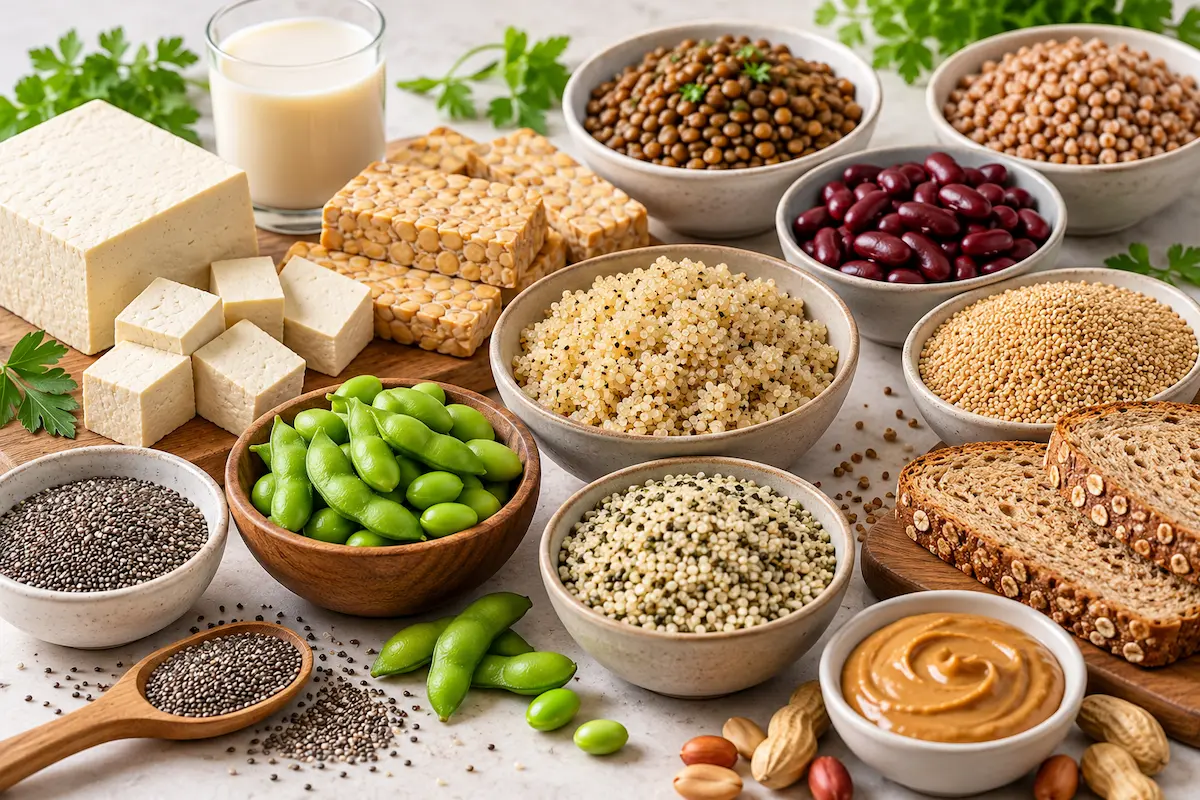
Think you need eggs, dairy, or meat to get all the essential amino acids your body needs? Think again. Several plant-based foods provide complete protein, making them excellent options for a vegan diet.
From tofu and tempeh to quinoa and hemp seeds, these foods can help you meet your protein needs while enjoying a varied plant-based diet.
In this article, you’ll find 10 vegan complete protein sources, their protein content, and simple ways to add them to your meals.
What Is a Complete Protein?
Protein is made up of amino acids that your body uses to build and repair tissues, produce enzymes and hormones, and support other essential functions.
Of the 20 amino acids your body uses, nine are essential because your body cannot make enough of them on its own. These are
- histidine
- isoleucine
- leucine
- lysine
- methionine
- phenylalanine
- threonine
- tryptophan
- valine
You must obtain them through food.
A complete protein provides all nine essential amino acids in sufficient amounts. Although many animal foods are complete proteins, several plant foods also meet this definition.
Complete Protein Sources for Vegans and Vegetarians
You don’t need to rely on animal products to get all nine essential amino acids. Several plant foods provide complete protein, making them valuable additions to a balanced vegan or vegetarian diet.
1. Soy Foods
Soy foods are some of the most versatile complete protein sources in a vegan diet. Tofu, tempeh, edamame, and soy milk contain all nine essential amino acids, making them easy additions to everyday meals.
Tofu is made from soybeans and has a mild flavor that works well in stir-fries, curries, soups, salads, and grain bowls. Depending on its firmness, preparation, and water content, it contains 9–18 g of protein per 100 g.
Tempeh is a fermented soybean product with a firm texture and slightly nutty flavor. With around 20 g of protein per 100 g, it is a protein-rich choice for plant-based meals.
Edamame, or young soybeans, delivers about 19 g of protein per cup (160 g) when cooked. It also contains iron, fiber and folate. Enjoy it as a snack or toss shelled edamame into fried rice, noodle bowls, salads, and soups.
Soy milk is a convenient way to add plant-based protein to breakfast and snacks. One cup (240 ml) typically contains 8.5 g of protein, although the amount varies by brand. Pour it over cereal, stir it into oatmeal, or blend it into a smoothie. Unsweetened, calcium-fortified varieties are a useful everyday option.
Exact amounts vary by product and preparation, so check nutrition labels for the most accurate figures. and help meet your calcium needs.
2. Quinoa
Quinoa is a pseudocereal commonly used as a grain. Unlike many other grains, it contains all nine essential amino acids, making it a complete protein source.
One cup (185 g) of cooked quinoa provides around 8 g of protein, along with fiber, magnesium, folate, and other essential nutrients.
Quinoa is naturally gluten-free, making it a useful alternative to wheat, barley, and other gluten-containing grains for people who need to avoid gluten.
Use it instead of rice, toss it into salads, or pair it with roasted vegetables and beans for a satisfying vegan meal.
3. Buckwheat
Despite its name, buckwheat is not a type of wheat. It is a gluten-free seed that is often used like a grain. Buckwheat provides all nine essential amino acids and is a useful alternative to wheat-based foods for people who want more variety in their diets.
One cup (168 g) of cooked buckwheat gives you about 5.7 g of protein. It is also a good source of magnesium, iron, phosphorus, and manganese, as well as folate, a B vitamin that supports DNA synthesis and cell division.
Cooked buckwheat can be served as a side dish, added to grain bowls, or used in porridge. Buckwheat flour is also suitable for making pancakes, noodles, and other baked or cooked foods.
4. Amaranth
Amaranth is a pseudocereal that has been eaten for centuries in parts of the Americas and is also used in Indian cuisine.
It provides protein, fiber, and minerals such as iron, manganese, and magnesium. Its amino acid profile makes it another useful complete protein source for vegans.
A single cup (246 g) of cooked amaranth provides approximately 9.4 g of protein, along with other nutrients that support a balanced diet.
Amaranth is naturally gluten-free and easy to incorporate into everyday meals. Cook it into a warm porridge, add it to soups, or serve it as a grain-like side dish. You can also use popped amaranth in homemade snack bars or sprinkle it over breakfast bowls for extra texture.
5. Hemp Seeds
Hemp seeds, also called hemp hearts when hulled, are a complete protein source that also provides unsaturated fats, including the omega-3 fatty acid alpha-linolenic acid (ALA). Their mild, nutty flavor makes them an easy addition to everyday meals.
Three tablespoons (30 g) of hemp seeds provide about 9.5 g of protein, making them a convenient way to boost the protein content of your meals.
Sprinkle hemp seeds over oatmeal, salads, smoothies, or roasted vegetables. You can also mix them into homemade energy balls for an extra nutritional boost.
6. Chia Seeds
Chia seeds are best known for their fiber content and ability to absorb liquid, but they also provide protein and healthy fats, including the omega-3 fatty acid alpha-linolenic acid (ALA). They contain all nine essential amino acids, although their protein content per serving is relatively modest.
One ounce (28 g) of chia seeds provides 4–5 g of protein, along with fiber and healthy fats.
Add chia seeds to smoothies, oatmeal, or plant-based yogurt. You can also make chia seed water, prepare chia pudding, or use them as an egg substitute in baking.
Although chia seeds are not a major protein source in typical serving sizes, they are a nutritious addition to a balanced vegan diet.
7. Nutritional Yeast
Nutritional yeast is an inactive yeast sold as yellow flakes or powder. It has a savory, slightly cheesy flavor that makes it popular in vegan cooking. Certain varieties provide all nine essential amino acids and can contribute a useful amount of protein in a small serving.
Two tablespoons of nutritional yeast provide around 3–5 g of protein, depending on the brand and serving weight.
Sprinkle nutritional yeast over popcorn, pasta, roasted vegetables, soups, or tofu scrambles.
Check the nutrition label because protein content and added nutrients, particularly vitamin B12, vary by product. Fortified nutritional yeast can be useful in a vegan diet, but not every variety contains vitamin B12.
Learn more: 8 Vegetarian foods high in vitamin B12
8. Spirulina
Spirulina is a type of blue-green cyanobacteria commonly sold as a powder or dietary supplement. It contains all nine essential amino acids, making it a complete protein source by amino acid composition.
However, because spirulina is usually consumed in small amounts, it shouldn’t be your main source of daily protein.
Just one tablespoon (7 g) provides 4 g of protein, along with nutrients such as thiamin, riboflavin, niacin, copper, and iron.
You can blend spirulina powder into smoothies with fruit and plant-based milk. Its strong, earthy flavor may take some getting used to, so start with a small amount if you’re trying it for the first time.
Choose products from reputable manufacturers that test for contaminants, as the quality of spirulina supplements can vary.
9. Ezekiel-Style Sprouted Grain Bread
Ezekiel-style sprouted grain bread is made from a combination of grains and legumes, such as wheat, barley, millet, lentils, and soybeans. Together, these ingredients can provide all nine essential amino acids, making some varieties a source of complete protein.
This bread works well for sandwiches, toast, or quick meals topped with hummus, avocado, or tofu. Depending on the ingredients, it can also provide carbohydrates and fiber.
One slice (40 g) typically provides around 6 g of protein, although the amount varies by brand.
Keep in mind that not all sprouted grain breads are complete protein sources or vegan. Check the ingredient list to confirm the protein sources and ensure the product contains no animal-derived ingredients.
10. Rice and Beans
Rice and beans make a nutritious combination found in many cuisines around the world.
Rice provides carbohydrates and some protein, while beans contribute protein and lysine, an essential amino acid that rice contains in smaller amounts. Rice also provides relatively more methionine than beans, which tend to be lower in this sulfur-containing amino acid. Together, rice and beans help provide a more balanced mix of essential amino acids.
One cup (146 g) of rice and beans provides about 6.8 g of protein, along with fiber and a complementary mix of essential amino acids.
You don’t have to eat them at the same meal, as a varied diet throughout the day can supply the amino acids your body needs.
11. Wheat and Peanut Butter
Whole-wheat bread with peanut butter makes a convenient vegan snack or light meal.
Wheat is relatively low in lysine, an essential amino acid, while peanuts provide more lysine. Although neither food is considered a complete protein source on its own, combining them can improve the overall amino acid profile and help provide all nine essential amino acids.
Two slices (64 g) of whole-wheat bread provide approximately 8 g of protein, while two tablespoons (32 g) of peanut butter add around 7.1 g. This combination provides about 15 g of protein, although the exact amount varies by brand.
How to Get Enough Complete Protein on a Vegan Diet
Including complete protein sources in your meals can help you meet your nutritional needs, but you do not have to eat a complete protein at every meal.
Your body uses amino acids from the foods you eat throughout the day. Eating a variety of plant-based protein sources, including beans, lentils, whole grains, nuts, seeds, and soy products, can help you obtain all nine essential amino acids. You do not need to combine specific foods at every meal.
Here are a few simple ways to include more protein in your daily diet:
- Include soy foods regularly. Tofu, tempeh, edamame, and soy milk are practical sources of complete protein.
- Choose protein-rich grains and seeds. Quinoa, buckwheat, hemp seeds, and amaranth add variety to meals.
- Combine different plant foods. Meals such as rice with lentils or whole-wheat bread with hummus provide complementary amino acid profiles.
- Pay attention to total protein intake. Even a complete protein food may not provide enough protein on its own if you eat only a small portion.
- Eat a varied diet. Different plant foods provide other important nutrients, including iron, zinc, calcium, and fiber.
Final Thoughts
You do not need animal products to obtain all nine essential amino acids. Vegan foods such as tofu, tempeh, edamame, quinoa, buckwheat, and hemp seeds can help you meet your protein needs while adding variety to your diet.
Focus on including protein-rich foods regularly, eating a range of plant foods, and choosing portions that meet your individual needs. With a little planning, a vegan diet can provide the protein and essential amino acids your body needs.