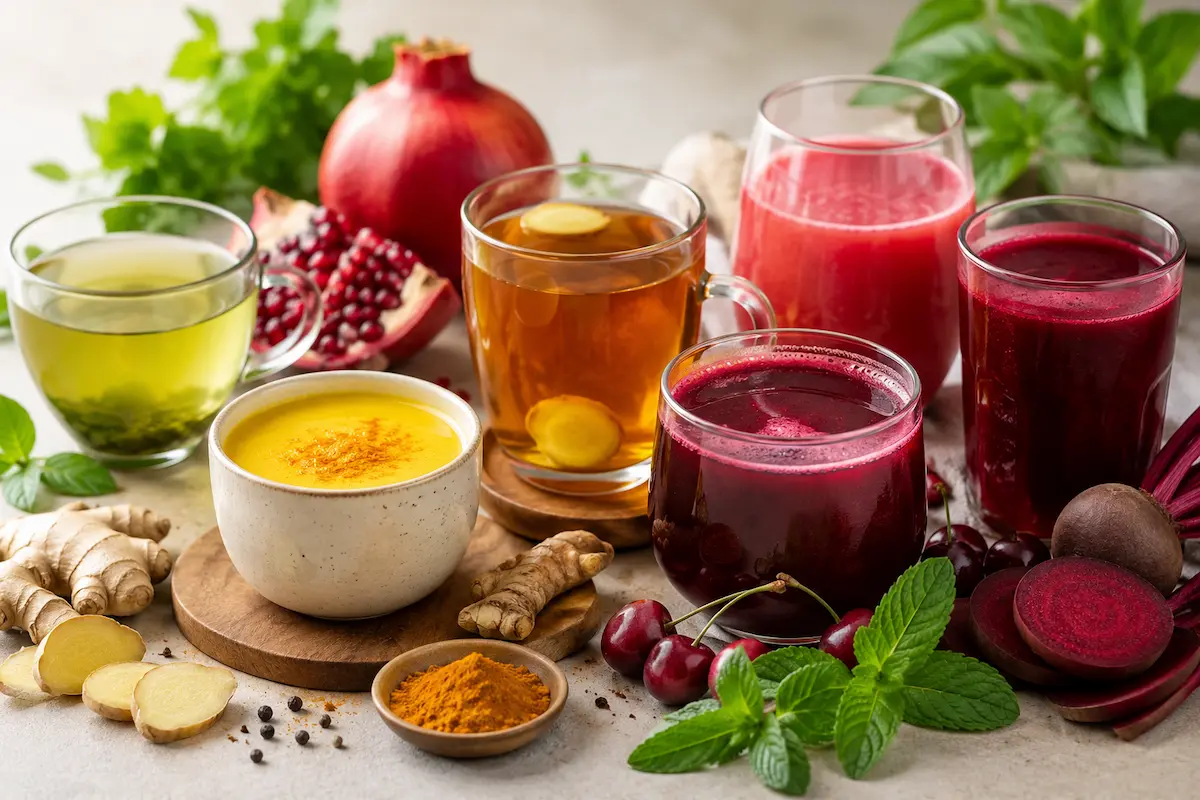
If you’ve ever searched online for ways to fight inflammation, you’ve probably come across drinks that promise to detox your body, flush out toxins, or reduce inflammation overnight.
From turmeric lattes to ginger shots and green juices, it’s easy to wonder which claims are backed by science and which are simply clever marketing.
The truth is, no single drink can eliminate chronic inflammation. However, some beverages contain naturally occurring compounds that may help support your body’s inflammatory response when they’re part of an overall healthy lifestyle.
In this article, you’ll discover the best research-backed anti-inflammatory drinks, what makes them beneficial, and simple ways to enjoy them as part of a balanced diet.
Can Drinks Really Reduce Inflammation?
No drink can cure chronic inflammation on its own. However, beverages rich in compounds such as polyphenols, flavonoids, catechins, anthocyanins, vitamin C, carotenoids, and nitrates have been studied for their anti-inflammatory properties.
Just as importantly, replacing sugar-sweetened beverages with more nutritious options can improve your overall diet. Think of these drinks as one part of an anti-inflammatory lifestyle—not a quick fix.
What Can I Drink to Reduce Inflammation?
These beverages contain naturally occurring compounds that may help support your body’s inflammatory response.
1. Green Tea
Few beverages have been studied as extensively as green tea when it comes to inflammation and overall health.
Green tea is naturally rich in catechins, particularly epigallocatechin gallate (EGCG), a powerful antioxidant that has attracted significant scientific interest. These plant compounds help protect cells from oxidative stress, which is closely linked to chronic inflammation and many long-term diseases.
In fact, a meta-analysis of 38 clinical trials found that green tea improved the body’s antioxidant defenses and lowered one inflammatory marker (IL-1β). While it had little effect on several other inflammation markers, the findings suggest green tea may still support a healthy inflammatory response, especially by reducing oxidative stress.
Green tea has also been linked to benefits for heart health, brain function, and metabolic health. Since it contains less caffeine than coffee, it can be a good choice for many people who are sensitive to higher caffeine intakes.
2. Turmeric Tea (Golden Milk)
Turmeric has been used for centuries in traditional cooking and medicine.
Its bright golden color comes from curcumin, the primary active compound responsible for many of turmeric’s health benefits. Laboratory and clinical studies suggest that curcumin may help influence several inflammatory pathways in the body.
A review of 10 meta-analyses involving nearly 5,900 participants showed that curcumin supplements significantly lowered key inflammatory markers, including C-reactive protein (CRP), IL-6, and TNF-α, highlighting its potential to support a healthy inflammatory response.
It’s worth noting, however, that most of this research has been conducted using concentrated curcumin supplements rather than turmeric powder, which contains only about 3–8% curcumin by weight, and curcumin is also absorbed poorly by the body.
That’s why turmeric is often paired with black pepper, which contains piperine—a natural compound that can significantly improve curcumin absorption.
3. Ginger Tea
Ginger has long been valued for soothing digestive discomfort, but its benefits extend beyond settling an upset stomach.
Fresh ginger contains bioactive compounds called gingerols and shogaols, which have demonstrated anti-inflammatory and antioxidant activity in numerous laboratory and human studies.
A 2020 review found that ginger supplements significantly lowered key inflammatory markers, including CRP, hs-CRP, and TNF-α. However, they showed no consistent effect on IL-6, highlighting the need for more high-quality research.
4. Tart Cherry Juice
Tart cherry juice has gained popularity among athletes, but its potential benefits extend beyond exercise recovery.
Tart cherries are naturally rich in anthocyanins, the pigments responsible for their deep red color. These compounds possess antioxidant and anti-inflammatory properties that have been studied for their effects on muscle recovery, joint health, and inflammation.
A 2022 review suggests that tart cherry significantly lowered CRP, a common marker of inflammation. However, it showed no significant effects on IL-6 or TNF-α, indicating that its anti-inflammatory benefits may be limited to certain inflammatory markers.
5. Pomegranate Juice
Pomegranate juice delivers an impressive concentration of polyphenols, making it one of the most antioxidant-rich fruit juices available.
Its unique compounds, including punicalagins and anthocyanins, have been studied for their ability to help reduce oxidative stress and support cardiovascular health.
Research on pomegranate products suggests they may help lower inflammatory markers such as hs-CRP, IL-6, and TNF-α.
However, studies looking specifically at pomegranate juice have shown less consistent results, with some finding no significant reduction in CRP.
6. Beetroot Juice
The deep crimson color of beetroot juice isn’t just eye-catching—it reflects its rich supply of beneficial plant compounds.
Beets are especially known for their naturally occurring dietary nitrates, which the body converts into nitric oxide. Nitric oxide helps relax blood vessels, improving circulation and supporting healthy blood pressure.
Beetroot also contains betalains, the natural pigments responsible for its vibrant red color. A review of laboratory, animal, and human studies found that these compounds show promising anti-inflammatory activity.
However, research specifically on beetroot juice and inflammation is still limited, and more human studies are needed to confirm these effects.
7. Matcha
If you enjoy green tea, matcha takes it one step further.
Unlike traditional green tea, where the leaves are steeped in hot water and then removed, matcha is made by whisking finely ground green tea leaves directly into water or milk. Because you consume the entire leaf, matcha provides a more concentrated source of many of the tea’s naturally occurring nutrients and antioxidants.
Like green tea, matcha is rich in catechins, particularly epigallocatechin gallate (EGCG), as well as caffeine and L-theanine.
Research suggests that these naturally occurring compounds may help support metabolic health while reducing inflammation and oxidative stress. However, more high-quality human studies are needed to confirm these benefits.
Because matcha contains more caffeine than regular green tea, people who are sensitive to caffeine, pregnant or breastfeeding, or advised to limit their caffeine intake may want to enjoy it in moderation or consult their healthcare provider.
8. Hibiscus Tea
With its vibrant ruby-red color and naturally tart flavor, hibiscus tea is more than just a refreshing herbal drink—it also contains a variety of antioxidants that may help combat oxidative stress and support heart health.
Hibiscus is rich in anthocyanins and other polyphenols, plant compounds known for their antioxidant activity.
A review of 27 studies, including a meta-analysis of 22 studies, found that hibiscus may help lower several inflammatory markers, including TNF-α and IL-6.
However, most research has examined hibiscus extracts and other preparations rather than brewed tea alone, more high-quality human studies are needed to confirm these benefits.
9. Berry Smoothies
Berries are among the richest dietary sources of antioxidants, making a homemade berry smoothie one of the simplest ways to increase your intake of inflammation-fighting plant compounds.
Blueberries, strawberries, raspberries, and blackberries are packed with anthocyanins, flavonoids, vitamin C, and fiber.
In fact, a 2021 review found that anthocyanin-rich berries helped lower CRP. Higher berry intake was also associated with a lower risk of heart disease, possibly by improving cholesterol levels and reducing inflammation.
Unlike fruit juice, a smoothie made with whole berries retains the fruit’s natural fiber. Fiber supports gut health and helps slow the absorption of naturally occurring sugars, making smoothies generally more satisfying than juice alone.
10. Unsweetened Cocoa
Natural cocoa powder contains flavanols, antioxidant compounds that have been extensively studied for their potential cardiovascular and anti-inflammatory benefits.
Unlike heavily sweetened hot chocolate mixes, pure cocoa powder provides these beneficial compounds without large amounts of added sugar.
A 2016 review showed that cocoa flavanols significantly lowered CRP, a common marker of inflammation, while improving insulin sensitivity and cholesterol levels.
However, researchers note that larger long-term studies are still needed to confirm these benefits.
Drinks That May Increase Inflammation
Just as some beverages can support a healthy dietary pattern, others may contribute to inflammation when consumed regularly in large amounts.
For example, a review looking at 64 trials found that diets containing sugar-sweetened beverages were associated with higher levels of CRP, suggesting that regularly choosing these drinks may not support long-term health.
Consider limiting:
- Sugar-sweetened soft drinks
- Energy drinks with large amounts of added sugar
- Sweetened fruit beverages
- Excessive alcohol
- Highly sweetened coffee drinks
- Milkshakes and dessert beverages
These drinks often provide significant amounts of added sugar and calories while offering little nutritional value. and calories with very little nutritional value.
Explore: 6 Foods that may increase inflammation
Tips to Get the Most Anti-Inflammatory Benefits
No single beverage can eliminate chronic inflammation. The greatest benefits come from your overall lifestyle and eating pattern.
To maximize the potential benefits of anti-inflammatory drinks:
- Choose unsweetened versions whenever possible.
- Drink a variety of antioxidant-rich beverages rather than relying on just one.
- Eat anti-inflammatory foods, such as fruits, vegetables, legumes, whole grains, nuts, and seeds.
- Include healthy fats from foods like olive oil, avocados, and fatty fish.
- Stay physically active.
- Prioritize quality sleep.
- Manage chronic stress.
- Avoid smoking and limit alcohol.
Consistency matters far more than searching for a single “super drink.”
Conclusion
Anti-inflammatory drinks can be a healthy addition to your diet, but they’re most effective when combined with an overall healthy lifestyle.
Beverages like green tea, turmeric tea, ginger tea, and berry smoothies provide beneficial plant compounds, but no single drink can prevent or cure chronic inflammation.
Instead of relying on a “super drink,” focus on consistently choosing nutrient-rich beverages, eating a balanced diet, staying active, getting enough sleep, and managing stress.
These everyday habits have the greatest impact on supporting your body’s natural inflammatory response.