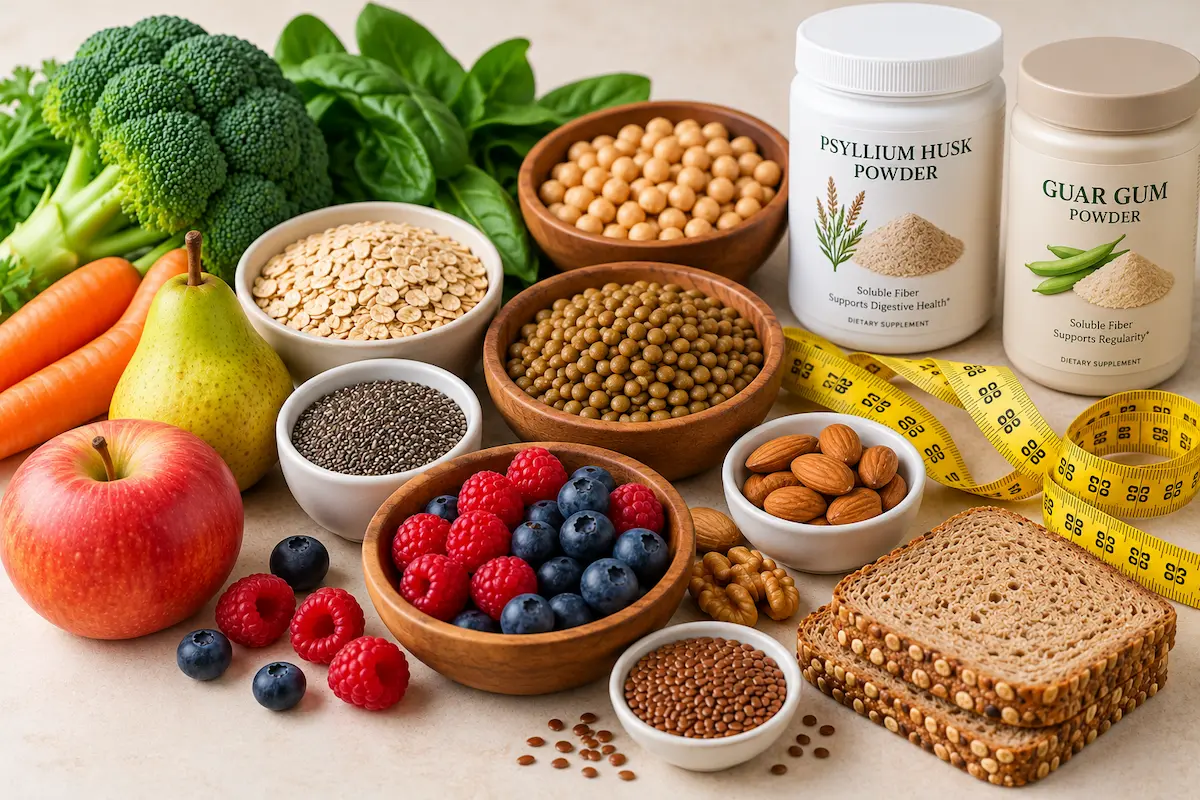
What if one of the simplest ways to make a weight-loss diet easier was not eating less, but choosing foods that keep you satisfied for longer?
That is one reason fiber gets so much attention when it comes to weight management. Fiber does not magically burn fat or cause weight loss on its own. Instead, it can affect hunger, digestion, blood sugar, and the overall quality of your diet in ways that may make maintaining a calorie deficit easier.
Here is how fiber can support healthy weight loss—and where its benefits have limits.
What Is Fiber?
Fiber is a type of carbohydrate found naturally in plant foods that your body cannot fully digest. Although it isn’t broken down like other carbohydrates, it still plays an important role in your digestive health.
As it moves through your digestive system, fiber helps support regular bowel movements, influences how quickly your body absorbs certain nutrients, and provides fuel for beneficial gut bacteria.
There are two main types of dietary fiber:
Soluble fiber dissolves in water and forms a gel-like substance in the digestive tract. Depending on the type, it can slow digestion and may help you feel full for longer.
Insoluble fiber does not dissolve in water. It adds bulk to stool and helps support regular bowel movements.
Many plant foods contain both types, so you don’t need to worry about separating them in your diet. The simpler approach is to eat a variety of vegetables, fruits, beans, lentils, whole grains, nuts, and seeds.
Does Fiber Actually Help You Lose Weight?
It can, but the effect is more subtle than many headlines suggest.
Fiber does not directly burn body fat. Instead, it can make weight loss easier by increasing fullness, improving the quality and volume of meals, and helping you replace lower-fiber foods with more nutritious options.
Research on dietary fiber and body weight generally supports a modest benefit, but results differ depending on the type of fiber, amount consumed, and the person’s overall eating pattern.
A 16-week study of 4,477 participants found that those who lost weight shed an average of 3.28 kg while following a plant-focused eating program. Greater intake of fruits, vegetables, beans, and other fiber-rich foods was also associated with greater weight loss, although fiber alone cannot be credited for these results.
This is why simply taking a fiber supplement while changing nothing else is unlikely to produce dramatic weight loss.
How Fiber Helps With Weight Loss
Fiber may support weight management in two main ways: by helping you feel satisfied after meals and by influencing gut health. Here’s what the research says about each.
Helps You Feel Full and Eat Less
One of the most useful ways fiber may support weight loss is by making meals more filling and satisfying.
High-fiber foods tend to add volume to meals without contributing a large number of calories. Some types of fiber also absorb water or slow digestion, which may help you feel satisfied for longer after eating.
This can make it easier to manage your overall calorie intake without constantly feeling like you need to eat less.
For example, replacing some refined grains with whole grains or adding beans and lentils to a meal can increase its fiber content while providing additional nutrients. These changes may also help make meals more satisfying.
Research supports this potential benefit, although the effects vary. A 2011 review noted that viscous fibers, such as pectin, beta-glucan, and guar gum, reduced appetite and short-term food intake more often than less-viscous fibers. However, their overall effects on energy intake and body weight were relatively small.
Similarly, a review of 44 publications found that only 39% of the fiber treatments significantly reduced perceived appetite, while 22% reduced food intake. Beta-glucan, lupin fiber, rye bran, whole-grain rye, and mixed high-fiber diets showed benefits in multiple studies, but most fiber treatments did not significantly reduce appetite or food intake.
Fiber does not directly burn fat, and eating more of it does not guarantee weight loss. However, including a variety of fiber-rich foods in balanced meals may help you feel satisfied and make a calorie-controlled eating pattern easier to maintain.
It May Support a Healthier Gut Microbiome
Some types of fiber are fermented by bacteria in your large intestine, producing short-chain fatty acids (SCFAs) such as acetate, propionate, and butyrate. These compounds support gut health and may influence metabolism and appetite.
However, a review of 44 studies found that fiber’s effects on gut bacteria and SCFA production varied by fiber type, structure, and dose. SCFA levels did not consistently increase in healthy adults.
Researchers are still exploring how interactions between fiber and gut bacteria may influence metabolism and body weight.
Eating a variety of plant foods provides different types of fiber to support gut bacteria, but these changes do not automatically lead to weight loss.
Learn more: 18 high-fiber foods that may help with weight loss
How Much Fiber Should You Eat for Weight Loss?
There is no special “weight-loss dose” of fiber.
For many adults, general recommendations fall around 25 to 38 grams of fiber per day, depending on age and sex.
Rather than trying to hit a large number immediately, gradually build your intake through whole foods.
Can Fiber Supplements Help With Weight Loss?
Fiber supplements may help in some situations, but their effects on body weight are inconsistent.
A review of 17 clinical trials found that fiber supplements had varying effects on weight loss. Some types modestly reduced body weight and energy intake, but overall benefits were limited. Results depended on fiber type, and further research is needed.
Whole foods remain a good first choice because they provide fiber alongside vitamins, minerals, and other beneficial nutrients. If you struggle to meet your fiber needs through food, a supplement may be worth discussing with a healthcare professional.
More is not necessarily better. Increase your fiber intake gradually and drink enough fluids to help reduce gas, bloating, and other digestive discomfort.
Final Thoughts
Fiber can support weight loss by helping you feel fuller, supporting digestion, and making balanced meals more satisfying. However, it doesn’t burn fat or guarantee weight loss.
Focus on getting fiber from vegetables, fruits, beans, lentils, whole grains, nuts, and seeds as part of a balanced diet. Gradually increase your intake and drink enough water.
The goal is to use fiber to support sustainable eating habits, not treat it as a quick fix for weight loss.