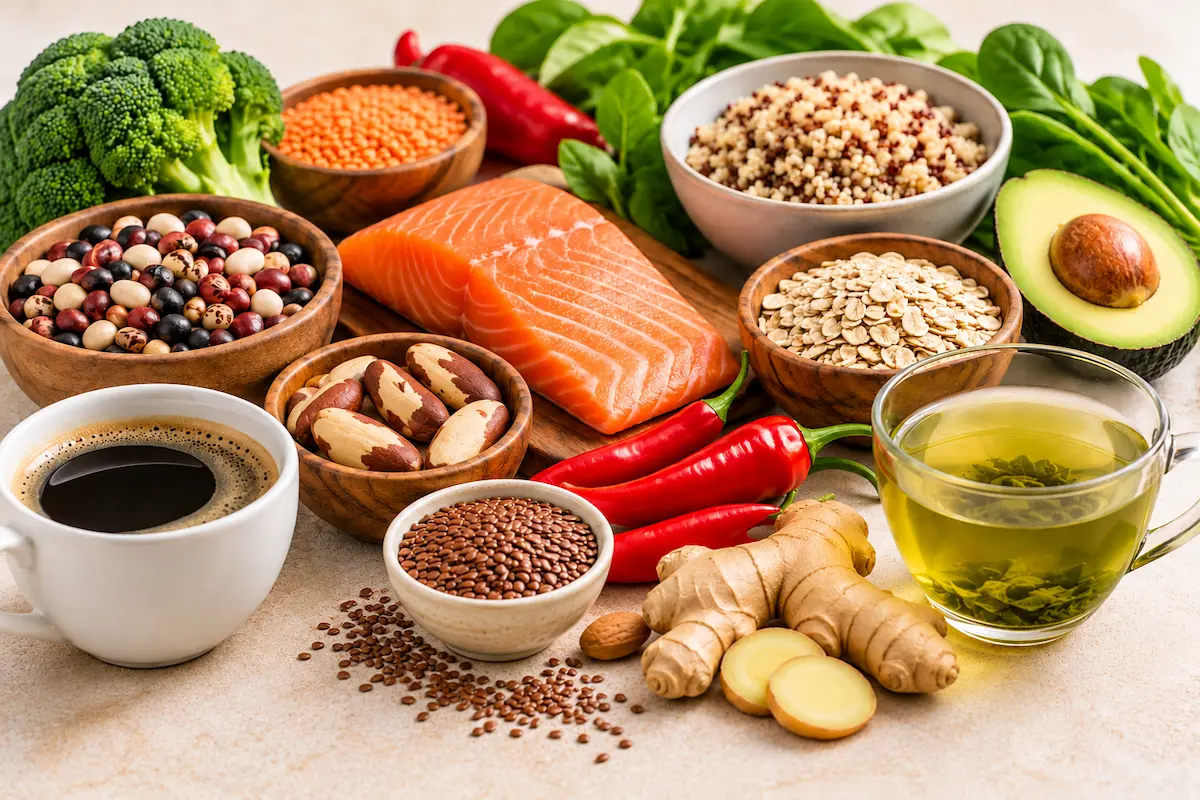
Your metabolism is working every minute of the day—even while you sleep. It keeps your heart beating, your body warm, your brain functioning, and your cells supplied with energy.
But can certain foods actually speed it up?
Some foods can have a small, temporary effect on energy expenditure, while others support metabolism by providing protein, fiber, essential nutrients, and compounds involved in normal metabolic function.
The key is knowing the difference between a temporary metabolic effect and a food that supports a healthy metabolism over time.
What Is Metabolism?
Metabolism refers to the collection of chemical processes your body uses to keep you alive and functioning.
Your body constantly uses energy to:
- Keep your heart and lungs working
- Maintain body temperature
- Digest and process food
- Move your muscles
- Support brain function
- Repair and build tissues
Your basal metabolic rate (BMR) is the amount of energy your body uses at rest to maintain essential functions. Your total daily energy expenditure is higher because it also includes physical activity and the energy used to digest food.
Many factors affect metabolism, including age, body size, muscle mass, hormones, genetics, physical activity, sleep, and overall diet.
No single food can override all of these factors.
Foods That May Support a Healthy Metabolism
Here are foods worth including in a balanced diet if you want to support the way your body uses energy.
1. Protein-Rich Foods
If there is one food group worth prioritizing for metabolism, it is protein-rich foods. Your body uses energy to digest, absorb and process every meal, but it requires more energy to process protein than carbohydrates or fats. This is known as the thermic effect of food.
A 2024 review showed that higher-protein meals increased energy expenditure during digestion compared with lower-protein meals. Some longer-term studies also reported higher daily energy expenditure with higher-protein diets.
Protein also helps preserve muscle during weight loss. Research involving 49 studies found that protein supplementation combined with resistance training improved muscle mass and strength.
Learn more: 15 High-protein foods that may help with weight management
2. Coffee
Your morning coffee may do more than help you feel awake. Caffeine, its main stimulant, can temporarily increase energy expenditure.
A meta-analysis of 94 studies found that caffeine had a small effect on fat metabolism. The effect was stronger in blood markers than whole-body fat-burning measurements, occurred during rest and exercise, and did not vary significantly by caffeine dose, sex or fitness level.
However, these effects do not necessarily translate into long-term body-fat loss. The response varies with caffeine intake and individual sensitivity, and some effects may diminish with regular use.
3. Green Tea
Green tea is often linked to weight management because it contains caffeine and catechins, including a compound called epigallocatechin gallate (EGCG).
Research found some changes in how the body used fuel after green tea catechin supplementation. However, the evidence was inconclusive about whether these supplements consistently increased resting metabolism or overall energy expenditure.
Green tea may sound promising for weight loss, but the results are less impressive in practice. A Cochrane review found that green tea preparations produced little to no clinically meaningful weight loss and did not help prevent weight regain in adults with overweight or obesity.
4. Chili Peppers
If you enjoy spicy food, chili peppers may offer a small metabolic benefit. They contain capsaicin, the compound responsible for their heat, which may temporarily increase thermogenesis and help the body use more fat for fuel.
A meta-analysis found that capsaicinoids and related compounds increased resting energy expenditure and fat oxidation in healthy adults. However, the researchers noted that more high-quality studies were needed to confirm these effects.
Research also suggests that capsaicin may have modest weight-management benefits, but it is not a substitute for a balanced diet and regular physical activity.
5. Beans and Legumes
Beans and legumes may not boost metabolism as noticeably as coffee or chili peppers, but they offer plant protein, fiber, and essential nutrients.
Their protein contributes to the thermic effect of food, while fiber helps you feel fuller for longer, supporting appetite management and a balanced calorie intake.
Fiber also feeds beneficial gut bacteria, which can produce short-chain fatty acids (SCFAs). However, a review of 44 studies found that fiber’s effects on SCFA production varied by its type, dose, and structure, with no consistent increase in healthy adults.
SCFAs may support glucose and fat metabolism, gut barrier function, immune activity, and blood pressure, potentially benefiting cardiometabolic health. However, these potential benefits do not mean beans and legumes directly increase your resting metabolic rate.
6. Nuts
Almonds, walnuts, pistachios, and peanuts provide a combination of plant protein, fiber, and unsaturated fats. Their protein contributes to the thermic effect of food, while fiber supports gut health and may help with appetite management.
However, a 2022 review found no significant increase in resting energy expenditure from nut consumption, suggesting that nuts do not directly boost metabolism.
Brazil nuts deserve special mention because they are exceptionally rich in selenium, a mineral that helps the body convert thyroid hormone T4 into its active form, T3. These hormones help regulate metabolism, but consuming extra selenium does not necessarily speed it up.
7. Whole Grains
Whole grains can support metabolic health by providing fiber, complex carbohydrates, vitamins, and minerals. Unlike refined grains, they retain the bran and germ, which contain much of the grain’s fiber and other nutrients.
Oats, brown rice, whole-wheat products, barley, and millets can make meals more satisfying. Whole-grain fiber also feeds beneficial gut bacteria, which produce short-chain fatty acids (SCFAs) that may support gut health and metabolic function.
A 2025 umbrella review of suggests that whole-grain consumption may provide metabolic benefits, including improved blood sugar control, blood lipid levels, blood pressure, body weight, inflammation, and appetite.
However, these benefits do not establish that whole grains directly increase resting metabolic rate.
8. Ginger
Ginger is more than a flavorful addition to meals and teas. It contains bioactive compounds called gingerols and shogaols that have been studied for their potential effects on inflammation and metabolic health.
A meta-analysis of 14 studies involving 473 adults with overweight or obesity found that ginger supplements reduced body weight, waist-to-hip ratio, hip circumference, fasting blood sugar, and insulin resistance, while increasing HDL (“good”) cholesterol.
However, ginger may not directly speed up your metabolism. A 2022 study noted that taking ginger extract daily for three months did not significantly change resting energy expenditure or body composition.
9. Flaxseed
Flaxseeds pack several nutrients that make them a valuable addition to a balanced diet. They provide fiber, alpha-linolenic acid (ALA), a plant-based omega-3 fatty acid, and lignans, which are plant compounds with antioxidant properties.
Flaxseed is not an established metabolism booster, but research suggests it may support blood sugar regulation. A meta-analysis found that flaxseed supplementation improved fasting blood glucose, insulin resistance, and insulin levels, although it did not significantly improve every measure of long-term blood sugar control.
Flaxseed fiber may also influence metabolism through the gut microbiome. In a mouse study, flaxseed fiber changed gut bacteria, increased levels of the short-chain fatty acid butyrate, and helped protect against diet-induced obesity, potentially by preventing a decline in energy expenditure.
However, these findings have not yet been established in human.
10. Broccoli
Broccoli deserves a place in a metabolism-supporting diet, not because it has been shown to dramatically increase calorie burning, but because it provides fiber, vitamin C, folate, and beneficial plant compounds.
Broccoli belongs to the cruciferous vegetable family, alongside cauliflower, cabbage, and Brussels sprouts. These vegetables contain glucosinolates, including glucoraphanin, which can be converted into bioactive compounds in the body.
A 12-week human study found that consuming high-glucoraphanin broccoli altered blood metabolites associated with fat metabolism and cellular energy production. However, the effects varied with genetic differences, and the study did not show that broccoli increased resting metabolic rate.
Also read: 15 Foods that may help burn fat
Does Spicy Food Really Boost Metabolism?
There is some truth behind this popular claim—but it is often exaggerated.
Capsaicin in chili peppers can increase thermogenesis and energy expenditure temporarily. However, the amount of additional energy your body burns is relatively small.
Eating spicy food can be part of a healthy diet, but it should not be treated as a reliable weight-loss method.
What About Water and Metabolism?
Water is essential for normal metabolism, helping with digestion, circulation, temperature regulation, and other bodily functions.
An early study found that drinking 500 mL of water temporarily increased metabolic rate by 30%, while another reported an increase in resting energy expenditure of up to 25% in overweight children. However, these short-term effects have not been consistently confirmed by later research.
Staying hydrated supports normal bodily functions, but drinking extra water is not a proven way to significantly boost metabolism or lose weight.
Closing Thoughts
No single food can dramatically speed up your metabolism.
Protein-rich foods, fiber, coffee, green tea, and chili peppers may have modest effects on energy expenditure, but a balanced diet, regular physical activity, adequate sleep, and muscle maintenance matter more for long-term metabolic health.