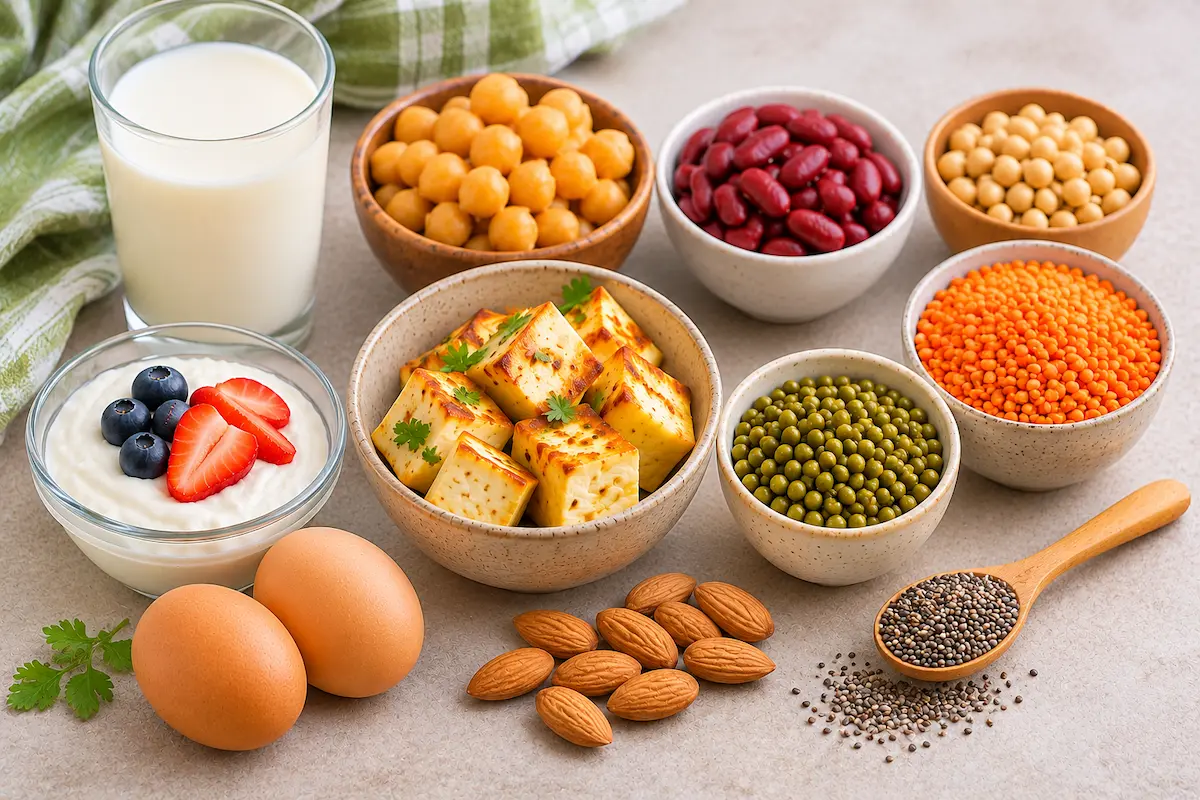
Getting enough protein on a vegetarian diet doesn’t have to be difficult. From paneer and Greek yogurt to eggs, milk, and lentils, plenty of familiar foods can help you meet your daily needs without eating meat or fish.
Your protein needs depend on factors such as body weight, age, activity level, and overall health. For healthy adults, the recommended dietary allowance (RDA) is approximately 0.8 grams of protein per kilogram of body weight per day.
The key is knowing which foods offer the most protein and how to include them in your meals. Some are convenient breakfast options, others make satisfying additions to lunch and dinner, and a few can help when you’re short on time.
Here are 11 vegetarian foods packed with protein, their approximate protein content, and simple ways to enjoy them.
1. Paneer
Paneer is a familiar protein source in Indian diets, and it is easy to turn into a satisfying meal. Unlike foods that require special preparation, paneer fits naturally into everyday dishes, from curries to quick stir-fries.
A 100-g serving of paneer provides approximately 16 g of protein, along with calcium and vitamin B12.
You can add paneer to palak paneer, make paneer bhurji, or grill it with vegetables and spices.
Pairing it with whole grains and vegetables helps create a more balanced meal.
2. Greek Yogurt
Regular yogurt is nutritious, but Greek yogurt has an advantage when protein is your priority. It is strained to remove some of the liquid whey, resulting in a thicker texture and a more concentrated protein content.
Plain Greek yogurt typically has around 9 g of protein per 100 g, although some varieties contain more.
Its creamy consistency makes it useful for more than breakfast. Add it to oats, serve it with fruit, or use it as a base for dips and dressings.
Choose plain varieties when possible, as flavored products may contain substantial added sugar.
3. Eggs
Despite their small size, eggs pack a useful amount of high-quality protein into a convenient serving. They contain all nine essential amino acids, which your body needs from food to support normal growth, tissue repair, and maintenance.
Two large eggs (100 g) provide 12.4 g of protein.
Eggs are also versatile enough to fit into almost any meal. Boil them for a quick snack, prepare a vegetable omelet, or serve scrambled eggs with whole-grain toast.
The yolk provides additional nutrients, including choline, vitamins A, D, and E, selenium, and healthy fats. Eating the whole egg therefore offers more nutritional benefits than protein alone.
Eggs are suitable for people who include them in their vegetarian diet, but not all vegetarians eat eggs.
4. Milk
You don’t always need a special food to increase your protein intake. A regular glass of milk can contribute a meaningful amount while also supplying calcium and other nutrients.
One cup (240 ml) of cow’s milk contains about 8 g of protein. Its protein comes mainly from casein and whey, two types of complete protein that supply all nine essential amino acids.
Drink milk on its own, stir it into oatmeal, or use it to prepare porridge and smoothies. If you prefer lactose-free milk, it generally has a similar protein content. Fortified varieties may also supply vitamin D.
5. Cottage Cheese
Cottage cheese is a useful option when you want a protein-rich food that doesn’t need much cooking. Unlike firm paneer, it usually consists of soft cheese curds with a mild flavor and a moist texture.
One half of a cup (113 g) serving of cottage cheese provides 14 g of protein.
Its mild taste makes it easy to combine with sweet or savory ingredients. Some varieties contain considerable sodium, so check the nutrition label if you are watching your salt intake.
Cottage cheese is not the same as Indian paneer, although both are fresh cheeses.
6. Skyr
If you enjoy thick yogurt but want another high-protein option, skyr is worth trying. This traditional Icelandic dairy product has a creamy consistency similar to Greek yogurt, but it is made using a distinct preparation process.
A ¾-cup (170 g) serving of plain skyr provides around 19 g of protein, although the exact amount may vary by brand.
Serve it with fruit, stir it into oats, or top it with a small amount of nuts for added texture. Plain skyr is a convenient breakfast or snack, particularly when you want protein without preparing a full meal. Compare product labels because protein content and added sugar can vary.
7. Kefir
Not every dairy food needs to be eaten with a spoon. Kefir is a fermented milk drink with a tangy flavor and a thinner consistency than yogurt, making it a convenient option when you prefer something to drink.
A typical 240 ml cup of plain dairy kefir supplies nearly 9 g of protein, though the amount varies by product.
You can drink it chilled, blend it with fruit, or add it to a breakfast smoothie.
Kefir may contain live microorganisms from fermentation, but the types and amounts differ between products. Check the label for protein content, added sugar, and information about live cultures.
Learn more: 11 Probiotic-rich foods for better gut health
8. Whey Protein Powder
When your schedule makes it difficult to prepare protein-rich meals, whey protein powder can offer a convenient alternative. It is made from whey, a protein naturally found in milk, and is commonly used by people who exercise or struggle to meet their protein needs through food alone.
One serving (19.5 g) of EAS whey protein powder provides 13 g of protein. The amount may vary across products and serving sizes.
Mix it with water or milk, or add it to a smoothie or oatmeal.
Whey protein is not essential if your regular diet already supplies enough protein, and it should complement rather than replace a balanced diet. It is unsuitable for people with a milk protein allergy.
9-14. Beans and Legumes
Beans and legumes are affordable vegetarian protein sources that also supply fiber, iron, and folate. They work well in curries, soups, salads, and everyday meals.
- Lentils: 9 g per cup (198 g)
- Chickpeas: 14.5 g per cup (164 g)
- Kidney beans: 15.3 g per cup (177 g)
- Black beans: 15.2 g per cup (172 g)
- Black-eyed peas: 13.2 g per cup (171 g)
- Green peas: 8.6 g per cup (160 g)
Pair beans and legumes with grains such as rice or whole-wheat roti to create satisfying, protein-rich meals.
15-18. Soy Foods
Soy foods are particularly useful for vegetarians because they contain all nine essential amino acids. They also offer versatile options for increasing protein intake without relying on dairy products.
- Tofu: 7–19 g per 100 g, varies depending on firmness and brand
- Edamame: 18.5 g per cup (160 g)
- Tempeh: 20 g per 100 g
- Soy milk: 8.5 g per cup (240 ml)
You can add tofu to stir-fries, use soy milk in smoothies, or include tempeh in curries and other main dishes.
19-23. Nuts and Seeds
Nuts and seeds may not be the main protein source in a meal, but they can make a useful contribution to your daily intake. They also supply healthy fats, fiber, and minerals.
Some good choices include:
- Peanuts: 6.8 g per 28 g
- Almonds: 6 g per 28 g
- Pumpkin seeds: 8.5 g per 28 g
- Hemp seeds: 9.5 g per 30 g
- Chia seeds: 4.7 g per 28 g
Sprinkle seeds over oatmeal or yogurt, add nuts to snacks, or mix them into salads. Since nuts and seeds are calorie-dense, moderate portions are generally a practical choice.
Learn more: 10 Vegan foods that contain all nine essential amino acids
How to Include More Protein in a Vegetarian Diet
You don’t need to eat the same foods every day or rely on expensive supplements to get enough protein. A few practical changes can help you include protein throughout the day.
- At breakfast: Try eggs, Greek yogurt, milk, or skyr.
- At lunch: Add dal, chickpeas, kidney beans, paneer, or tofu.
- For snacks: Choose yogurt, roasted chickpeas, nuts, or a glass of milk.
- At dinner: Include a protein source alongside vegetables and whole grains.
- When you’re busy: A whey protein shake can be convenient if you consume dairy and struggle to meet your needs through food.
Combining different protein sources throughout the day can help you obtain the essential amino acids your body needs. You do not have to combine specific plant foods at every meal.
Final Thoughts
A vegetarian diet can provide plenty of protein when it includes a variety of suitable foods. Paneer, Greek yogurt, eggs, milk, and other dairy products offer convenient options, while lentils, beans, tofu, and other plant foods help round out your intake.
Rather than focusing on a single high-protein food, include protein sources regularly across your meals. Choose foods that fit your preferences, budget, and nutritional needs, and combine them with vegetables, fruits, whole grains, and healthy fats for a balanced diet.