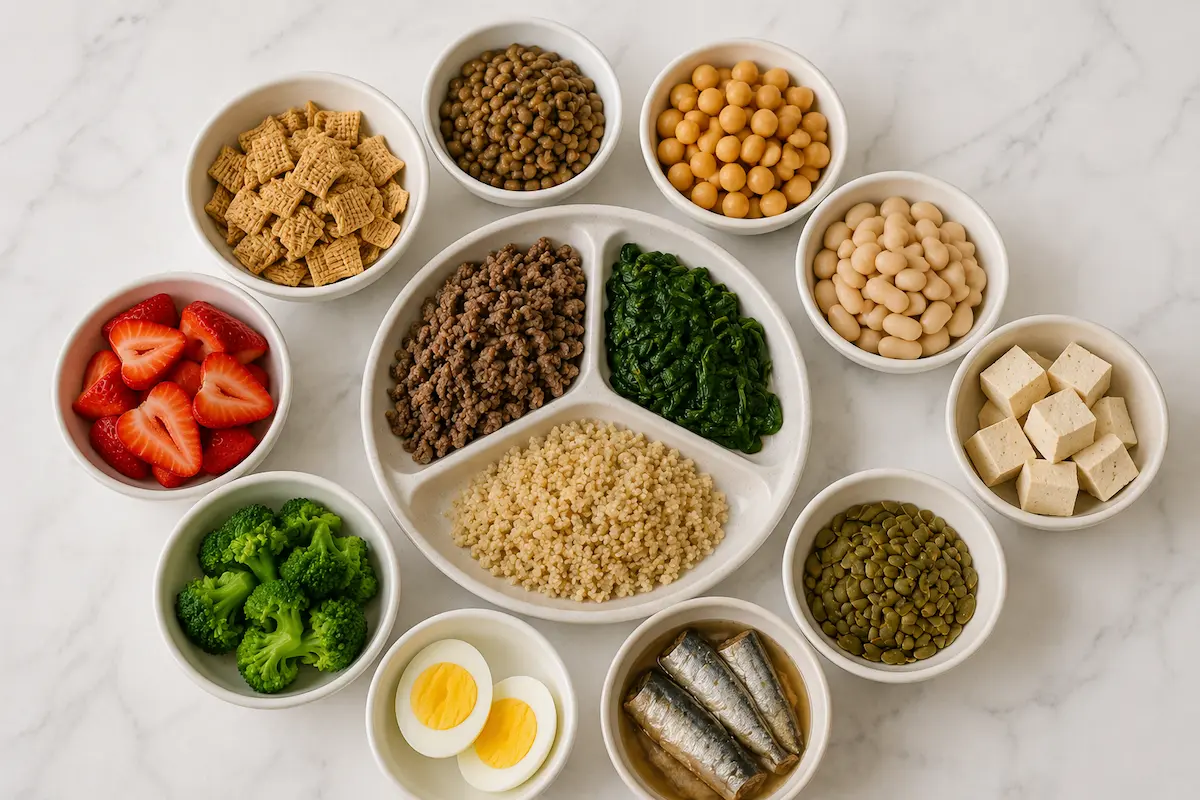
Iron is an essential mineral that supports your toddler’s growth, brain development, healthy red blood cell production, and energy production.
As toddlers become more active and often develop picky eating habits, including a variety of iron-rich foods in their diet becomes increasingly important.
This article covers the high iron foods to feed your toddlers, how much iron they need, and practical tips to help improve iron absorption.
How Much Iron Do Toddlers Need?
Toddlers between 1 and 3 years need 7 mg of iron per day.
Although their iron requirement is lower than during late infancy, meeting this daily goal is still important because many toddlers eat smaller portions and may become selective about food.
Heme vs. Non-Heme Iron
Iron comes in two forms.
Heme iron is found in animal foods such as beef, turkey, chicken, and fish. It is absorbed more efficiently by the body.
Non-heme iron is found in beans, lentils, tofu, whole grains, seeds, leafy greens, and fortified cereals. Pairing these foods with vitamin C-rich fruits and vegetables can improve iron absorption.
Iron-Rich Foods for Toddlers
Note: Iron values are approximate and may vary depending on serving size and preparation method. Percentages are calculated using the recommended daily iron intake of 7 mg for children aged 1–3 years.
1. Iron-Fortified Breakfast Foods
Iron-fortified breakfast cereals and fortified oatmeal are among the easiest ways to boost your toddler’s iron intake. Because they’re fortified, they often provide more iron than many naturally iron-rich foods.
One serving of iron-fortified breakfast cereal typically provides about 4–18 mg of iron (57–257% of the Daily Value), depending on the brand, while one prepared packet of fortified instant oatmeal provides around 4–6 mg (57–86%).
Choose cereals and oatmeal that are low in added sugar and made with whole grains whenever possible.
2. Lean Meats and Poultry
Lean meats and poultry provide heme iron, the type of iron that is most easily absorbed by the body. They’re also rich in high-quality protein, zinc, and vitamin B12, which support healthy growth, brain development, and immune function.
Good choices include:
- Lean beef (1 oz cooked): ~0.9 mg (12% of daily iron needs)
- Dark turkey meat (1 oz cooked): ~0.4 mg (6%)
These foods are easy to include in toddler meals. Try serving shredded lamb, mini meatballs, turkey burgers, beef tacos, or ground beef mixed into pasta sauce. Cutting meat into small, tender pieces can make it easier for toddlers to chew.
3. Liver
Liver is one of the richest natural sources of iron and also provides vitamin A, vitamin B12, folate, and copper. Because it contains very high amounts of vitamin A, it should be served only occasionally and in small portions.
Good choices include:
- Beef liver (½ oz cooked): ~0.9 mg of iron (13% of daily iron needs)
- Chicken liver (½ oz cooked): ~1.6 mg of iron (23%)
Serve liver in small portions mixed into meatballs, meatloaf, or minced with ground meat to improve its flavour and texture.
4. Beans and Legumes
Beans and legumes are excellent plant-based sources of iron, protein, and fiber. They also provide folate, magnesium, potassium, and other nutrients that support healthy growth and digestion.
Good choices include:
- Lentils (¼ cup cooked): ~1.6 mg (23% of daily iron needs)
- White beans (¼ cup cooked): ~1.7 mg (24%)
- Chickpeas (¼ cup cooked): ~1.2 mg (17%)
- Kidney beans (¼ cup cooked): ~1 mg (14%)
- Black beans (¼ cup cooked): ~0.9 mg (13%)
Serve beans in soups, curries, burritos, pasta sauces, bean patties, or homemade hummus. Pair them with vitamin C-rich foods like tomatoes, strawberries, oranges, or bell peppers to improve iron absorption.
5. Soy Foods
Soy foods provide iron along with plant-based protein and several important vitamins and minerals. They’re an excellent option for vegetarian and vegan toddlers.
Good choices include:
- Regular tofu (¼ cup): ~3.3 mg (48% of daily iron needs)
- Edamame (¼ cup): ~0.9 mg (13%)
- Cooked soybeans (¼ cup): ~2.2 mg (32%)
Try adding tofu to stir-fries, soups, or pasta dishes. Edamame can be served as a finger food for older toddlers, while cooked soybeans work well in salads, grain bowls, and mixed vegetable dishes.
6. Spinach
Spinach is one of the best leafy greens for boosting your toddler’s iron intake.
In addition to non-heme iron, it provides vitamin A, vitamin K, folate, and antioxidants that support healthy growth and development.
A ¼-cup serving of cooked spinach provides around 1.6 mg of iron, meeting approximately 23% of a toddler’s daily iron needs.
Try blending spinach into smoothies, stirring it into pasta sauce, soups, scrambled eggs, or adding it to homemade muffins and meatballs.
7. Eggs
Eggs provide moderate amounts of iron along with high-quality protein, choline, vitamin B12, selenium, and healthy fats that support brain development.
One large egg contains around 0.8 mg of iron, covering 12% of a toddler’s recommended daily iron intake.
Serve eggs scrambled, hard-boiled, as omelets with vegetables, or baked into egg muffins for an easy toddler-friendly meal.
8. Whole Grains
Whole grains provide small to moderate amounts of iron while also supplying fiber, complex carbohydrates, B vitamins, and other nutrients that support steady energy and healthy digestion.
Including a variety of whole grains in your toddler’s meals can help increase their overall iron intake.
Good choices include:
- Quinoa (¼ cup cooked): ~0.7 mg (10% of daily iron needs)
- Amaranth (¼ cup cooked): ~1.3 mg (18%)
- Rolled oats (¼ cup dry): ~0.9 mg (12%)
Quinoa can be served as a side dish instead of rice, while amaranth works well as a warm breakfast porridge. Oats are a versatile option that can be enjoyed as oatmeal, overnight oats, or added to homemade pancakes and muffins.
9. Nuts and Seeds
When served in age-appropriate forms, nuts and seeds can provide iron, healthy fats, plant protein, fiber, vitamin E, magnesium, and zinc.
Because whole nuts and many whole seeds can be choking hazards for young children, serve nuts as smooth nut butters and seeds finely ground or as seed butters.
Good choices include:
- Almond butter (1 tablespoon): ~0.6 mg (9% of daily iron needs)
- Cashew butter (1 tablespoon): ~0.8 mg (11%)
- Pumpkin seeds (1 tablespoon): ~0.8 mg (11%)
- Hemp seeds (1 tablespoon): ~0.8 mg (11%)
- Tahini (1 tablespoon): ~1 mg (15%)
Sprinkle finely ground seeds over oatmeal, yogurt, smoothies, or mashed vegetables, or stir seed and nut butters into oatmeal, yogurt, dips, or sauces.
10. Fish
Certain types of fish provide iron along with high-quality protein and omega-3 fatty acids, including DHA, which supports brain and eye development. Fish also supplies nutrients like vitamin D, iodine, and selenium.
Good choices include:
Serve fish flaked into rice, mixed with pasta, or paired with mashed vegetables for easy toddler-friendly meals. Choose low-mercury fish and remove any bones before serving.
11. Dark Chocolate (Occasional Treat)
Dark chocolate can contribute some iron to a toddler’s diet while also providing magnesium, copper, and antioxidants.
A 10 g serving of dark chocolate (70–85% cocoa) contains about 1.2 mg of iron, providing 17% of a toddler’s recommended daily iron intake.
However, because dark chocolate may contain added sugar and small amounts of caffeine, it should be offered only occasionally and in small portions to older toddlers.
Iron-rich whole foods, such as beans, lean meats, and iron-fortified cereals, should remain the main sources of iron in your toddler’s diet.
12. Green Vegetables
Besides spinach and kale, several other green vegetables contribute modest amounts of iron while providing vitamin C, folate, vitamin K, and fiber.
Good choices include:
These vegetables can be added to soups, pasta dishes, omelets, casseroles, or served alongside lean meats for a balanced meal.
Foods That May Reduce Iron Absorption
Some foods and drinks can interfere with iron absorption when consumed in large amounts or at the same meal.
These include:
- Excessive cow’s milk
- Large amounts of calcium-rich foods eaten alongside iron-rich meals
- Tea (which should generally not be given to young children)
Most experts recommend limiting cow’s milk to no more than 16–24 ounces (480–720 mL) per day for toddlers. Drinking too much milk may reduce appetite for iron-rich foods and increase the risk of iron deficiency.
How to Feed a Picky Toddler More Iron
Then include practical, iron-specific tips such as:
- Offer iron-rich foods regularly without pressure.
- Pair familiar foods with new iron-rich foods.
- Serve iron-rich foods when your toddler is most hungry.
- Include iron-rich snacks like hummus or fortified cereal.
- Add finely chopped spinach or lentils to favorite meals.
- Pair plant-based iron sources with vitamin C-rich fruits and vegetables.
- Limit excessive cow’s milk to help maintain appetite for iron-rich foods.
- Remember that repeated exposure often helps toddlers accept new foods.
Signs Your Toddler May Not Be Getting Enough Iron
Iron deficiency doesn’t always cause noticeable symptoms at first. As iron deficiency progresses and may develop into iron deficiency anemia, symptoms of iron deficiency may include:
- Unusual tiredness or fatigue
- Pale skin
- Irritability
- Poor appetite
- Reduced attention or alertness
If left untreated over time, iron deficiency may also affect healthy growth and development.
These symptoms can have many possible causes and do not necessarily mean your child has iron deficiency. If you notice any of these signs or have concerns about your toddler’s iron status, consult your child’s healthcare provider. They may recommend blood tests and discuss whether dietary changes or supplements are appropriate.
Final Thoughts
Iron is an essential nutrient that supports your toddler’s growth, brain development, energy levels, and overall health.
Offering a variety of iron-rich foods throughout the week—including lean meats, beans, fortified cereals, eggs, seafood, and plant-based sources—can help meet your child’s daily needs.
If your toddler is a picky eater, remember that small, consistent changes often make a bigger difference than trying to overhaul their diet overnight. With patience and a balanced approach, you can help build healthy eating habits while supporting their iron intake.