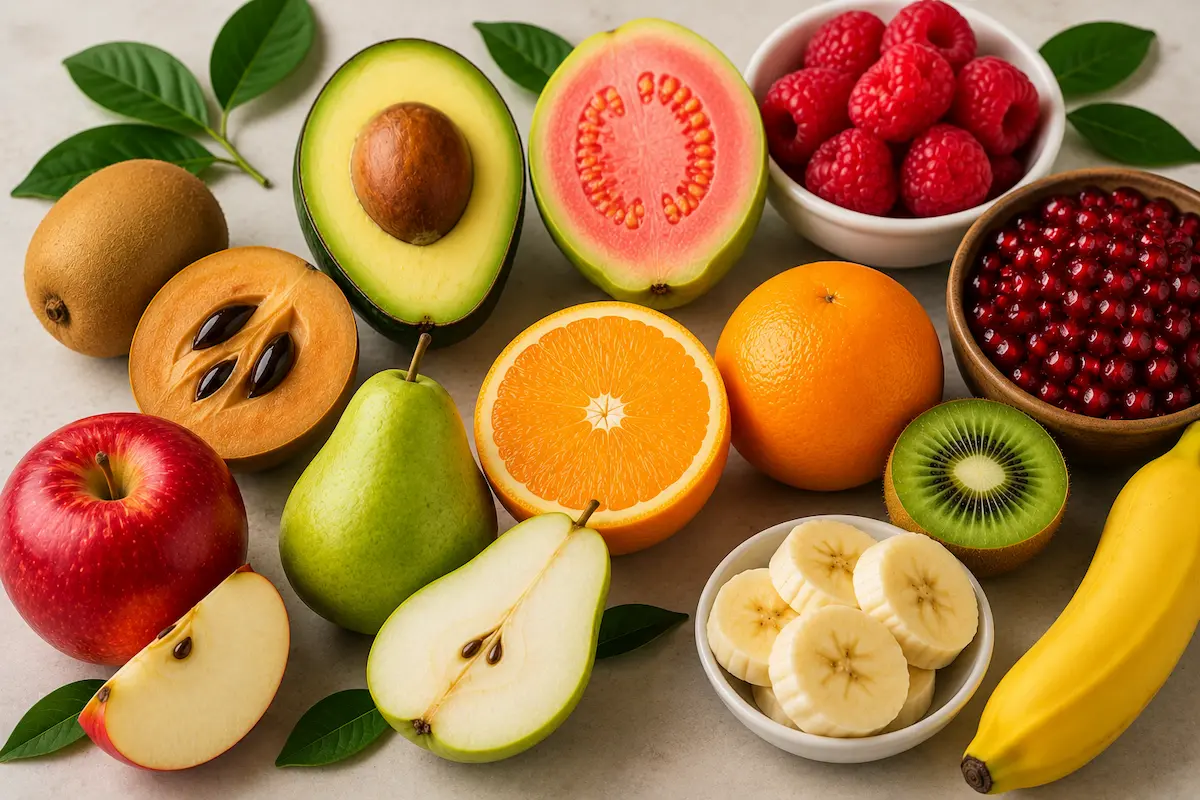
Most people know that fruit is good for their health, but not all fruits provide the same amount of fiber.
Fiber plays an important role in supporting digestive health, promoting fullness, nourishing beneficial gut bacteria, and helping maintain healthy cholesterol and blood sugar levels.
Unfortunately, most adults don’t get enough fiber each day. Choosing fruits that are naturally high in fiber is one of the easiest ways to increase your intake while enjoying a variety of vitamins, minerals, and antioxidants.
In this article, you’ll discover the best fruits rich in fiber, how much fiber they provide, and the health benefits they offer.
Why Is Fiber Important?
Fiber is a type of carbohydrate that your body can’t fully digest. Instead of being broken down and absorbed like other carbohydrates, it passes through the digestive system, where it supports several aspects of health.
A diet rich in fiber may help:
- Help relieve consipation
- Promote a healthy gut microbiome
- Increase feelings of fullness
- Support healthy cholesterol levels
- Help maintain healthy blood sugar levels
- Support heart health
- Lower the risk of colorectal disease
- Promote healthy weight management
According to the Dietary Guidelines for Americans, most adult women should aim for about 25 grams of fiber per day and most adult men about 38 grams, although individual needs vary.
Fruits That Are High in Fiber
The fruits below are among the best natural sources of fiber and can help you move closer to your daily fiber goal while providing a wide range of essential nutrients.
1. Passion Fruit
If you’re looking for one of the richest natural sources of fiber, passion fruit is hard to beat.
One cup (236 g) provides an impressive 24.5 g of fiber, while 100 g contains approximately 10.4 g, making it one of the highest-fiber fruits available.
Beyond its exceptional fiber content, passion fruit is also rich in vitamin C, vitamin A, potassium, and beneficial plant compounds that help support immune health and protect cells from oxidative stress.
Scoop out the pulp and enjoy it on its own, or add it to yogurt, smoothies, oatmeal, or fruit salads.
2. Avocado
Although it’s commonly treated as a vegetable, avocado is botanically a fruit and one of the best high-fiber foods you can eat.
A single cup of avocado cubes (150 g) contains 10 g of fiber, equivalent to about 6.7 g per 100 g.
Avocados are equally famous for their heart-healthy monounsaturated fats, folate, potassium, vitamin E, and vitamin K, making them one of the most nutrient-dense fruits you can eat.
3. Guava
Guava stands out among tropical fruits thanks to its impressive fiber content and remarkable nutritional value.
One cup (165 g) serving provides 8.9 g of fiber, while 100 g contains around 5.4 g.
It’s also exceptionally rich in vitamin C and supplies potassium, copper, folate, and antioxidants that help support immune function and overall health.
4. Sapodilla
Sapodilla, also known as chikoo, is a tropical fruit prized for its naturally sweet, caramel-like flavor and impressive fiber content.
One sapodilla (170 g) provides 9 g of fiber, while 100 g contains about 5.3 g.
In addition to fiber, sapodilla provides vitamin C, copper, potassium, iron, and antioxidant polyphenols, nutrients that support digestive health, immunity, and healthy cells.
5. Raspberries
Few fruits pack as much fiber into such a small serving as raspberries.
They provide an impressive 9.75 g of fiber per cup (150 g), or about 6.5 g per 100 g.
They’re also loaded with vitamin C, manganese, and anthocyanins, antioxidant compounds that help protect cells from oxidative stress and support healthy aging.
6. Blackberries
Sweet, juicy, and bursting with nutrients, blackberries are another excellent fruit for boosting your fiber intake.
One cup (144 g) supplies approximately 8 g of fiber, which equals about 5.3 g per 100 g.
In addition to fiber, blackberries provide vitamin C, vitamin K, manganese, and anthocyanins, nutrients that contribute to healthy bones, immunity, and heart health.
7. Pomegranate
Every spoonful of pomegranate arils adds a satisfying crunch along with a generous amount of dietary fiber.
One cup (174 g) of pomegranate arils provides around 7 g of fiber, while 100 g provides approximately 4 g.
Its jewel-like seeds are also packed with vitamin C, vitamin K, folate, potassium, and powerful polyphenol antioxidants, including punicalagins, which have been studied for their potential role in supporting heart health.
8. Pear
Keeping the skin on a pear is one of the easiest ways to get more fiber from this naturally sweet fruit.
One medium pear (178 g) provides around 5.5 g of fiber, while 100 g contains about 3.1 g.
Pears also supply vitamin C, copper, potassium, and antioxidant polyphenols, nutrients that help support immune function, heart health, and overall wellness.
9. Kiwi
Don’t let its small size fool you—kiwi offers much more than just vitamin C.
One cup (180 g) contains 5.4 g of fiber, while 100 g provides 3 g.
This fuzzy fruit is also loaded with vitamin C, vitamin E, vitamin K, folate, and potassium. Research suggests kiwi may also help support regular bowel movements as part of a balanced diet.
10. Fresh Figs
Fresh figs combine natural sweetness with an impressive nutritional profile.
Two large figs (128 g) provide 3.7 g of fiber, which works out to about 3 g per 100 g.
They’re also rich in potassium, calcium, magnesium, vitamin K, and antioxidant polyphenols, making them a nutritious fruit for supporting bone and heart health.
Fresh figs pair beautifully with yogurt, cottage cheese, leafy salads, or can simply be enjoyed on their own.
11. Apples
An apple is one of the simplest ways to increase your fiber intake without changing your diet dramatically.
A medium-sized apple (200 g) contains 4.2 g of fiber, while 100 g provides 2.1 g.
Apples also contain vitamin C and beneficial polyphenols, plant compounds that may support heart health and help protect cells from oxidative damage.
For the greatest fiber benefit, eat apples with the peel on or add sliced apples to oatmeal, salads, or yogurt.
12. Persimmon
When persimmons are in season, they’re one of the tastiest ways to add more fiber to your plate.
One medium persimmon (170 g) provides 6.1 g of fiber, while 100 g contains 3.6 g.
Persimmons are also packed with vitamins A and C, manganese, and antioxidant compounds, which help support eye health, immune function, and protect against oxidative stress.
13. Oranges
Whole oranges offer much more than a refreshing burst of citrus flavor—they’re also a good source of dietary fiber.
One large orange (154 g) provides nearly 3.4 g of fiber, while 100 g contains 2.2 g.
They’re particularly rich in vitamin C, folate, potassium, and citrus flavonoids, antioxidants that may help support immune function and heart health.
Instead of drinking orange juice, enjoy the whole fruit to get all of its naturally occurring fiber.
14. Blueberries
Tiny but nutrient-dense, blueberries are an easy way to add more fiber and antioxidants to your diet.
One cup (150 g) contains around 3.6 g of fiber, which is equivalent to 2.4 g per 100 g.
Blueberries are especially valued for their anthocyanins, vitamin C, vitamin K, and manganese, nutrients that have been linked to brain, heart, and immune health.
15. Star Fruit
With its distinctive star-shaped slices, star fruit is as attractive on the plate as it is nutritious.
A single cup (132 g) of starfruit cubes provides 3.7 g of fiber, while 100 g contains about 2.8 g.
Star fruit also supplies vitamin C, copper, potassium, and antioxidant compounds that help support healthy cells and immune function.
Note: People with kidney disease should avoid star fruit because a review of 136 reported cases found it can cause kidney and nervous system toxicity, largely due to oxalate and caramboxin.
16. Dragon Fruit
With its vibrant pink skin and speckled flesh, dragon fruit is as nutritious as it is eye-catching.
A single cup (180 g) delivers 3.2 g of fiber, or 1.8 g per 100 g.
Dragon fruit is also a good source of vitamin C, magnesium, iron, and prebiotic fiber, which helps nourish beneficial bacteria in your gut.
17. Bananas
Bananas may not be the highest-fiber fruit on the list, but they’re one of the easiest to enjoy every day.
One medium banana (115 g) provides nearly 2 g of fiber, while 100 g contains 1.7 g.
Besides fiber, bananas are an excellent source of potassium, vitamin B6, and vitamin C.
Slightly green bananas also contain resistant starch, a type of carbohydrate that acts similarly to fiber and helps nourish beneficial gut bacteria.
18. Mango
Juicy, sweet, and naturally refreshing, mangoes make it easy to add more fiber to your meals.
One cup (165 g) delivers 2.6 g of fiber, while 100 g provides 1.6 g.
Mangoes are also loaded with vitamins A and C, folate, copper, and protective antioxidants, nutrients that support healthy skin, immune function, and overall well-being.
19. Strawberries
Bright, flavorful, and naturally low in calories, strawberries are a delicious way to boost your fiber intake.
A single cup (144 g) supplies approximately 2.9 g of fiber, which equals around 2 g per 100 g.
Strawberries are exceptionally rich in vitamin C, manganese, folate, and antioxidant polyphenols, making them one of the most nutrient-dense berries you can enjoy.
20. Coconut
Although commonly called a nut, coconut is botanically classified as a fruit.
Fresh coconut is surprisingly high in fiber, with just a single cup (85 g) providing approximately 7.7 g, or 9g per 100 g.
Beyond its impressive fiber content, coconut is rich in manganese, copper, selenium, and medium-chain triglycerides (MCTs), healthy fats that provide a quick source of energy. It also contains small amounts of iron and potassium.
Enjoy fresh shredded coconut as a topping for oatmeal, yogurt, smoothie bowls, and fruit salads, or add it to homemade granola and baked goods for extra texture and fiber.
Fresh vs. Dried Fruits: Which Has More Fiber?
In general, dried fruits contain more fiber per gram because most of the water has been removed.
For example:
- Raisins contain more fiber than fresh grapes.
- Dried figs contain more fiber than fresh figs.
- Prunes contain more fiber than fresh plums.
However, dried fruits are also more concentrated in calories and natural sugars, so it’s best to enjoy them in moderation.
Is fruit juice high in fiber?
No. Most fruit juices contain very little fiber because much of it is removed during processing. Eating whole fruit is generally the better choice.
Closing Thoughts
Adding more fiber-rich fruits to your diet is an easy way to support digestive health, heart health, and overall well-being.
While some fruits contain more fiber than others, eating a variety of whole fruits can help you meet your daily fiber needs while providing vitamins, minerals, and antioxidants.
For the best results, pair fruit with other high-fiber foods, including vegetables, legumes, whole grains, nuts, and seeds.