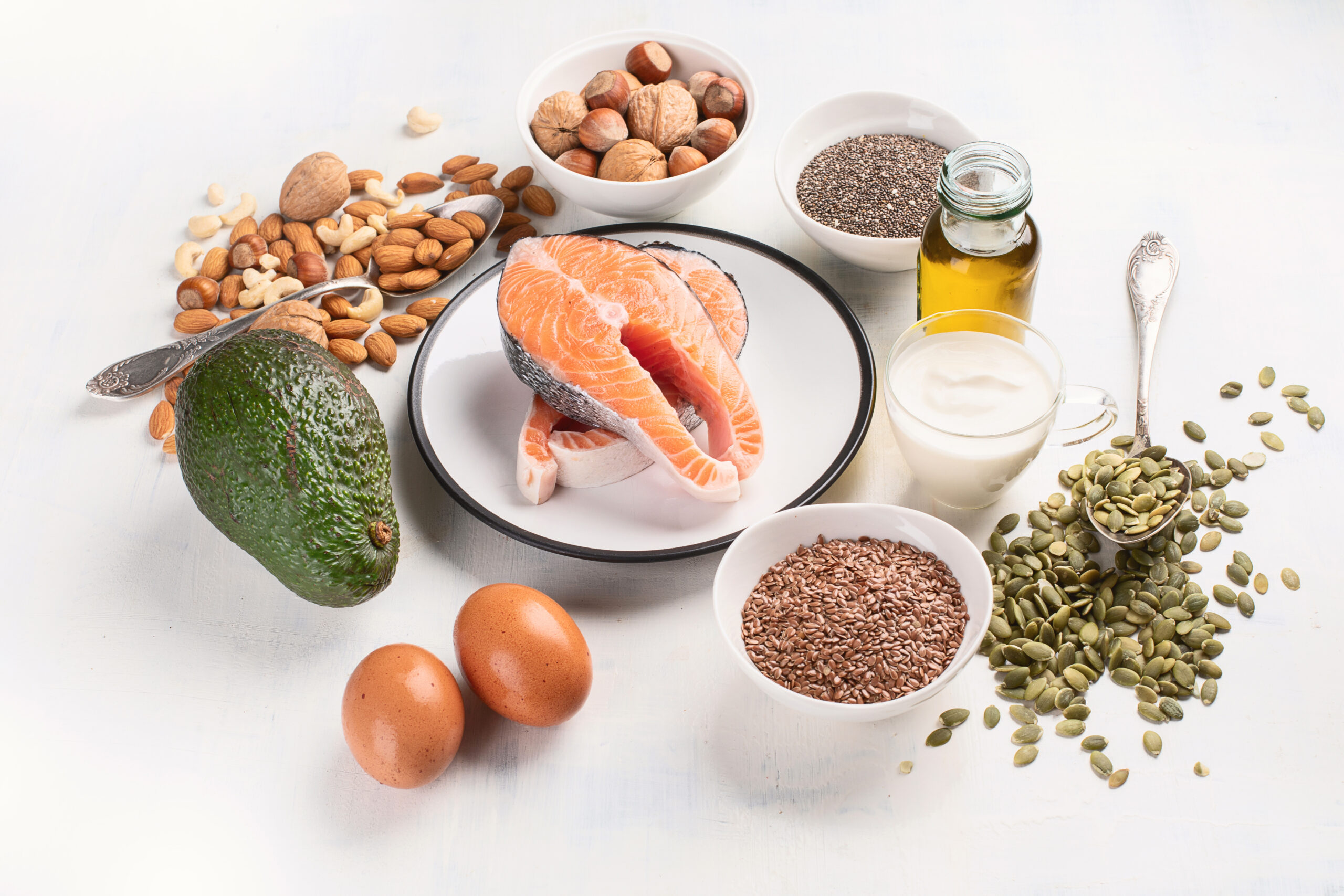
When it comes to eating a balanced diet, fats often get a bad reputation. Many people associate fats with weight gain, clogged arteries, and other health issues. However, not all fats are created equal, and certain types of fats are crucial for maintaining a healthy body.
These healthy fats provide essential nutrients, improve heart health, boost brain function, and support a healthy metabolism.
In this blog, we will dive into the world of healthy fats and explore foods rich in these essential nutrients that can benefit your overall health.
What Are Healthy Fats?
Fats are one of the three macronutrients (along with carbohydrates and proteins) that provide energy to the body.
While fat has often been misunderstood and associated with poor health, it’s essential to understand that not all fats are harmful. The key lies in choosing the right types of fats for your body.
Healthy fats, also known as unsaturated fats, come in two main forms: monounsaturated fats and polyunsaturated fats. These fats are liquid at room temperature and offer numerous health benefits.
They can help reduce bad cholesterol levels, lower the risk of heart disease, improve brain function, and support the absorption of fat-soluble vitamins like A, D, E, and K.
In contrast, saturated fats and trans fats are the fats that you should limit in your diet. Saturated fats are typically found in animal-based products, such as fatty cuts of meat and full-fat dairy products, while trans fats are artificially created fats often found in processed foods.
These types of fats can raise levels of bad cholesterol (LDL) and increase the risk of heart disease, stroke, and type 2 diabetes.
For instance, a review of 21 meta-analyses showed that reducing saturated fat intake likely lowers the risk of cardiovascular diseases but doesn’t affect overall or heart-related deaths. And higher saturated fat intake may increase the risk of heart disease and breast cancer risks. However, more research is needed.
The World Health Organization (WHO) reports that a 2% increase in energy from trans fats can lead to a 25% higher risk of death from cardiovascular disease.
Best Healthy Fat Foods
Now that we know why healthy fats are important, let’s explore some foods that are packed with these beneficial fats.
1. Avocados
Avocados are one of the richest sources of healthy fats, with 14.7 grams per 100 g-serving, most of which are heart-healthy monounsaturated fats (9.8 grams), particularly oleic acid.
Beyond healthy fats, avocados are rich in fiber, potassium, and antioxidants, all of which support heart health.
Their carotenoids, including lutein and zeaxanthin, help reduce the risk of age-related macular degeneration and cataracts, while also providing anti-cancer properties.
As rich in fats, avocado can also be a great addition to your weight-loss diet.
Replacing traditional fatty spreads like butter, cream cheese, or mayonnaise with avocado on sandwiches can lower your intake of calories, saturated fat, sodium, and cholesterol—making your meal healthier without compromising on taste or texture.
2. Olive Oil
Olive oil is a staple in the Mediterranean diet and is well-known for its health benefits, particularly in heart health. It is rich in monounsaturated fats and has anti-inflammatory properties.
A tablespoon (14 g) of olive oil contains 14 grams of fat, with 10.2 grams being monosaturated fats.
Consumption of olive oil is associated with reduced inflammatory cytokines and liver fat, better management of weight and blood sugar levels, and an improved heart health and cognitive function.
Always choose extra virgin olive oil, as it is the healthiest form, as it is minimally processed and retains the most nutrients.
3. Nuts
Nuts like almonds, walnuts, and cashews, are great sources of healthy fats.
They are also packed with protein, fiber, essential vitamins, minerals, phenolic compounds, and phytosterols.
Total fat content per an ounce (28.35 g):
- Hazelnuts: 17.2 grams
- Brazilnuts: 19 grams
- Walnuts: 18.5 grams
The fat content in hazelnuts is predominantly made up of monounsaturated fatty acids, accounting for approximately 80% of their total fat and fat in walnuts are primarily made of polyunsaturated fats. While fat in brazilnuts has a balanced mix of all kinds of fats.
Nut consumption has been associated with numerous health benefits, including improved blood lipid levels, a lower risk of coronary heart disease, certain cancers, stroke, atherosclerosis, type 2 diabetes, inflammation, and other chronic conditions.
4. Fatty Fish
Fatty fish, such as salmon, mackerel, sardines, and herring, are rich in omega-3 fatty acids, primarily the long-chain polyunsaturated fats eicosapentaenoic acid (EPA) and docosahexaenoic acid (DHA).
These fish contain up to 40% polyunsaturated fatty acids and provide an average of 35 mg of cholesterol per 100 grams, contributing minimally to overall cholesterol intake.
Consumption of fish and fish fats are primarily linked to a reduced risk of cardiovascular diseases. They help increase HDL (good) cholesterol, lower LDL (bad) cholesterol and triglycerides, reduce blood pressure, and decrease inflammatory markers. Additionally, regular fish intake is associated with improved mood and a noticeable reduction in depression symptoms.
It’s recommended to consume two servings of fish per week, including atleast one meal with fatty fish like salmon or mackerel for optimal health benefits.
5. Coconut
6. Dark Chocolate
Dark chocolate, especially varieties with 70% or higher cocoa content, is a good source of healthy fats, primarily monounsaturated fats (MUFA) and small amounts of polyunsaturated fats. An ounce-serving (28.35 g) provides 12.1 grams of fat.
Dark chocolate is also a good source of iron, magnesium, phosphorus, copper and manganese.
Additionally, antioxidants, such as flavonoids in cocoa, is linked to improved cognition and cardiovascular health. However, more research is needed.
It is to be remembered that an ounce serving of dark chocolate is also high is saturated fat (6.95 grams) which is considered high. If consumed regularly, this could be a concern, especially for heart health. Moreover, they may also contain added sugar.
However, when enjoyed in moderation, it can still be a nutritious and satisfying treat as part of a balanced diet.
7. Seeds
Seeds like chia seeds, flax seeds and hemp seeds are an excellent source of healthy fats, particularly omega-3 and omega-6 fatty acids, which support heart health, reduce inflammation, and boost brain function.
Total fat content per 30-g serving of these seeds:
- Chia seeds: 9.23 grams
- Flax seeds: 11.18 grams
- Hemp seeds: 14.6 grams
About 66-78% of the total fat in these seeds comes from polyunsaturated fatty acids, particularly omega-3s. They’re also rich in fiber, protein, B-vitamins, and essential minerals (USDA).
8. Eggs
Eggs are one of the most nutritious foods available and contain healthy fats in the form of omega-3s and monounsaturated fats.
One large egg (50 g) contains 5.3 grams of fat, with 1.64 grams of saturated fat, nearly 2 grams of monounsaturated and 0.7 grams of polyunsaturated fats.
They are also a good source of vitamin D, high-quality protein, and choline, which is essential for memory, mood, muscle function, and other functions.
A review of high-quality studies suggest that healthy fats, when consumed regularly as part of a balanced diet, have a positive or neutral effect on key health markers and pose no risks with one or less than one egg a day.
Additionally, as rich in protein and fats, eggs make you feel full, making it a great choice as a weight-loss food.
9. Nut Butters
Nut butters, such as peanut, almond, and cashew butter, are excellent sources of healthy fats, protein, and fiber. These monounsaturated and polyunsaturated fats support heart health, brain function, and hormone balance.
For maximum benefits, choose natural, unsweetened varieties to avoid added sugars and unhealthy fats.
Enjoy in moderation, as these rich spreads are packed with nutrients but also high in calories, even in small amounts.
For example, a single 45-gram serving of peanut butter provides 23.1 grams of healthy fats and 10 grams of protein, but it’s also calorie-dense, packing 269 kcal.
10. Full-Fat Dairy (In Moderation)
Full-fat dairy products like cheese, yogurt, and milk contain a moderate amount of saturated fat.
However, recent research suggests that consuming full-fat dairy in moderation may not have the negative impact on health that was once believed.
Out of multiple studies on regular-fat (2–4%) dairy products like milk, yogurt, cheese, and butter, most found no significant association between regular-fat dairy and obesity, type 2 diabetes, prediabetes, or cardiovascular diseases. However, a few studies observed either a positive or negative effect on certain health outcomes.
In fact, full-fat dairy can provide important nutrients like protein, calcium, and vitamin D.
Final Thoughts
Healthy fats are an essential part of a balanced diet and should not be feared or avoided.
By incorporating a variety of healthy fat-rich foods such as avocados, olive oil, nuts, seeds, and fatty fish into your meals, you can improve your heart health, brain function, and overall well-being. Remember, the key is moderation.
Aim to replace unhealthy fats (like trans fats and excessive saturated fats) with healthier options and enjoy the benefits of a fat-friendly diet.
By making informed choices about the fats you consume, you’ll be well on your way to living a long and healthy life.
References:
- U.S. Department of Agriculture: FoodData Central (used for nutritional values across foods)
- National Institutes of Health (NIH): Office of Dietary Supplements Factsheet – choline
- Bhuyan DJ, Alsherbiny MA, Perera S, Low M, Basu A, Devi OA, Barooah MS, Li CG, Papoutsis K. The Odyssey of Bioactive Compounds in Avocado (Persea americana) and Their Health Benefits. Antioxidants (Basel). 2019 Sep 24;8(10):426. doi: 10.3390/antiox8100426. PMID: 31554332; PMCID: PMC6826385.
- Isaakidis A, Maghariki JE, Carvalho-Barros S, Gomes AM, Correia M. Is There More to Olive Oil than Healthy Lipids? Nutrients. 2023 Aug 18;15(16):3625. doi: 10.3390/nu15163625. PMID: 37630815; PMCID: PMC10459315.
- Gonçalves B, Pinto T, Aires A, Morais MC, Bacelar E, Anjos R, Ferreira-Cardoso J, Oliveira I, Vilela A, Cosme F. Composition of Nuts and Their Potential Health Benefits-An Overview. Foods. 2023 Feb 23;12(5):942. doi: 10.3390/foods12050942. PMID: 36900459; PMCID: PMC10000569.
- Tsoupras A, Brummell C, Kealy C, Vitkaitis K, Redfern S, Zabetakis I. Cardio-Protective Properties and Health Benefits of Fish Lipid Bioactives; The Effects of Thermal Processing. Mar Drugs. 2022 Mar 2;20(3):187. doi: 10.3390/md20030187. PMID: 35323486; PMCID: PMC8955125.
Duranova, H., Kuzelova, L., Fialkova, V. et al. Coconut-sourced MCT oil: its potential health benefits beyond traditional coconut oil. Phytochem Rev 24, 659–700 (2025). https://doi.org/10.1007/s11101-024-09969-1
- Myers M, Ruxton CHS. Eggs: Healthy or Risky? A Review of Evidence from High Quality Studies on Hen’s Eggs. Nutrients. 2023 Jun 7;15(12):2657. doi: 10.3390/nu15122657. PMID: 37375561; PMCID: PMC10304460.
- Socci V, Tempesta D, Desideri G, De Gennaro L and Ferrara M (2017) Enhancing Human Cognition with Cocoa Flavonoids. Front. Nutr. 4:19. doi: 10.3389/fnut.2017.00019.
- Agarwal A, Rizwana, Tripathi AD, Kumar T, Sharma KP, Patel SKS. Nutritional and Functional New Perspectives and Potential Health Benefits of Quinoa and Chia Seeds. Antioxidants (Basel). 2023 Jul 12;12(7):1413. doi: 10.3390/antiox12071413. PMID: 37507952; PMCID: PMC10376479.
- Taormina VM, Unger AL, Kraft J. Full-fat dairy products and cardiometabolic health outcomes: Does the dairy-fat matrix matter? Front Nutr. 2024 Jul 29;11:1386257. doi: 10.3389/fnut.2024.1386257. PMID: 39135556; PMCID: PMC11317386.
- Pipoyan D, Stepanyan S, Stepanyan S, Beglaryan M, Costantini L, Molinari R, Merendino N. The Effect of Trans Fatty Acids on Human Health: Regulation and Consumption Patterns. Foods. 2021 Oct 14;10(10):2452. doi: 10.3390/foods10102452. PMID: 34681504; PMCID: PMC8535577.
- Aramburu A, Dolores-Maldonado G, Curi-Quinto K, Cueva K, Alvarado-Gamarra G, Alcalá-Marcos K, Celis CR, Lanata CF. Effect of reducing saturated fat intake on cardiovascular disease in adults: an umbrella review. Front Public Health. 2024 Jun 3;12:1396576. doi: 10.3389/fpubh.2024.1396576. PMID: 38887252; PMCID: PMC11180890.
Note: Most of the references above are used under open-access licence CC BY 4.0.
10 thoughts on “10 Best Foods High in Healthy Fats”
Comments are closed.